Newsletters


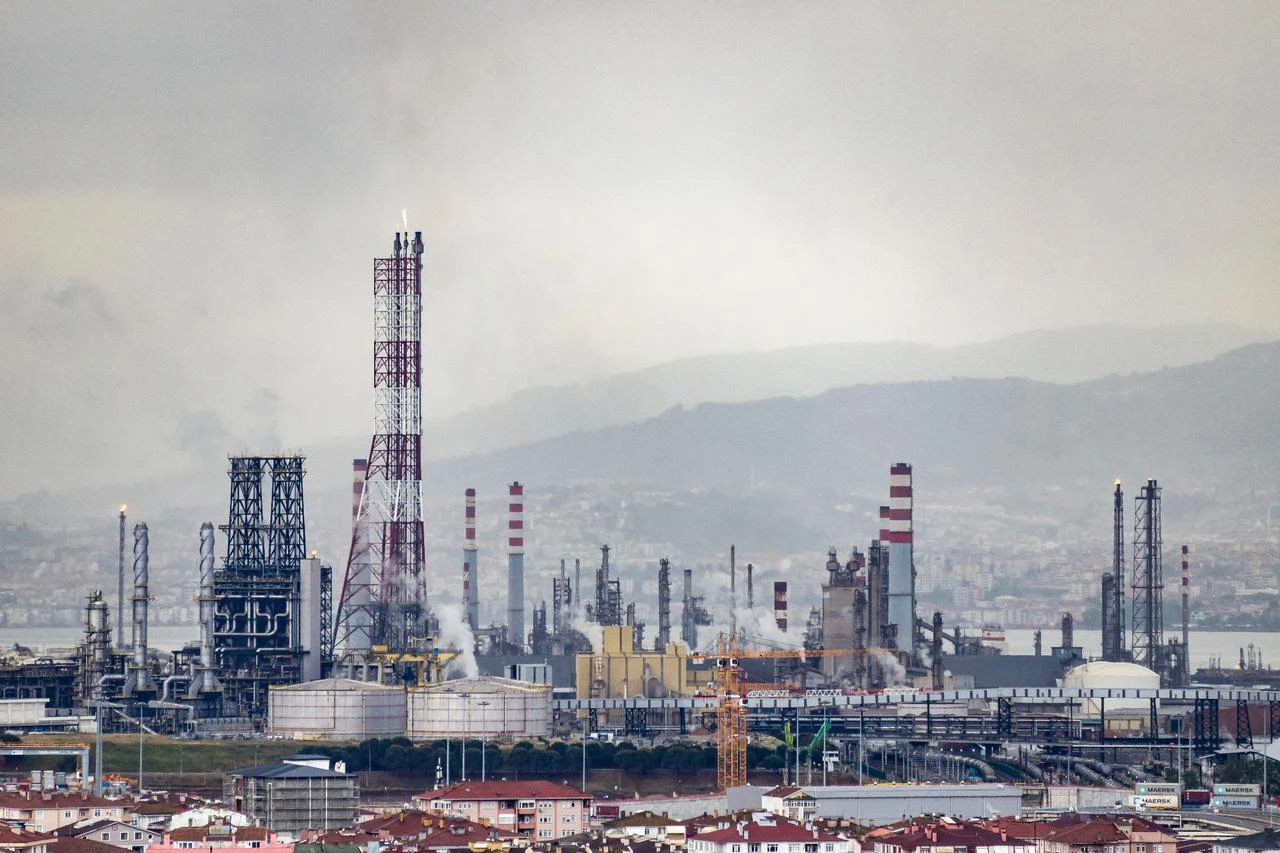


Türkiye’s industrial production fell 1.4% year over year in June, while output rose 0.1% from the previous month, according to data from the Turkish Statistical Institute (TurkStat).
The decline was driven by two of the three main industrial categories, with mining and quarrying output falling 1.6% annually and 0.5% monthly, while manufacturing production declined 1.5% year over year and remained unchanged from May.
Electricity, gas, steam and air conditioning production and distribution increased 1.1% annually and 1.5% monthly. Unadjusted industrial production, meanwhile, rose 14.4% year over year.
Of 25 sectors, 14 recorded monthly growth in June, while 11 contracted.
Clothing production fell 15.1% annually and 7.8% monthly, while plastics production declined 3.9% year over year and 1.0% from May.
Beverage production increased 11.1% annually and 6.1% monthly. Other transportation equipment, largely linked to defense manufacturing, rose 2.8% annually and 50.2% monthly after falling 46.2% in May. Motor vehicle production increased 1.8% year over year and 4.6% from the previous month.
High-technology production rose 3.8% monthly but fell 20.3% annually. Low-technology production declined 1% monthly and 1.2% annually, while low-medium-technology production fell 1.3% monthly and 0.8% annually. High-medium-technology production increased 2.4% monthly and 3.5% annually.
Intermediate goods production fell 1.6% monthly, while energy production rose 0.6%. Durable and nondurable goods production declined 3.3% and 1.1%, respectively.
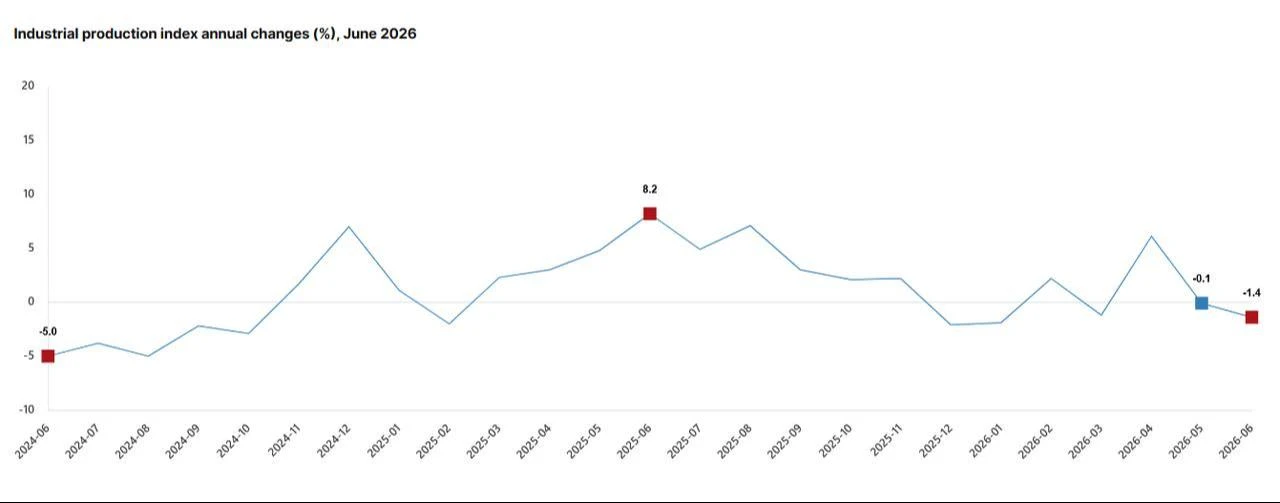

Local brokerage OYAK Investment described industrial production as "stagnant," noting that the figures follow a 0.1% contraction in May, while monthly production had declined 3%.
The brokerage attributed much of the volatility since 2025 to fluctuations in defense-related production. Defense industry production had contributed 1.6 percentage points to monthly growth in June.
"Looking ahead, if geopolitical tensions in the Middle East continue to ease, industrial production is likely to gain some momentum in the coming months; additionally, the global manufacturing PMI remaining at its highest levels in four years will support external demand," the analysts said.
Pusula Investment said the June data matched the picture emerging from its company discussions, with U.S-Iran-Israel tensions affecting activity across industries while energy and raw material costs remained broadly unchanged.
"On a monthly basis, we observed that manufacturing remained flat, while there was some appetite on the electricity side," the brokerage said. It added that high-tech production had been under pressure, while mid-range technology had benefited from a low-base effect.
Treasury and Finance Minister Mehmet Simsek, on the other hand, pointed to the industrial sector’s second-quarter growth despite challenging global conditions, noting that annual production increased 1.9% in the period.
He also highlighted a 3.9% increase in high-technology production and noted that the share of medium-high- and high-technology products in manufacturing exports reached 44.5% as of June.
"Strong growth in value-added production and the improvement in the composition of exports are concrete indicators of the transformation in industry," Simsek said. "We will continue to move up the global value chains through our productivity-focused policies."


 Set as preferred source
 Set as preferred source


 1 min read
 1 min read