

 Newsletters





Meta has poured billions of dollars into artificial intelligence to keep pace with rivals, and the pressure on the company is mounting even as CEO Mark Zuckerberg gets ready to unveil new products built for the AI era on Wednesday.
The company will kick off its annual Connect conference from its Menlo Park headquarters at 4 p.m. PT (11 p.m. GMT) Wednesday, and Zuckerberg will deliver a keynote address to the developer-focused event.
Earlier this month, the social media giant launched Muse, its first agentic app for consumers, a tool designed to perform tasks on behalf of humans, like a digital personal assistant.
After a user connects various personal accounts, whether financial, health-related or shopping, they can ask Meta to perform tasks like signing up for services, booking appointments and making calls.
Amazon blocked Meta this week from using AI bots to shop for users automatically. At the same time, other businesses including Instacart, Shopify and Expedia have announced partnerships to integrate their services into Muse.
The Muse agent is built on Meta's own AI models and is designed to compete with OpenAI's ChatGPT and Anthropic's Claude.
The company released its first pair of interactive smart glasses in 2021, about a year before OpenAI sparked a global AI boom with the release of ChatGPT, and the devices have grown increasingly sophisticated since.
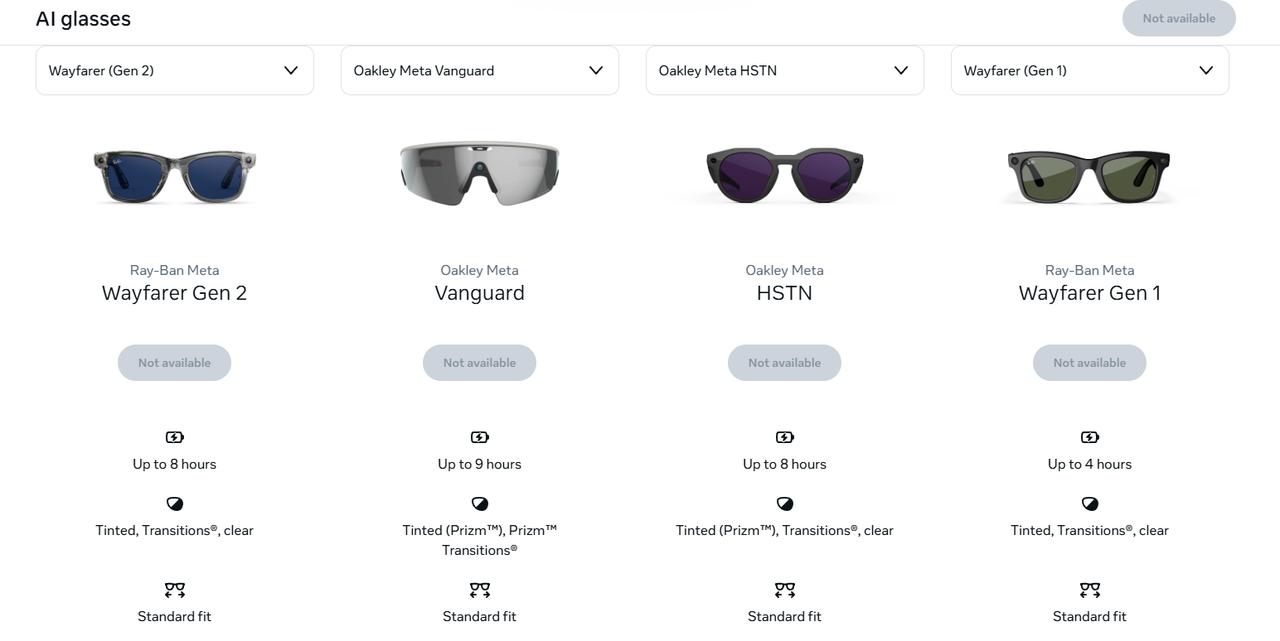

Last year, Meta unveiled a pair of augmented reality "display" glasses which project images on the lenses. And earlier this year, the company released self-branded AI glasses, apart from its partnership with eyewear manufacturer EssilorLuxottica, which produces multiple Ray-Ban-branded Meta glasses.
However, their novelty quickly became clouded by privacy concerns, with critics dubbing the eyewear as "pervert glasses." At last year's Connect, Meta's chief product officer Chris Cox brushed aside such concerns and told news outlets, including AFP, that "social norms" would form around the use of smart glasses.
More recently, Meta has said a recording indicator light would always be visible to people nearby, and that tampering with the indicator light would disable the camera.
The company is reportedly working on a new pair of audio-only glasses, and has also been rumored to be developing a new generation of mixed reality glasses. Meta has also been battling children's safety and privacy issues around the world.
In August, the company settled a lawsuit with dozens of attorneys general in the U.S. who accused Meta of violating state and federal laws regarding consumer protections and children's online privacy. As part of the settlement, Meta agreed to pay up to $18 billion in fines and enact restrictions for teenagers.
Meta faces social media restrictions and bans for younger users, as well as thousands of potential personal injury lawsuits in the U.S. that are still making their way through state courts.


 Set as preferred source
 Set as preferred source


 1 min read


 1 min read


