Newsletters


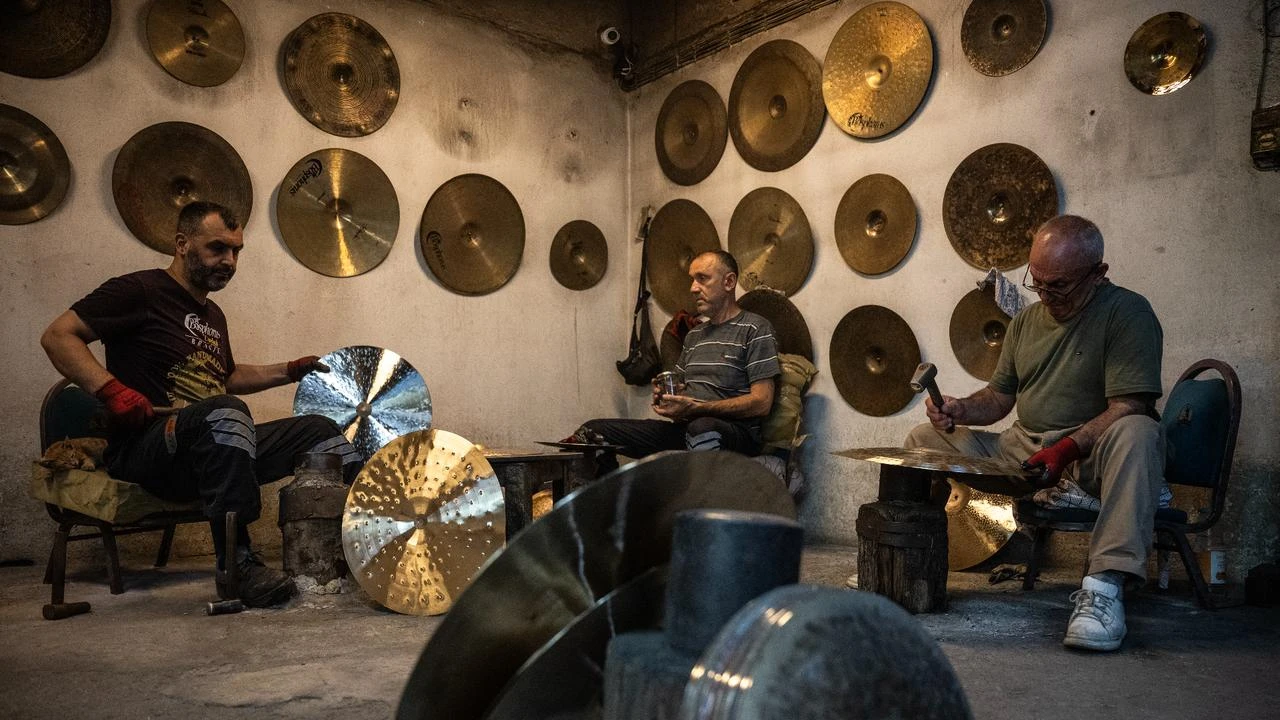
In a workshop on Istanbul's northern outskirts, craftsmen hammer glowing bronze discs into cymbals using techniques that trace back more than 400 years.
Türkiye remains the global center for hand-hammered cymbals, a tradition rooted in Ottoman military bands and refined by a 17th-century Armenian alchemist.
Cymbals first appear in the Ottoman Empire as tools of war, carried by mehter military bands whose thunderous rhythms were designed to frighten enemy troops and unsettle their ranks before battle.
What begins as an instrument of intimidation eventually crosses into music, laying the foundation for a craft that would outlast the empire itself.
The turning point comes in the 17th century, when Armenian alchemist Avedis Zildjian develops a unique bronze alloy and treatment process that makes cymbals far less brittle than earlier versions.
His breakthrough earns him recognition from the Ottoman sultan in 1623, along with permission to open a workshop in Istanbul.
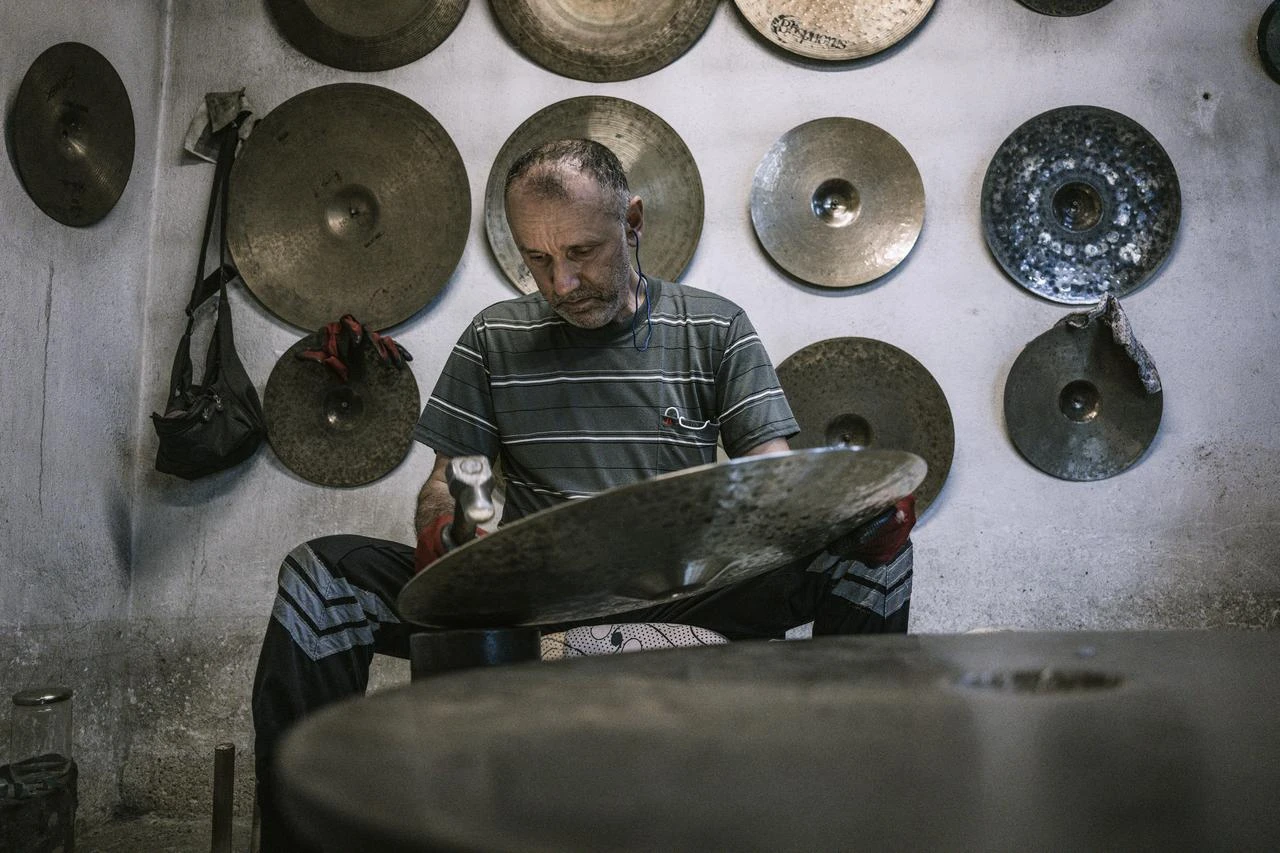
Zildjian's formula passes down through generations of craftsmen, guarded as a closely held secret. When the original Zildjian operation later relocates to the United States near the end of the Ottoman Empire, other artisans trained under Zildjian masters remain in Istanbul, keeping the handcrafted tradition alive on Turkish soil.
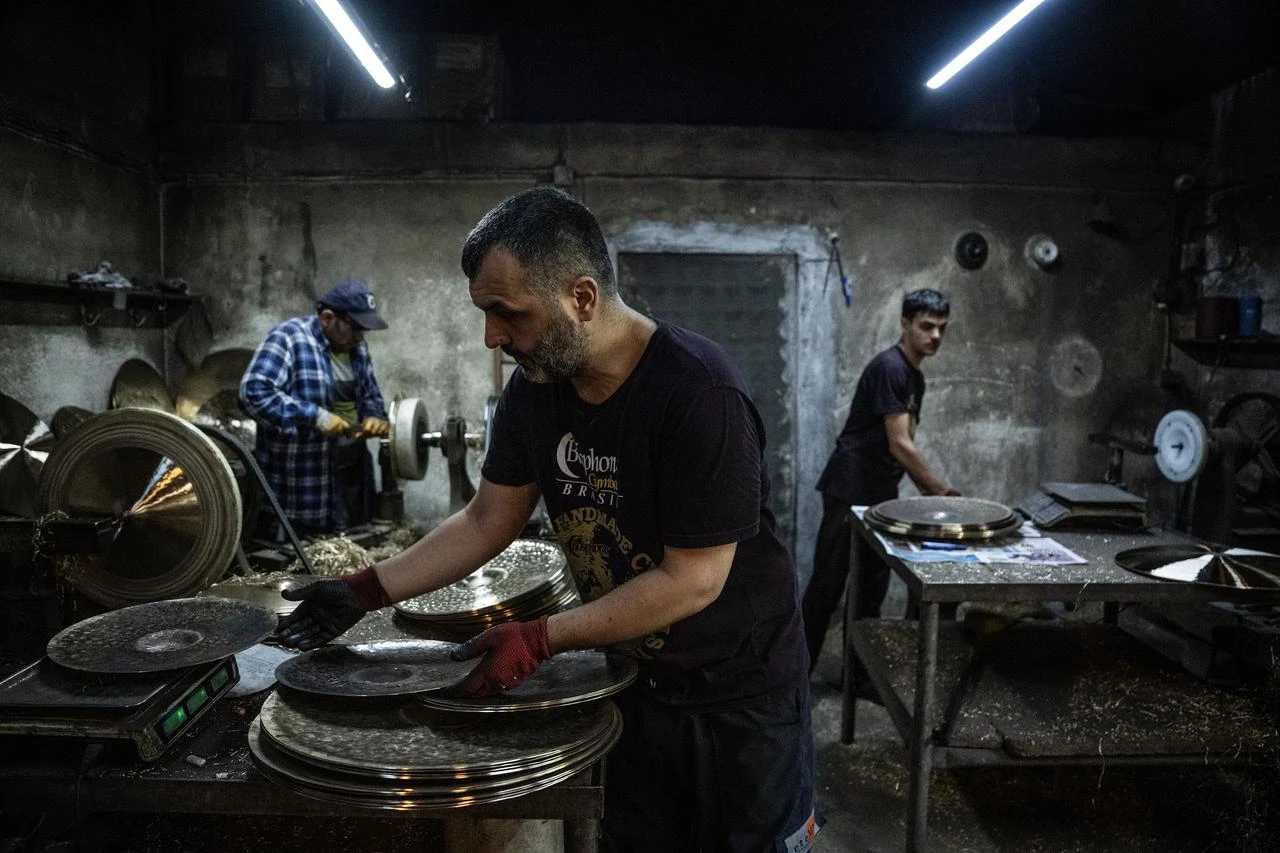
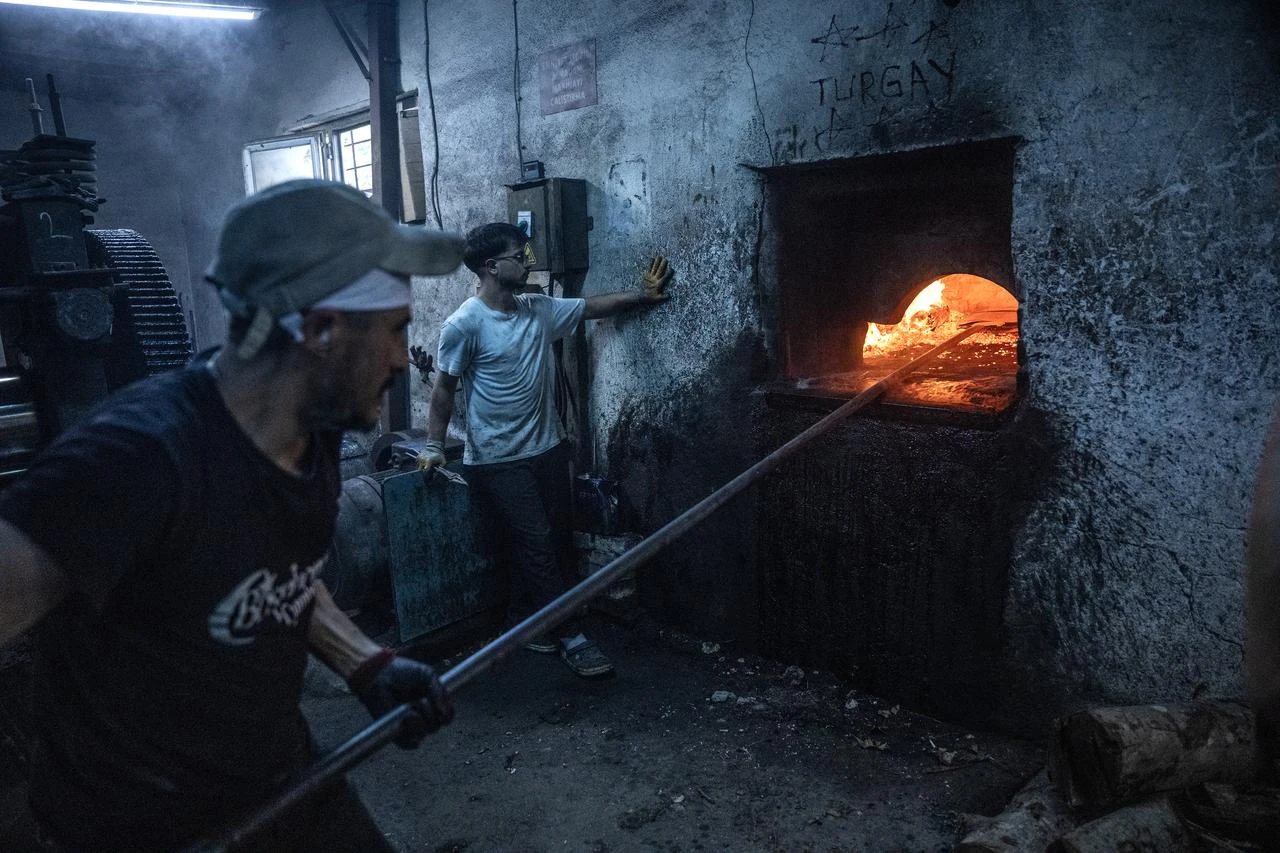
At Bosphorus Cymbals, on Istanbul's northern outskirts, workers still rely on coal and wood rather than electricity or gas to produce cymbals entirely by hand.
Sales representative Mehmet Ozturk says casting a single cymbal can take up to a week from start to finish, a process largely unchanged over centuries.
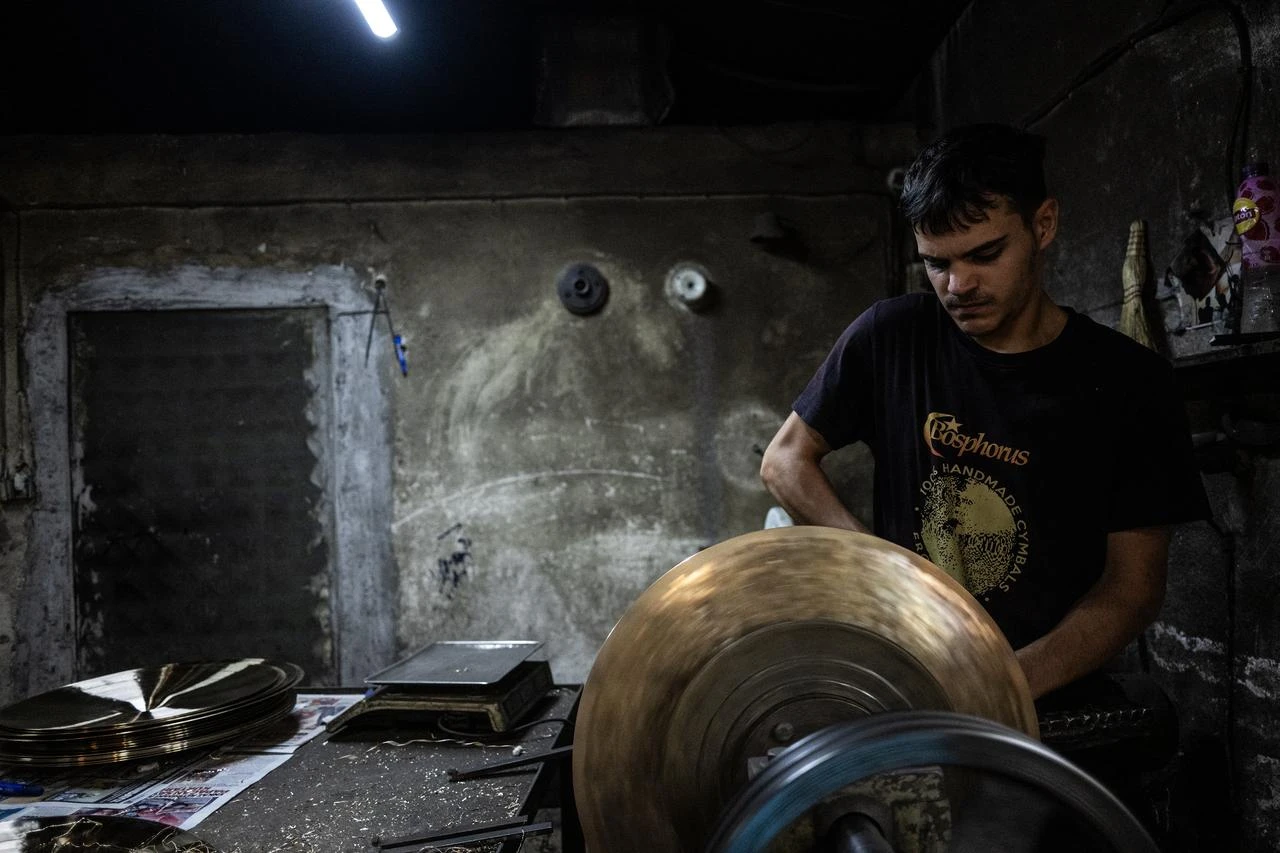
Production begins with casting: copper and tin are melted into molten bronze, then poured into molds and cooled into disc-shaped blanks.
Master cymbalsmith Hasan Seker, who co-founded Bosphorus Cymbals in 1996, says the alloy also includes one additional ingredient, kept secret, that shapes the metal's consistency and eventual sound.
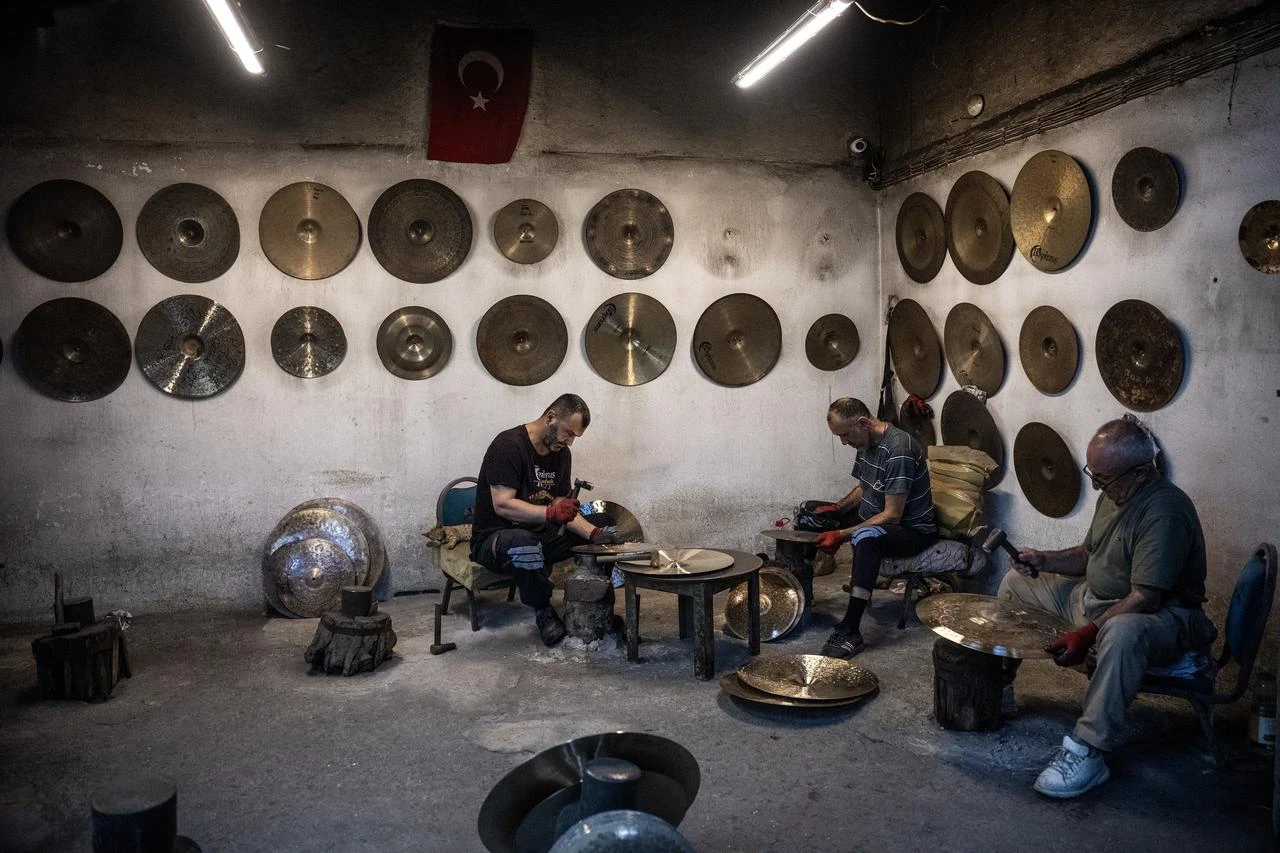
Glowing blanks move between a furnace and a rolling mill in a cycle repeated as many as 15 times, compressing and spreading the bronze before it is water tempered.
Workers move quickly during this stage, using long-handled tools to shift the hot metal without pausing the process.
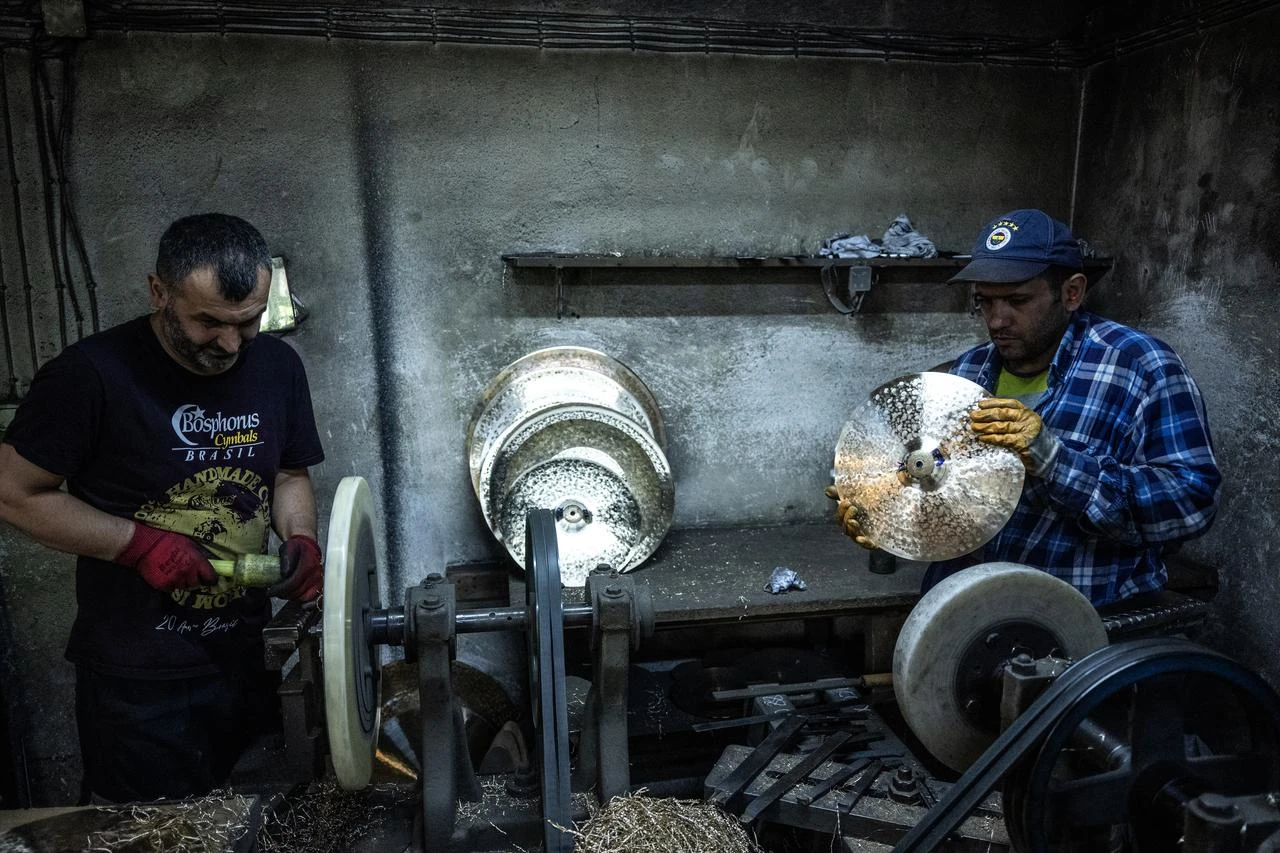
Once tempered, the blank is punched to raise its bell and cut to the correct size, giving it the recognizable outline of a finished cymbal.
Even at this stage, the piece remains incomplete: its tone and character are still shaped by the hammering process that follows.
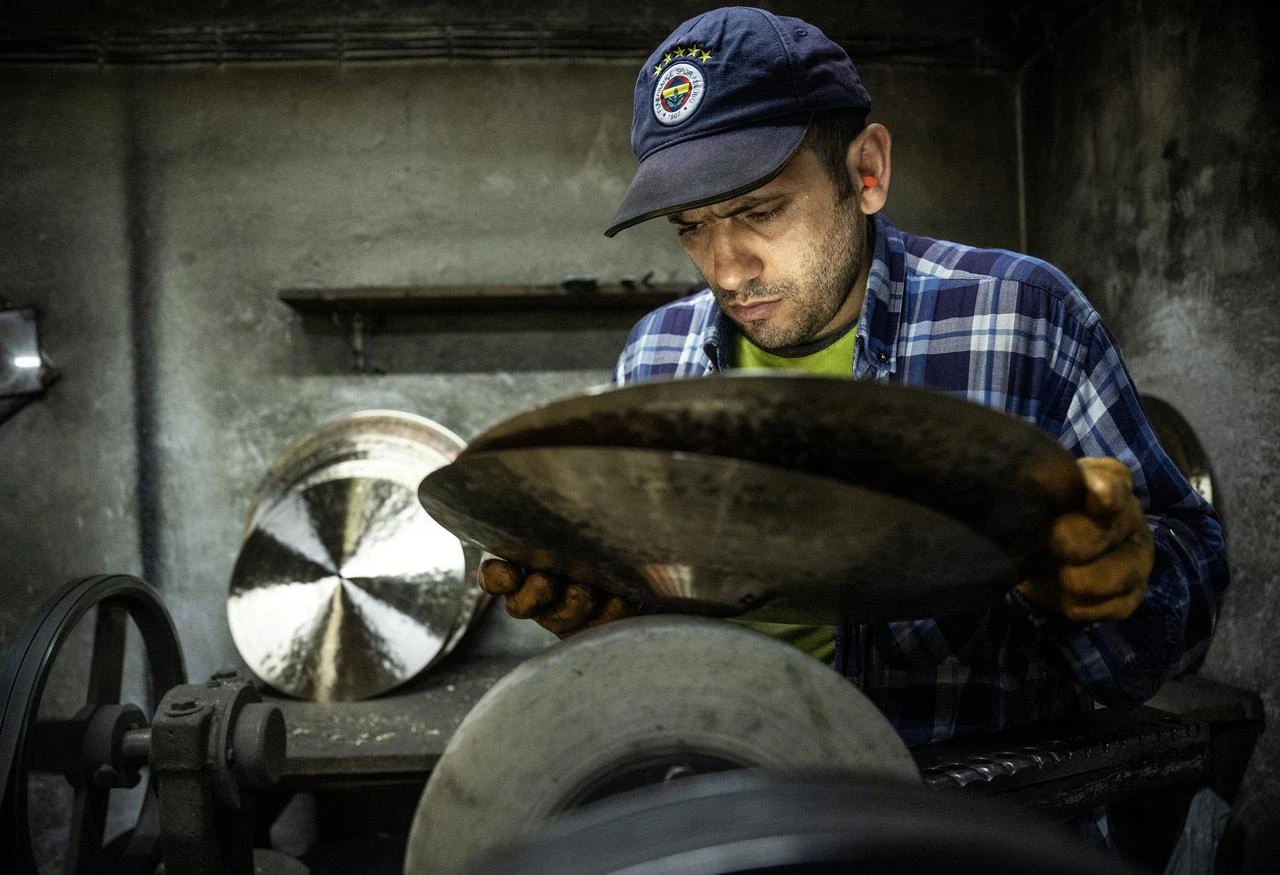
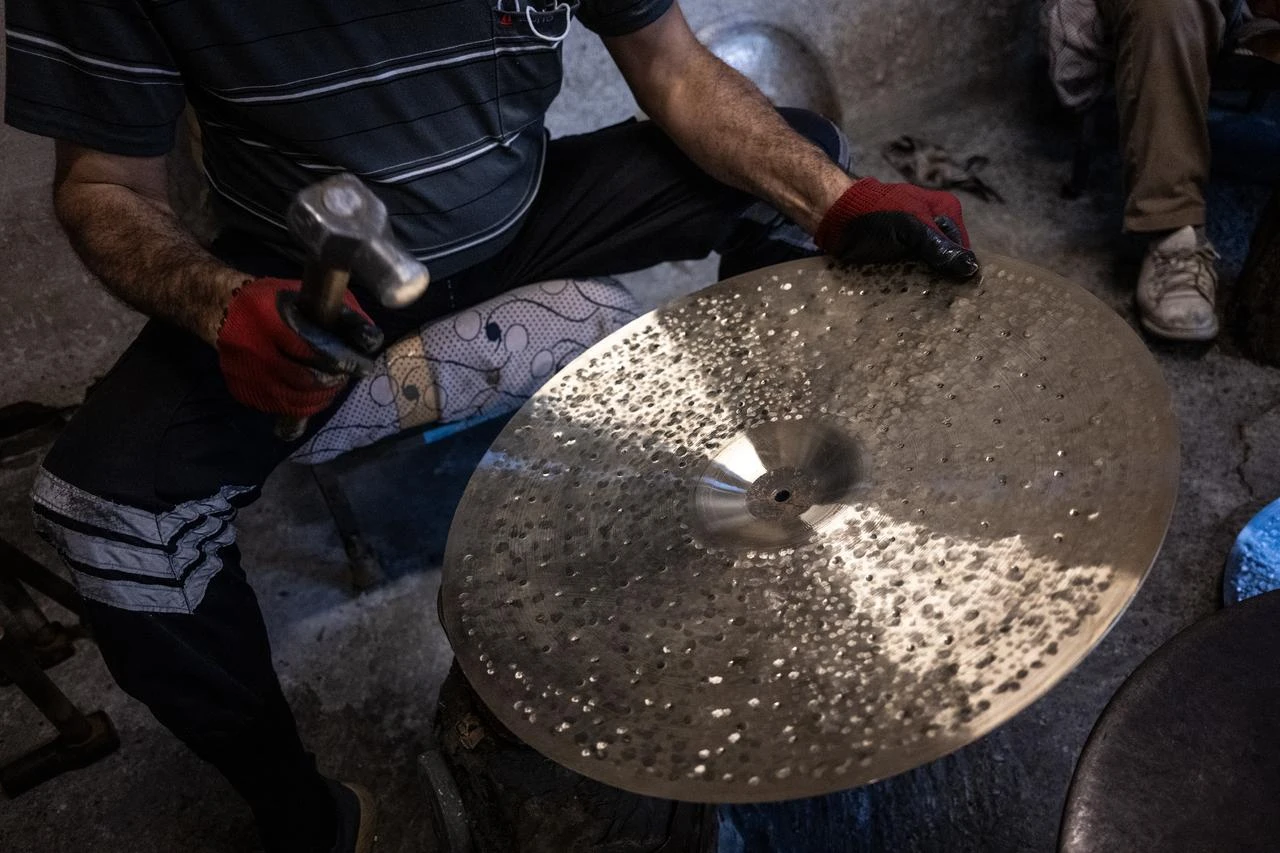
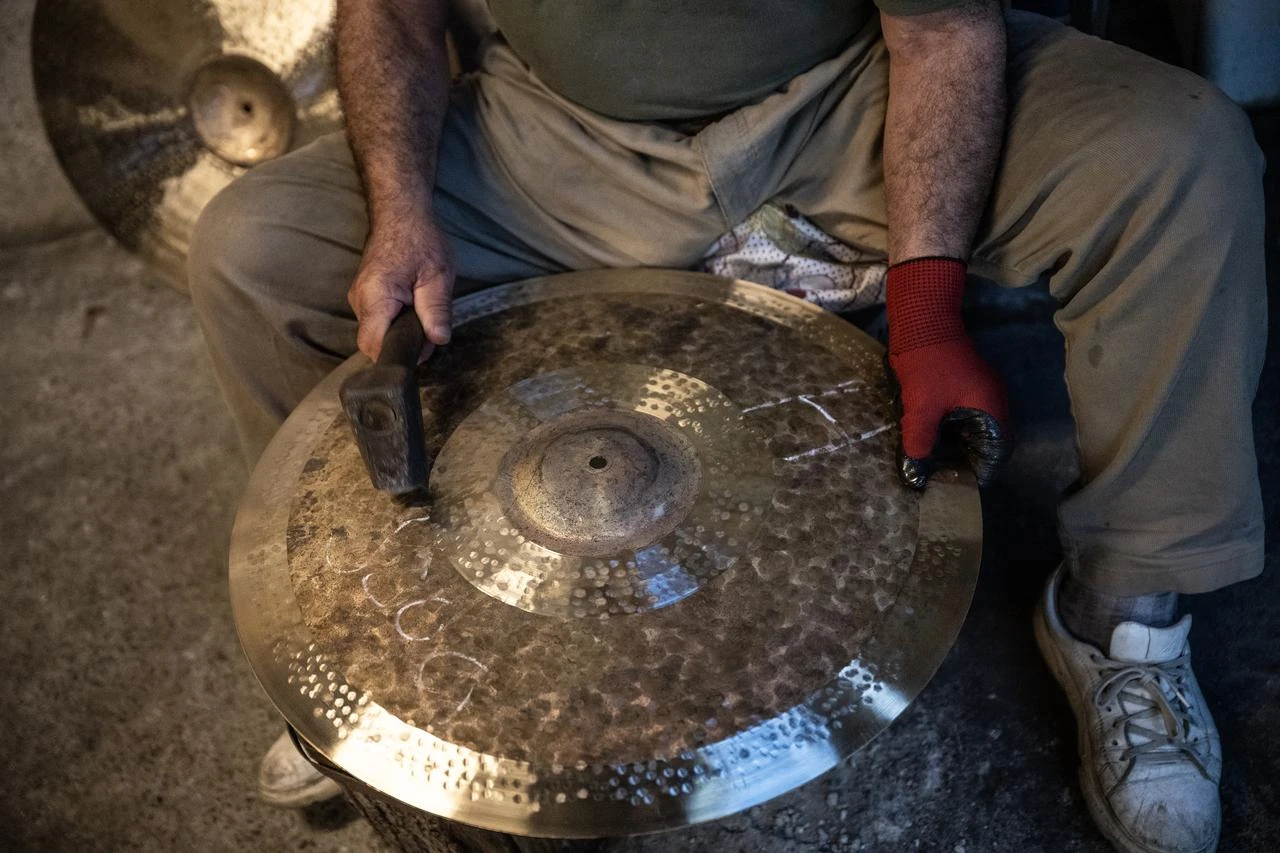
A trio of craftsmen strikes the bronze in a sequence of precise, deliberate blows, working to create the darker, more complex tones favored by jazz drummers.
Seker says no strike is random, with each hammer mark contributing to the texture and resonance of the final instrument.
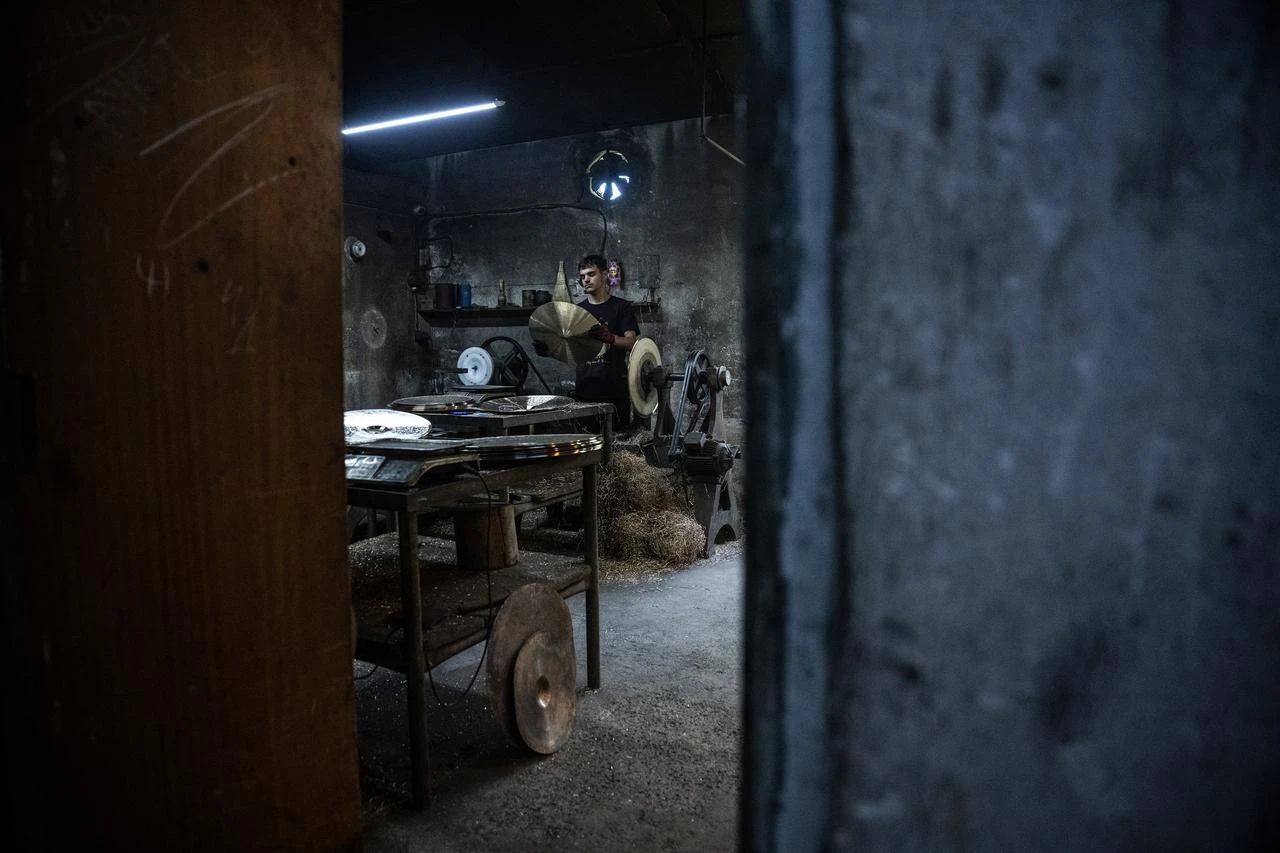
Seker, who began working in the trade at age 12, describes hammering as an emotional process: a craftsman's mood, from calm to frustrated, shows up in the force and rhythm of each blow.
Those small variations in pressure, he says, are what give every cymbal its individual character, or, as he puts it, its soul.
The workshop's walls carry aging posters of jazz drummers, including Jeff Hamilton, Stanton Moore and Ari Hoenig, evidence of the trade's reach far beyond Türkiye.
Seker says musicians from around the world have visited the workshop over the years, some describing the trip as a kind of pilgrimage.
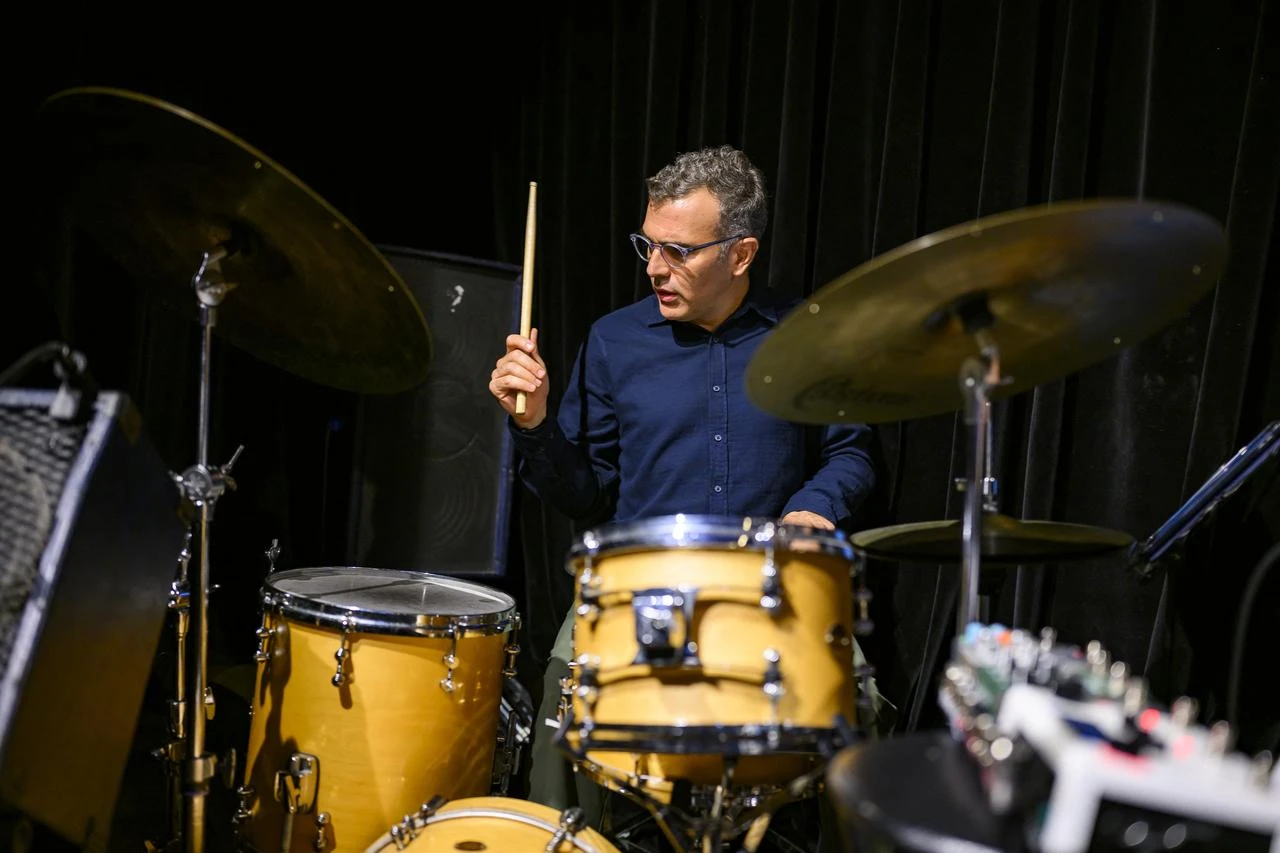
At Nardis Jazz Club, near Istanbul's Galata Tower, a centuries-old stone landmark overlooking the city, drummer Derin Bayhan rehearses with cymbals made exclusively in Istanbul, saying no two handmade cymbals, even from the same series and weight, ever sound identical.
Jazz historian Berk Ozler traces the appeal to scarcity: once the Zildjian family shifted to mass production in the United States, cymbals made in Istanbul stayed handcrafted, preserving a uniqueness that jazz musicians still seek out today.


 Set as preferred source

 3 min read