Newsletters


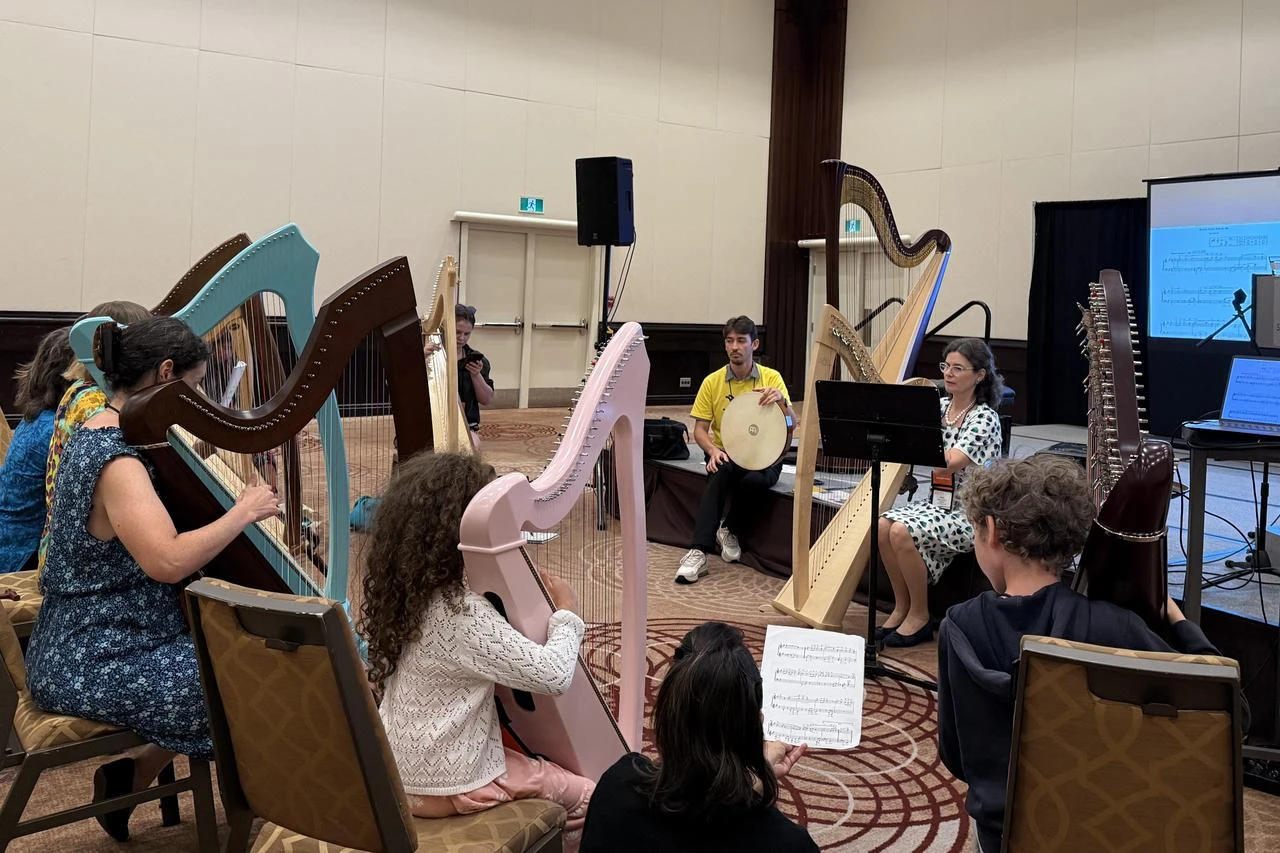


The Turkish Harp Project introduced Türkiye's harp heritage to international audiences at the One Harp World 2026 congress, held in Toronto, Canada, and attended by over 1,000 harpists from around the world.
The congress, held July 28 to Aug. 3 at the Sheraton Centre Toronto Hotel, marked the first time the American Harp Society and the World Harp Congress combined their annual conferences into a single joint event, bringing together harpists, teachers, instrument makers, composers and students from across the globe.
The initiative took part in the congress with support from Türkiye's Ministry of Culture and Tourism and the Yunus Emre Institute.
During the event, presentations covered the history of the ceng, a traditional Turkish harp-like instrument, as well as the melodic structure of Turkish music and the contemporary Turkish harp repertoire.
The ceng, also known as the Turkish harp, was a favored instrument in Anatolia and the Ottoman court, appearing in miniature paintings, reliefs, and ceramics before production of the instrument stopped in the late 17th century.
No historical example of the ceng has survived; harpist Sirin Pancaroglu began reviving the instrument in 2008, working with instrument makers to build modern reconstructions, and founded the Turkish Harp Project the same year to bring Turkish music's heritage to harpists worldwide.
Participants learned about the traditional Turkish harp through concerts, workshops, and exhibitions and had the opportunity to review Pancaroglu's "Turkish Harp Sheet Music Collection," a multi-volume compilation of Turkish music arranged for modern harp.
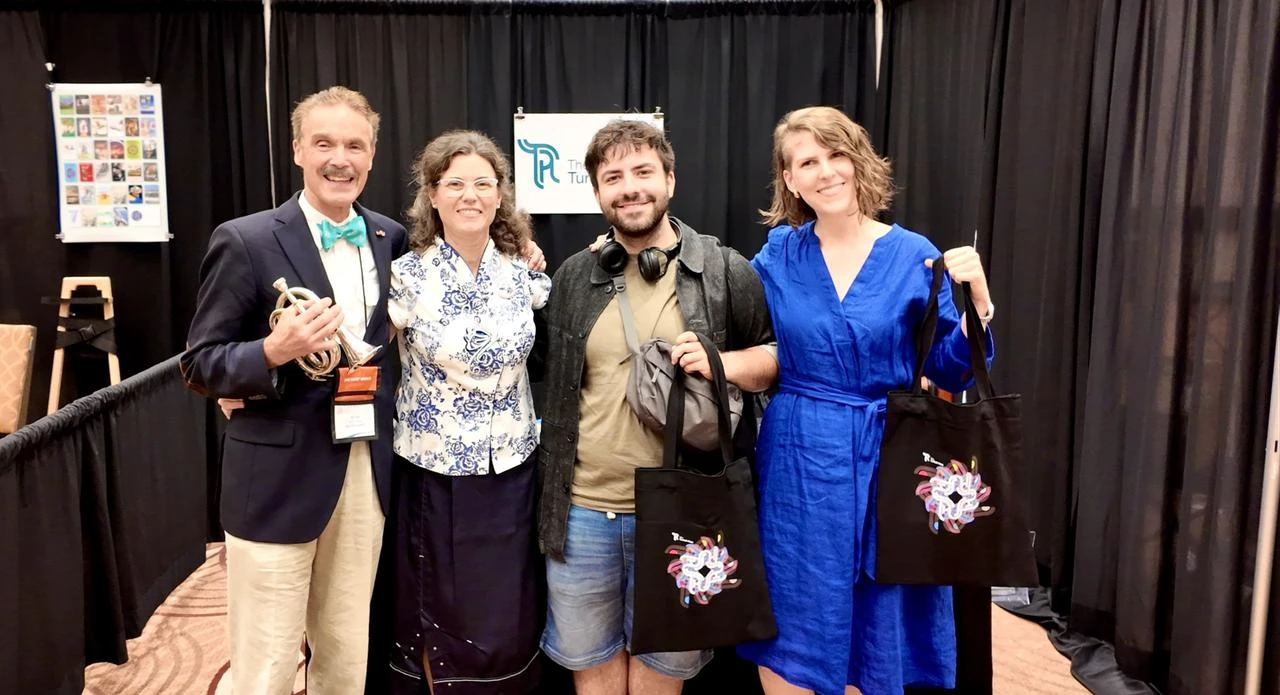

At sessions titled "A Ceng Moment," organizers detailed the historical development of the ceng alongside live recitals. Pancaroglu's "Exploring Turkish Tunes" workshops and her "Highlights from The Turkish Harp" recital featured traditional works, including the Buselik Saz Semaisi and Nikriz Pesrev, along with original compositions.
The wider congress program also included masterclasses, international competition recitals, youth-focused concerts, Canadian and world music programming, and contemporary improvisation sessions, alongside an exhibition hall where major harp makers presented their latest instruments.
The Turkish Harp Project distributed sheet music books through raffles at its exhibition booth. Separately, Ukrainian harpist Veronika Lemishenko performed Pancaroglu's composition "Asiklar Olmez" ("Lovers Never Die").
The program, which also featured presentations by Pancaroglu and music researcher Seymen Ozdeniz, aimed to introduce Türkiye's musical heritage to an international audience.
The Turkish Harp Project has previously carried its programming to more than a dozen countries, including presentations at institutions such as Indiana University's Jacobs School of Music in the United States and the Liszt Academy in Hungary, as part of efforts backed by Türkiye's Ministry of Culture and Tourism to expand the instrument's international reach.


 Set as preferred source
 Set as preferred source


 2 min read