Newsletters


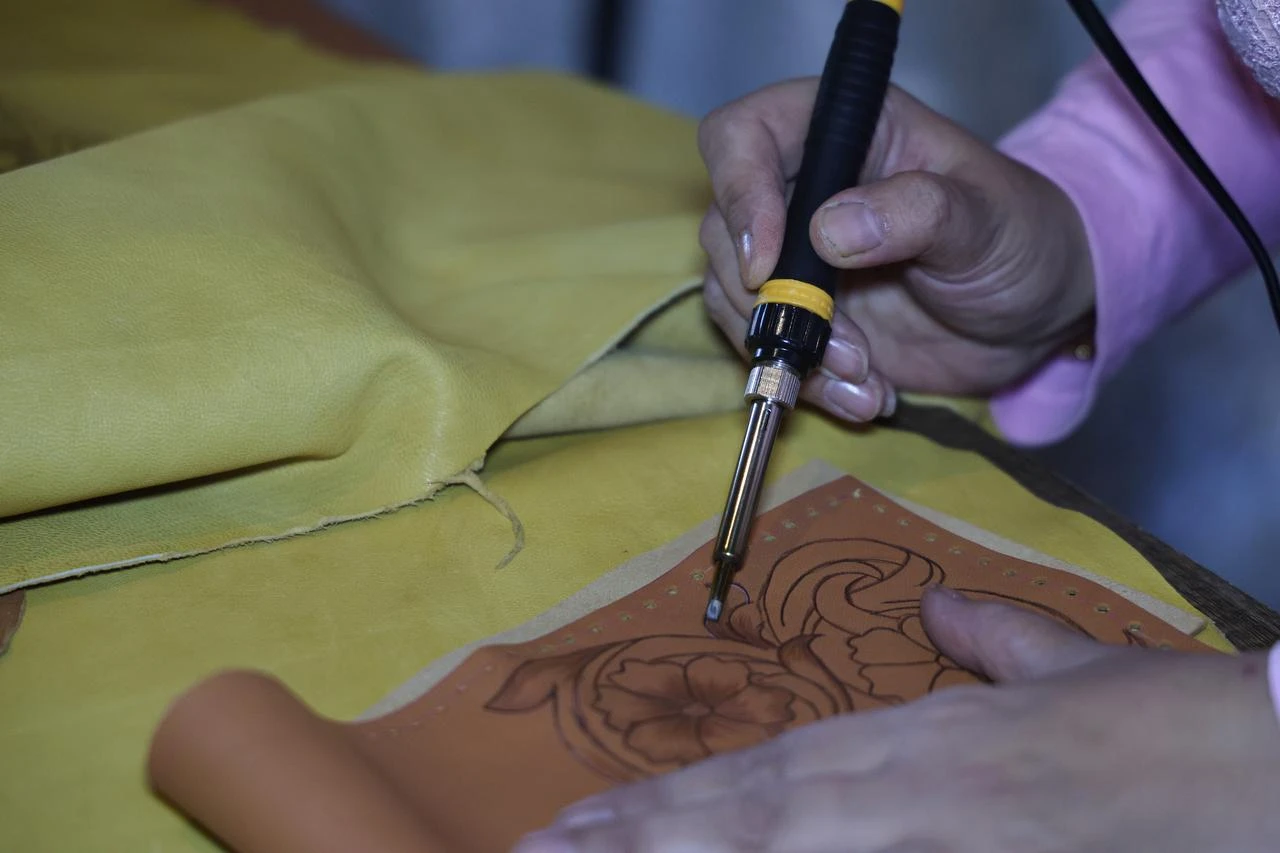


A retired handicrafts teacher in Syria's Aleppo province is working to keep the fading art of leather burning alive, turning natural hides into detailed artworks while passing the rare technique on to her daughters.
Yememe Turkmeni, 53, has practiced the craft for 26 years, using heated metal tools to burn motifs, shading and different tones directly onto leather. The technique requires careful control of heat and pressure because excessive heat can permanently damage the material.
Once more widely practiced in Aleppo, the craft has gradually fallen out of use as fewer artisans have learned how to work with leather.
"Despite its long history, this craft had been almost forgotten in Aleppo," Turkmeni said. "Many people practiced wood burning, but very few worked on leather."
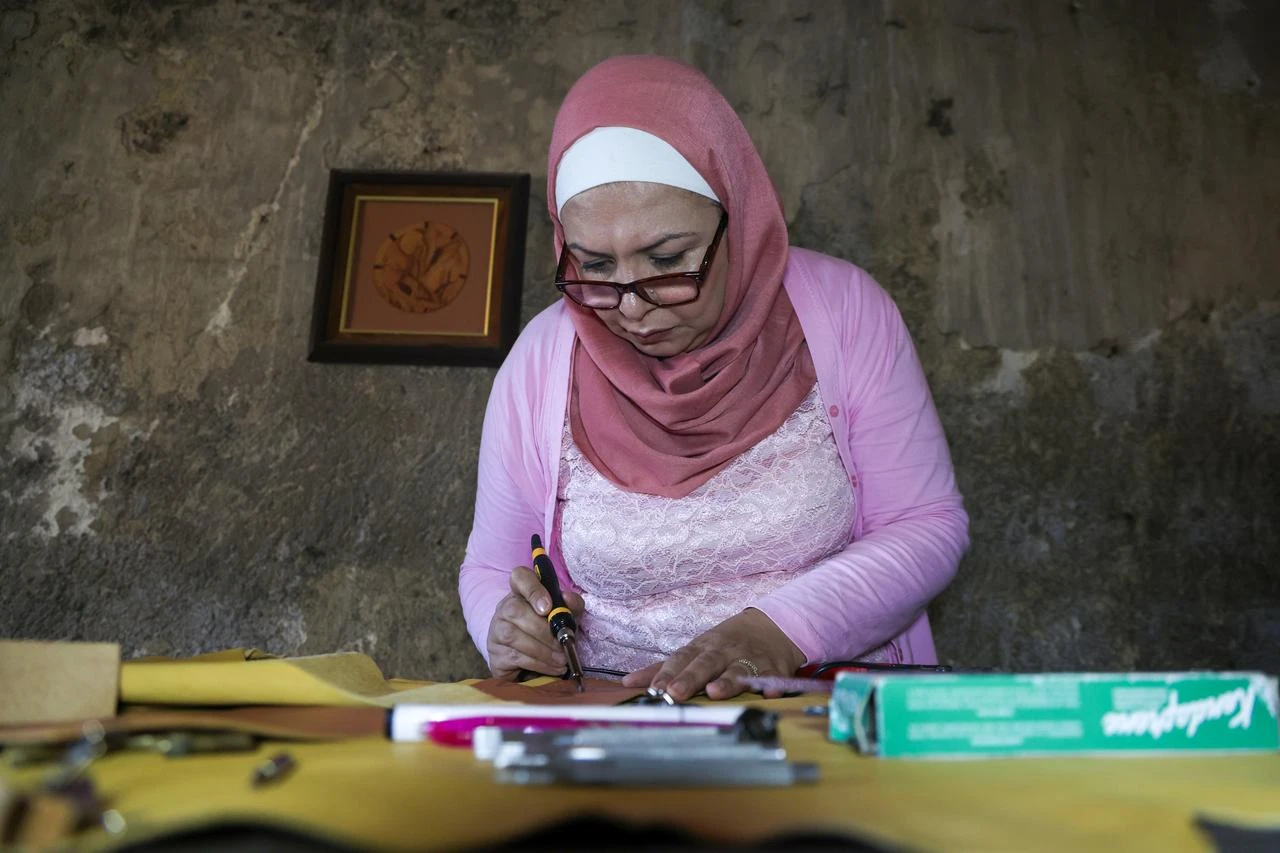

Working with her daughters in a small workshop, Turkmeni produces leather bags, wall panels, tabletop artworks, and decorative objects featuring traditional motifs.
Her interest in the craft began when she designed bags for herself and her daughters. As people around her showed interest in the pieces, she began expanding the range of products she made.
Exhibitions also led her to focus on smaller and lighter works after she noticed that Syrians living abroad often looked for pieces that could be carried easily.
"I noticed at exhibitions that smaller and lighter pieces were more popular," she said. "People living abroad, in particular, prefer works that are easy to transport. I therefore began focusing more on these products."
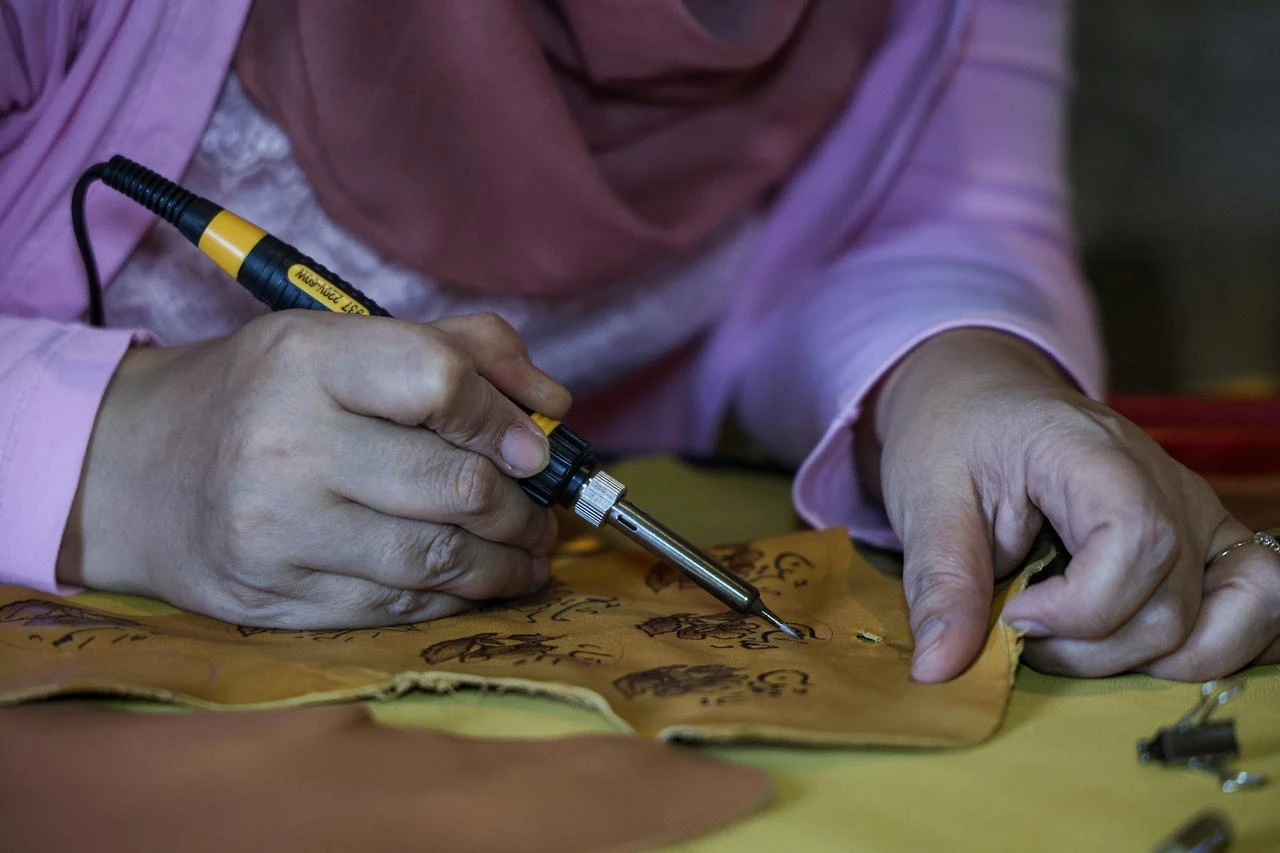
Turkmeni said the qualities of natural leather prevent her works from becoming standardized, even when she uses the same design more than once.
The animal's species and age, as well as the section of hide used, can change the leather's texture, color and reaction to heat.
"Even if I use the same design, no two pieces can be completely identical," she said. "Each piece develops a different color and texture."
Finding suitable material remains one of the main difficulties, as leather burning requires natural, undyed leather. Most leather sold on the market has already been treated or colored, forcing her to seek out appropriate hides separately.
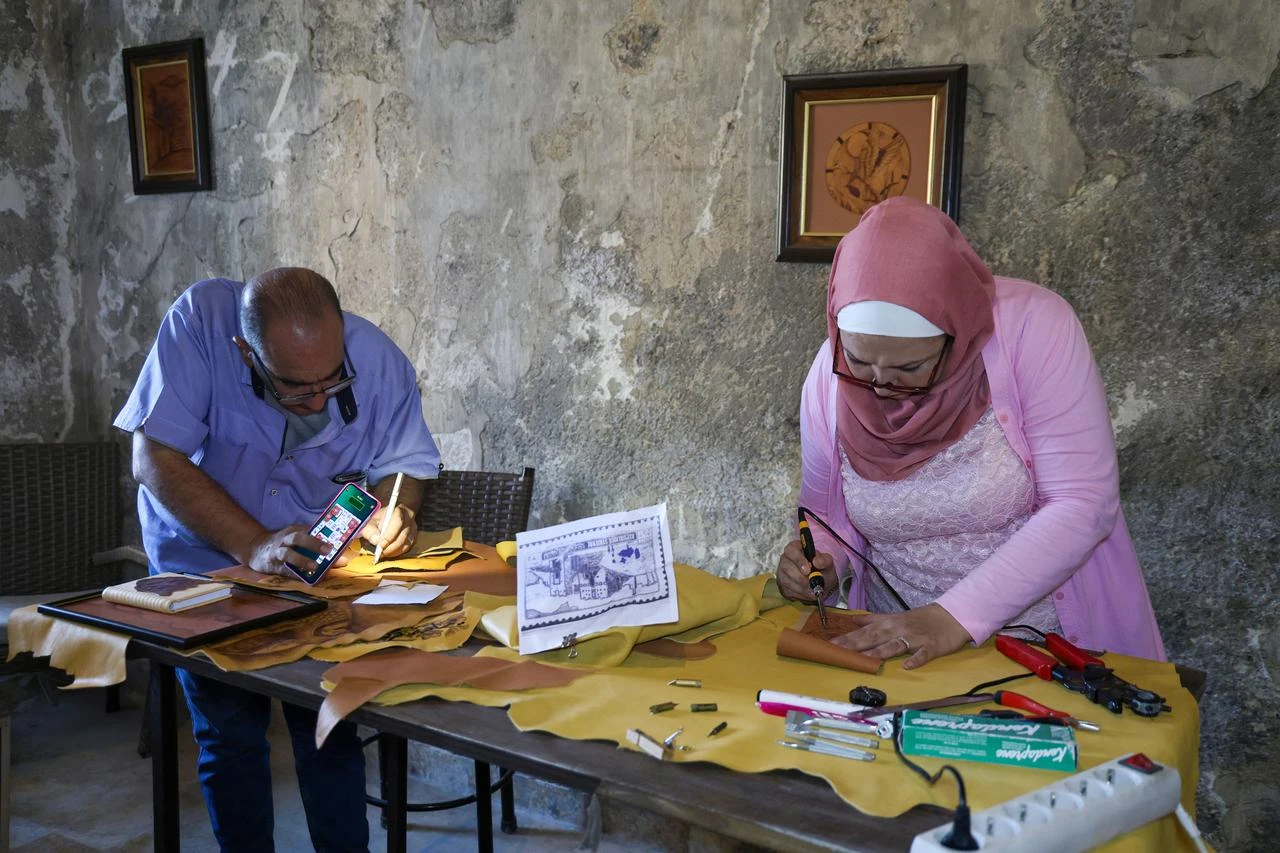
Although Turkmeni has taught the technique to her daughters, their education limits the time they can spend working alongside her.
She now hopes to pass the craft on to more young people, even offering to teach it without charge if necessary.
Referring to leather's historical use as a surface for writing and communication, Turkmeni said the art had not received the recognition it deserved.
"This is a very old profession. It is known that the earliest writings and some messages in history were inscribed on leather," she said. "However, this art has not received the attention it deserves to this day."
She believes traditional handicrafts can continue if younger generations build on them through contemporary designs and small-scale projects.
"We have highly valuable handicrafts in our culture. By developing them, we can turn them into successful projects," she said.
"I want to teach this craft to young people, free of charge if necessary, because this art must be kept alive."


 Set as preferred source
 Set as preferred source


 3 min read