Newsletters


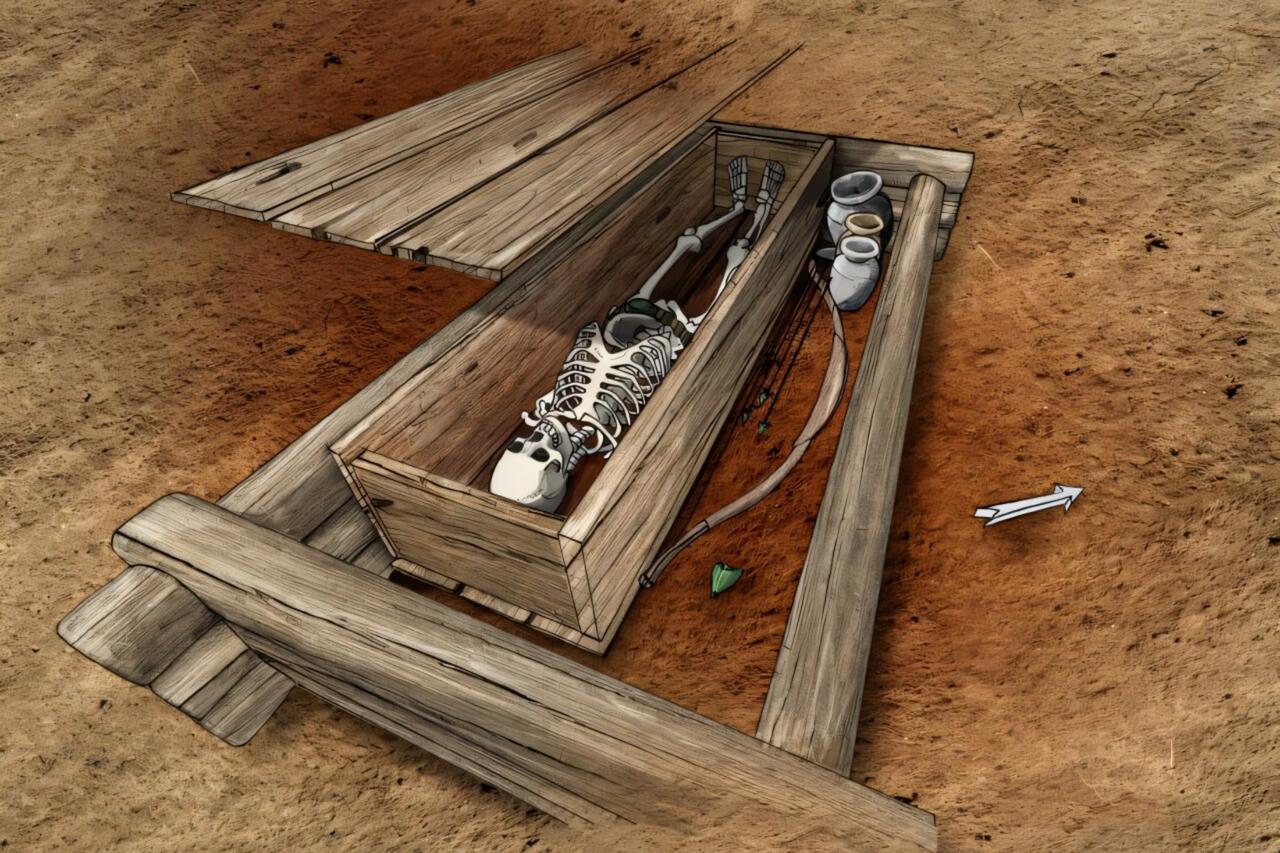


An ancient cemetery on the Mongolian steppe suggests that wealth, rank and political allegiance mattered more than family ties in the burial world of the Xiongnu, the first major nomadic empire of the Central Asian steppes.
A study published in Antiquity examined the Tamir cemetery, where ancient DNA had already traced two family lineages across six generations. Although the site appeared at first to be a family burial ground, researchers found that grave placement and funerary treatment were shaped more by status than by blood.
Tamir sits near the edge of the steppe that stretches toward the Gobi Desert, overlooking the meeting point of two rivers. The cemetery was founded around 100 B.C., after Han armies pushed the Xiongnu north of the Gobi, and it was abandoned around 100 A.D. as the empire was breaking down.
The Xiongnu were powerful rivals of China’s Han dynasty. Their political system was generally divided into “left” and “right” branches, with the left branch linked to the ruler’s heir, often a son of the supreme leader, known as the Shanyu.
Ameline Alcouffe of the University of Toulouse said the broad outline of this system is known, but how it worked in daily life and burial practice remains difficult to pin down.
To work through the complex burial patterns at Tamir, researchers brought together statistical modeling, machine learning and a method adapted from evolutionary biology.
One model tested how grave goods could point to kinship, wealth and burial location. Machine learning then looked for patterns without being told who was related. A third method built a kind of cultural “family tree,” not from genes, but from burial customs such as grave goods and body positions.
Alcouffe stressed that the team was not claiming that tomb customs were inherited like DNA. Instead, she said the method produced “not a biological genealogy, but a ‘map’ of cultural relationships.”
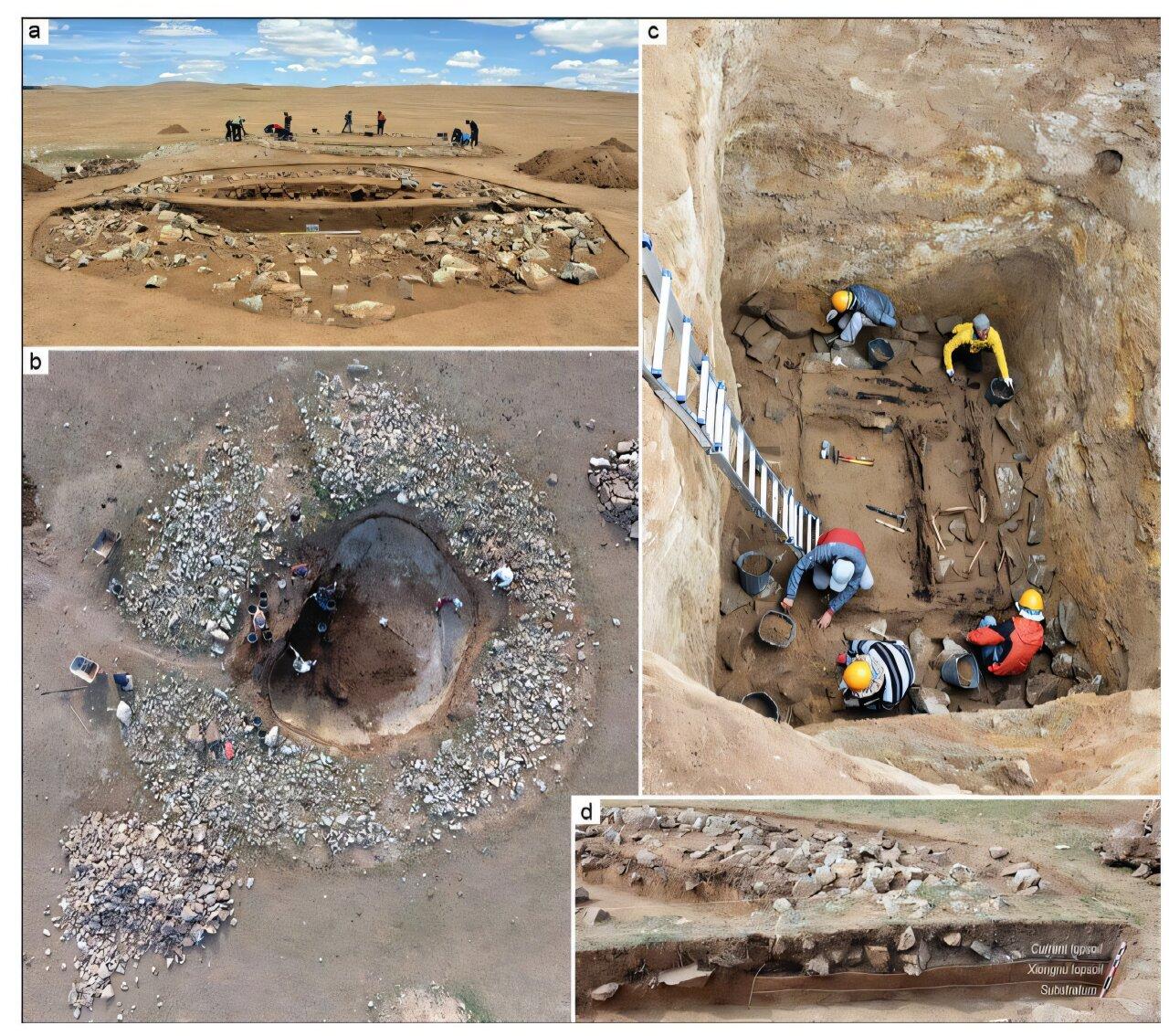

The results showed that wealth and status played a more defining role than biological ties. At Tamir, two primary family lineages, called A and B, may even reflect the left and right branches of the Xiongnu hierarchy, according to the researchers.
In Lineage A, only a single family member from most generations was buried at the cemetery, suggesting that siblings may have been laid to rest elsewhere. One striking exception involved two brothers who shared the same bloodline but received vastly different burials.
While one brother was placed in a lavish grave alongside his wife and other members of Lineage A, the other was interred roughly 200 meters away on the cemetery's periphery. This stark contrast demonstrates that shared ancestry did not guarantee equal status in death.
Another unusual case involved a wealthy man buried with a poor woman. Couples usually received similar funerary treatment, but this pair did not.
Their burial came near the end of the cemetery’s use and almost exactly as the Xiongnu empire was collapsing around 85 A.D. At that stage, grave goods became scarcer, and the site was later abandoned.
For the researchers, Tamir offers a “proof of concept” for using this type of toolkit to study ancient cemeteries. Alcouffe said the next step would be to apply the approach to other sites with detailed funerary data and see whether similar patterns turn up in other cultural and historical settings.
At Tamir, the evidence points to a burial world where family identity mattered, but power, alliance and rank mattered more.


 Set as preferred source
 Set as preferred source


 3 min read