Newsletters


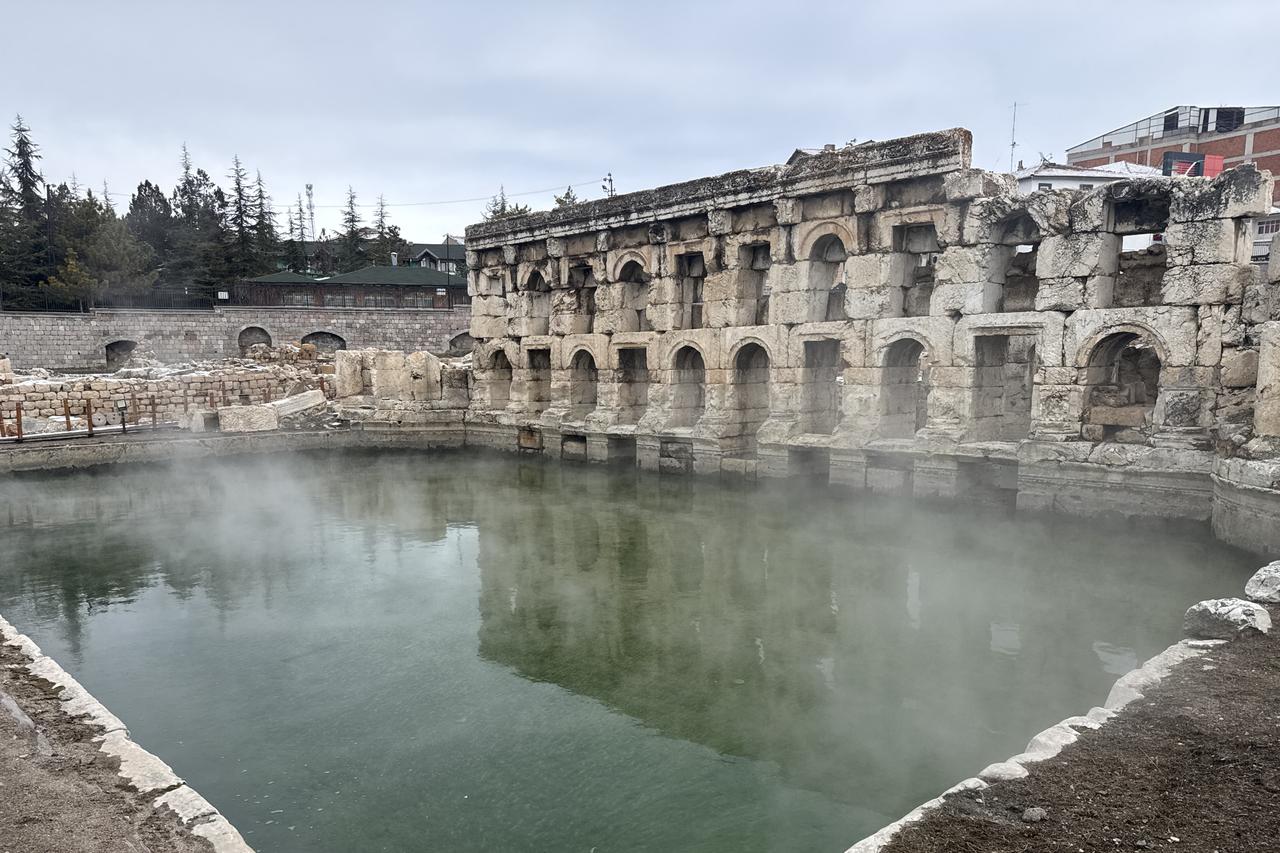


The Basilica Therma Roman Bath, also known locally as the “Kral Kizi” or “King’s Daughter,” welcomed close to 50,000 visitors over the past year, underlining its growing appeal as one of Central Türkiye’s most distinctive cultural heritage sites. Located in the Sarikaya district of Yozgat province and listed on UNESCO’s World Heritage Tentative List, the site continues to stand out for its uninterrupted use of natural thermal water for nearly two millennia.

Built in the second century A.D. during the Roman Empire, the Basilica Therma was constructed directly on a thermal spring that still flows today at roughly 45 to 50 degrees Celsius. The bath complex lies in the center of modern Sarikaya, a town that historically developed around this healing water source. In antiquity, the settlement was known as Aquae Sarvenae, a name reflecting the importance of the hot springs along a major route linking Tavium and Caesarea, present-day Kayseri.
The structure is widely recognized for its monumental facade, large open-air thermal pool, and interior bathing spaces, all designed according to Roman architectural principles. Marble was used for the facade and pools, while limestone formed the inner walls. Despite centuries of political and cultural change, the bath remained in use, first during Roman times, then through Byzantine, Seljuk, and Ottoman periods, and into the modern era.
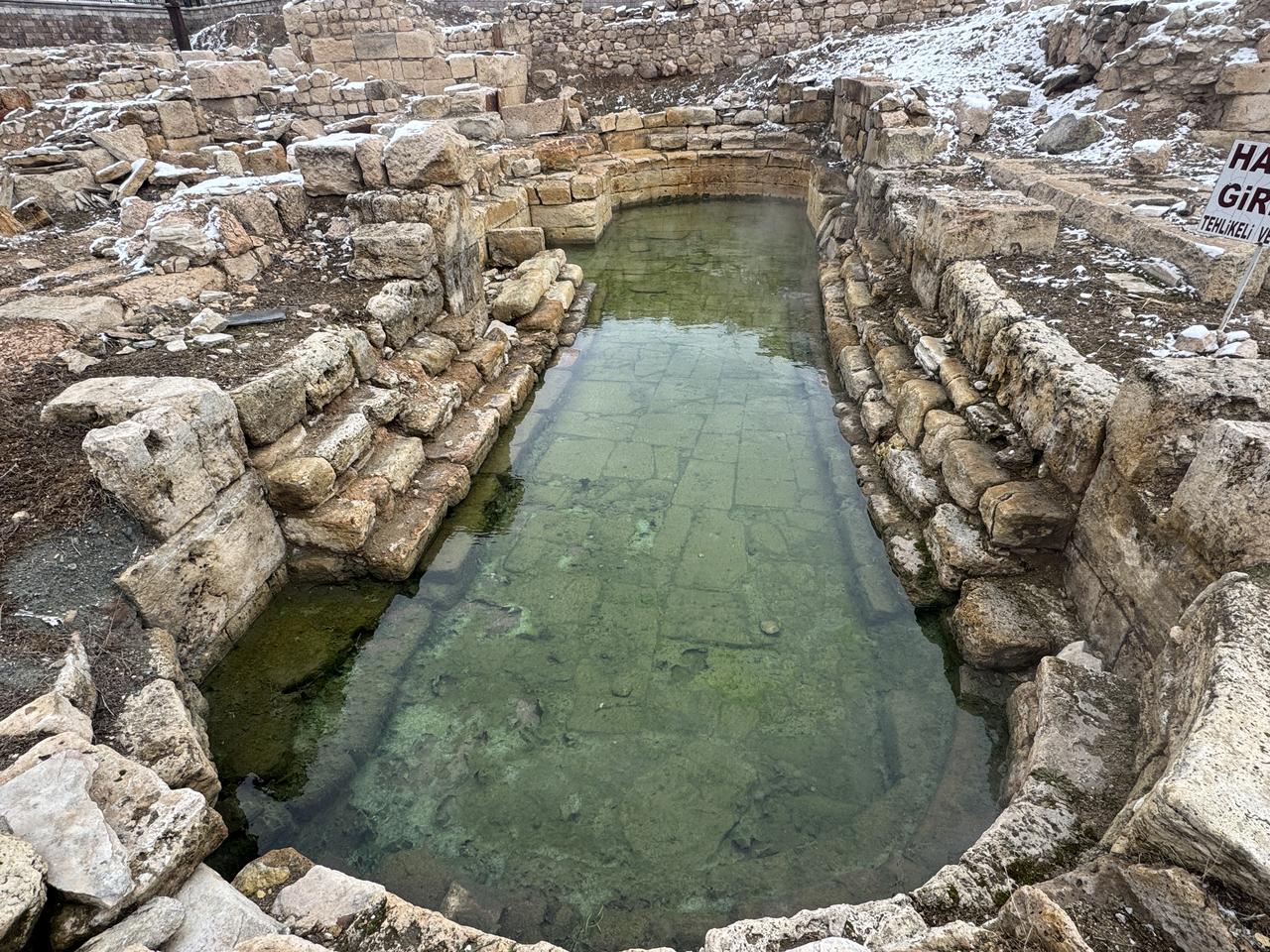
Local tradition associates the bath with a legend in which the daughter of a Roman ruler living in Kayseri recovered from a serious illness after bathing in the thermal waters. This belief gave rise to the popular name “Kral Kizi,” a term still commonly used today. Archaeological evidence, including carvings linked to Asclepius, the Roman god of healing, supports the idea that the site was designed not only for bathing but also for therapeutic purposes.
Following the spread of Christianity, a church was added to the northern side of the bath, and the town became known as Basilica Therma. Until the mid-fifth century, it served as a bishopric center. A marble baptismal stone placed inside the main pool shows how the complex also gained religious significance during the Byzantine era.
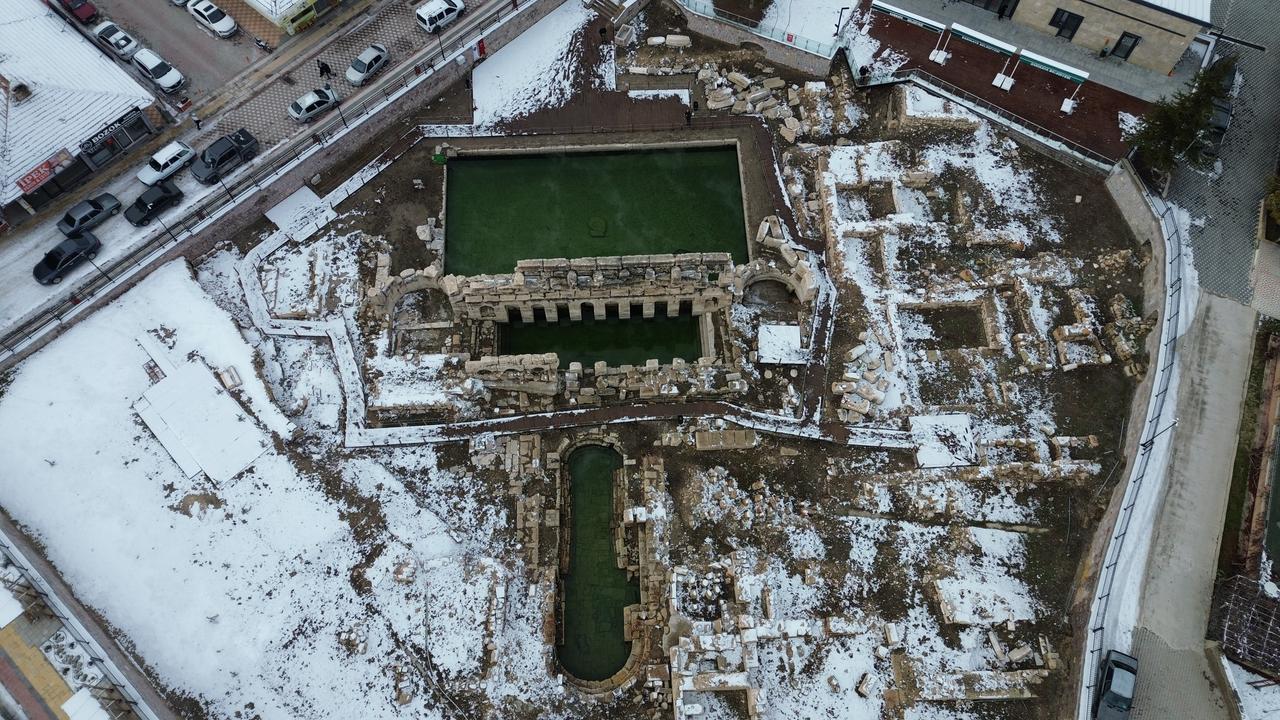
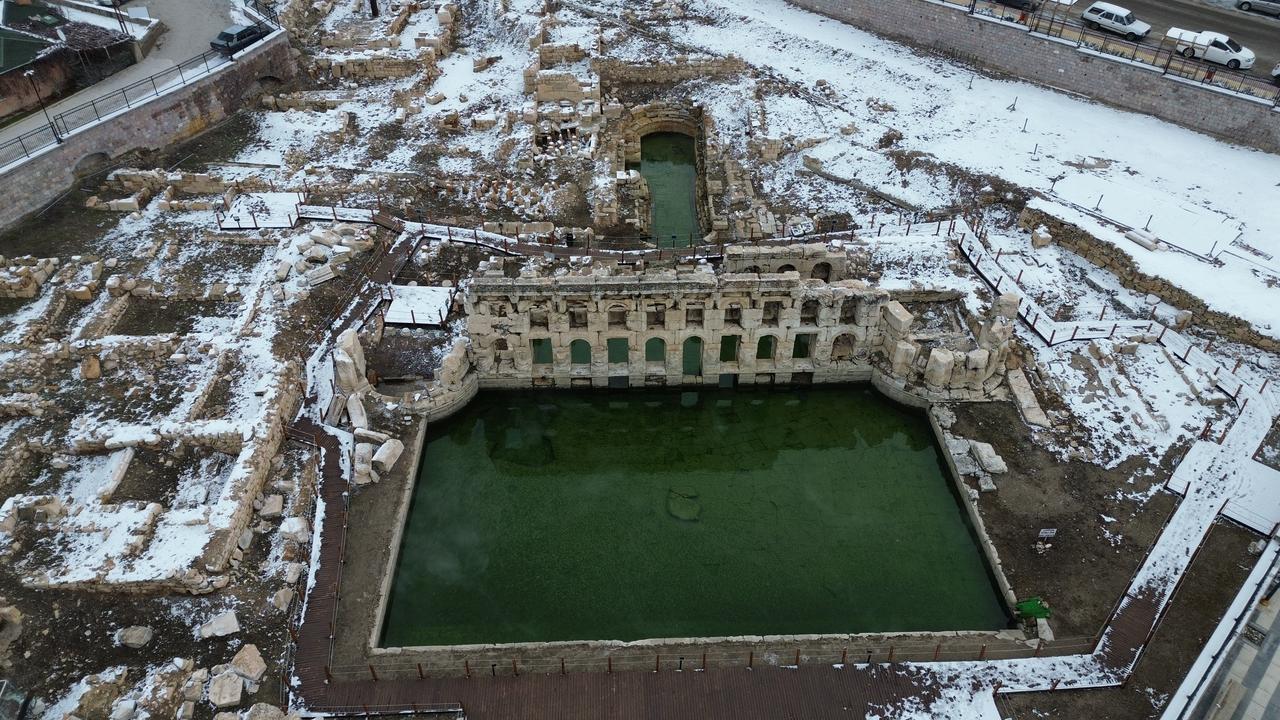
After landscaping and environmental improvements carried out under the supervision of the Yozgat Museum Directorate between 2022 and August 2024, the site reopened to visitors with enhanced access and presentation. In recent winter conditions, cold air and snowfall have created striking scenes as steam rises from the warm thermal pools, drawing additional attention. Drone footage has captured these visuals, helping to raise the site’s profile.
Yozgat Governor Mehmet Ali Ozkan said the Roman bath had attracted serious interest, noting that only one comparable example exists, in the city of Bath in the United Kingdom. He pointed out that the Sarikaya bath received around 50,000 visitors last year and expressed expectations that the figure could climb to 100,000 or even 200,000 in the coming years as tourism develops further.
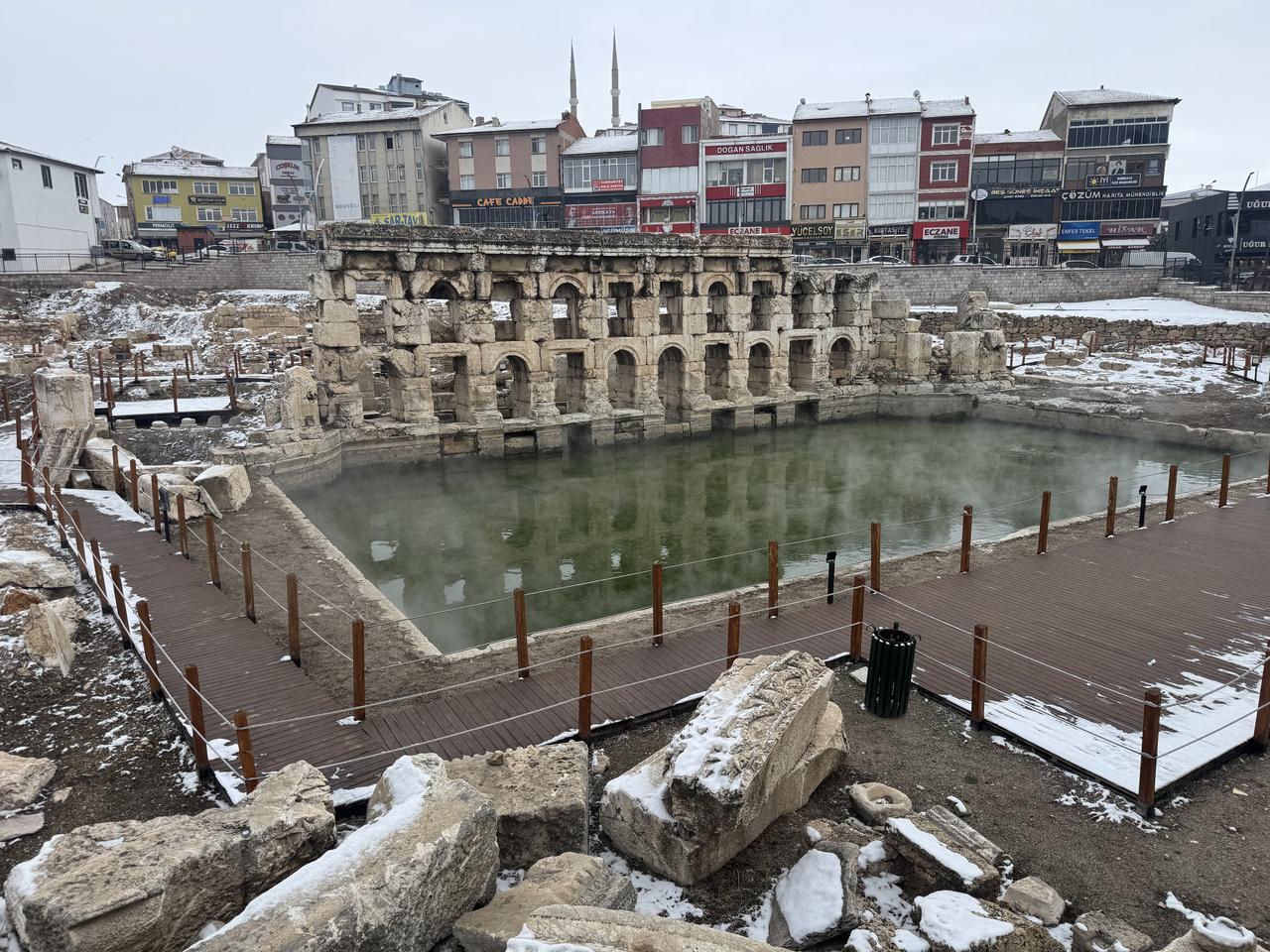
According to UNESCO documentation, the Basilica Therma is considered the only protected Roman thermal bath of its kind in Anatolia. Unlike the Roman baths in England, which include extensive later additions, the Sarikaya complex has largely preserved its original Roman layout, with Byzantine and later elements kept outside the main structure.
Authorities emphasize that the site now plays an important role not only in cultural preservation but also in the local economy. Ongoing efforts aim to restore and promote nearby historical areas, including the Kazankaya Valley, as part of a broader regional tourism strategy centered on Sarikaya’s unique thermal heritage.


 Set as preferred source
 Set as preferred source


 3 min read