Newsletters


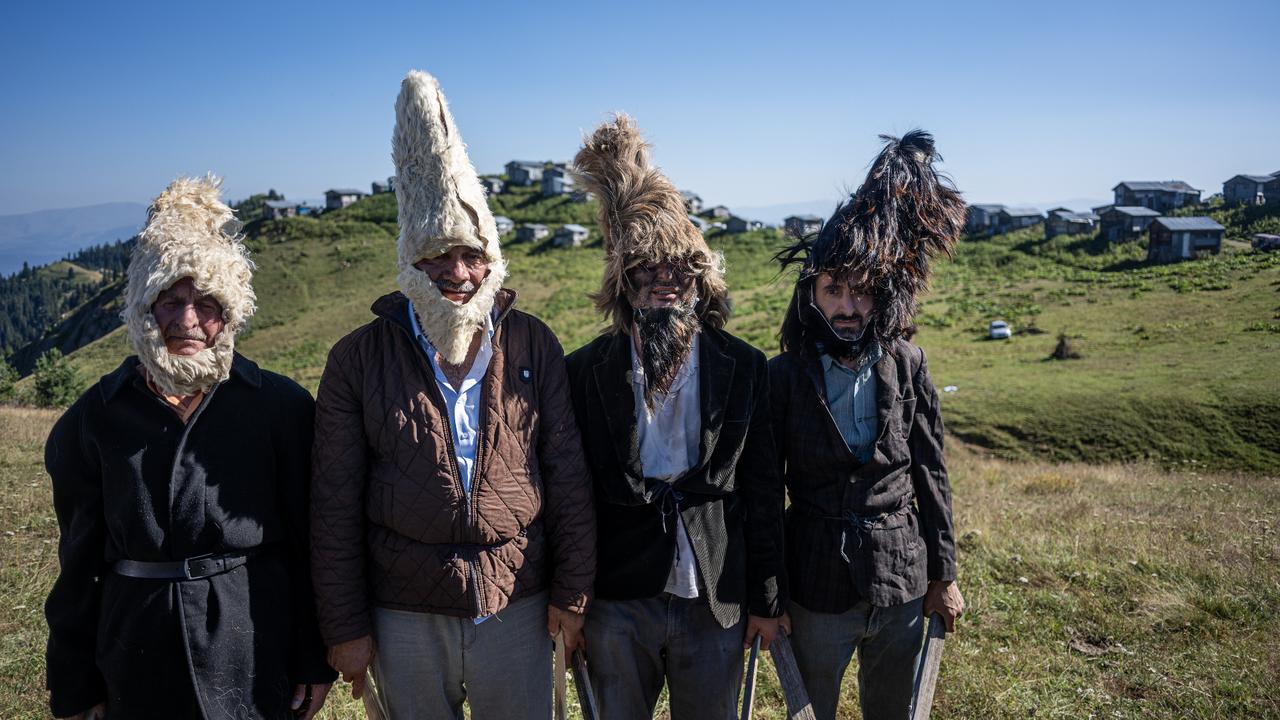
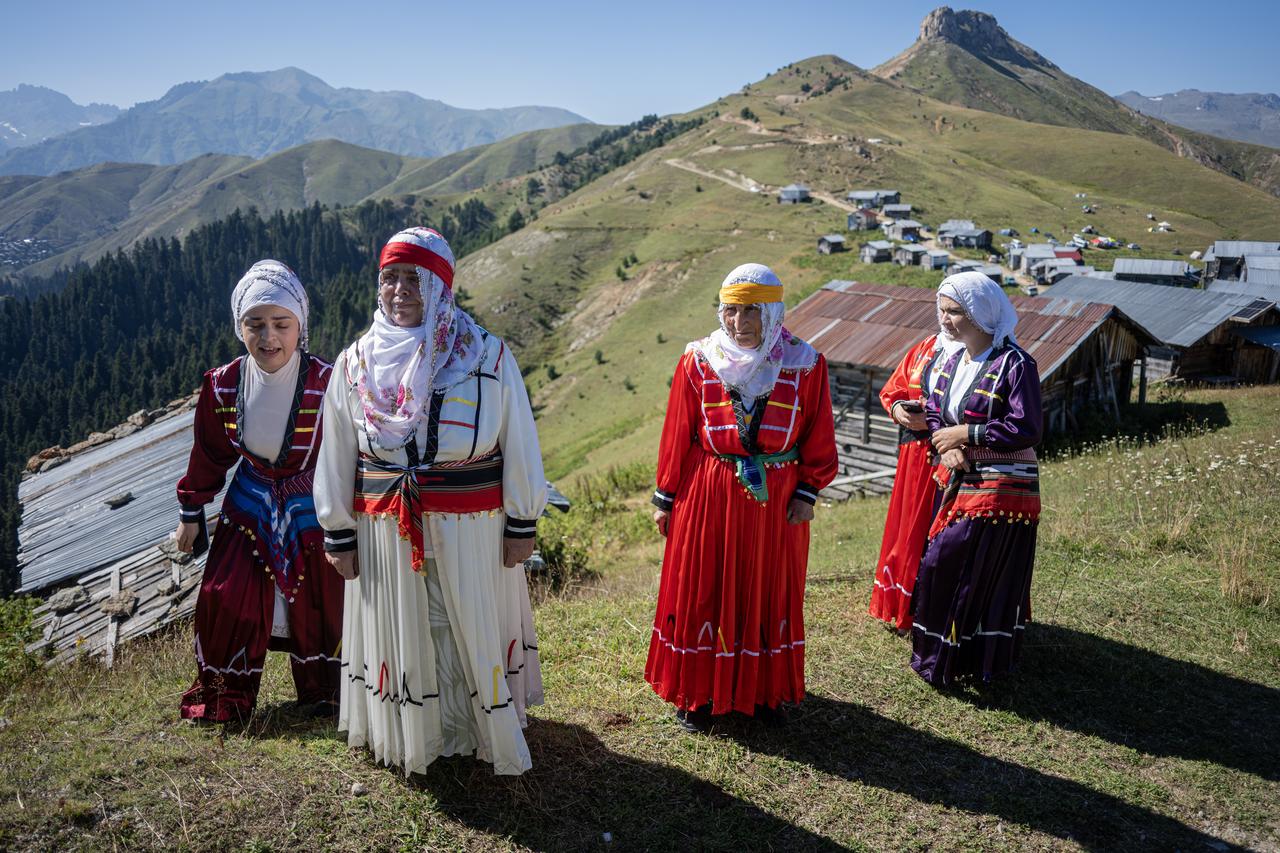
In the highland villages of Savsat district in Artvin, a mountainous province in Türkiye's northeastern Black Sea region, a 150-year-old tradition known as "berobana" continues each summer.
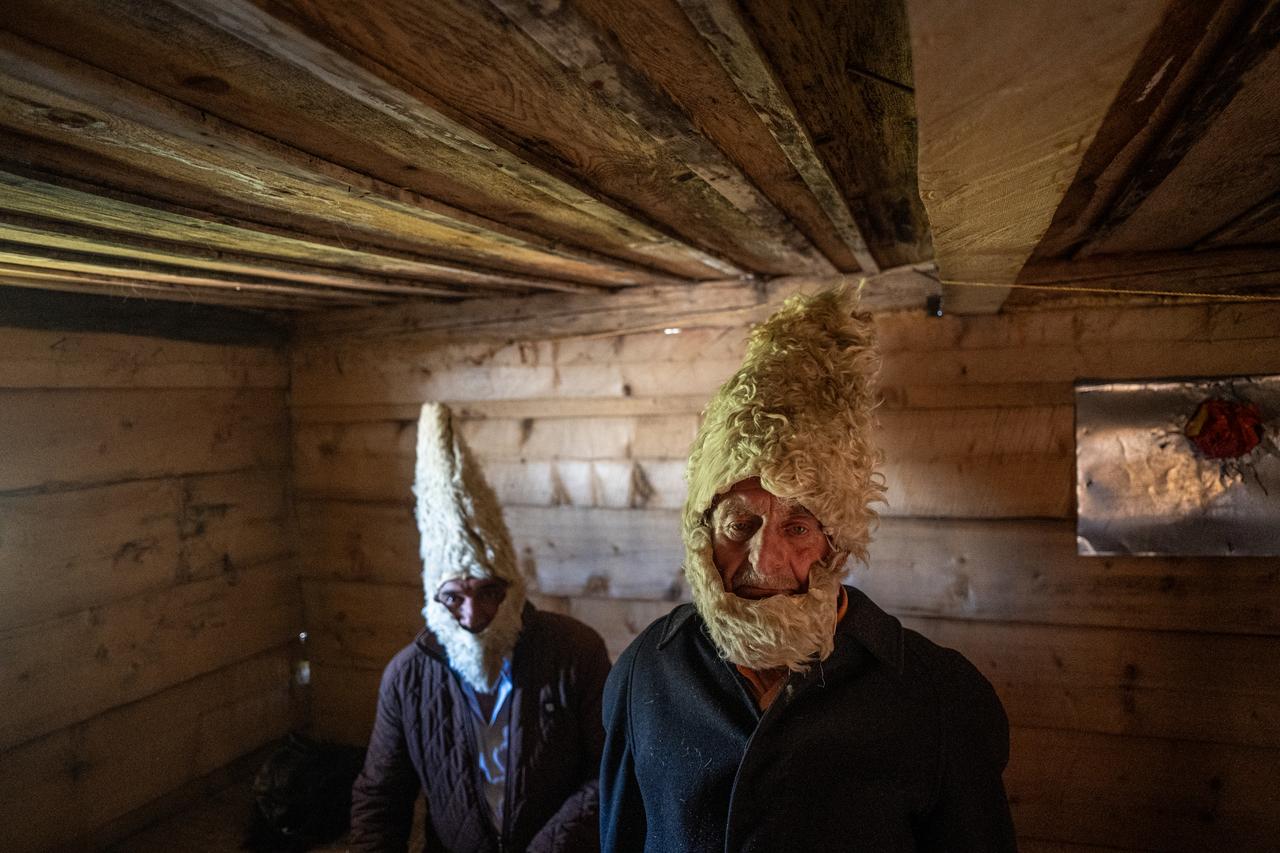
For the villages scattered across Savsat's yaylas, or highland pastures, berobana represents more than entertainment.
Residents describe the custom as inherited directly from their ancestors, a way to bring the community together each year and reaffirm bonds among households otherwise separated by distance and the demands of rural life.
Villagers who take part in the ritual's closing dance believe their households will not go without abundance, or "bereket," in the year ahead.
The belief ties berobana to older agrarian customs, in which communal rituals performed at pivotal points in the calendar were thought to influence the fortunes of the coming season.
Berobana was once performed on New Year's Eve, when families gathered indoors during the harsh winters of Türkiye's high Black Sea mountains.
Over time, the date shifted to July and August, when villages that are empty out for much of the year fill again with residents who return to tend the yaylas during the warmer months.
The tradition's name comes from Georgian, reflecting historic ties between communities in Türkiye's northeastern borderlands and neighboring Georgia.
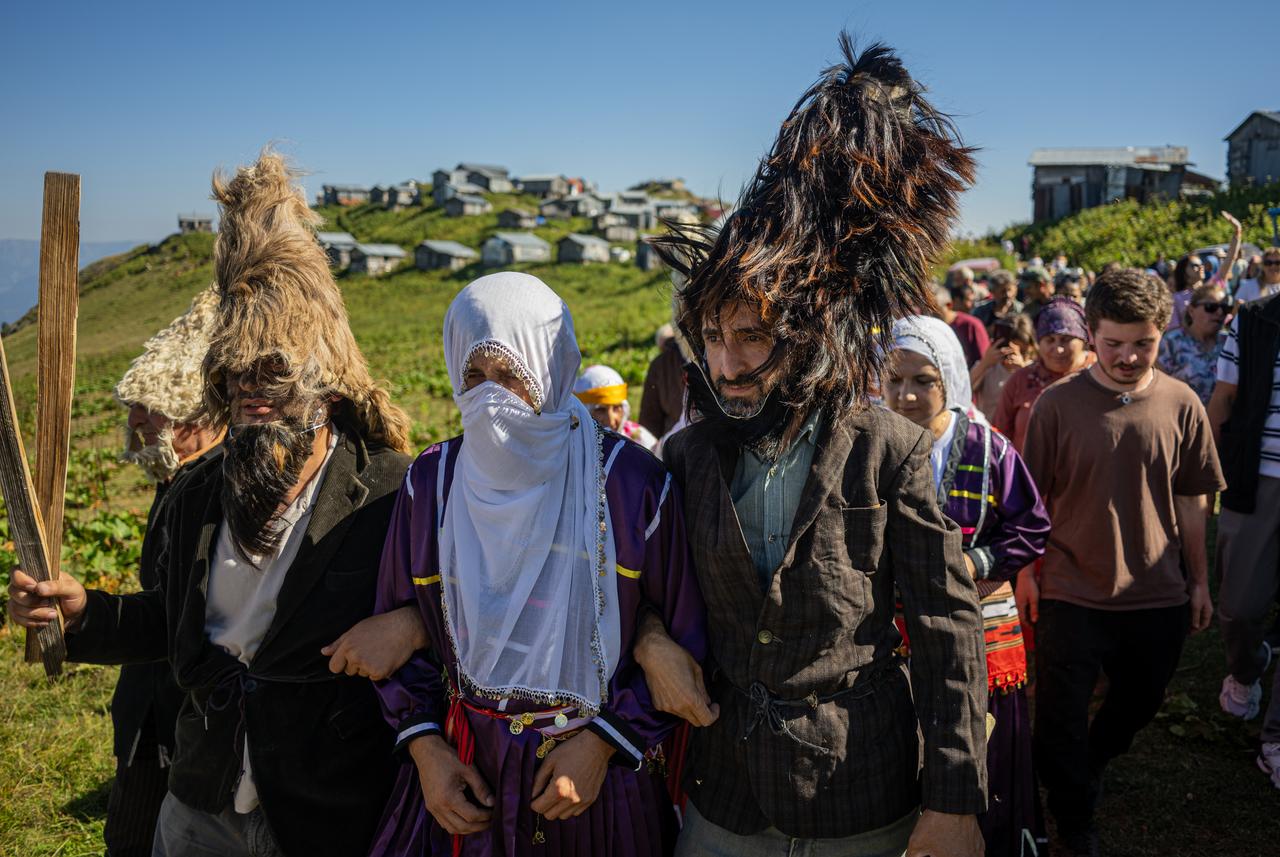
"Beri" translates to "old man," while "bana" means "woman," names that correspond to the two central characters at the heart of the ritual's theatrical performance.
One young man from the village is chosen each year to play "bana," dressing in women's clothing borrowed from the community.
The role transforms him into the ritual's central figure, around whom the rest of the performance and much of the ensuing pursuit and dancing revolve.
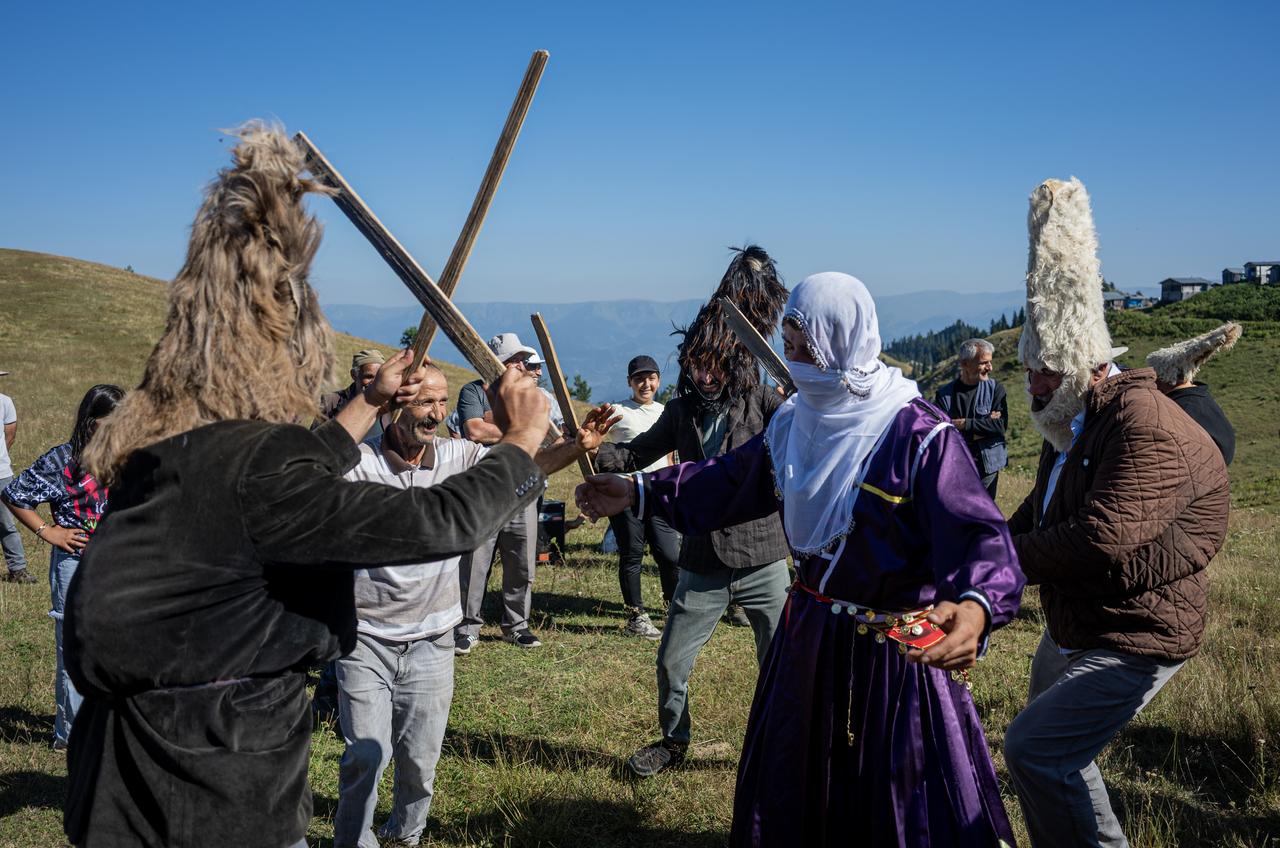
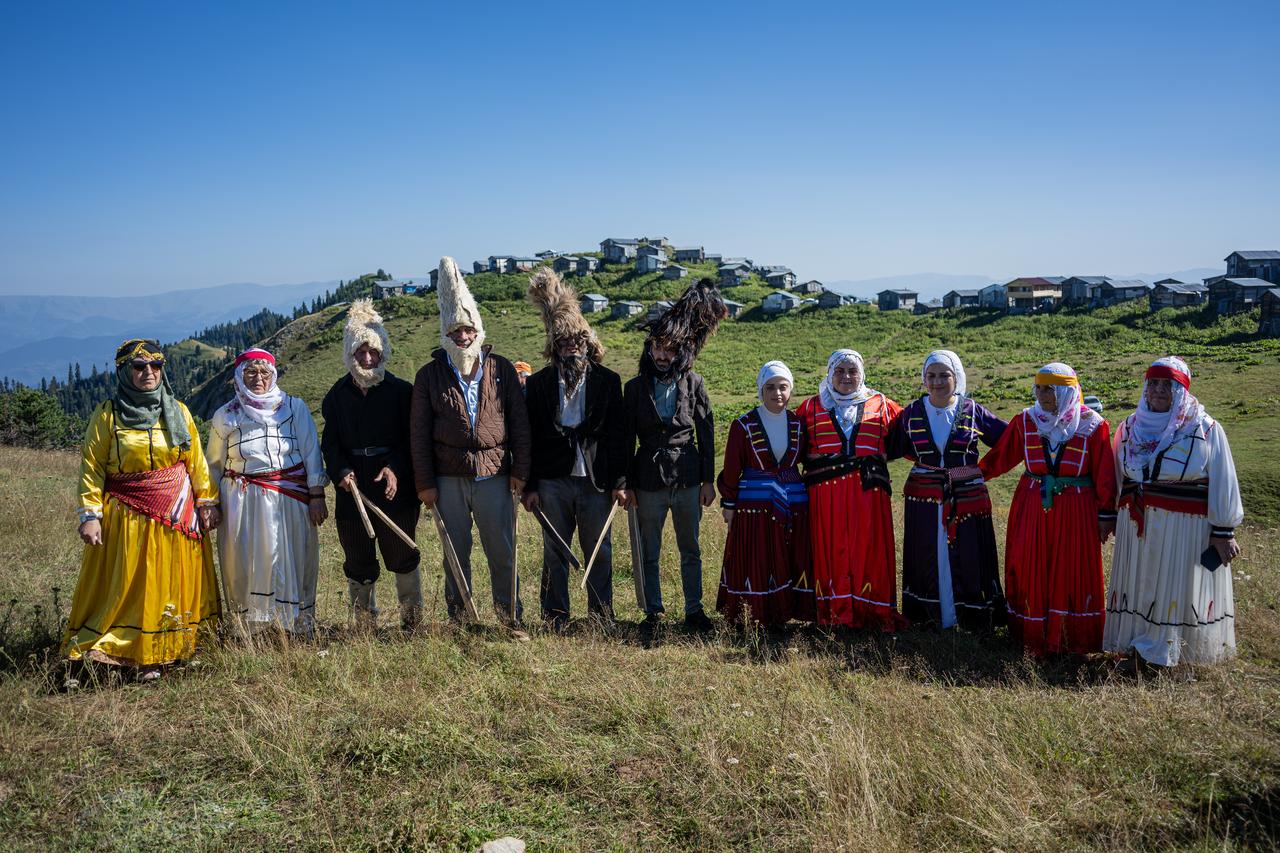
Men playing the "beri" role wear conical hats known as "kabalak," fashioned from goat wool and sheepskin, along with false beards and goat-hide caps.
Many blacken their faces with soot, completing a look meant to evoke the region's elders. Each carries a wooden stick, which serves a protective purpose later in the ritual.
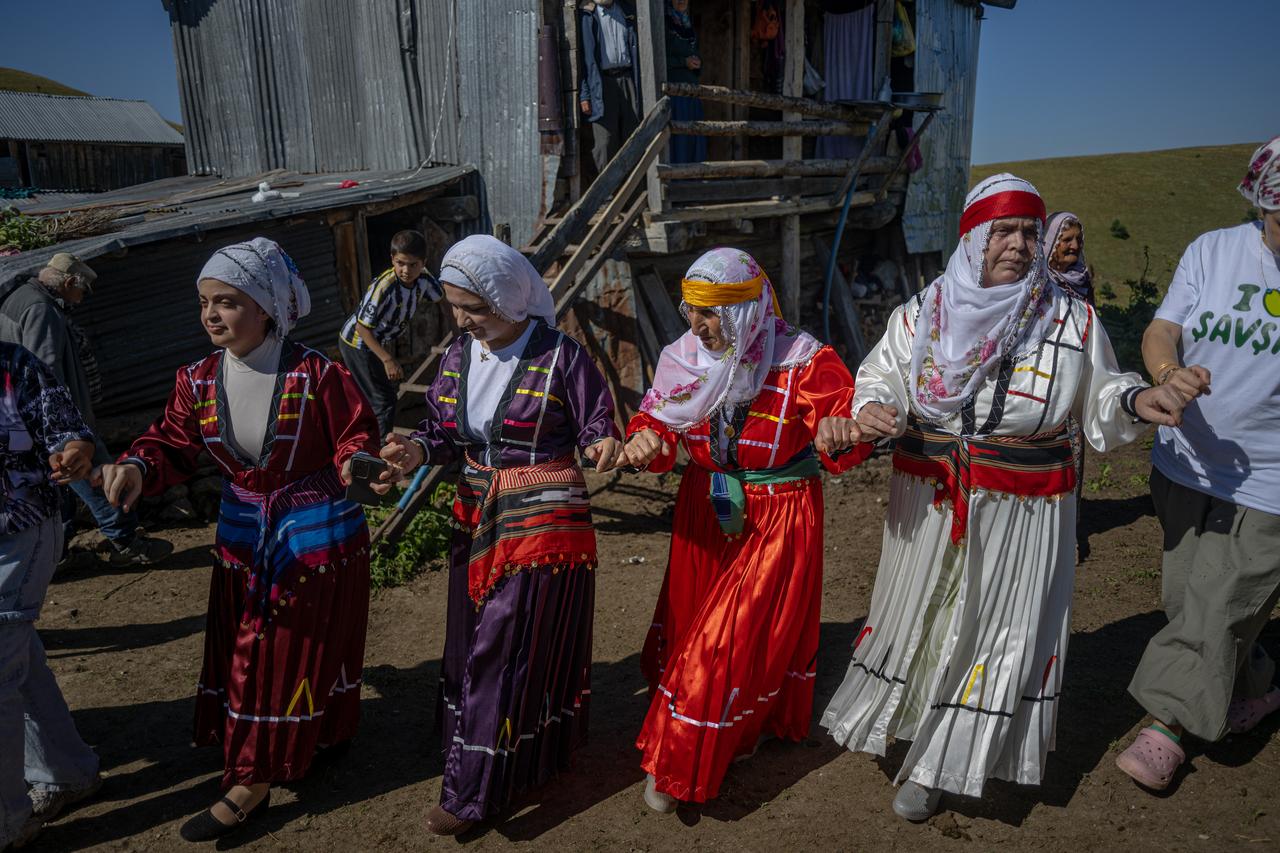
Before setting off, the costumed performers gather at a house on the yayla and step outside to the sound of an accordion, dancing briefly for the village residents who have gathered to watch.
The music signals the start of the day's festivities and draws neighbors out of their homes.
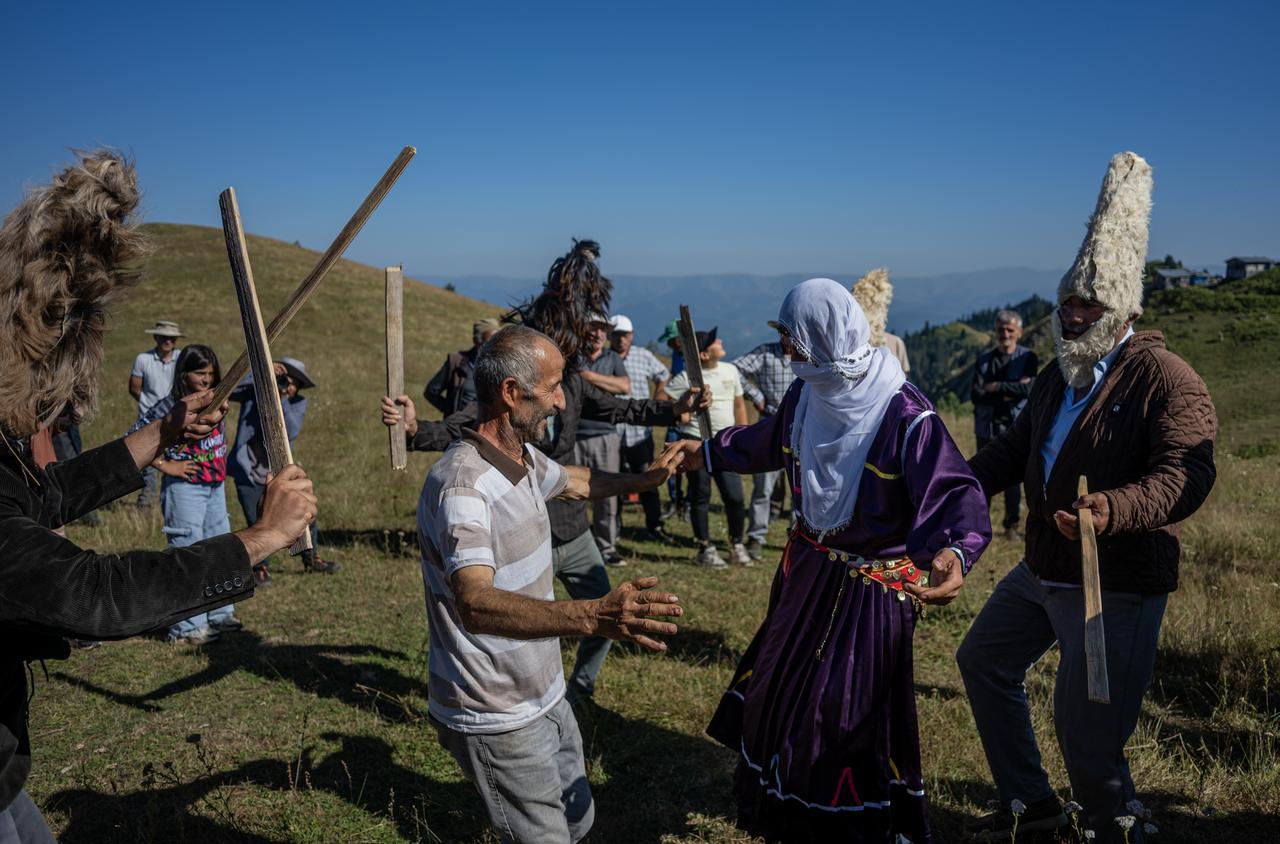
The group then moves from house to house across the yayla, collecting cream, corn flour and salt from each household they visit. Homeowners who decline to contribute are playfully "frightened" by the performers, a lighthearted custom that rarely deters residents from taking part.
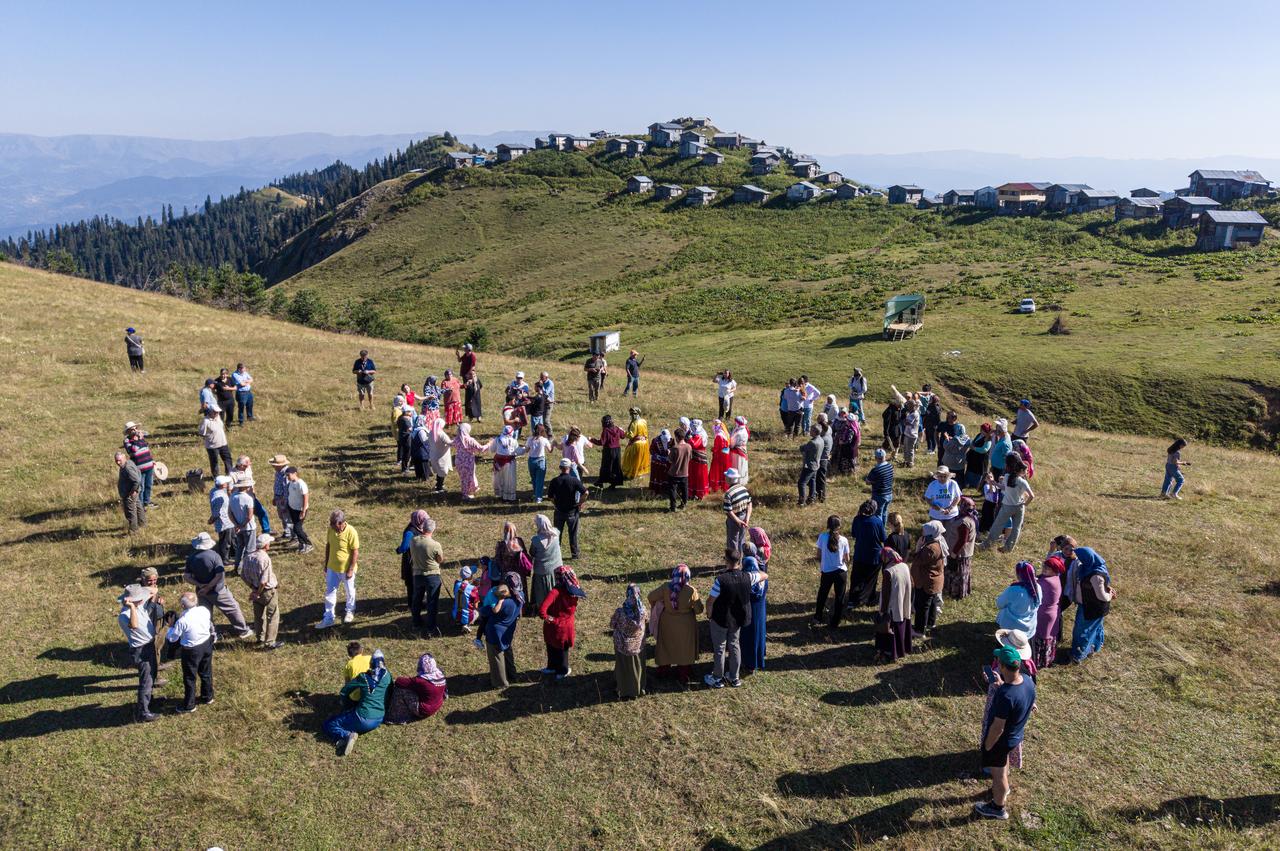
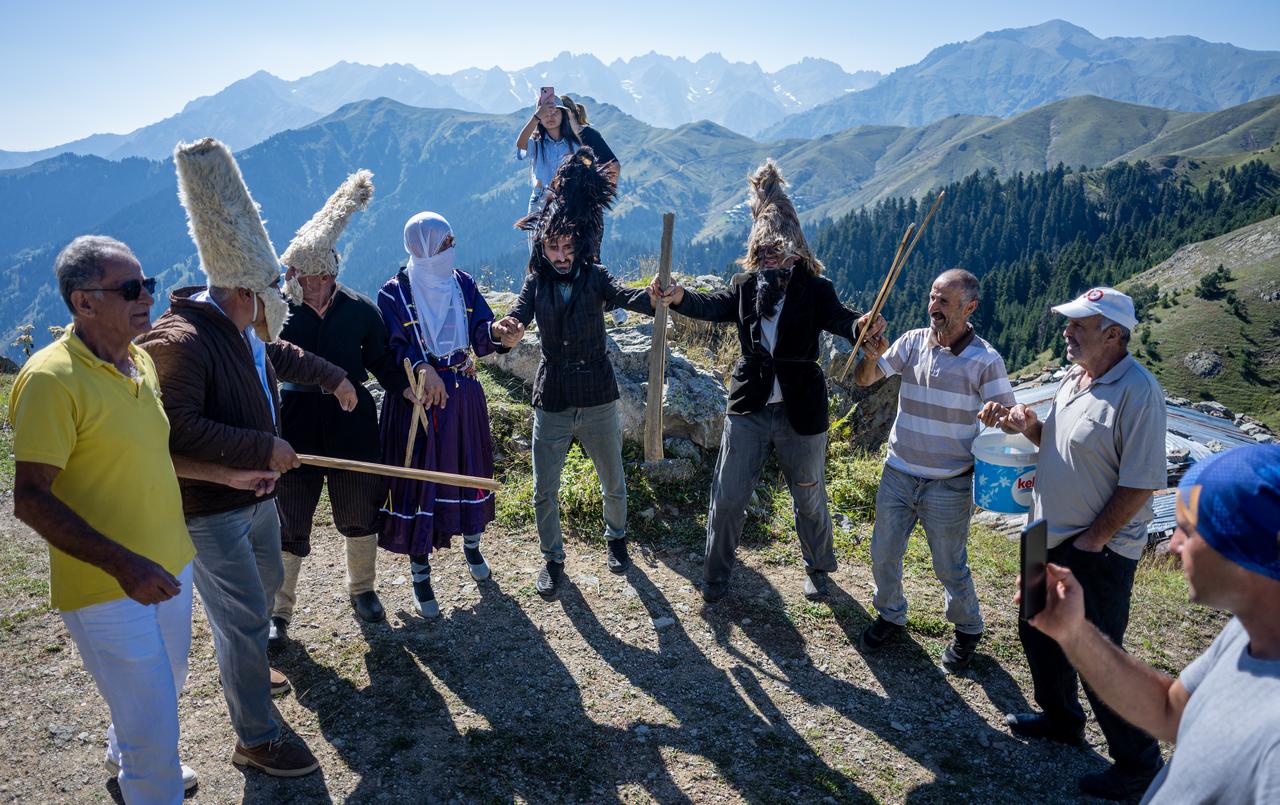
Once the group returns to the festival area, the collected ingredients are set aside and the mood shifts to a game: villagers attempt to "kidnap" the man playing "bana," while the "beri" characters use their sticks to fend off the repeated attempts.
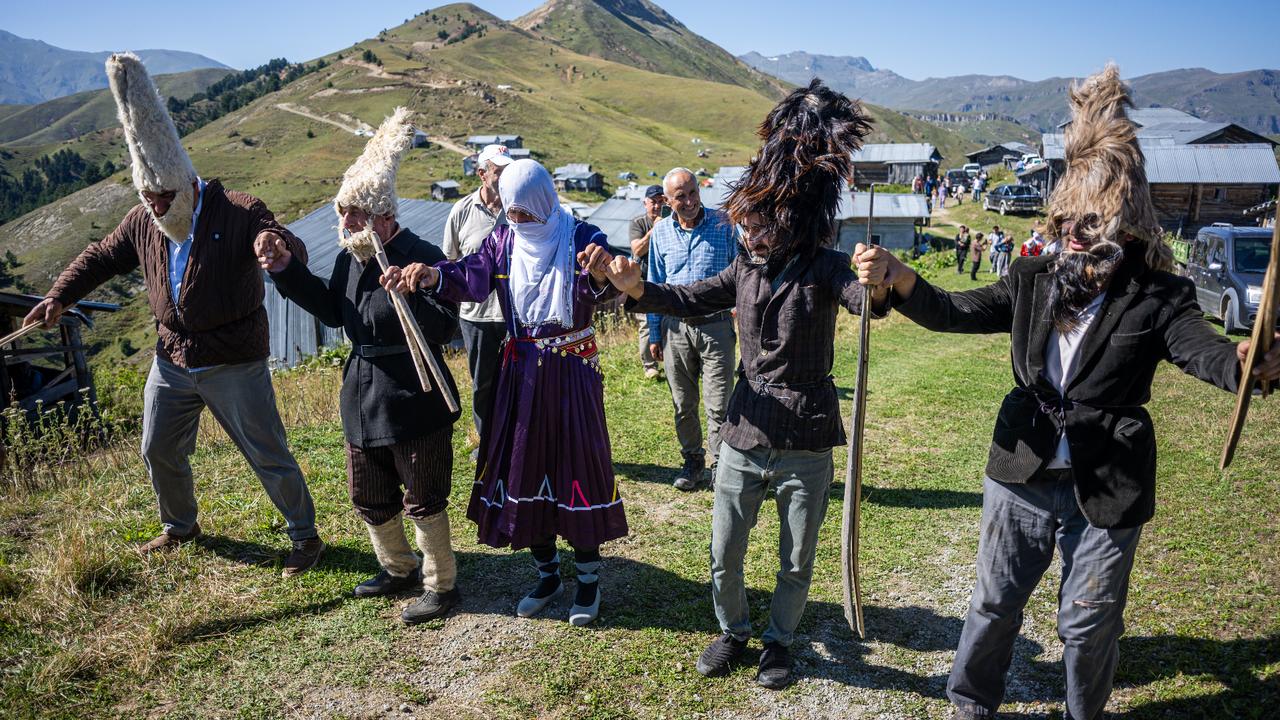
Eventually, "bana" is allowed to "escape" with a villager of his choosing, as the "beri" performers step aside without resistance, resolving the game and prompting the whole community to join in a horon, a traditional line dance performed across Türkiye's Black Sea region.
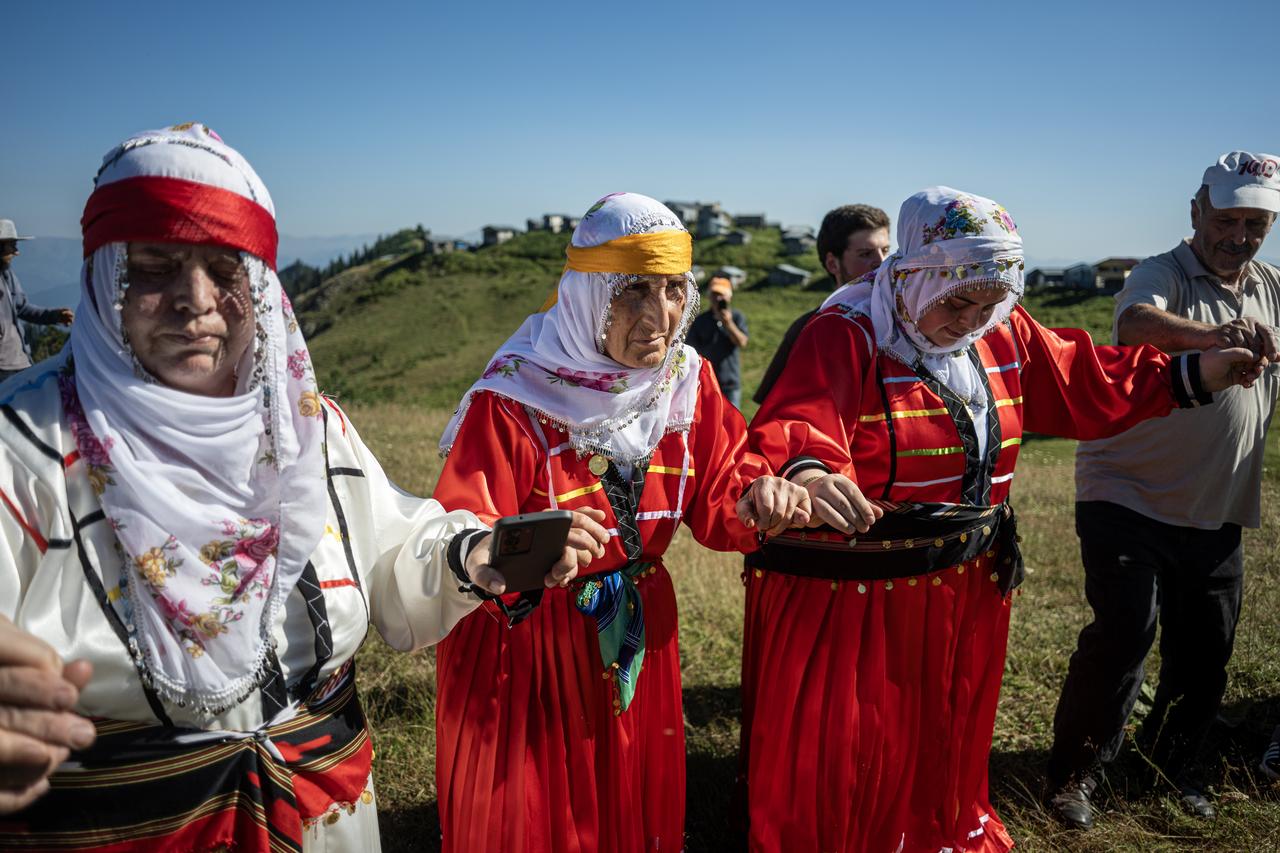
From the cream, salt and corn flour gathered earlier, villagers prepare a dish called "Havics," which is distributed to every household that took part.
The festivities continue over two days, and residents say they hope to pass the custom on to younger generations, keeping berobana alive in Savsat for years to come.

 1 min read


 Set as preferred source