

 Newsletters


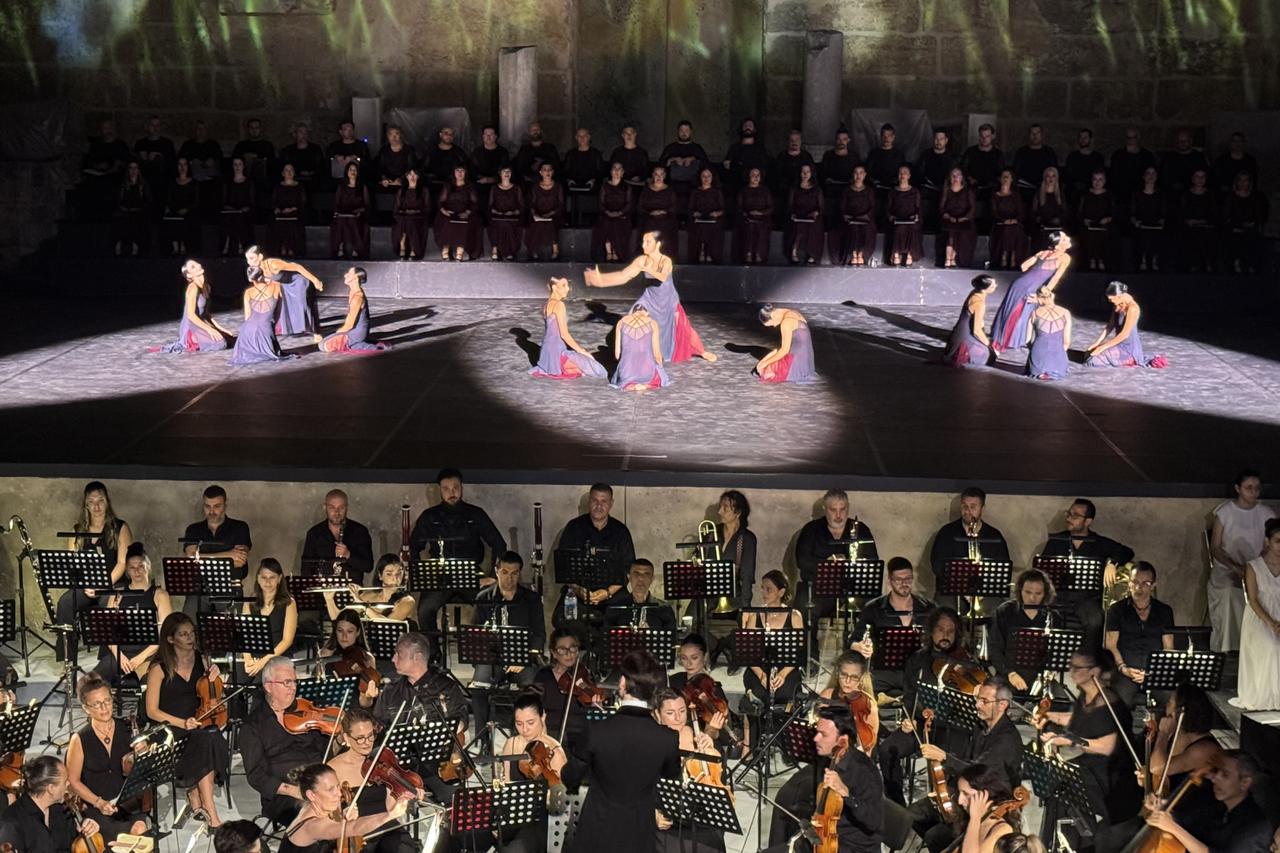


The 33rd Aspendos Opera and Ballet Festival, held this year in Antalya, staged German composer Carl Orff's "Carmina Burana," one of the grandest works in the music world, under the direction of 22-year-old Maximilian Cem Haberstock.
The festival is being held for the 33rd time at the Aspendos Ancient Theater by the Ministry of Culture and Tourism's General Directorate of State Opera and Ballet.
A 250-member cast took the stage for "Carmina Burana." It was led by Haberstock, who is among the promising young artists of his generation with a rapidly rising international career in opera as well as the symphonic repertoire.
It included the Antalya State Opera and Ballet orchestra, soloists, a choir, a children's choir, and ballet and modern dance ensembles.
"Carmina Burana," the first work in Orff's Trionfi (Triumphs) trilogy, is a choreographic stage cantata inspired by about 200 poems and songs found in a monastery near Munich. It was brought to the stage in a large-scale production combining orchestra, ballet, soloists, and choir.
The work will be performed for the second time at the Aspendos Ancient Theater on Sept. 21.
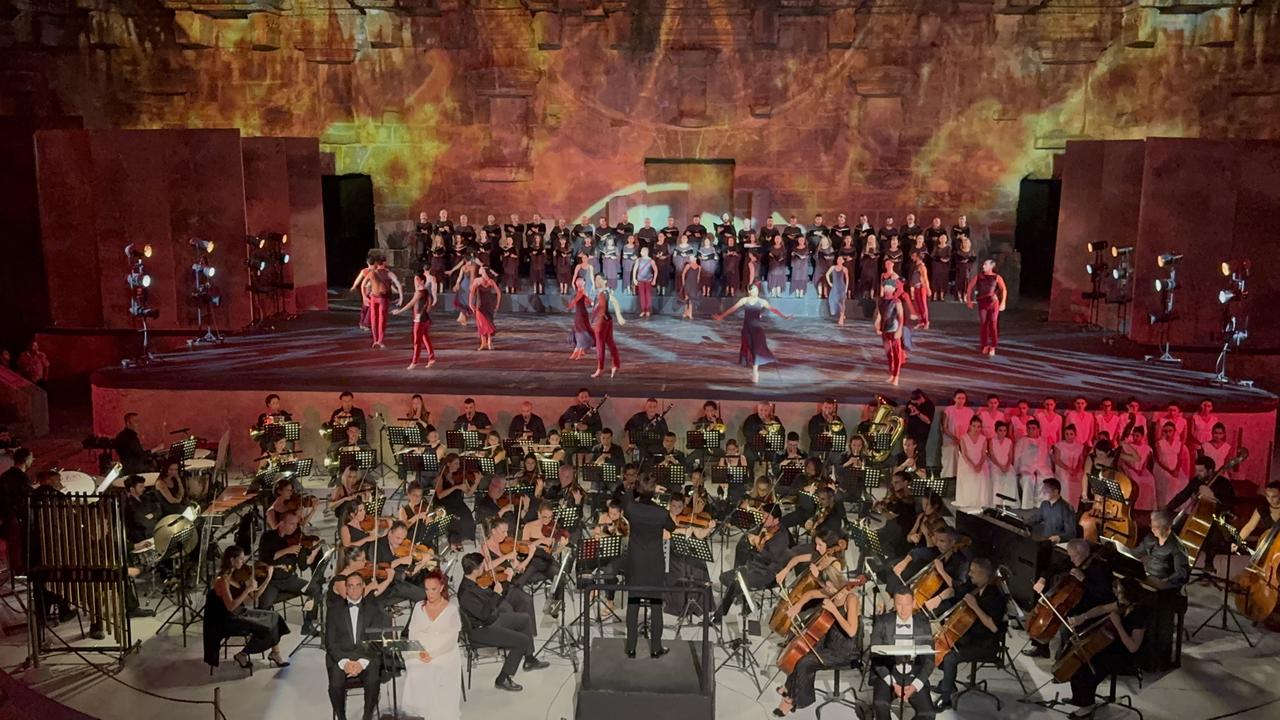

Composer Carl Orff wrote "Carmina Burana" in 1935-36, and it premiered at the Frankfurt Opera on June 8, 1937. Its texts come from a medieval collection of songs and poems, written mostly in Latin and Middle High German, that was discovered in 1803 at Benediktbeuern Abbey in Bavaria, Germany.
Orff set 24 of them to music, covering themes such as the unpredictability of fortune, springtime, love, and drinking. The title is Latin for "Songs of Beuern," a reference to the abbey's name.
The work opens and closes with "O Fortuna," one of the most widely recognized pieces in classical music.


 Set as preferred source
 Set as preferred source


 1 min read

 1 min read


