Newsletters


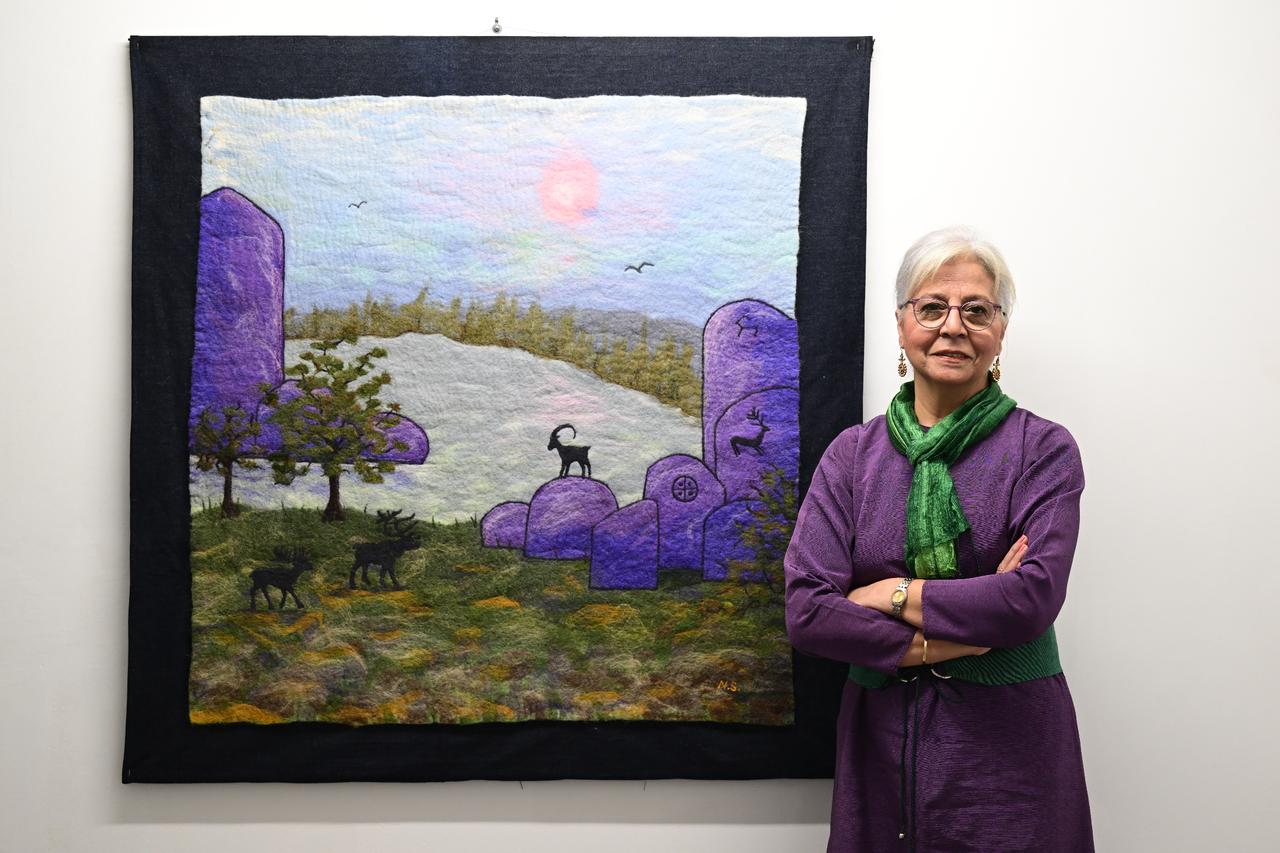


Felt artist Nur Saglamer, working under the Ministry of Culture and Tourism, has reinterpreted the earliest visual expressions of Turkish civilization through felt art, drawing inspiration from the Proto-Turkic petroglyph tradition. The project, completed after nearly 1.5 years of research and production, traces Turkic cultural memory from ancient rock carvings to contemporary textile-based expression.
A petroglyph is defined as “an image created by removing part of a rock surface by incising,” referring to figures carved, engraved, or pecked into stone surfaces.
Proto-Turkic petroglyphs found across Central Asia, the Altai Mountains, the Tian Shan range, and parts of Anatolia provide key evidence of early Turkic societies’ daily life, belief systems, and relationship with nature. Created long before the widespread use of writing, these images served as one of the earliest visual communication tools for transmitting collective memory.
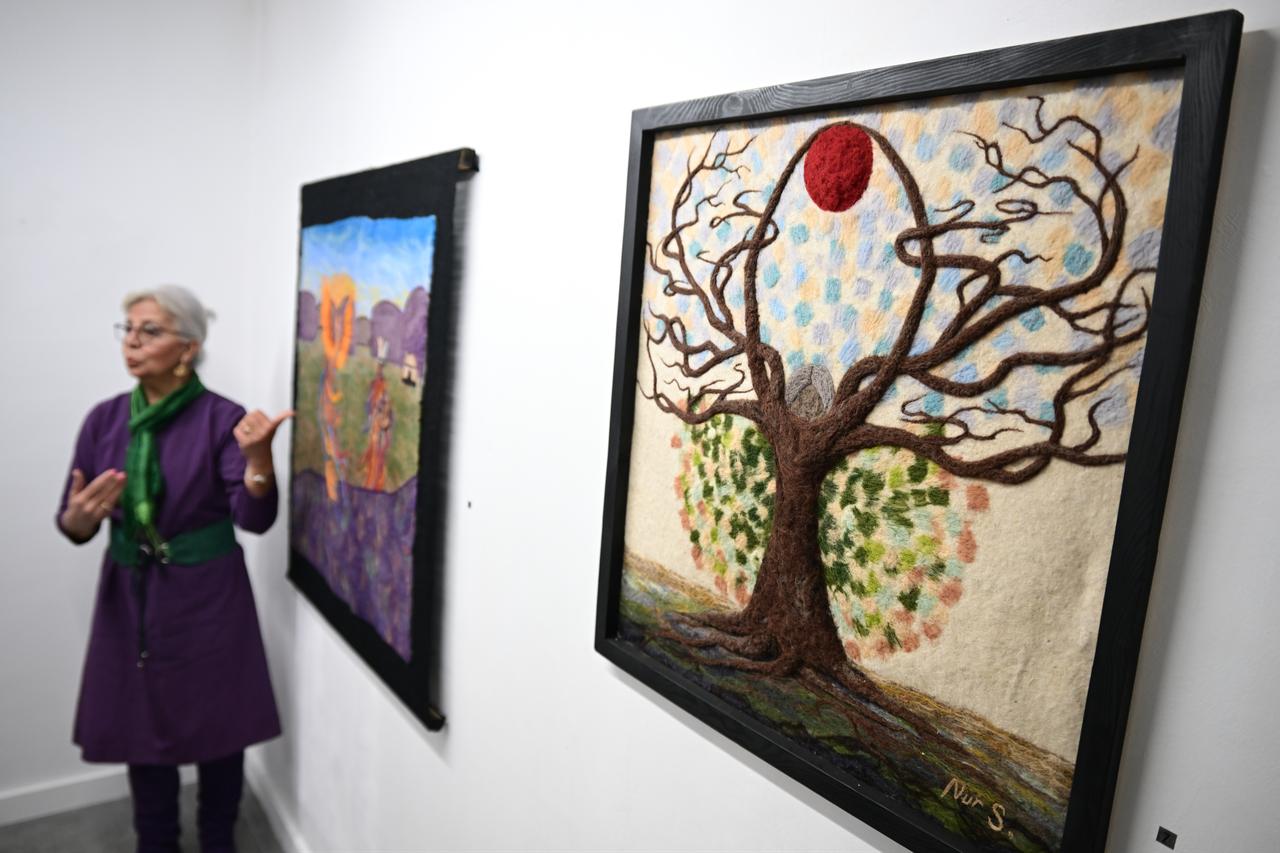

Saglamer’s work approaches petroglyphs not merely as archaeological remains but as living elements of cultural heritage. Felt, a core material of nomadic Turkic life, has historically been used for shelter, clothing, ceremonial objects, and household items.
By translating Proto-Turkic petroglyph imagery into felt, the project establishes a material and symbolic continuity between ancient visual traditions and traditional Turkic crafts.
The felt works prominently feature motifs frequently encountered in Proto-Turkic petroglyphs, including mountain goats, wolves, horses, deer, solar symbols, and hunting scenes.
These figures are commonly associated with strength, movement, fertility, and cosmological order in early Turkic belief systems. The restrained compositions and limited color palette reflect the direct and minimal visual language characteristic of rock carvings.
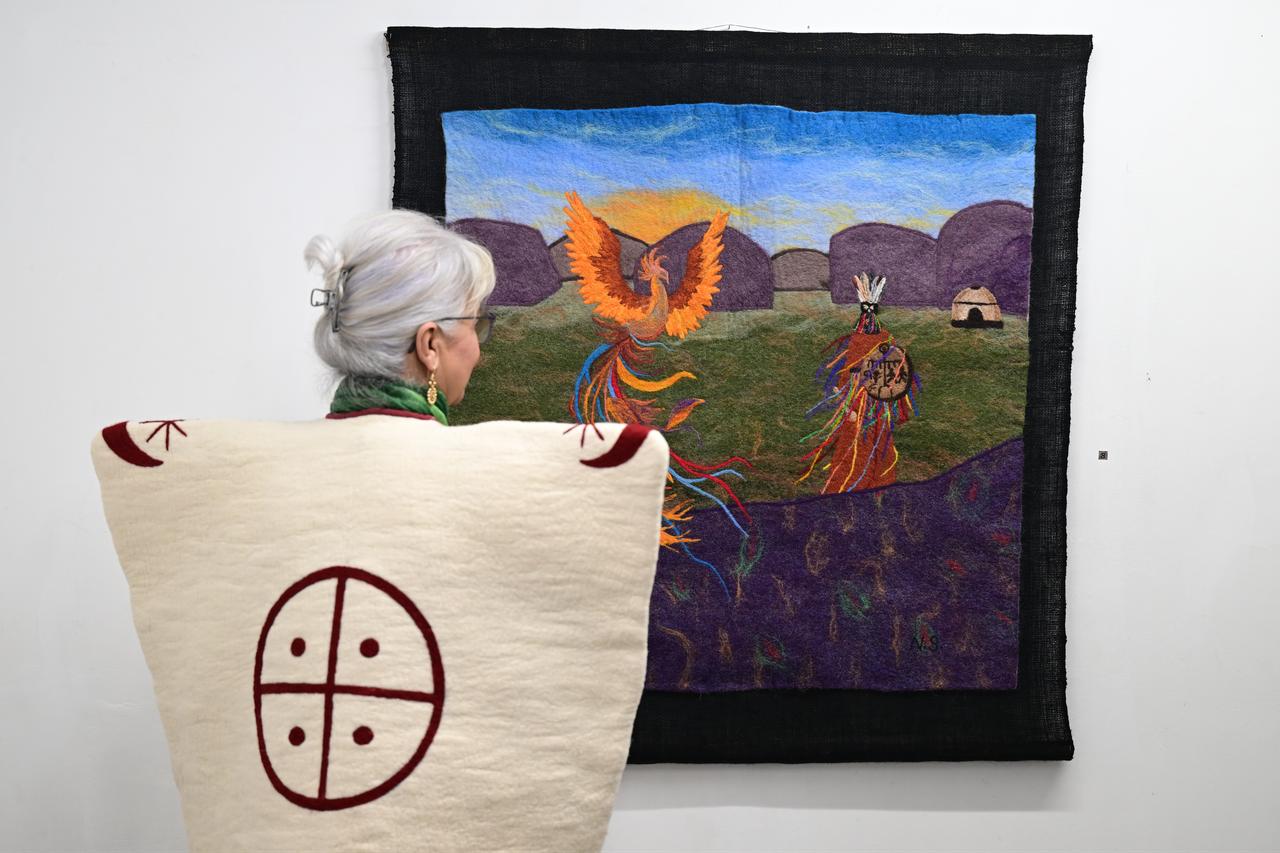
Before beginning the production phase, the artist conducted extensive archival and literature-based research. Rock art sites in Central Asia were examined alongside international academic studies and archaeological inventories.
Proto-Turkic petroglyph examples were analyzed according to formal structure, symbolic meaning, and chronological context. Over the course of 1.5 years, these findings were adapted into felt-based forms while preserving the visual integrity of the original carvings.
Petroglyphs, carved directly into stone, represent a rigid and permanent form of expression, while felt embodies an organic and flexible material language.
In Saglamer’s work, linear carvings found on rock surfaces are reinterpreted through the direction, density, and layering of felt fibers. This method allows the imagery to maintain its original structure while being transferred into a different artistic medium.
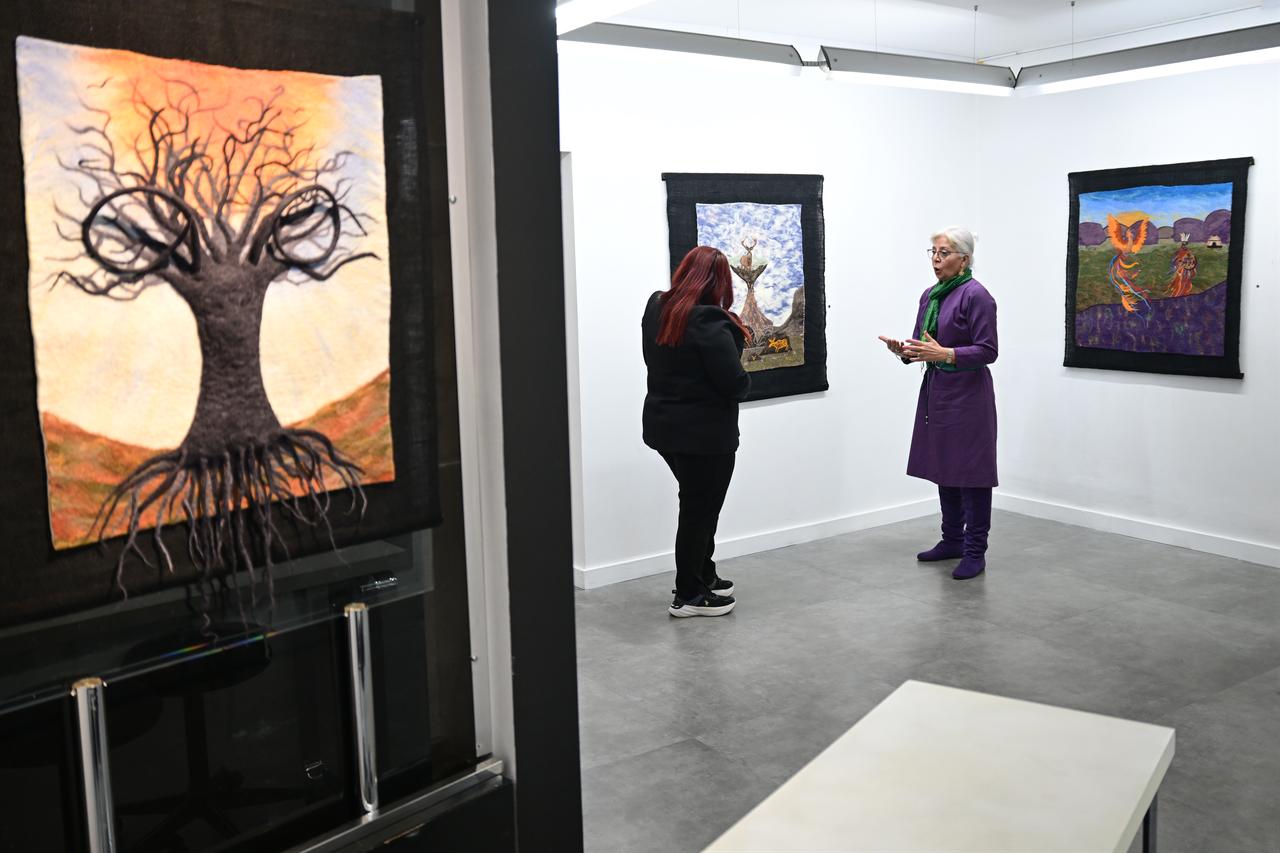
The project goes beyond a collection of individual artworks by offering a chronological visual narrative of Turkish civilization. Beginning with Proto-Turkic themes, the felt compositions reflect cultural transitions across historical periods.
According to Nur Saglamer, exhibitions of the Proto-Turkic petroglyph-themed felt works are planned across various cities in Türkiye, with international exhibitions also being considered. The project aims to contribute to the international visibility of Turkish cultural heritage through traditional art forms.


 Set as preferred source
 Set as preferred source



 3 min read