Newsletters


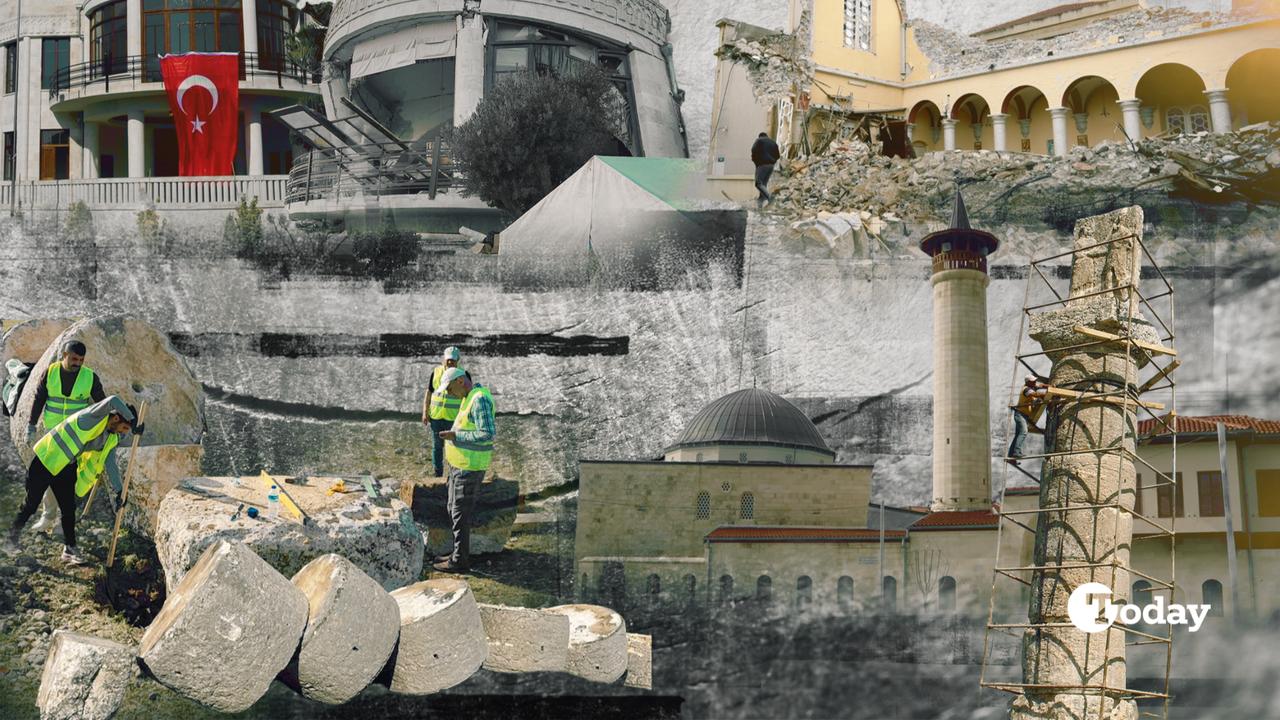
On Feb. 6, 2023, two major earthquakes struck southern Türkiye within nine hours, registering Mw 7.7 and Mw 7.6. A third strong tremor followed on Feb. 20. Eleven provinces were affected, with more than 14 million people impacted. Official figures recorded 53,697 fatalities and over 107,000 injuries.
When the ground stopped shaking, the damage continued to reveal itself through collapsed landmarks, fractured monuments and broken urban memory.
Gaziantep Castle
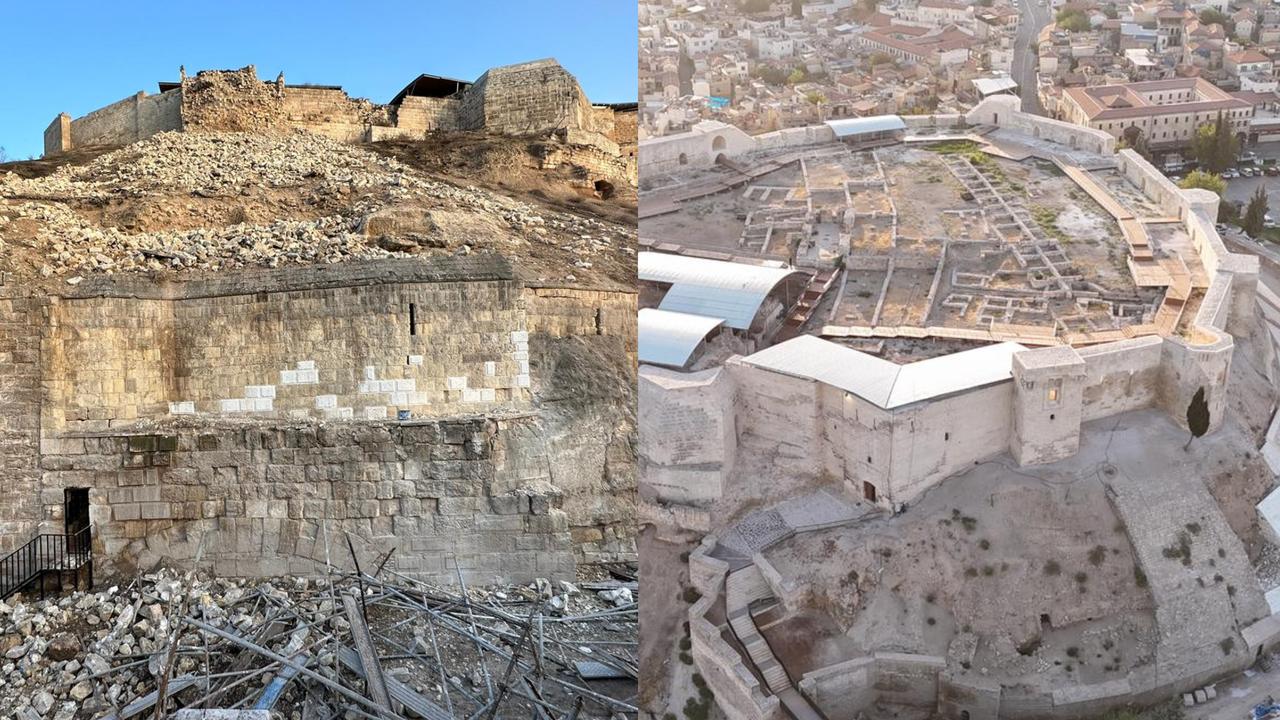
Gaziantep Castle, with a history spanning roughly 6,000 years, was among the most striking symbols of destruction after the earthquakes. Its damaged walls and collapsed sections quickly became part of the collective memory of the disaster.
Following scientific board recommendations and a restoration process led by the ministry, the castle underwent nearly three years of meticulous work. It has since regained its pre-earthquake appearance and has been reopened to tourism.
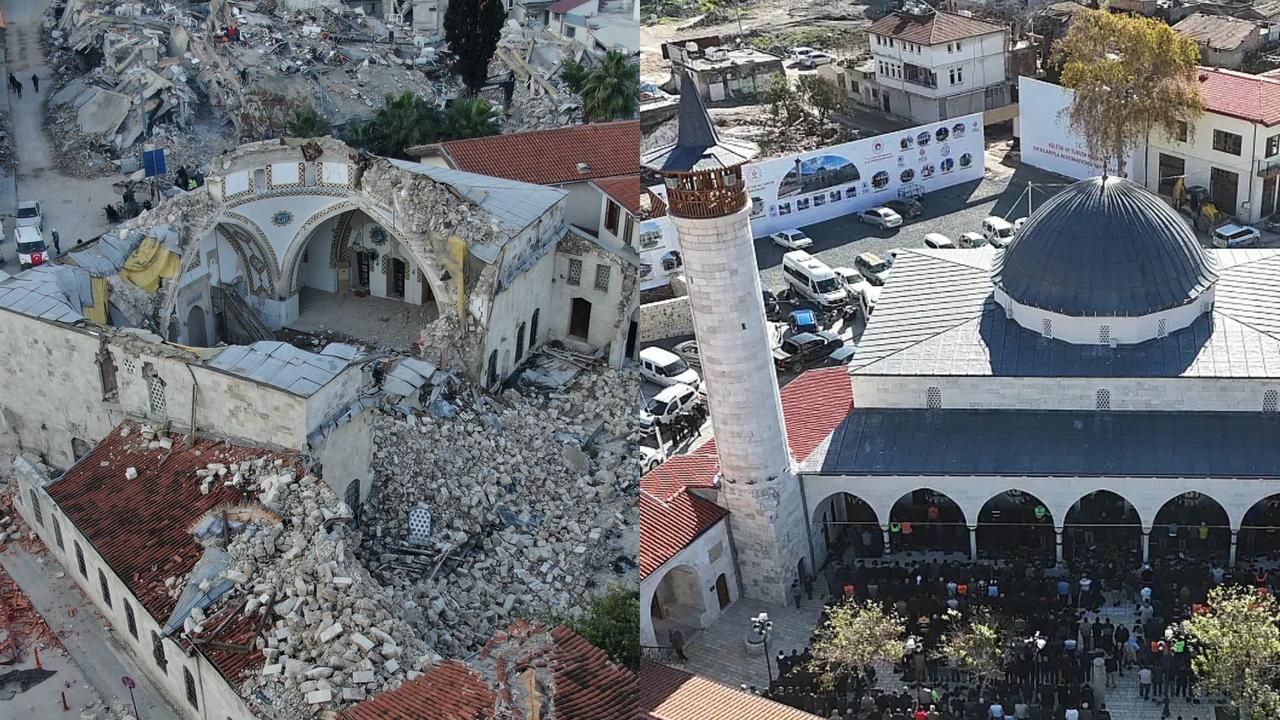
Habib-i Nejjar Mosque, Hatay
Habib-i Nejjar Mosque, named after a figure mentioned in the Quran and associated in Christian belief with one of the earliest followers of prophet Jesus in Antioch, was heavily damaged in the earthquake.
Restoration works were launched immediately under the coordination of the General Directorate of Foundations, with sponsorship from the Konya Metropolitan Municipality. Taking seismic risks into account, the project followed a careful approach aimed at reducing future damage, and the restoration process has now been completed.
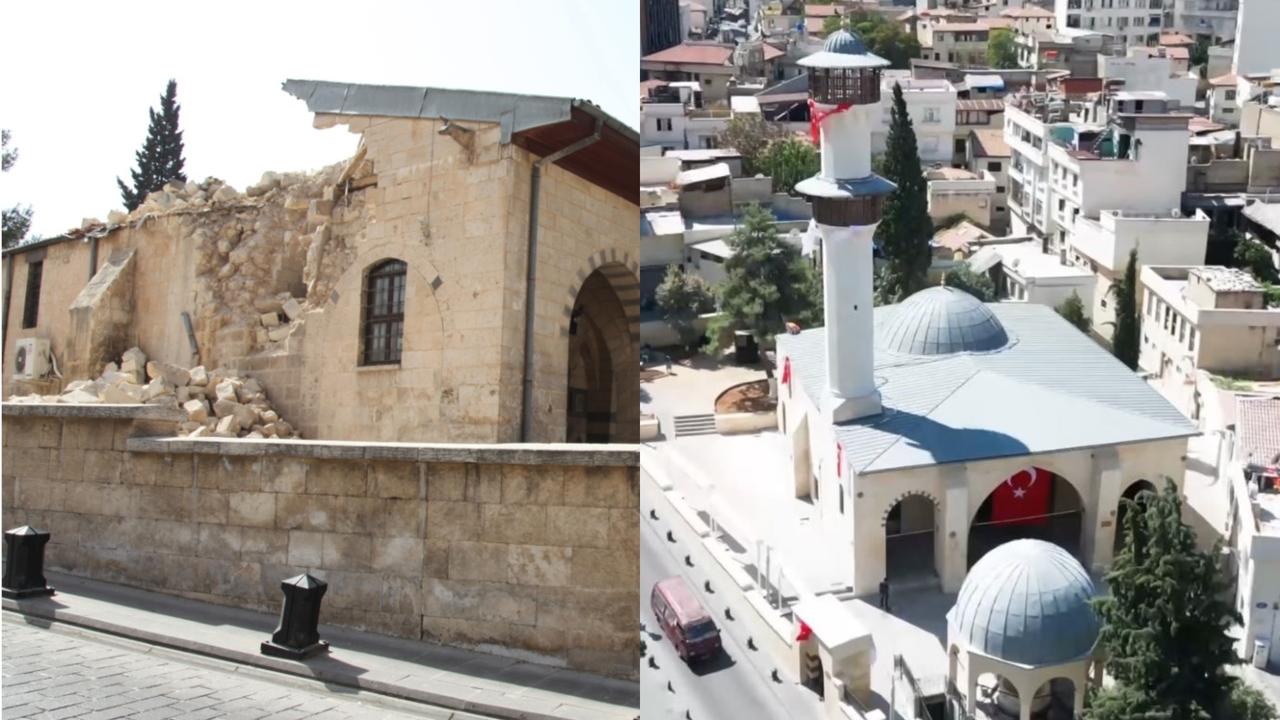
Sirvani Mosque, Gaziantep
Built in the 16th century, the Sirvani Mosque is among the oldest surviving structures in its city. Like many charitable foundation properties, it was damaged during what authorities described as the “disaster of the century.”
The General Directorate of Foundations placed the building under restoration. Ground surveys and structural reinforcement were carried out, buried vaults were revealed, and overall stability was re-established. Original architectural elements were preserved, while surface cleaning, joint renewal and infrastructure works were completed to return the mosque to use.
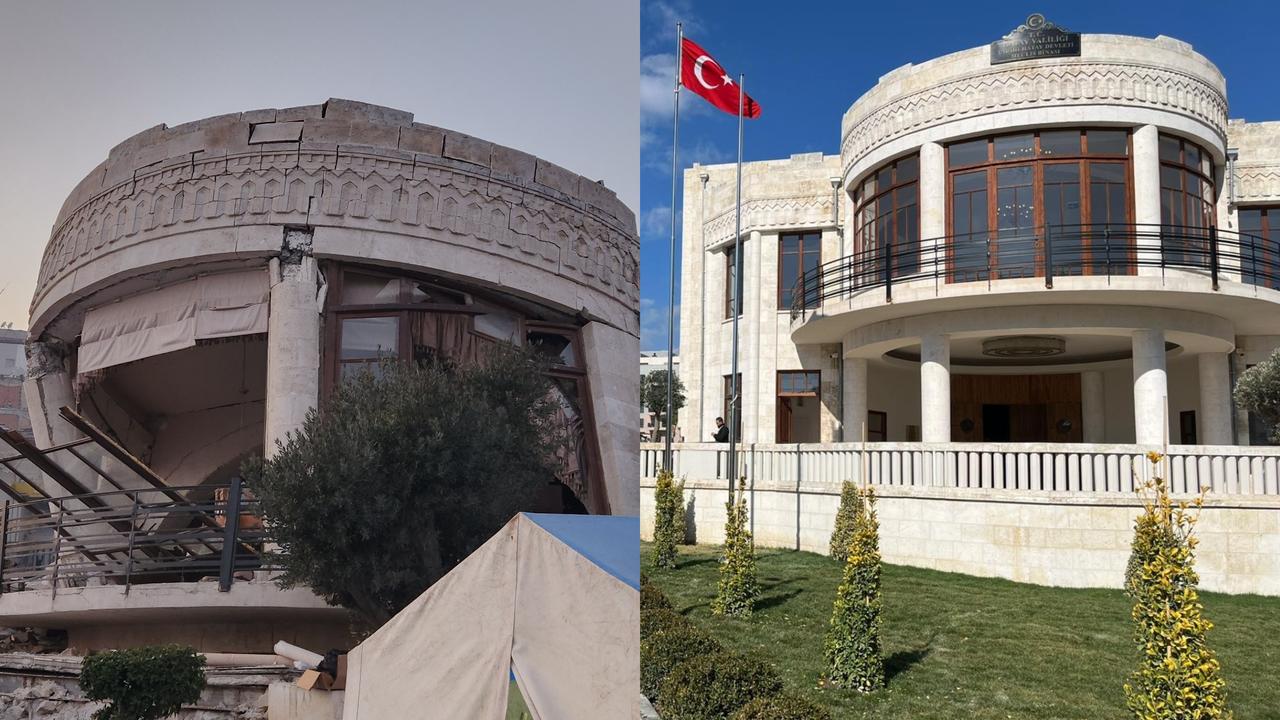
Parliament Building of the Hatay
The building that served as the parliament of the Hatay State for nearly one year, until Hatay joined Türkiye on June 29, 1939, has been restored following extensive works. The adjacent Adali Mansion was also rebuilt as part of the same project.
The nearly three-year restoration and reconstruction process has been completed, and the historic parliament building is planned to operate as a permanent stage under the State Theaters General Directorate in the coming period.
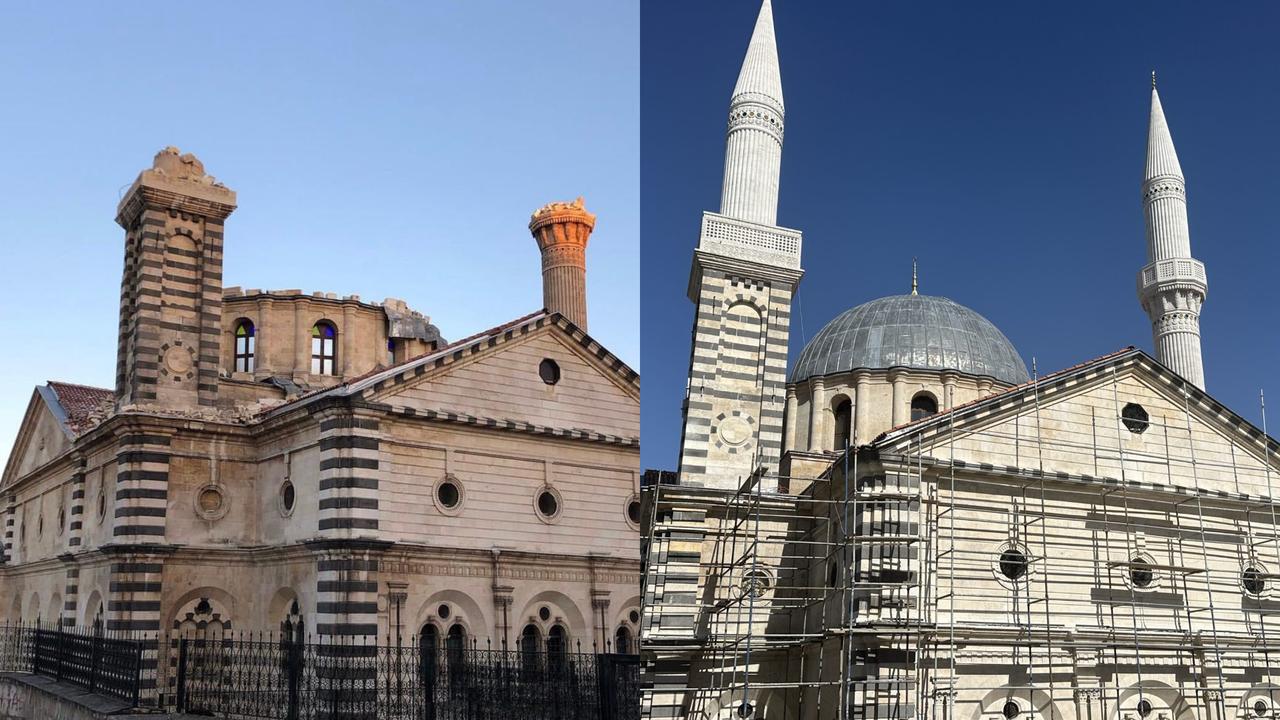
Kurtulus Mosque, Gaziantep
The Kurtulus Mosque, originally built in 1892 as the Virgin Mary Church and later used as a prison before being converted into a mosque in 1960, lost its dome and minarets during the earthquakes.
Restoration works carried out by the General Directorate of Foundations repaired the damaged elements, and the building was reopened for worship.
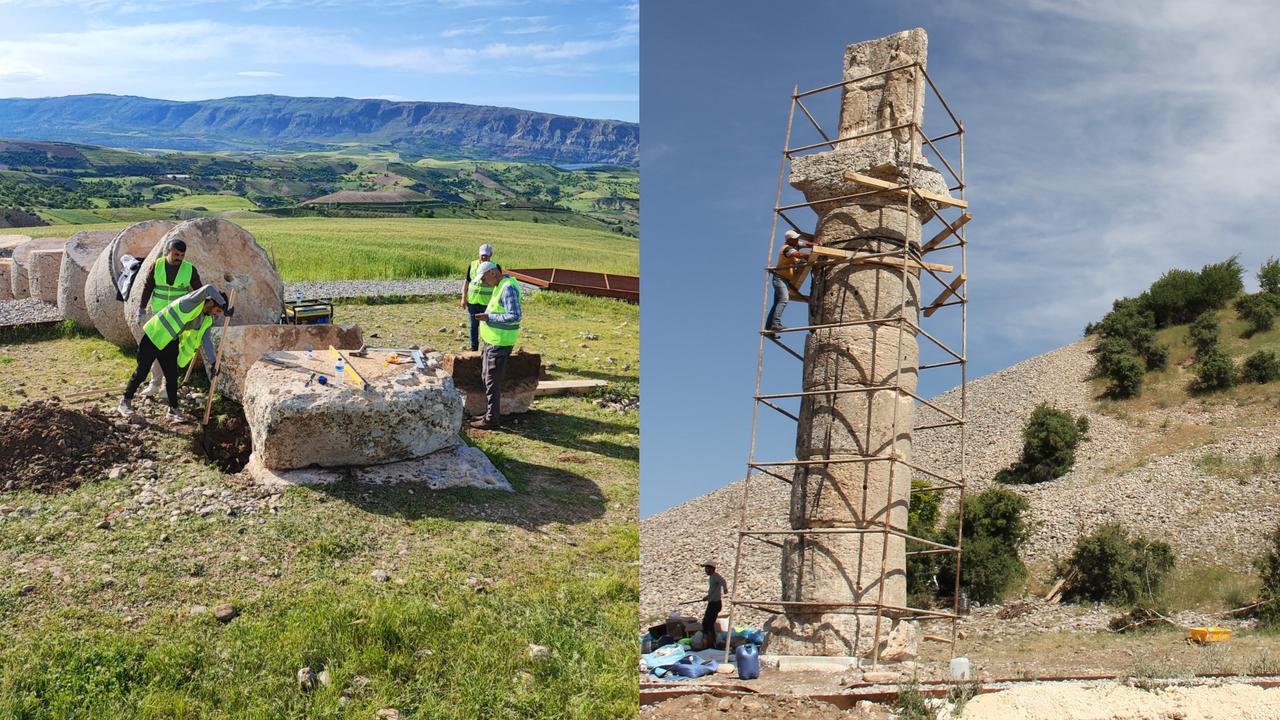
Karakus Tumulus, Adiyaman
The Karakus Tumulus, dating back 2,043 years to the Kingdom of Commagene, suffered severe damage when its well-known “handshake column” collapsed. The column, depicting King Mithradates II shaking hands with his sister Laodice, broke into eight stone drums, while the relief itself split into three pieces.
Under the supervision of the Ministry of Culture and Tourism, a team led by Professor Yasar Selcuk Sener from Ankara Haci Bayram Veli University dismantled, repaired and reassembled the monument. Broken relief fragments were reattached, and a missing base section was completed before the column was raised again.
Beyond the sites featured here, restoration work is still under way at many historic buildings and museums affected by the earthquakes. Officials indicate that further projects are continuing across the region, with additional structures and cultural assets expected to return to public life in the period ahead, extending the broader recovery of cultural heritage beyond what can be shown in this gallery.

 1 min read


 Set as preferred source