Newsletters


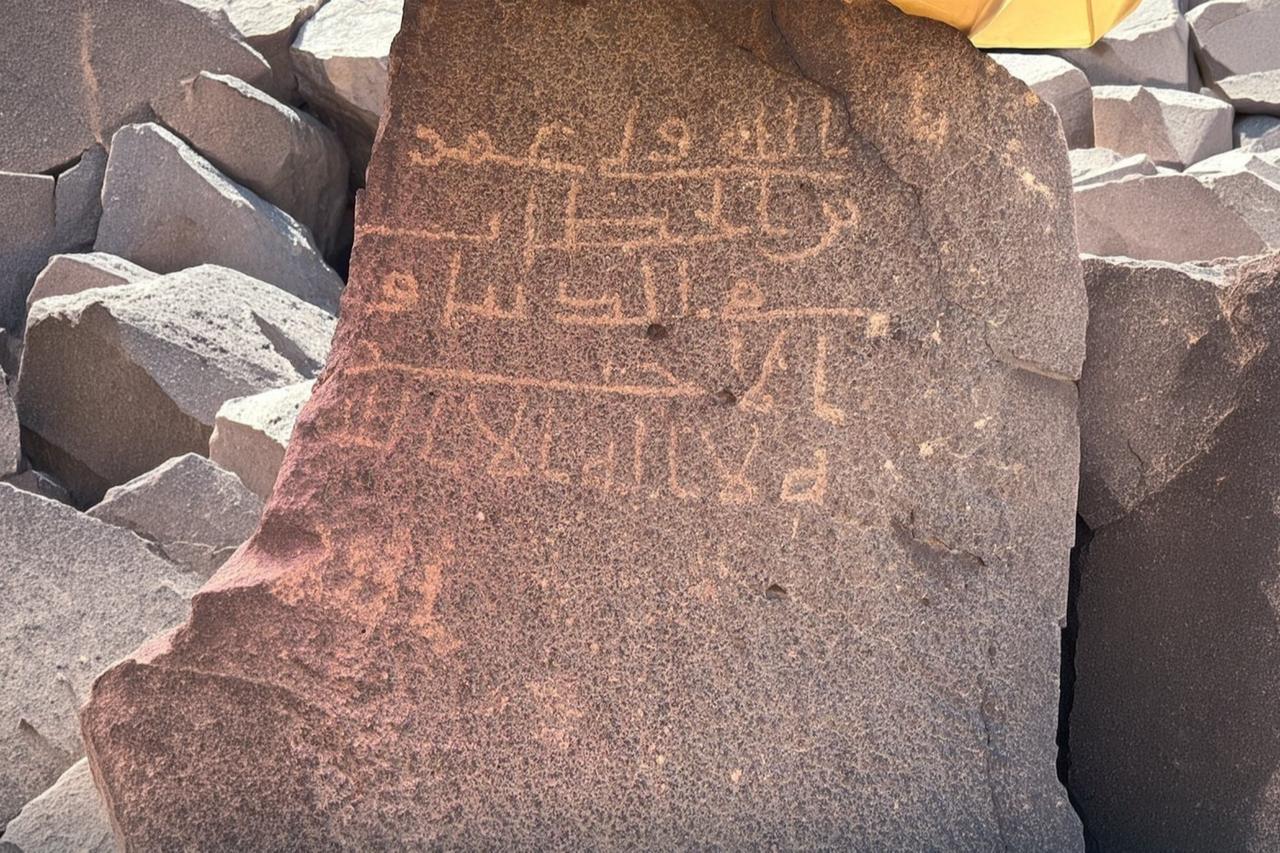


Archaeological surveys in Saudi Arabia’s Medina province have uncovered multiple rock carvings bearing the name of Umar ibn al-Khattab, the second caliph of Islam, alongside a vast collection of other ancient artifacts.
The Heritage Commission revealed Tuesday that these inscriptions were among 1,774 archaeological findings made during the first two seasons of a wide-scale survey mission in the Al Mahd Governorate.
Commission data shows survey teams documented 173 previously unknown archaeological sites, highlighting the region's rich and diverse heritage.
Among the notable findings alongside the caliph's name were ancient Arabic poems written in rock.
In line with statistics by the commission, the discoveries consist of 1,259 rock art drawings, 461 Islamic inscriptions, 34 inscriptions in the language of the Thamud, 11 stone structures, three palaces and archaeological structures, two milestones of caravan routes, and four wells.
Umar ibn al-Khattab governed the Islamic empire from 634 CE to 644 CE.
Historically, the Medina province, and the Al Mahd Governorate specifically, served as a crucial crossroads for ancient trade networks and early Islamic pilgrimage routes.
For centuries, caravans, merchants, and travelers crossed these rugged desert pathways, leaving behind markings as a way to document their journeys, offer prayers, or leave messages for those following behind.
For centuries, caravans, merchants and travelers crossed these rugged desert routes, leaving markings that helped document their journeys, offering prayers, or sending messages to those who followed.
Discovering these inscriptions right along these historic corridors highlights just how vital the region was to the commercial and spiritual connectivity of the early Islamic world.


 Set as preferred source
 Set as preferred source


 1 min read


 1 min read