Newsletters


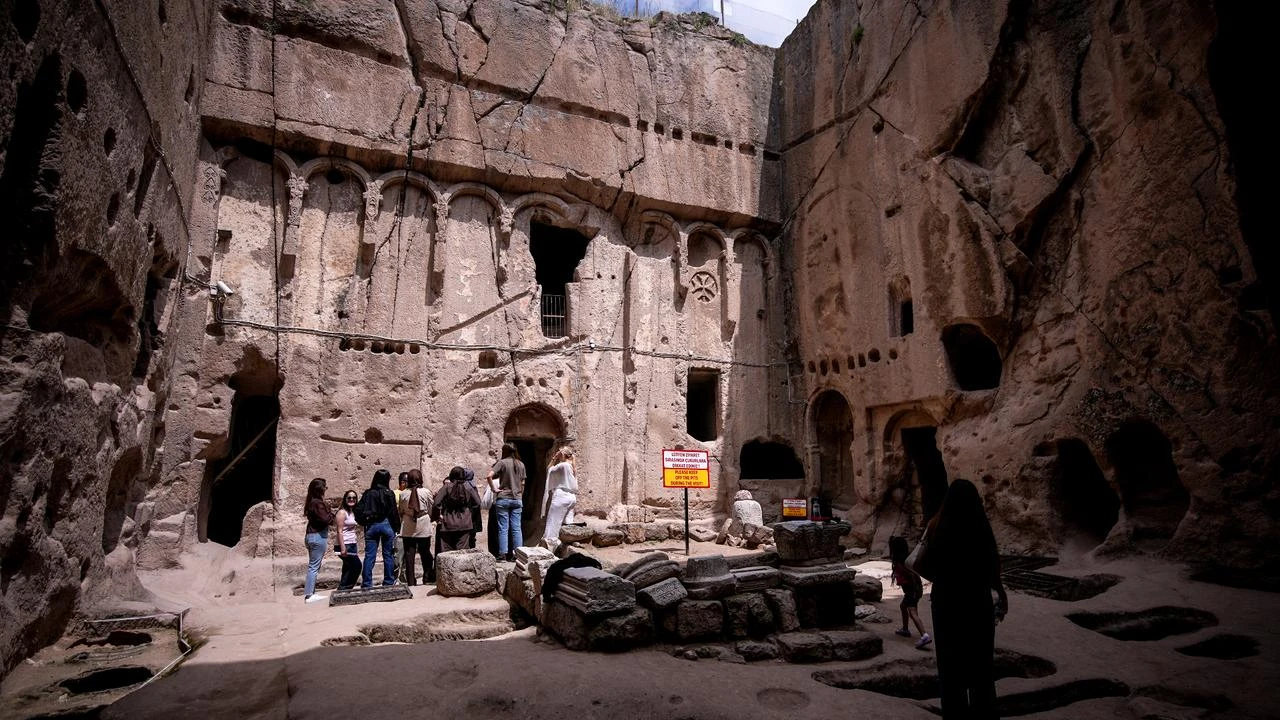
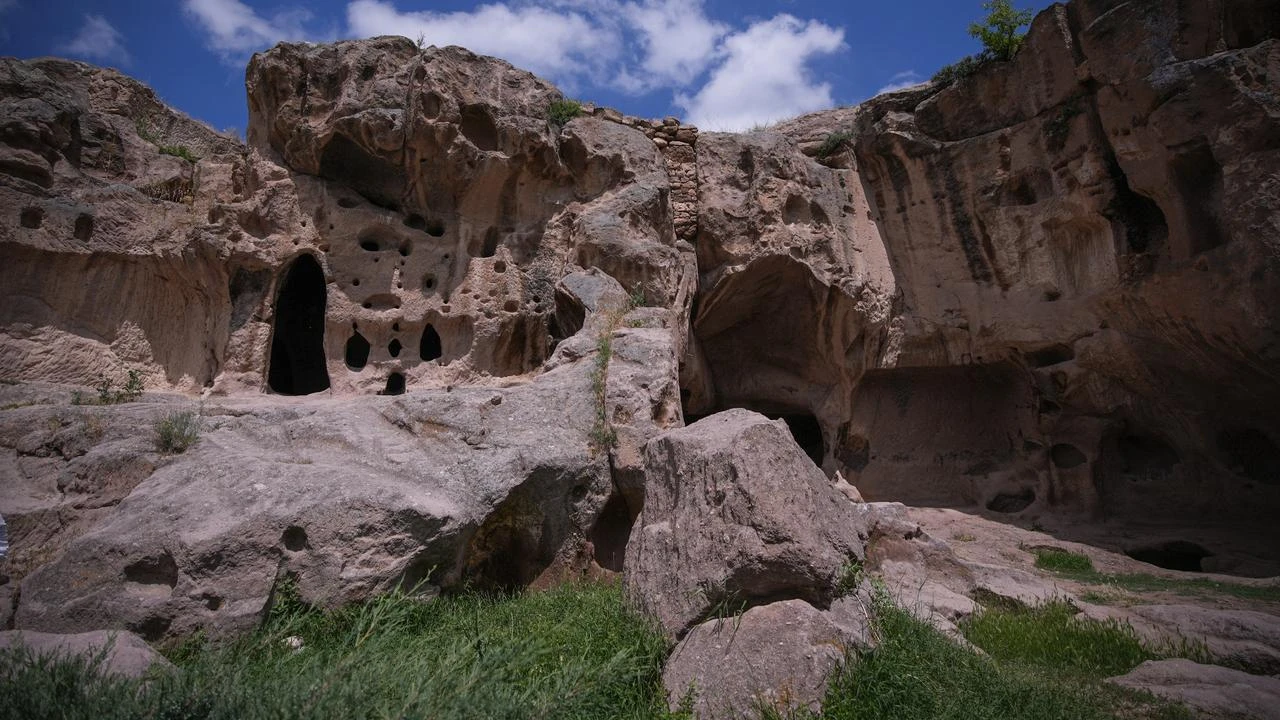
Carved into an extensive rock formation near Nigde in central Türkiye, Gumusler Monastery brings together Byzantine religious art, underground spaces and traces of daily life within one remarkably preserved settlement.
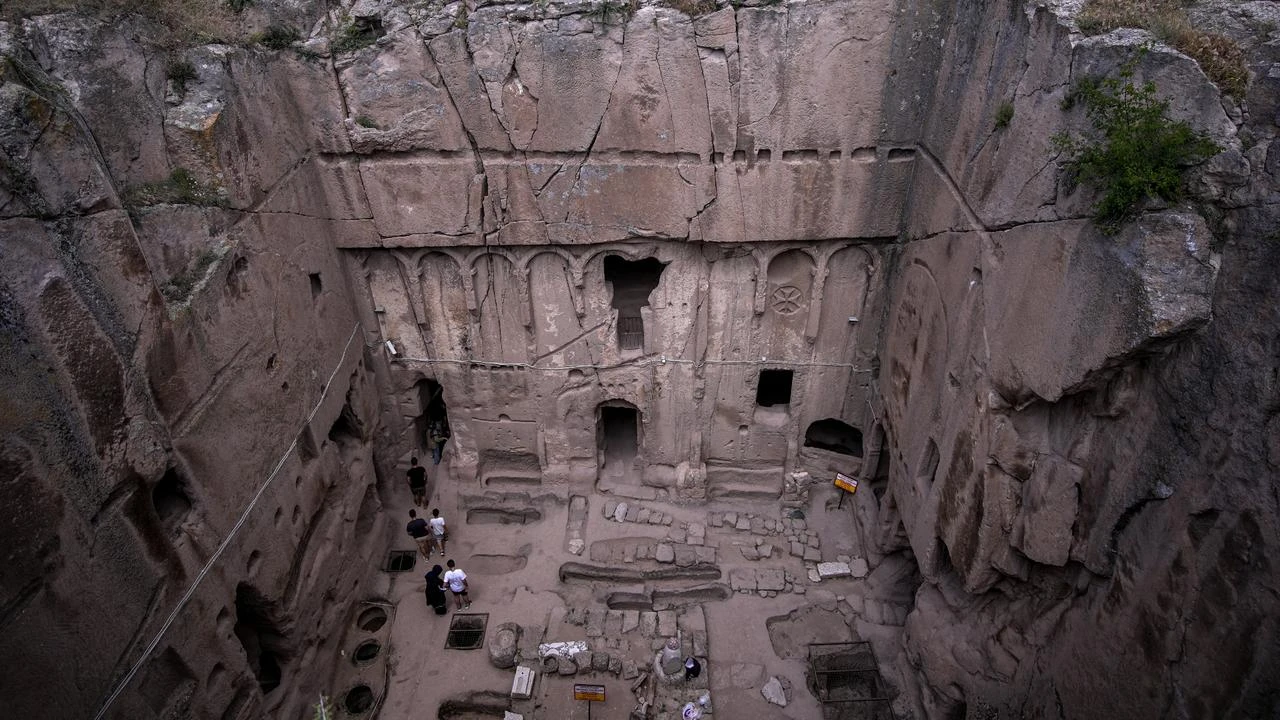
Located in Gumusler town, about 8 kilometers (4.97 miles) from Nigde, the monastery and its underground city were officially registered as an archaeological site in 1973.
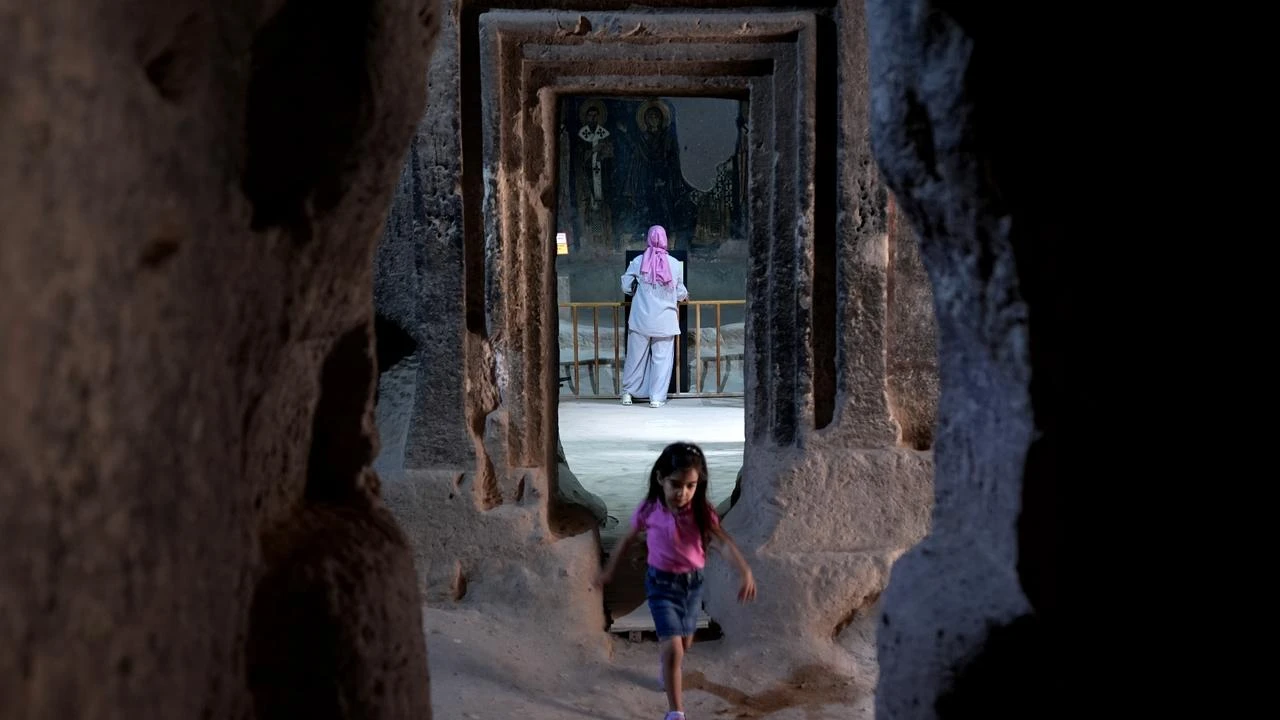
The settlement stretches across a broad rock mass whose eastern and southern faces extend for about 1.5 kilometers, with the entirely rock-cut facade once serving as a residential center.
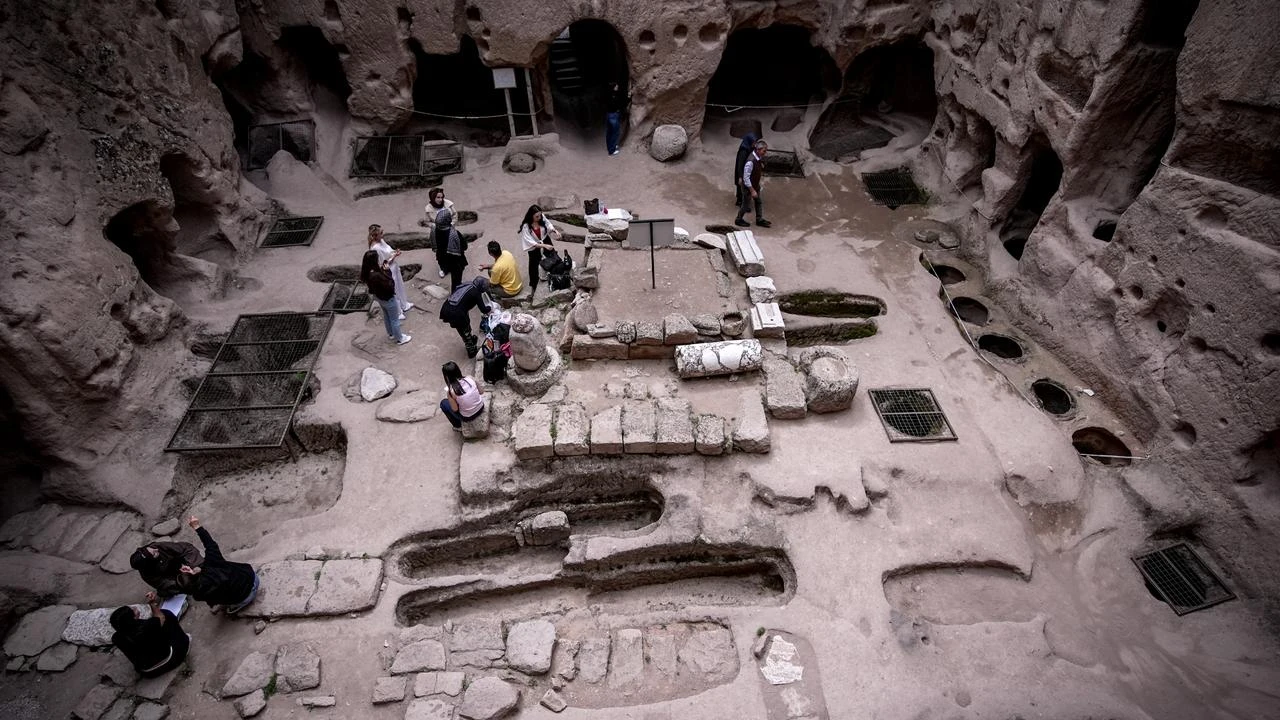
Developed between the eighth and 12th centuries, the complex was carved directly out of the main rock rather than built up with separate blocks of stone.
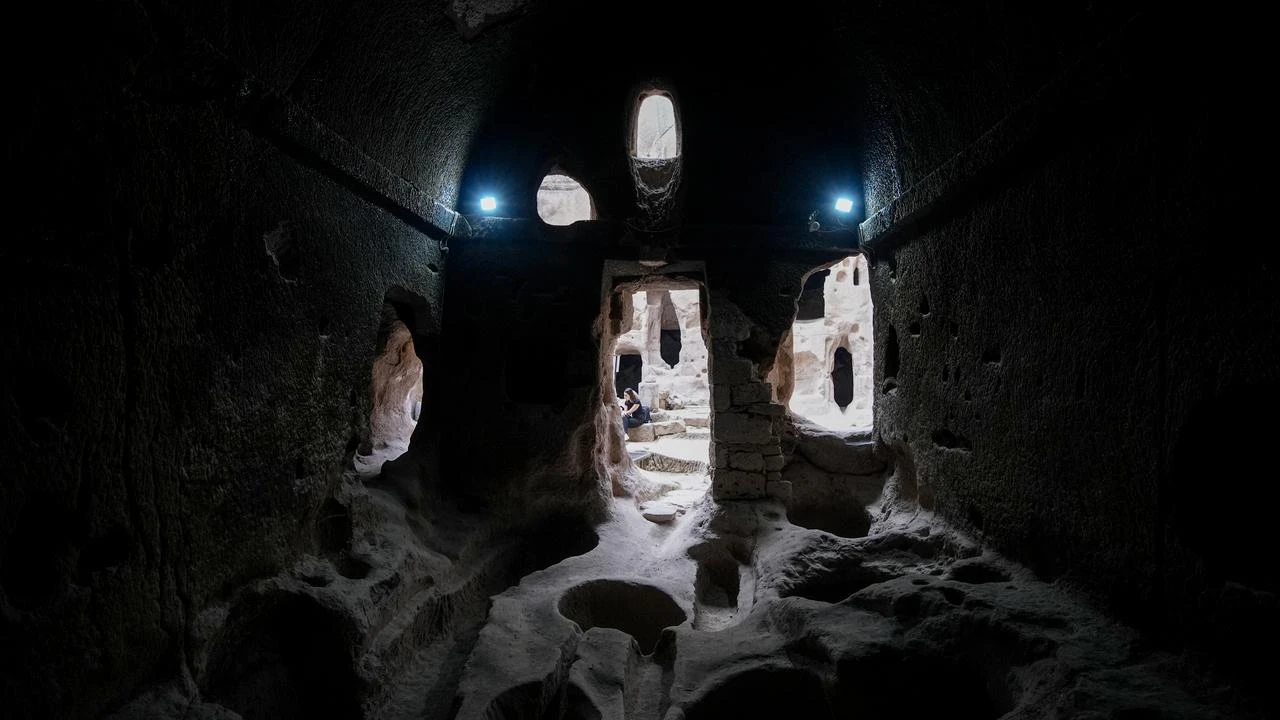
At the heart of the monastery, a central courtyard with steep walls rising as high as 14 meters opens out onto the church, underground chambers, and other connected structures.
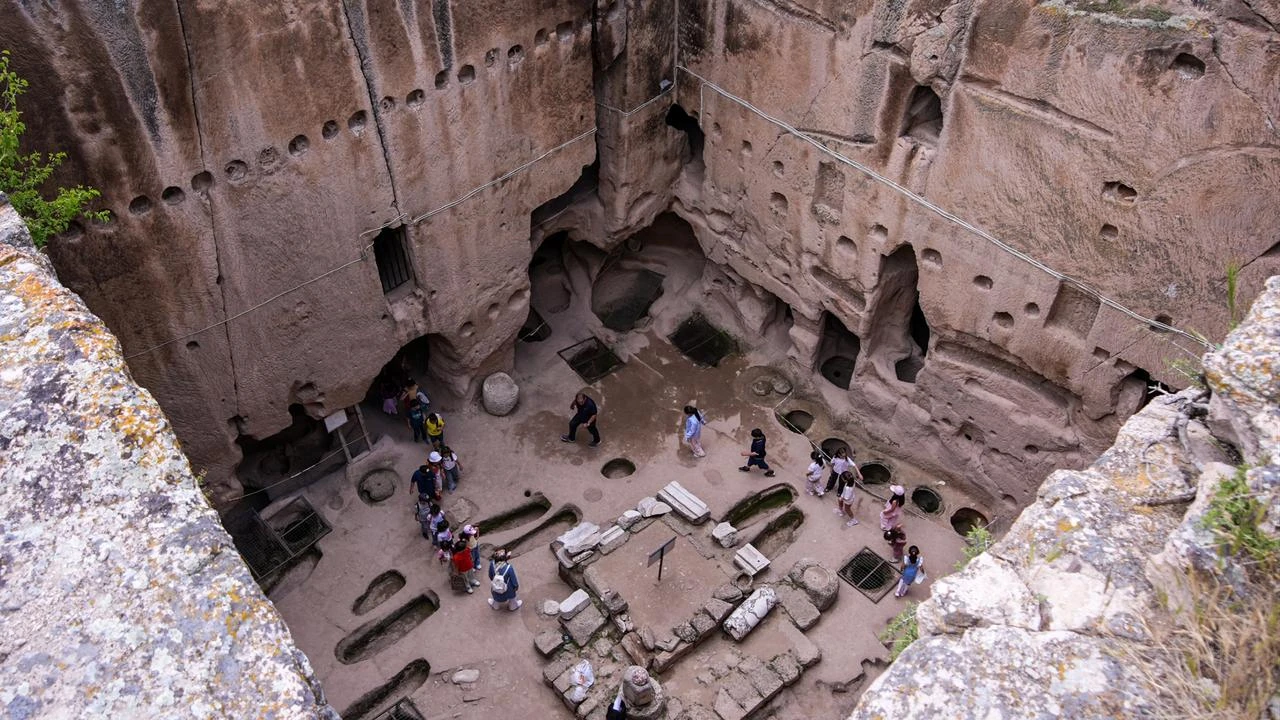
Archaeological evidence indicates that the large room on the northern side of the complex and the floor of the central courtyard were used as burial areas.
A two-story underground city lies on the southern side of the courtyard, while the monastery's rock-cut church occupies the western section of the complex.
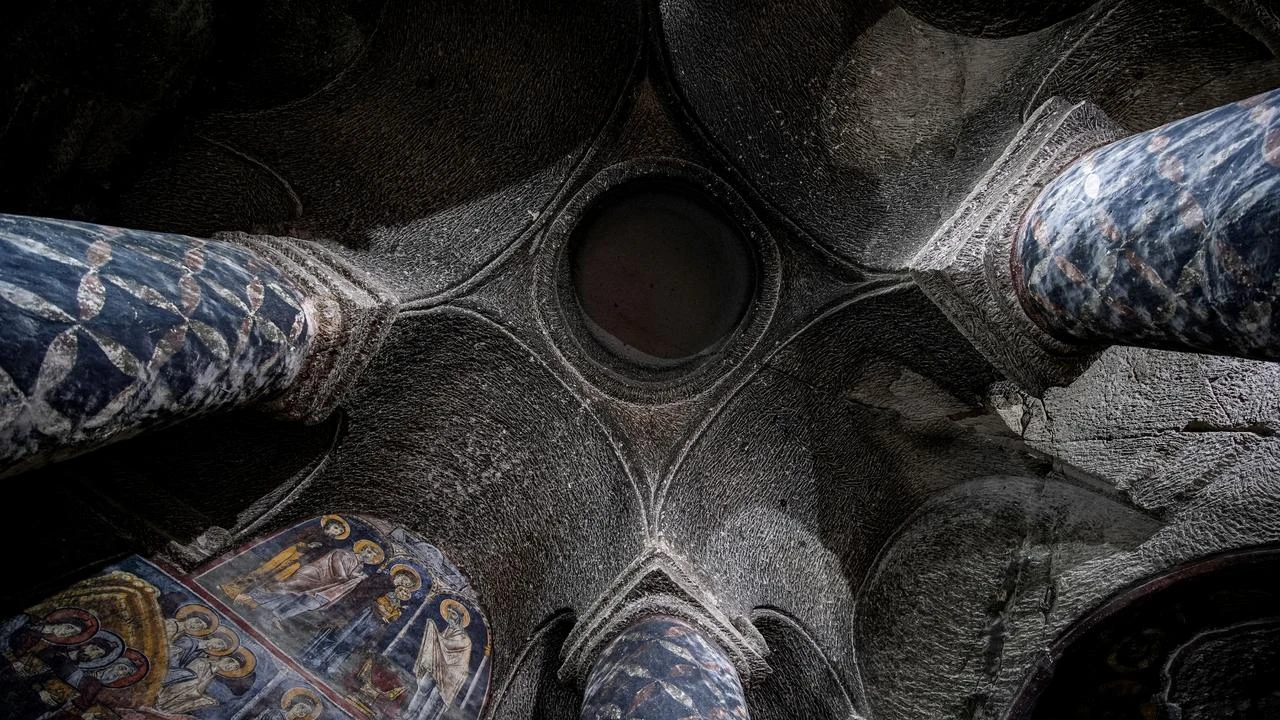
The church follows a closed Greek-cross plan, an architectural layout in which four arms of similar length spread out from a central space enclosed within the structure.
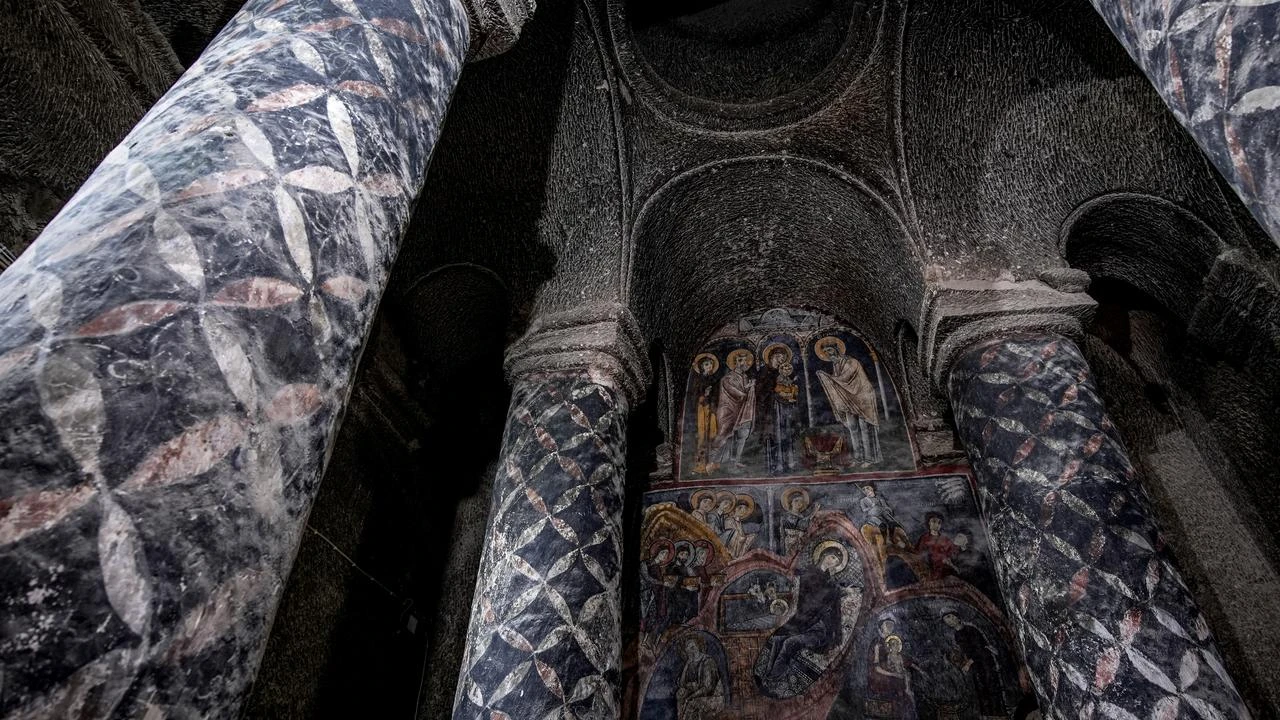
Four columns cut from the natural bedrock support the church interior, where plaster surfaces were dressed up with decorative rosette motifs.
The paintings in the main apse, the semicircular area behind the altar, include a Deesis scene showing sacred figures in prayer, symbols linked to the Gospel writers, and portraits of church fathers including Basil the Great, Gregorios of Nyssa, and Gregorios of Nazianzus.
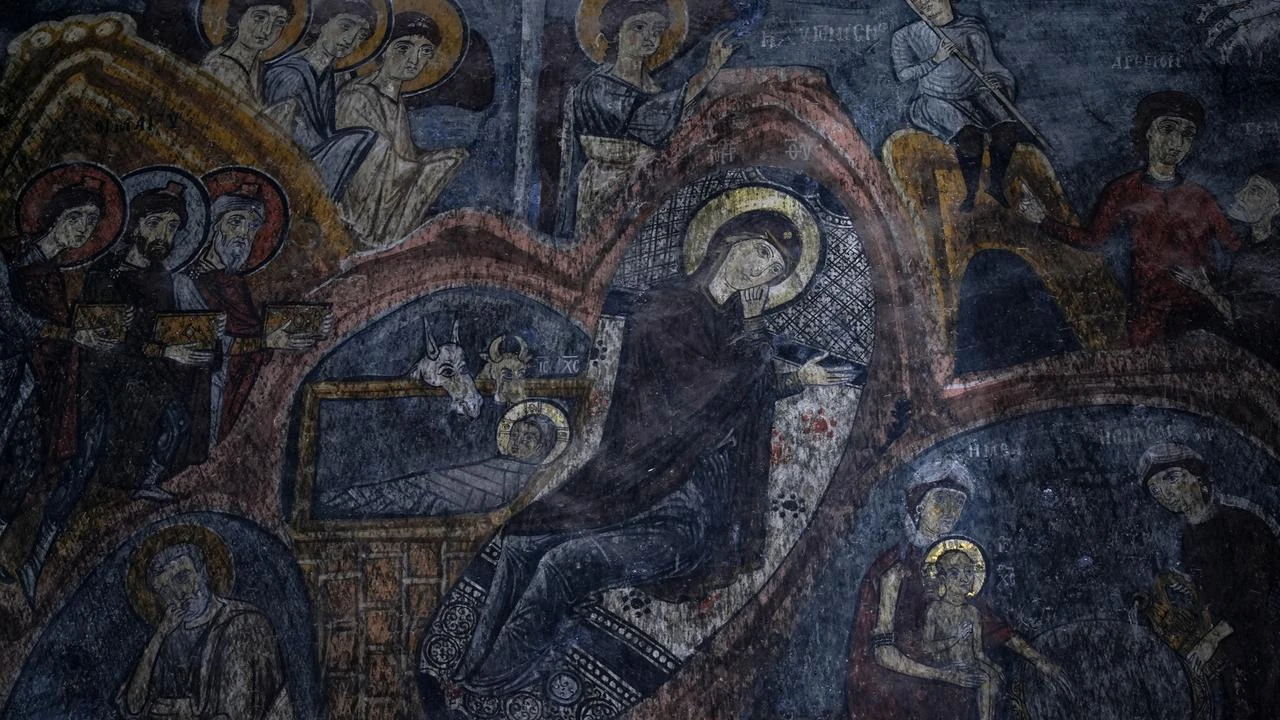
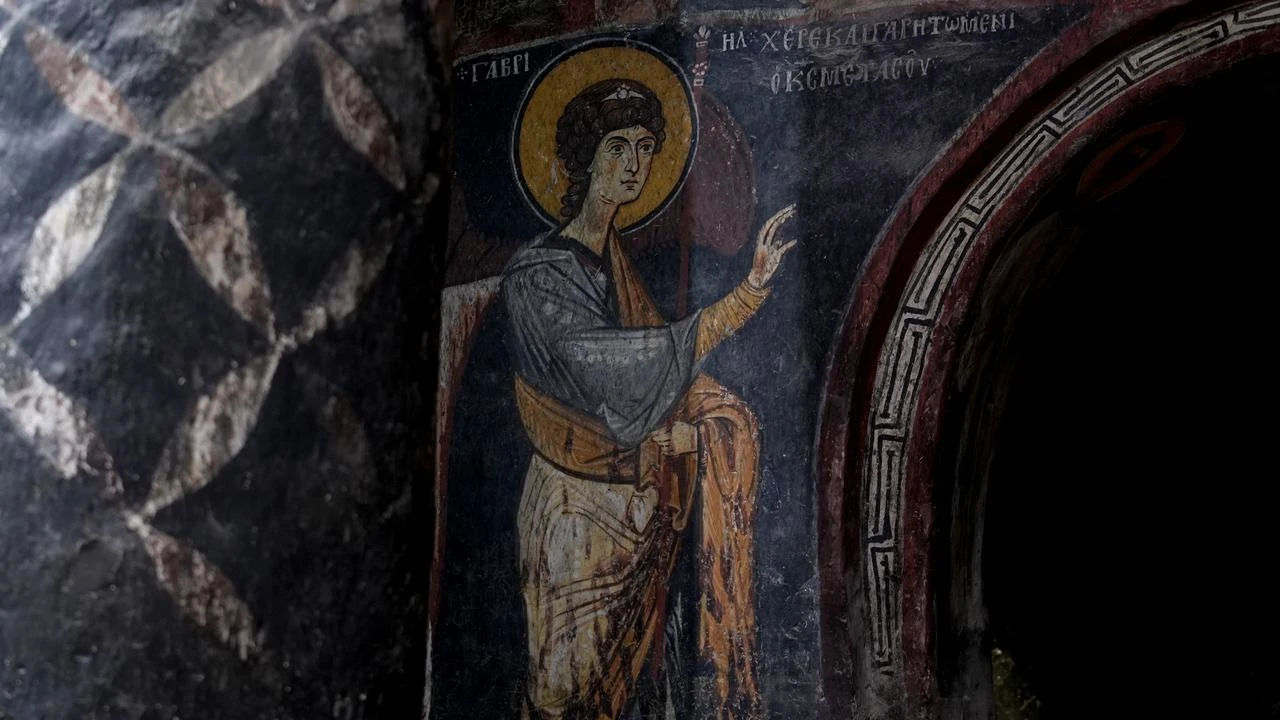
Other scenes, including the Annunciation, the birth of Jesus, the Presentation at the Temple, John the Baptist, and St. Stephanos, are believed to have been carried out by a second artist, while images of Mary, the child Jesus, and the archangels Gabriel and Michael are linked to a third.
Above the narthex, the entrance area leading into the naos or main worship space, a room displays hunting scenes and animal figures described as unusual for Cappadocia, while the church paintings are dated through their style and iconography to the 11th and 12th centuries.


 Set as preferred source

 3 min read