Newsletters





The European Broadcasting Union (EBU) is preparing to confront one of the most serious crises in Eurovision history, as its members gather in Geneva to decide whether Israel should be allowed to take part in the 2026 Eurovision Song Contest in Vienna. The issue, which has triggered boycott threats and exposed deep divisions among broadcasters, will be discussed at the EBU General Assembly on December 4–5.
At the meeting, public broadcasters that make up the EBU will review recent rule changes introduced after allegations that the Israeli government interfered in last year’s contest. The EBU is an alliance of mainly European public service media organizations which owns and organizes the Eurovision Song Contest each year.
Dave Goodman, head of communications for the Eurovision Song Contest, said members will first be asked to examine whether the new reforms go far enough to ease concerns. According to his explanation, a formal vote on Israel’s participation will only take place if members decide that the latest measures are not sufficient.
The new regulations, announced in November, are designed to limit what the EBU describes as disproportionate promotional campaigns, particularly when they are led or financed by governments or state institutions. Broadcasters and artists are now barred from joining third-party campaigns that could sway results, and the EBU has warned that any attempts to influence voting unfairly will lead to sanctions.
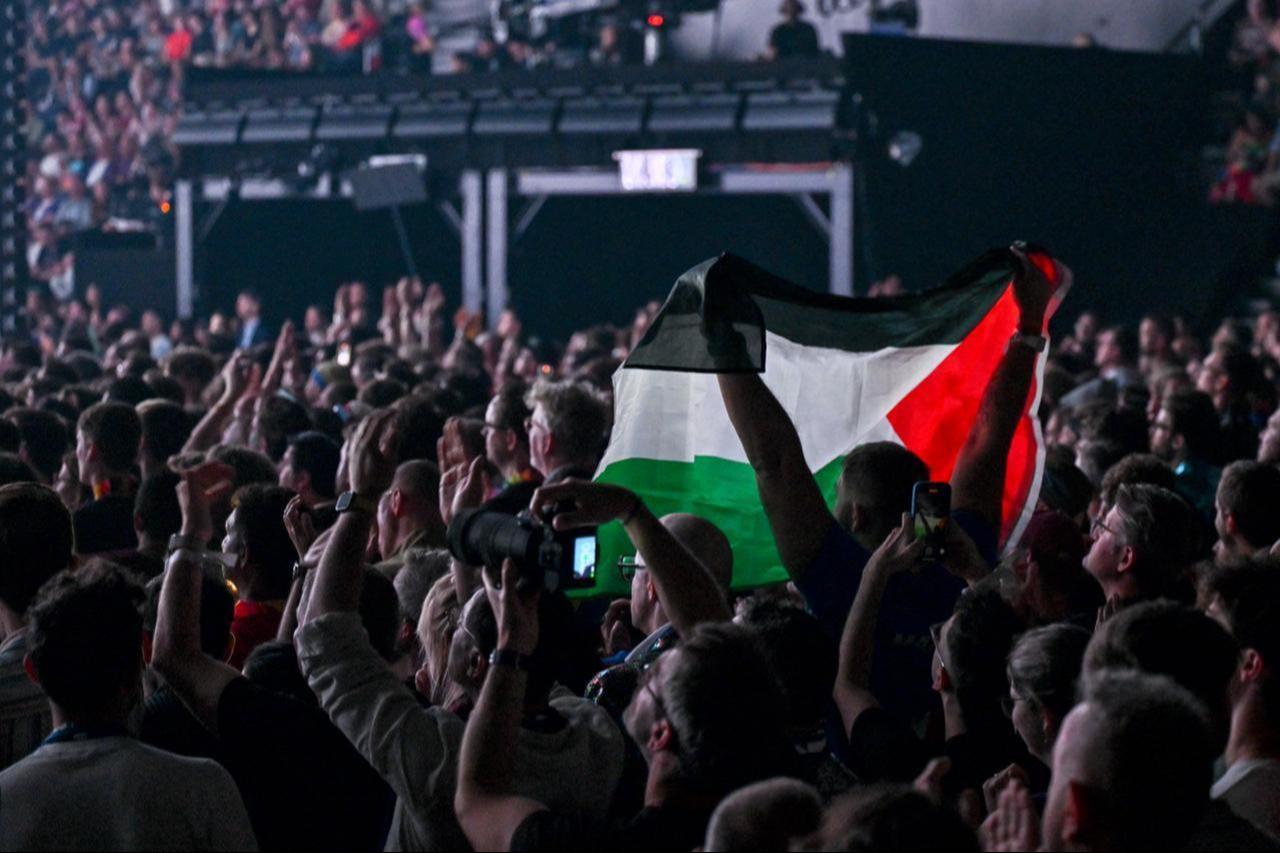

As part of the overhaul, the EBU has decided to cut in half the number of votes a single person can cast per payment method during the contest. For the 2026 edition in Vienna, viewers will be able to send up to 10 votes instead of 20 via each channel, whether online, by SMS, or by phone.
In addition, professional juries, which consist of music industry professionals appointed by participating broadcasters, will return to the semi-final stage for the first time since 2022. Their comeback is meant to restore a near 50–50 balance between jury scores and public voting, after recent contests leaned more heavily on audience votes.
The debate over Israel’s place in the competition has already led to open challenges from several European broadcasters. Some argue that Israel should be excluded because of the war in Gaza and what they describe as political interference, while others insist that expelling the country would be unacceptable and would undermine Eurovision’s traditional role as a pan-European cultural event.
Spain’s public broadcaster RTVE has said it will pull out of the 2026 contest if Israel is not expelled, signalling that it wants the EBU to take firm action. Dutch broadcaster AVROTROS has stated that it cannot support Israel’s participation “given the ongoing severe humanitarian tragedy in Gaza,” adding that it believes government interference in the contest has been proven.
Slovenia’s broadcaster RTV has also announced that it would withdraw, pointing to its solidarity with Palestinians. From Iceland, broadcaster RUV has said it will “reconsider” taking part if Israel competes, while its board has already called for Israel to be excluded. Ireland’s RTE has gone further by declaring that it would be “unconscionable” to participate if Israel is allowed to enter, citing the situation in Gaza.
Despite the mounting boycott threats, other political and media figures have lined up behind Israel’s continued place in the contest. They argue that exclusion would cross a red line and would itself amount to politicizing Eurovision.
German Chancellor Friedrich Merz has said that if Israel were expelled, Germany should withdraw from the event, describing the fact that expulsion is even being discussed as “a scandal.” Austria’s public broadcaster ORF, which will host the show in Vienna next May, has also made clear that it backs Israel’s participation, stressing that the country is “an inseparable part” of the Eurovision Song Contest.
As the General Assembly gets under way in Geneva, EBU members now need to decide whether the latest reforms are enough to protect the integrity of the competition or whether they must go further and put Israel’s participation to a formal vote, in a move that could reshape the contest’s future.


 Set as preferred source
 Set as preferred source


 1 min read

 1 min read