

 Newsletters


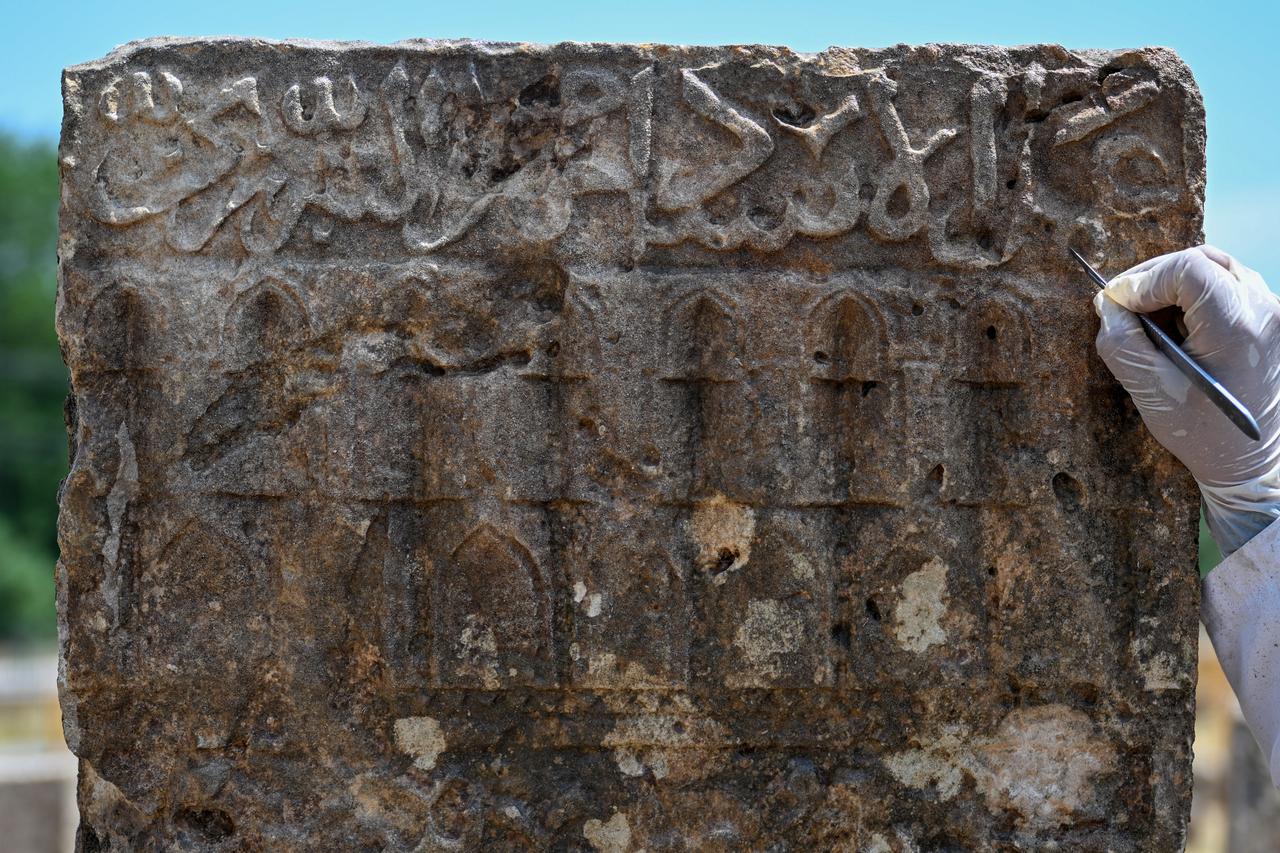


An inscription reading "Amel-i Ustad Muhammed el-Tebrizi" (the work of Master Muhammed of Tabriz) was found on one of the stones unearthed from beneath the soil at the historic Seljuk Cemetery in Van's Gevas district, which contains the Halime Hatun Tomb, built 700 years ago.
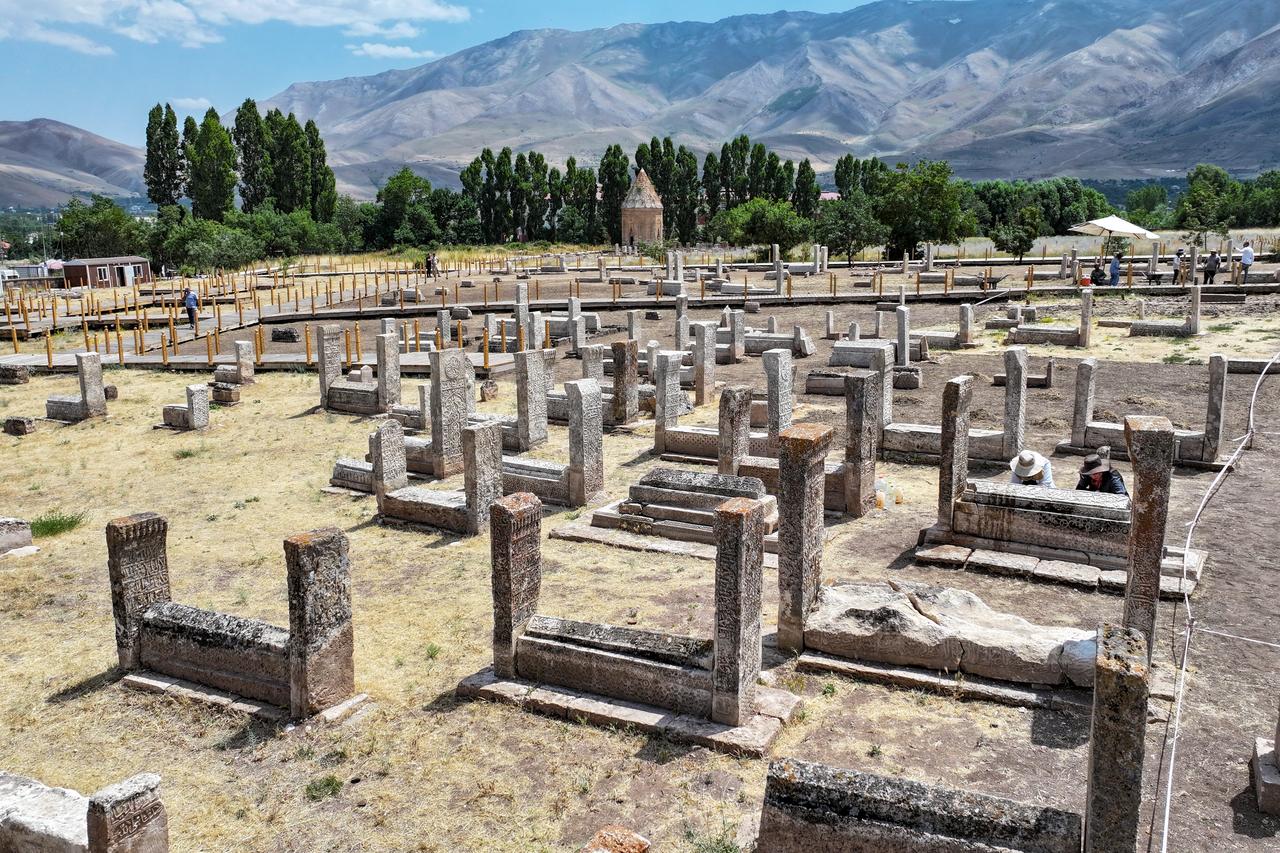
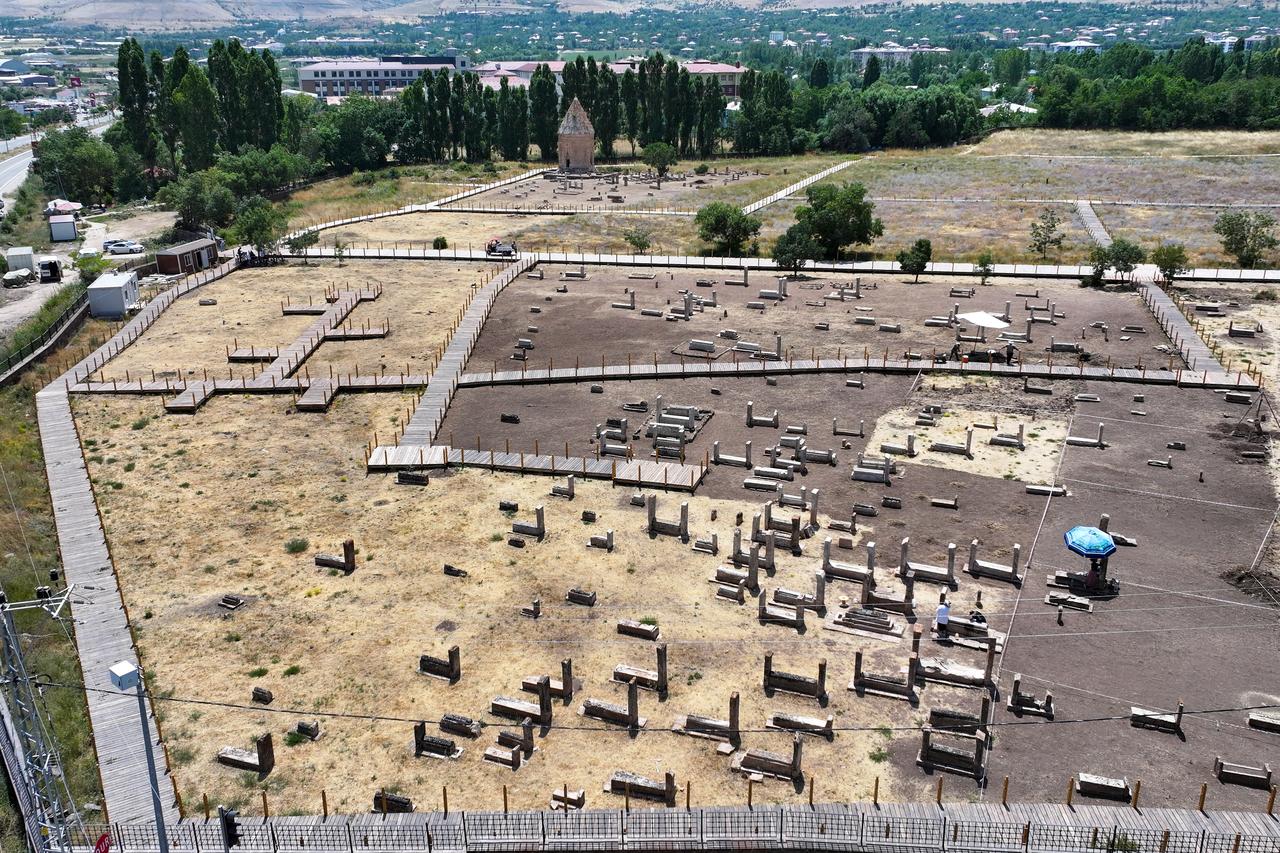
Excavation and restoration work, which began in 2022 with permission from the Ministry of Culture and Tourism, is continuing at the cemetery, one of Anatolia's largest Turkish-Islamic burial sites.
The work, granted "Presidential Decisive Excavation" status last year under the Heritage for the Future Project, is being carried out under the leadership of Associate Professor Ercan Calis of the Art History Department at Van Yuzuncu Yil University (YYU).
A 15-person team of experts in art history, archaeology, epigraphy, architecture, restoration, and conservation has identified more than 1,000 gravestones across the roughly 50-decare (about 12-acre) site, some reaching two and a half meters in height and notable for their inscriptions and traditional motifs.
Among these, a gravestone whose headstone was broken and whose base was buried 50 centimeters (19.6 inches) underground was uncovered through two days of meticulous work.
In addition to the discovered inscription "Amel-i Ustad Muhammed el-Tebrizi," the team's work since 2022 has uncovered inscriptions belonging to stonemasons named "Amel-i Ustat Esed," "Amel-i Yusuf bin Miran" and "Abbas Oglu Omer."

Calis said that they were pleased to bring the new findings to the scientific community, noting that this marked the fourth stonemason identified at the site. He said the discovery was not just a stone but reflected the artist's own distinctive style and workshop practice.
"Finding a new master is actually quite significant for us," Calis said. "We had already understood that his work was different, but our analysis revealed that this piece was also made by a different master."
He added that master craftsmen reflect their emotions, talents, and the characteristics of their period in the stone through their own perspectives.
Calis explained that the stone, like many others, was broken, with its headstone completely buried underground before being carefully raised. He noted that its arrangement was particularly different.
"While the inscriptions belonging to our other masters are located on the head side of the headstone, this new master's inscription is on the foot side," he said, adding that this made it a markedly different piece of work.
Deputy excavation head Dr. Ahmet Erk said the team had been working at the site since 2022, previously identifying inscriptions by three other stonemasons.
"This year we identified the name of a new master," he said. "The inscription reads 'Amel-i Ustat Muhammed el-Tebrizi.' He came from the city of Tabriz in Iran."
Erk said the findings suggest masters came from a wide region rather than a single tradition, reflected in the variety of decorations, stone structures and inscriptions.
"This place has the character of an open-air museum," he added. "We work with undergraduate, graduate and doctoral students, turning knowledge into practice rather than theory."


 Set as preferred source
 Set as preferred source


 1 min read
 1 min read


