Newsletters




An unusual human-like face spotted among the ceiling decorations of an 800-year-old UNESCO World Heritage site in central Türkiye has raised new questions about whether the monument's medieval builders deliberately concealed a portrait of its patron within the stonework.
Veteran Turkish journalist Sirer Dogan, who first documented the famous prayer-like shadows at the Divrigi Great Mosque 41 years ago, has now photographed what he believes could be a hidden depiction of Ahmet Shah, the 13th-century ruler who commissioned the mosque.
The newly observed figure appears in the ceiling of the adjoining hospital, known as a darussifa, a historical medical and healing institution.
According to Dogan, its features become visible when viewed from a particular position near the entrance.
The resemblance has not been scientifically verified, and Dogan has called on researchers to investigate whether the apparent portrait was intentionally incorporated into the structure.
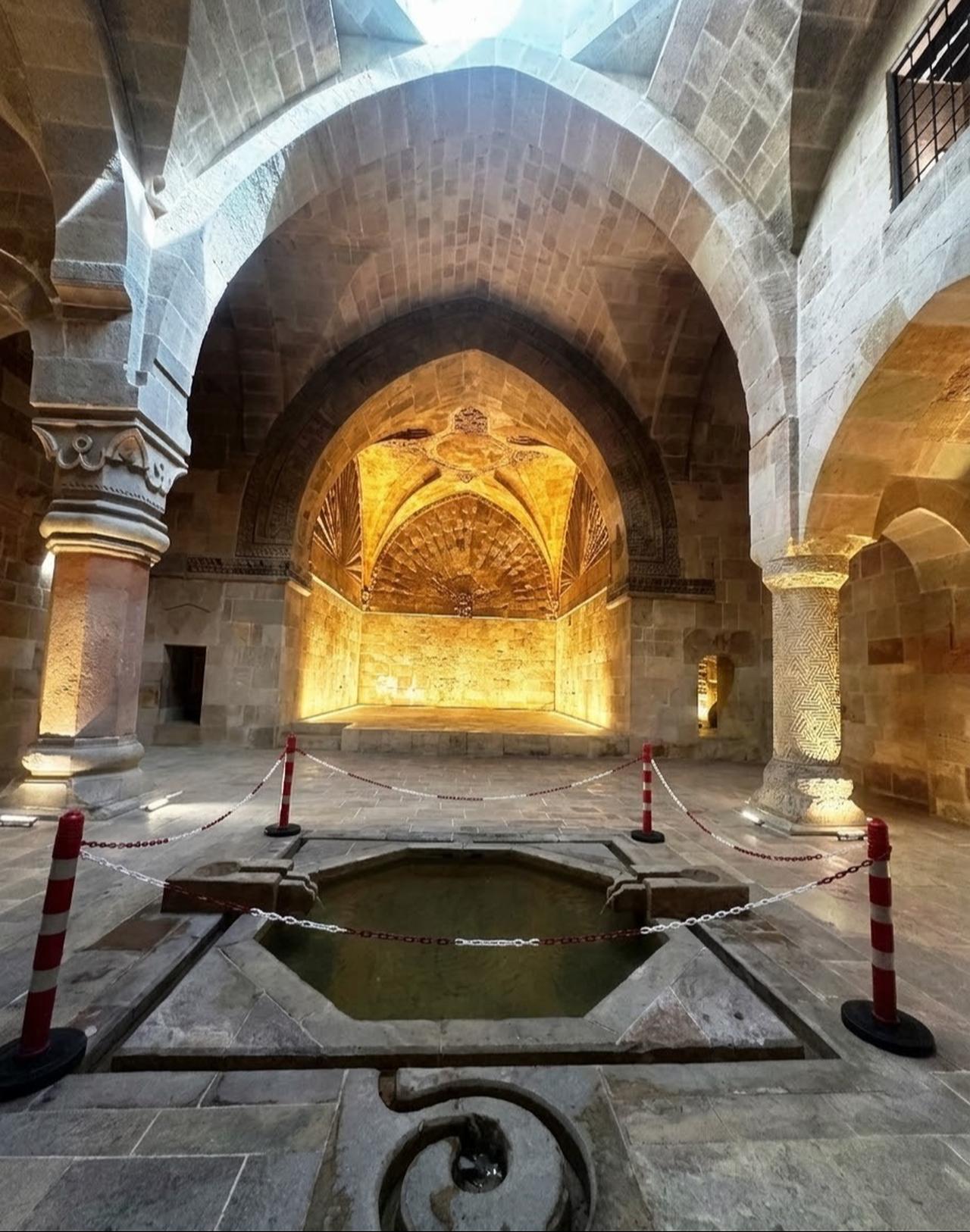

The ceiling's decorative patterns appear to form a male face when viewed from below at a specific angle, with narrow eyes, prominent cheekbones and a drooping mustache.
Dogan believes these features could represent Ahmet Shah, who ruled under the Mengujek dynasty, a regional principality affiliated with the Anatolian Seljuk state.
He further suggested that the image may have been commissioned by Melike Turan Melek, who oversaw the construction of the hospital section, as an expression of her affection for Ahmet Shah.
Speaking to Ihlas News Agency (IHA), Dogan said his decades of documenting the monument had encouraged him to examine its architectural details more closely, particularly following its latest restoration.
"During my 55 years in journalism, I have taken many photographs of the Divrigi Great Mosque and Hospital," he said, recalling his previous observations and discussions with historians, professors and architects.
Dogan added he suspected the ceiling figure represented Ahmet Shah and that Turan Melek may have had his likeness incorporated into the building because of their love for each other.
However, the proposed identification and romantic explanation remain Dogan's personal interpretations rather than established historical findings.
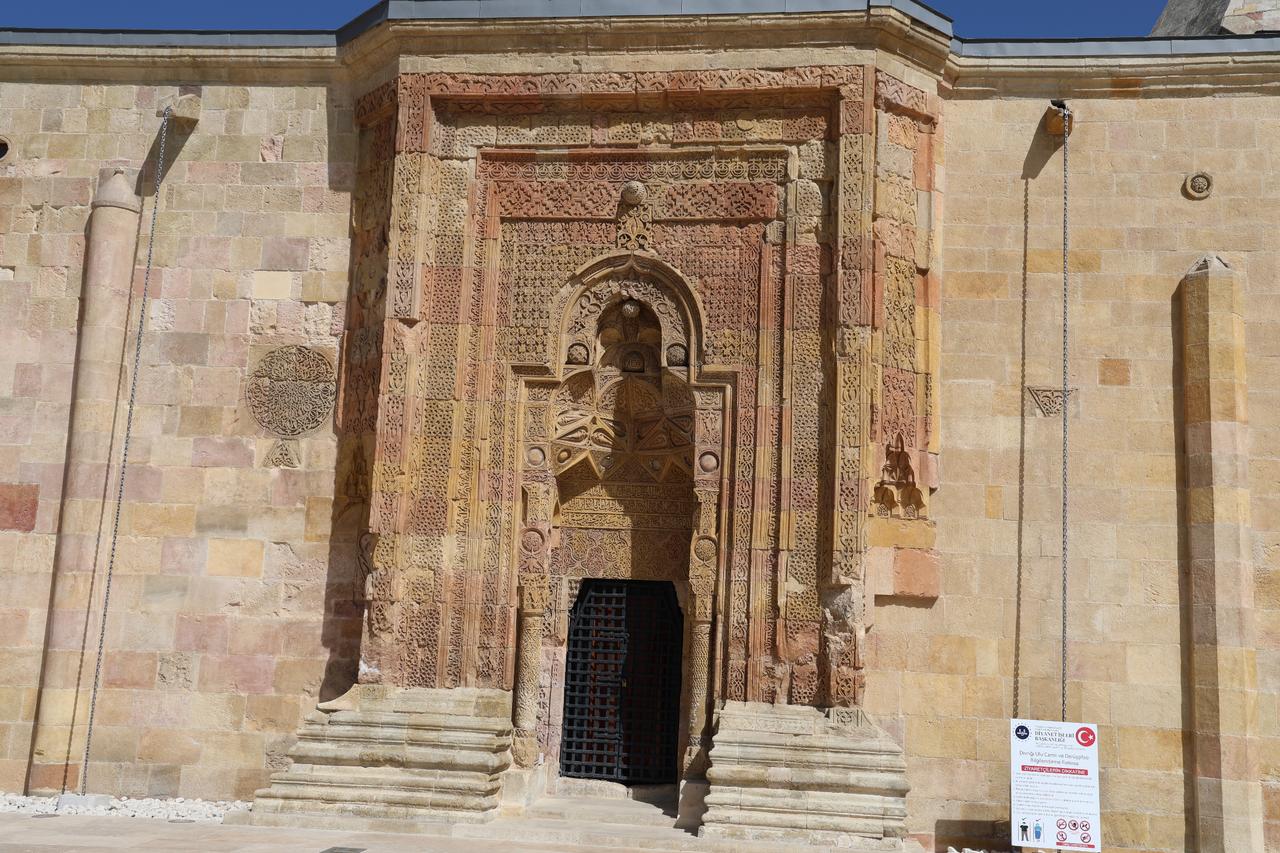
Dogan's latest observation comes over four decades after he photographed sunlight casting shadows resembling a person praying on the mosque's elaborately decorated entrances.
Those photographs attracted attention, and Japanese researchers subsequently brought the phenomenon to a wider international audience.
According to Dogan, researchers publicized the shadow formations around 25 years after his original photographs, further strengthening his interest in the building's unusual architectural features.
Following the monument's recent restoration, he returned to photograph its interior and noticed the apparent facial outline among the hospital ceiling decorations.
He believes the new observation warrants closer examination by architectural historians and other specialists.
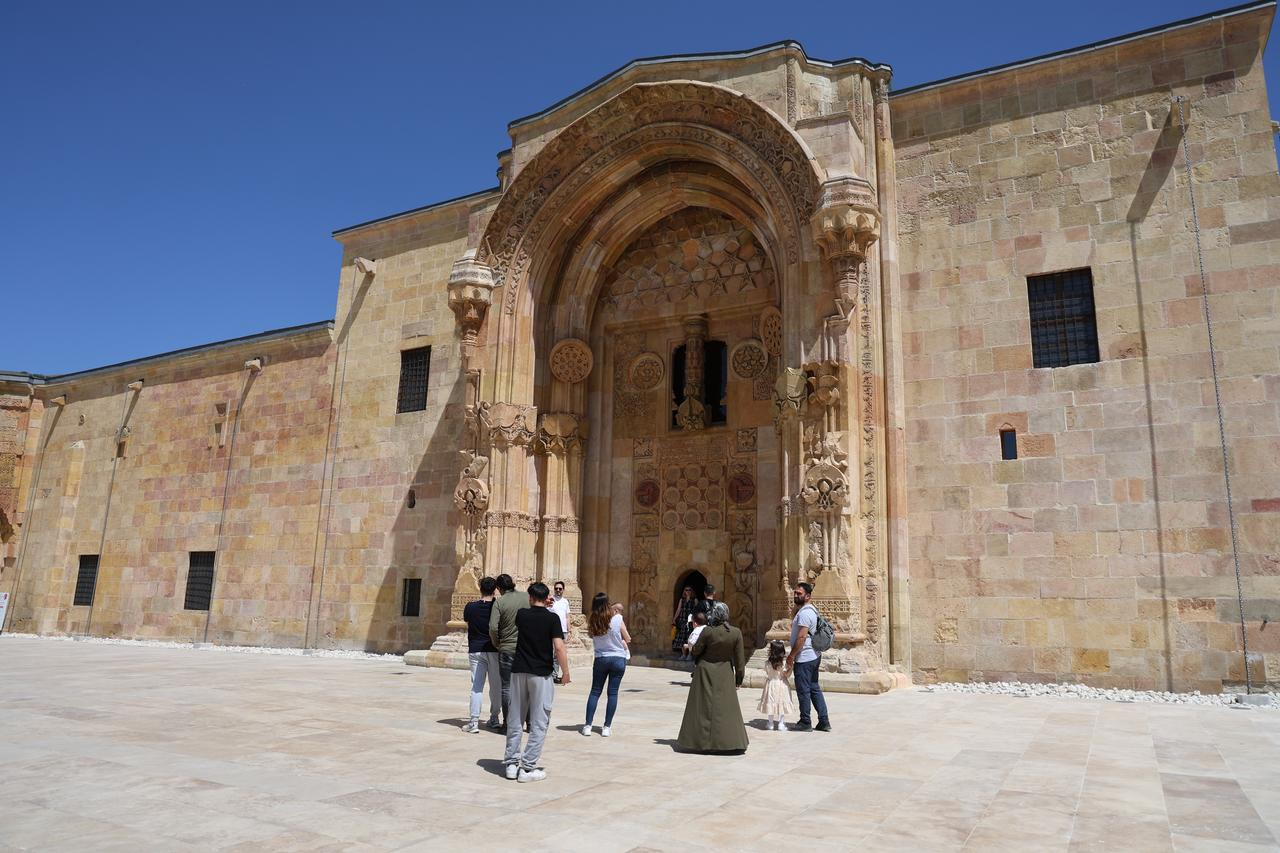
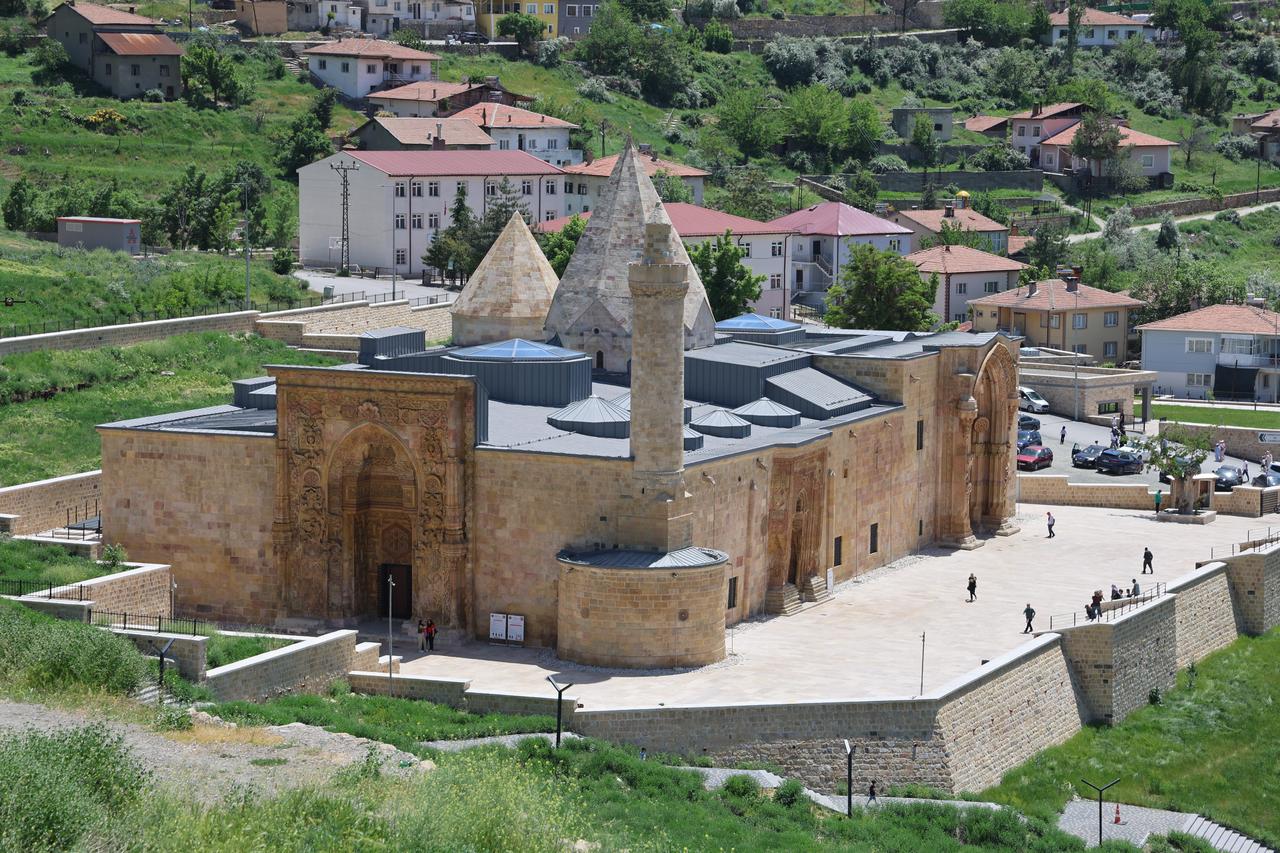
Located in the Divrigi district of Sivas province, the Divrigi Great Mosque and Hospital became one of Türkiye's first UNESCO World Heritage properties in 1985.
Often described as the "Alhambra of Anatolia," the complex was commissioned during the Mengujek period, with Ahmet Shah overseeing the mosque and Melike Turan Melek commissioning the adjoining hospital.
Construction began in 1228 and was completed in 1243 under chief architect Hurrem Shah of Ahlat, son of Mughis.
The complex is particularly known for its intricate stone carvings, which reportedly include nearly 10,000 decorative motifs.
Although many patterns appear symmetrical from a distance, closer examination reveals differences in their designs, with individual motifs said to have no exact duplicates elsewhere in the structure.
The monument is also described as an unusual example of a religious and medical complex commissioned jointly by a male and female patron.
Several questions surrounding its construction remain unresolved.
According to accounts cited in the report, no confirmed records of architect Hurrem Shah's work before or after the project have been identified.
Historical accounts also suggest that Melike Turan Melek died before the complex was completed, while the architect's fate after construction remains uncertain.
Dogan's newly photographed ceiling formation now adds another question to the monument's long history, although determining whether the apparent face was deliberately carved and whom it might represent will require further scholarly investigation.


 Set as preferred source
 Set as preferred source


 1 min read


 1 min read