Newsletters


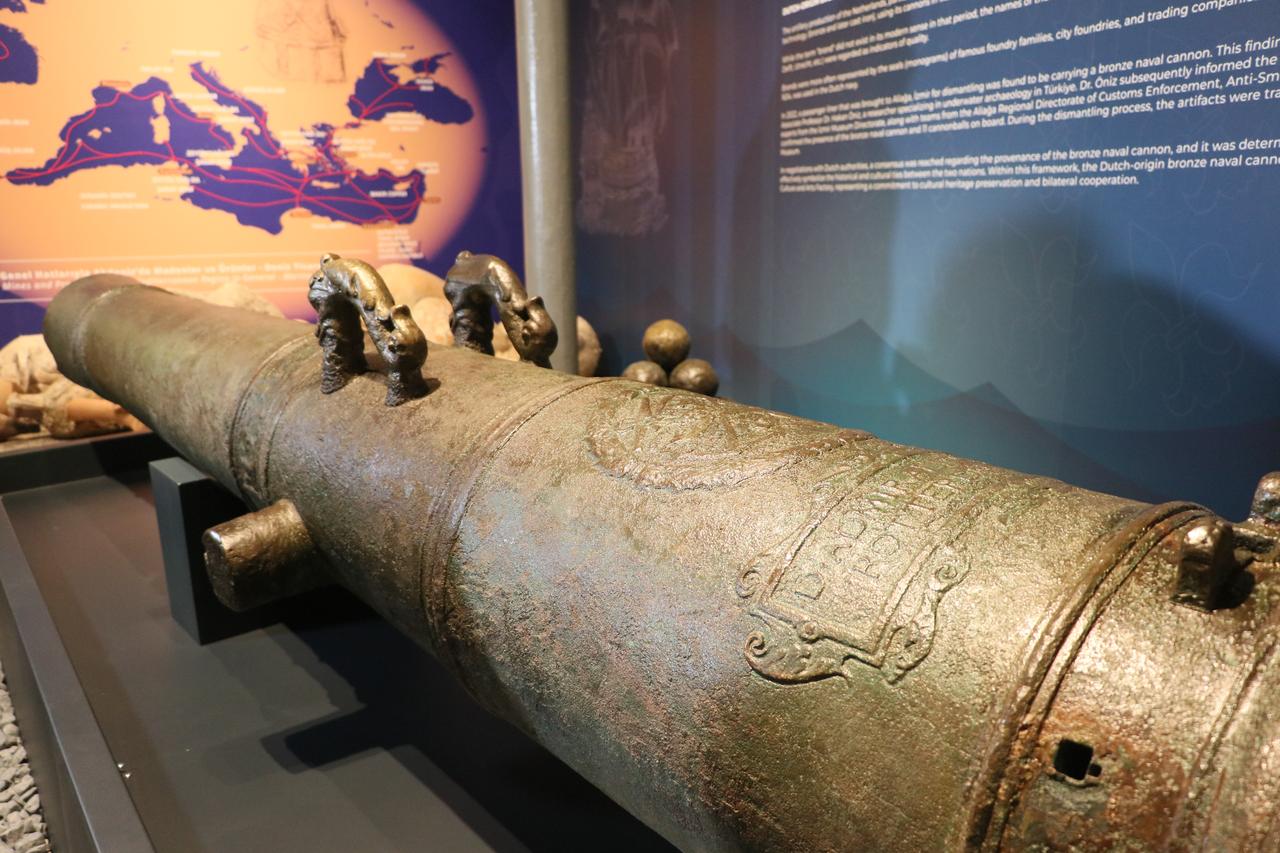


A bronze naval cannon and cannonballs dating back to the early 17th century have been put on public display in Izmir after being discovered during the dismantling of a ship brought to Türkiye for scrapping.
The artifacts were uncovered in 2025 when a vessel arrived in Izmir for dismantling, a process in which old ships are taken apart for recycling. During the operation, workers found a cannon and cannonballs in the ship’s restaurant section, prompting authorities to step in after a tip-off.
Experts from the Izmir Museum Directorate examined the objects and determined that they qualified as historical artifacts. The items were then taken under protection and subjected to further evaluation.
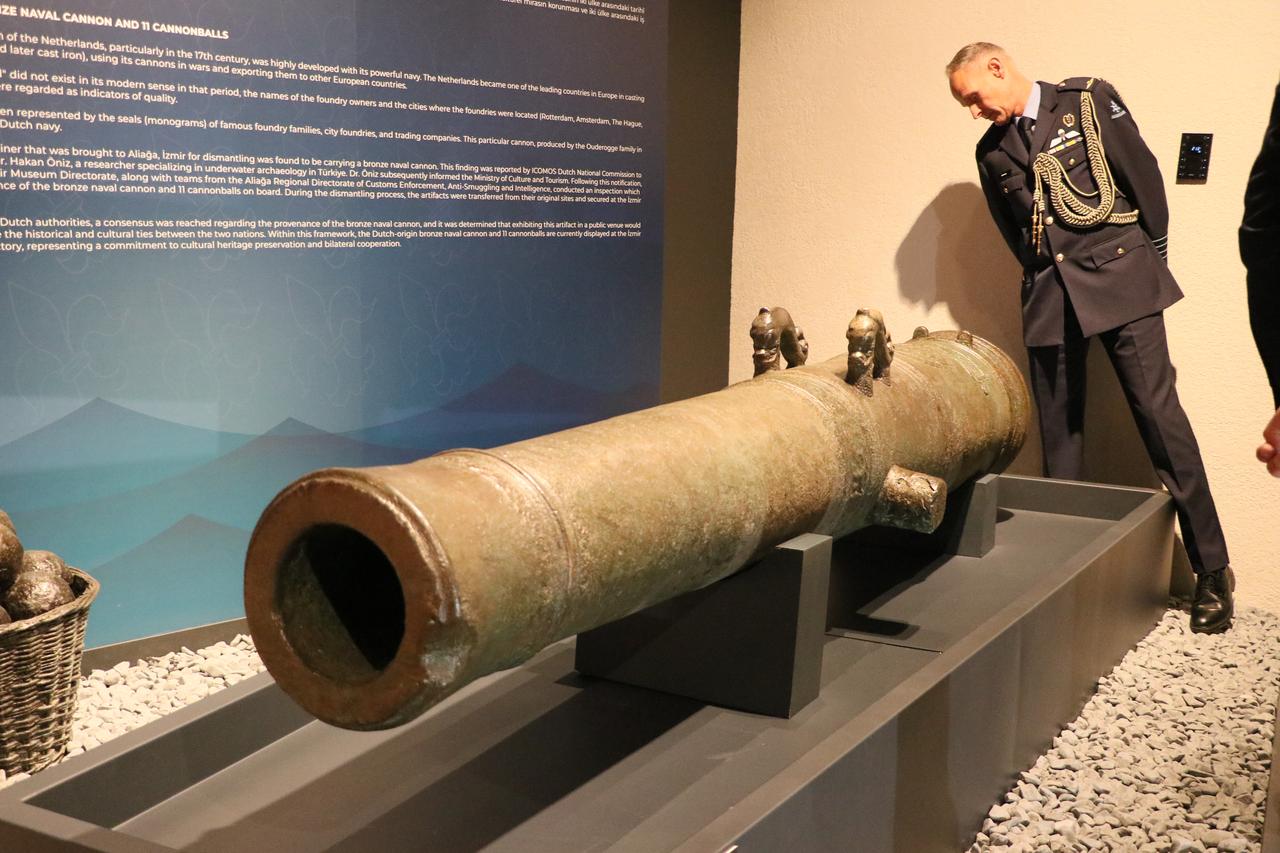

Specialists identified the bronze cannon and 11 cannonballs as originating from the Netherlands and dating to the first half of the 17th century. Following consultations with Dutch authorities, both sides agreed that the artifacts would remain in Türkiye for exhibition rather than being returned.
The decision was framed as a reflection of cooperation and mutual understanding between the two countries, with officials emphasizing the value of shared cultural heritage.
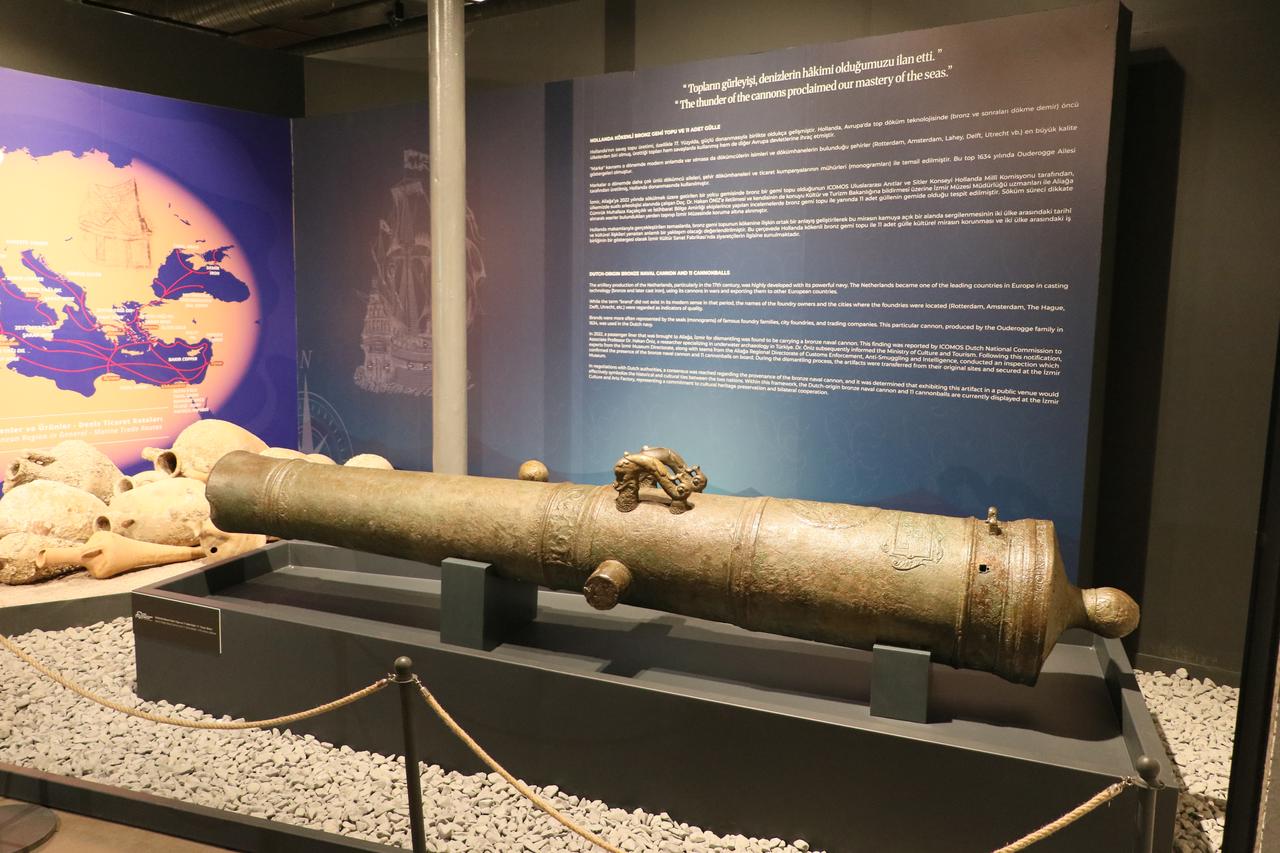
The artifacts are now on display at the Izmir Culture and Arts Factory, a cultural complex, within a section titled “Power from the Sea,” which focuses on maritime history.
Speaking at the opening, Director General of Cultural Assets and Museums Birol Incecikoz said authorities had responded quickly after receiving information during the dismantling process and had coordinated with Dutch counterparts regarding the artifact’s future.
He noted that the Dutch side supported keeping the items in Türkiye for public display, underlining that such cooperation strengthens ties between the two countries.
Netherlands Ambassador to Ankara Joep Wijnands also highlighted the long-standing relationship between the two nations, describing the outcome as a positive example of collaboration. He added that it was reassuring to know the artifacts were being preserved properly and described the discovery as remarkable.


 Set as preferred source
 Set as preferred source


 3 min read