Newsletters


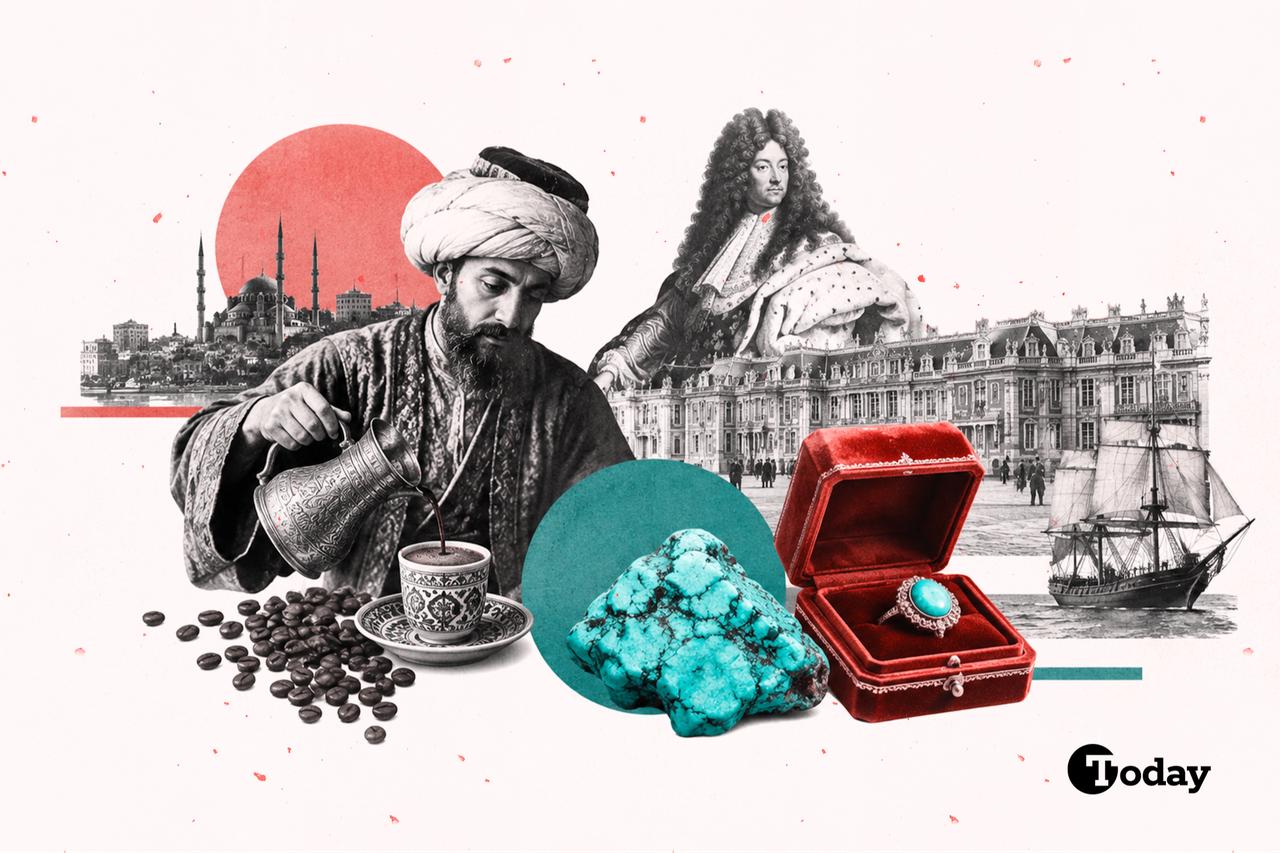


The intrigue began with a cup of black goo.
The sludge was Turkish coffee, thick as harbor mud and capable of keeping a minor aristocrat awake until sunrise.
It helped teach France an enduring lesson: Foreign things become considerably more desirable when served with ceremony, wrapped in mystery and priced beyond the reach of sensible people.
By the 16th century, France and the Ottoman Empire had entered improbable strategic friendship.
King Francis I and Sultan Suleiman the Magnificent shared an inconvenient enemy in the Habsburgs.
Their alliance scandalized Christian Europe.
Commerce followed diplomacy, and now, over four centuries later, Türkiye remains one of Europe’s great workshops.
Goods trade with the European Union topped €217 billion in 2025.
Turkish factories ship automobiles, machinery, appliances, textiles, and clothing West; its jewelers sell billions of dollars of their work abroad.
“Türkiye continues to be a strategic production and supply hub for the EU,” says Turkish Trade Minister Omer Bolat.
And nowhere is Bolat’s strategic supply chain more gloriously visible than on a rotating brochette.
According to the European Turkish Doner Producers Association, the EU now turns out roughly 146,000 tons of doner a year—a vast spinning meat empire that makes the Ottoman advance on Vienna look positively undercatered.
For Türkiye, the next step is getting more Turkish names onto what those factories make.
The country that has spent decades manufacturing for European brands is pushing its own brands and protected traditions abroad—trying to turn Turkish production into Turkish property.
Coffee has returned to the front line.
The Ottoman world had transformed coffee drinking into social theater.
Constantinople had coffeehouses by the 16th century: places where men drank, conducted business, traded gossip, and occasionally frightened authorities by demonstrating what happens when caffeine and politics occupy the same room.
Then France discovered the stuff.
In 1669, Suleyman Aga Mustafa Raca, envoy of Ottoman Sultan Mehmet IV, stopped in to visit Louis XIV. The French court had wigs, mirrors, mistresses, and an alarming amount of free time. What it lacked was caffeine.
Suleyman Aga had bales of prized Yemini Mocha.
The ambassador entertained in Ottoman fashion, pouring coffee amid an exotic choreography of cups, fabrics, and hospitality. It was such a big deal that the Metropolitan Museum of Art in New York credits his reception with helping make coffee fashionable in France.
Parisian society, then as now susceptible to whatever fashionable people were doing behind expensive doors, took notice. Coffee became chic.
The Turks shipped coffee West by the sack. France learned to sell it by the cup.
By the 1670s, public coffee sellers appeared in Paris. In 1686, the Sicilian Francesco Procopio dei Coltelli opened what became Cafe Procope, eventually a haunt of writers, philosophers, and political conspirators.
The Ottoman coffeehouse underwent French naturalization. Voltaire drank prodigious quantities of coffee. Rousseau frequented cafes. By the revolutionary era, politics discussed over coffee was occasionally exploding into the street.
Coffee was not traveling solo.
Silk, spices, pigments, and precious stones also moved West along the Mediterranean arteries, linking Ottoman markets with Europe, carrying with them the intoxicating suggestion of elsewhere.
One of those things was blue.
Turquoise had been mined for centuries, notably in Persia, but reached European buyers through Turkish and Levantine trade.
The French called it pierre turquoise—Turkish stone.
The Persians supplied the stone. The Turks supplied the route. The French supplied the name. Eventually somebody supplied the velvet box, and that was where the serious money began.
Under Louis XIV, Jean-Baptiste Colbert was building a national industry around a brutally simple proposition: Why send French money abroad for beautiful things when France could make beautiful things and persuade foreigners to send their money to Paris?
Foreign influences arrived at one door; French luxury departed through another. Luxury became industrial policy.
The Ottomans were no mere warehouse at the eastern end of this arrangement.
French turquerie—the mania for Ottoman-inspired clothes and interiors—proved how deep the Ottoman aesthetic had sunk into Western taste.
Three and a half centuries later, Suleyman Aga’s little cup acquired something it never had at Versailles: paperwork.
In 2025, “Türk Kahvesi” (Turkish Coffee) secured EU recognition as a Traditional Specialty Guaranteed, formally protecting a name that had traveled West long before Europe had trademarks.
The ambassador vanished. The empire disappeared. The cup stayed.
And the coffee is still black as harbor mud. Cultural arbitrage, one demitasse at a time.


 Set as preferred source
 Set as preferred source



 3 min read