Newsletters




An exhibition exploring Istanbul’s memory, architecture and city life through a range of art forms will open Oct. 21 at Istanbul Shopping Mall.
Titled "Speaking with Istanbul," the show is curated by Samed Karagoz and features work by Ozan Turkkan, Eylul Alici, Kivanc Aykan, Raziyye Kuzu Atalay, Server Demirtas, Selcuk Artut and Fuat Degirmenci.
The exhibition uses contemporary art to interpret the layered identity of Istanbul, shaped by its people, nature, architecture and memories. It includes painting, sculpture, installation, digital art, photography, ceramics and illustration.
Its starting point is a question: "Does a city’s memory live only in its people?" The show invites visitors to think of the city as a living storyteller.
The exhibition will be in the lobby on the first floor of the mall’s D Block and can be visited free of charge through Dec. 16.

Demirtas’s "Self-Portrait" focuses on a body hidden beneath a cover, evoking the unseen memories that build up over time. The piece draws a parallel between what the human body holds inside and the stories that have accumulated along Istanbul’s old walls, streets and shorelines.
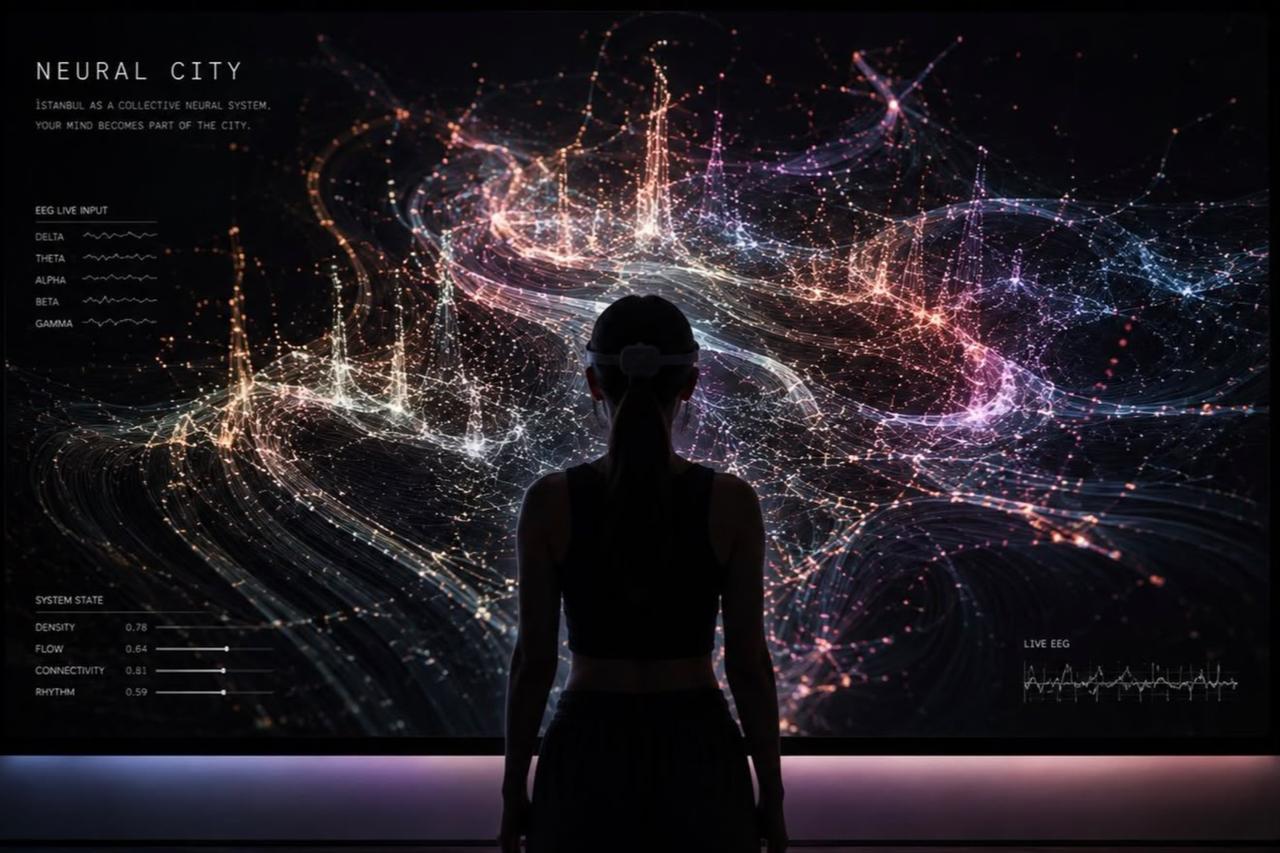
Alici’s "Neural City" portrays the city as an organism that is constantly changing through people’s movements, encounters and relationships. Linking the neural networks of the human brain to the complexity of the city, the work highlights Istanbul’s ever-shifting, dynamic character.
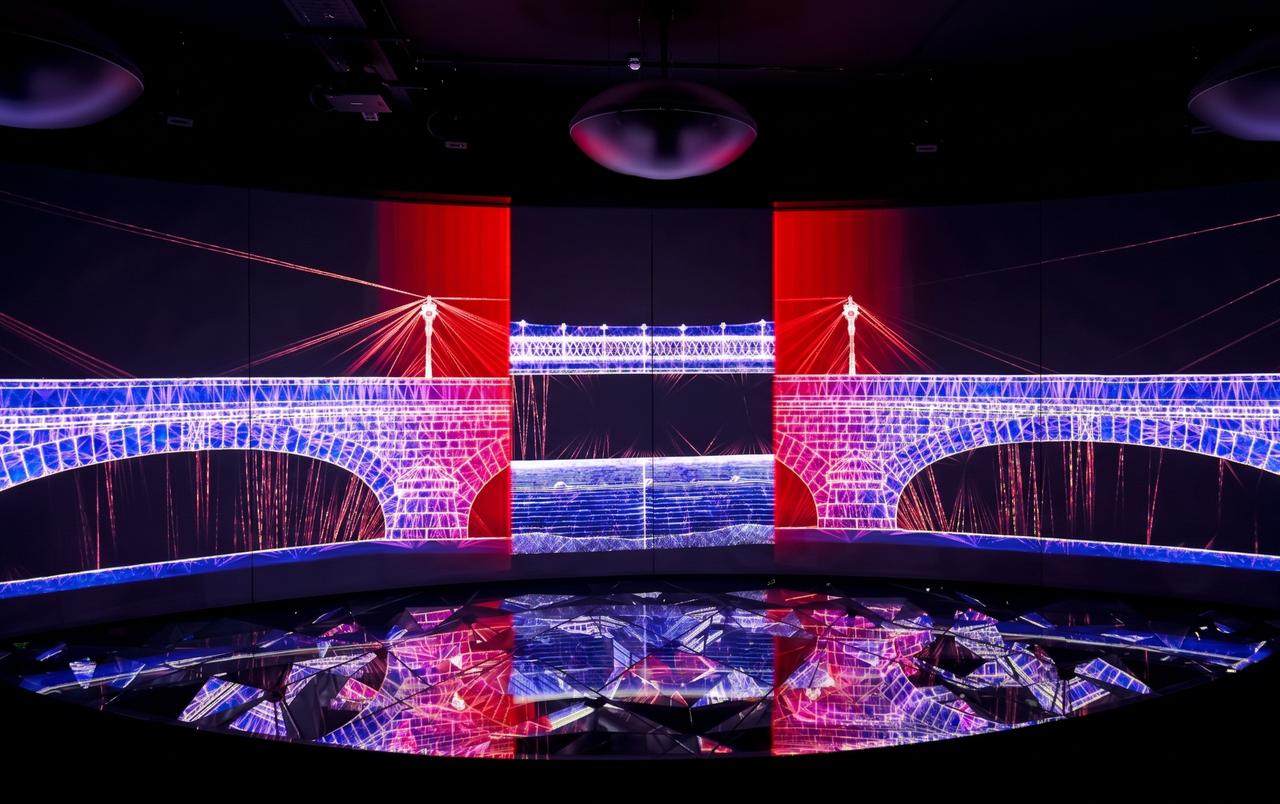
Turkkan’s video installation "Bridges" turns historical bridge drawings and architectural plans into digital systems using creative coding and artificial intelligence. In the work, bridges stand not only for physical connections but also for communication, encounter and partnership.
Aykan’s interactive work looks at the relationship among people, nature and technology through the plants that accompany city life on Istanbul’s balconies and in its windows. It asks viewers to consider plants as part of the city’s urban memory.
Atalay’s "Latent Loops" reinterprets Turkish rug and kilim motifs using AI-assisted algorithms. Using deep learning systems to generate new compositions in real time, the work examines how traditional patterns take on new visual forms as technology evolves.
Artut’s "Geomart-ut7" series connects geometric art with today’s generative technologies. In the piece, simple geometric forms move and grow into complex structures, exploring repetition, infinity, order and chaos through the possibilities of computational art.
Degirmenci’s "Minimal Renaissance" probes the boundaries between physical and digital experience, adding to the exhibition’s story of Istanbul told through varied forms of expression.
Addressing the city’s timeless spirit and changing identity through contemporary art, the show invites visitors to reconsider their own relationship with Istanbul.


 Set as preferred source
 Set as preferred source


 1 min read
 1 min read