Newsletters


Karachi, Pakistan’s largest metropolis, is often associated with rapid growth, relentless traffic and sprawling neighborhoods. Yet shielded by this modern chaos are remnants of a more orderly port city, one shaped by Victorian aesthetics and civic ambition. Among the most striking reminders are the orange and rose-pink clock towers that once regulated the city’s daily rhythms.
Many of these towers, built between the late 19th and early 20th centuries, are now collapsing, concealed behind shops, or stripped of their function. Conservationists warn that unless action is taken soon, this chapter of Karachi’s architectural story may fade altogether.
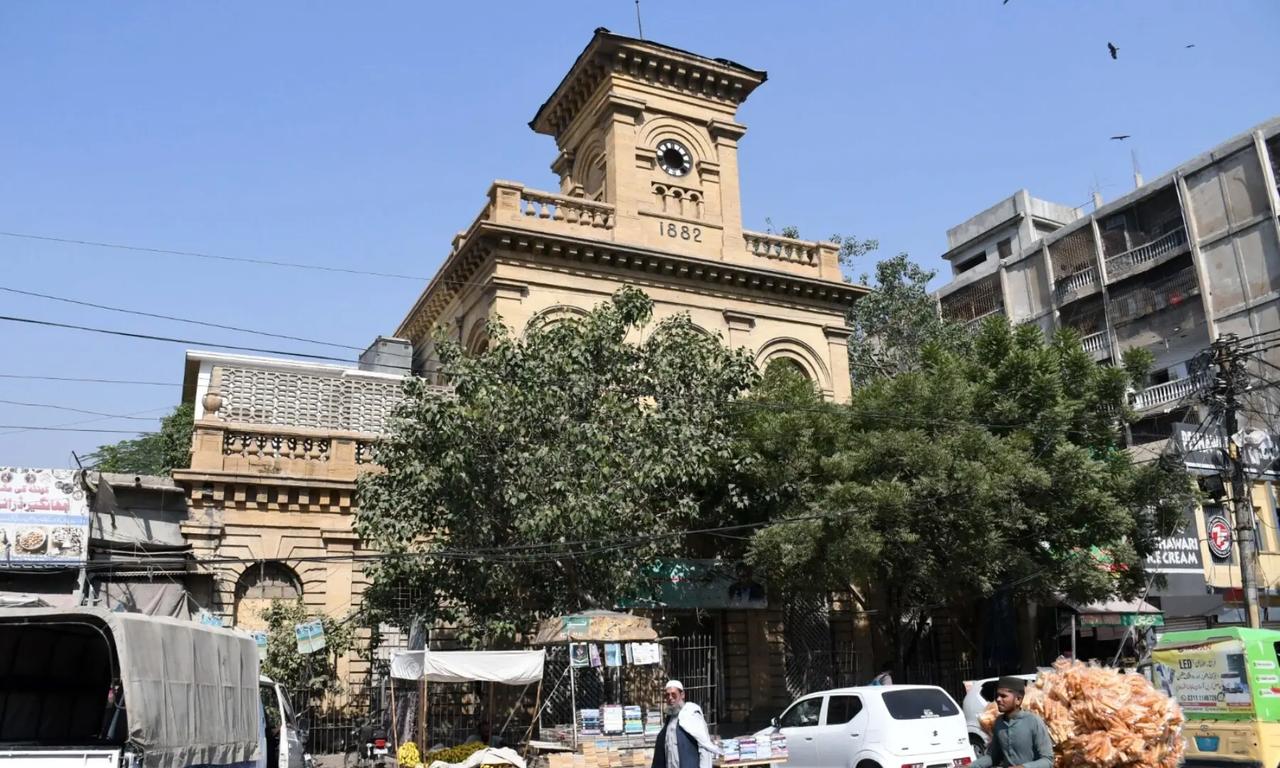

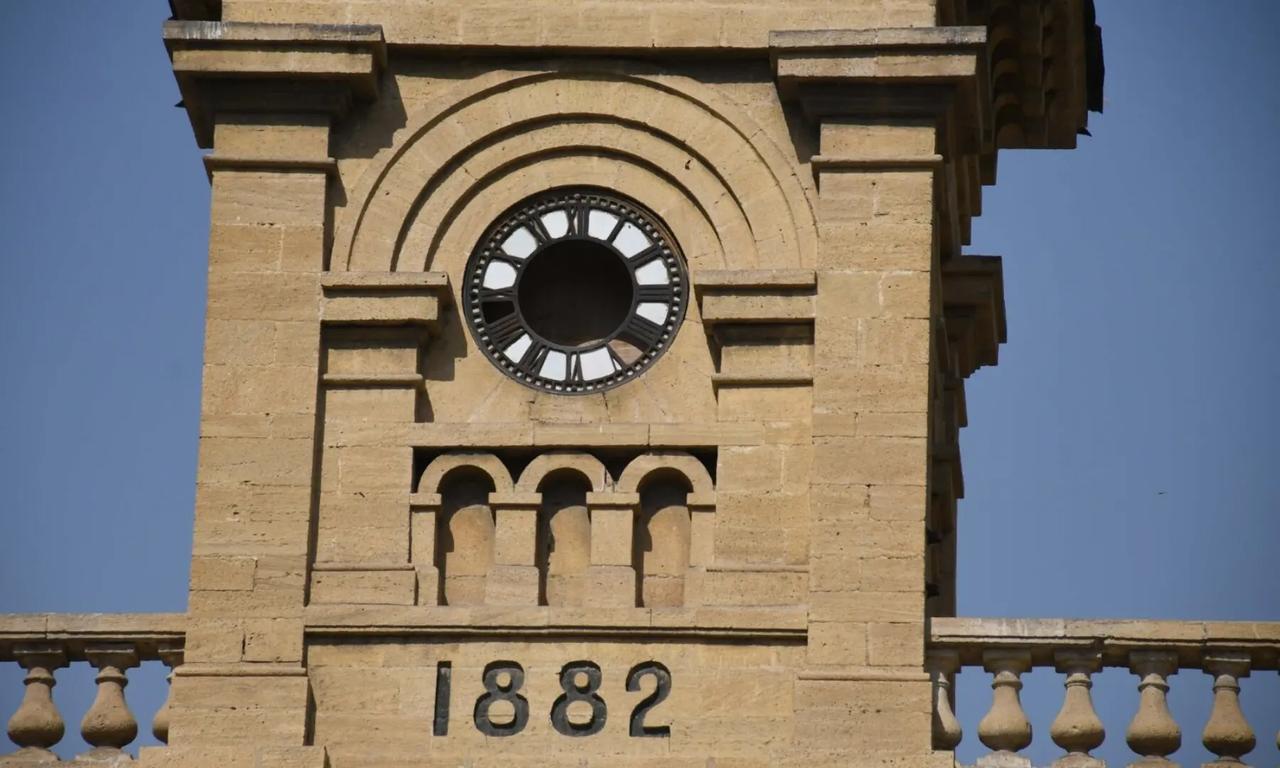
In the dense heart of Saddar, the 1882 clock tower of the Eduljee Dinshaw Charitable Dispensary stands wedged between Chinese dental clinics and corner groceries. The Victorian-era building, still in use as a public dispensary, bears the weight of decades of neglect: soot-stained wooden windows, emergency staircases disintegrating at the back, and a once-prominent clock frozen without hands.
Inside, health workers continue to administer free dengue tests, while pigeons rest on the tower’s weathered stone. Rusting spiral steps lead upward, recalling a period when caretakers climbed daily to wind the clock by hand.
A few kilometers away, the Lea Market tower tells an even harsher story. What was once a cherished gathering place is now overwhelmed by a sprawling vegetable market and rickshaws using the entrance as an informal terminal. Its shutters lie broken or missing, while the rusted clock hands remain stuck at 11:45, a moment no one remembers anymore.
Locals still recall the tower’s former life. A retired teacher, Mukhtar Baloch, said the square “was a favorite gathering place for everyone in the area, both young and old, until the 1980s,” noting that it served as a hub for political and social conversations before losing its vitality.
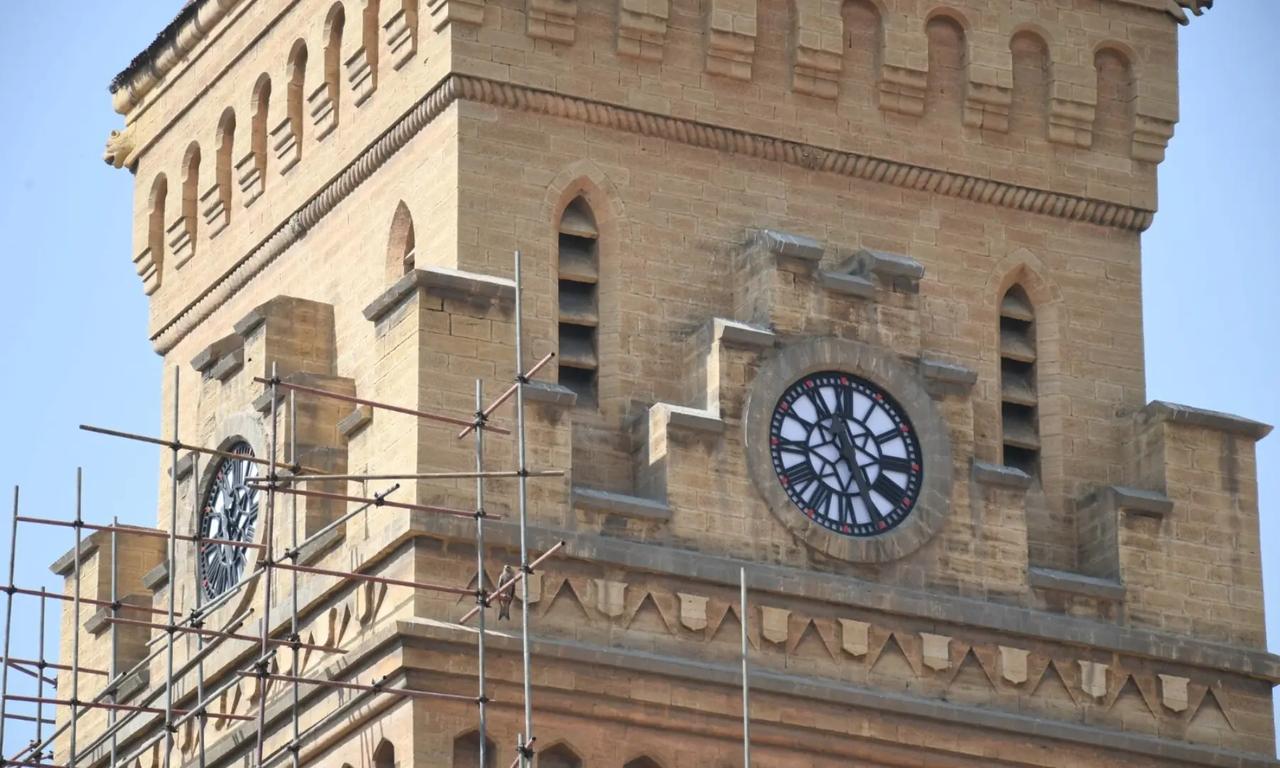
Heritage researcher Shaheen Nauman explained that until 2019, around 11 clock towers were documented across Karachi. New surveys in the southern districts added four more, raising the total to 15. Among them are the 1884 Merewether Tower, the Holy Trinity Cathedral tower from 1885, Empress Market from 1889, Poonabai Mamaiya from the same year, Sydenham Passenger Pavilion from 1913, Lakshmi Building from 1924 and Lea Market from 1927.
Only three of these still function. Nauman noted that during the British colonial period, wristwatches were a luxury, making clock towers essential civic infrastructure. Positioned in busy streets and open squares, they broadcast time across long distances through their chimes.
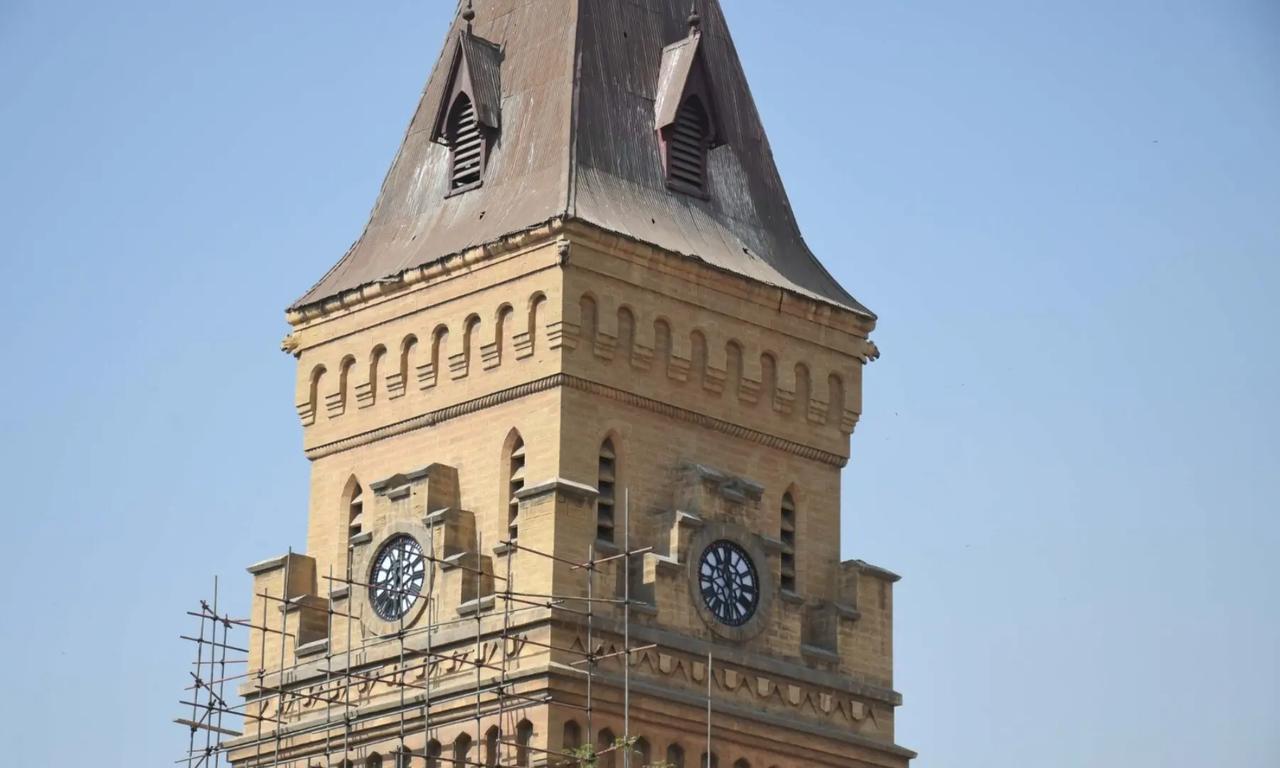
Despite widespread neglect, some efforts have succeeded. At Empress Market, long buried under illegal kiosks before a major anti-encroachment operation in 2018, the clock tower has been restored thanks to local artist and technician Bilal Asif.
“It was a huge challenge to bring back to life a clock that had stopped decades ago,” he said, adding that it took weeks of painstaking work. The result is Karachi’s only hybrid-powered tower clock, while the functioning clocks at the KMC headquarters and Merewether Tower still require weekly manual winding.
Architect and heritage advocate Marvi Mazhar emphasized the need for structured preservation, urging authorities to formally classify these clocks as heritage assets and introduce monthly inspections with recorded notes for accountability.
Nauman echoed the urgency, suggesting that the revival of Empress Market proves what is possible. The city’s clock towers, she said, “symbolize time itself, and its deep significance in human life,” recalling how their chimes once set the rhythm of daily existence.


 Set as preferred source
 Set as preferred source


 3 min read