Newsletters




Qapla!
The word rumbles out of the throat like a challenge, a warrior’s farewell wishing success. It sounds nothing like English, and that is exactly the point. Marc Okrand built it to sound foreign.
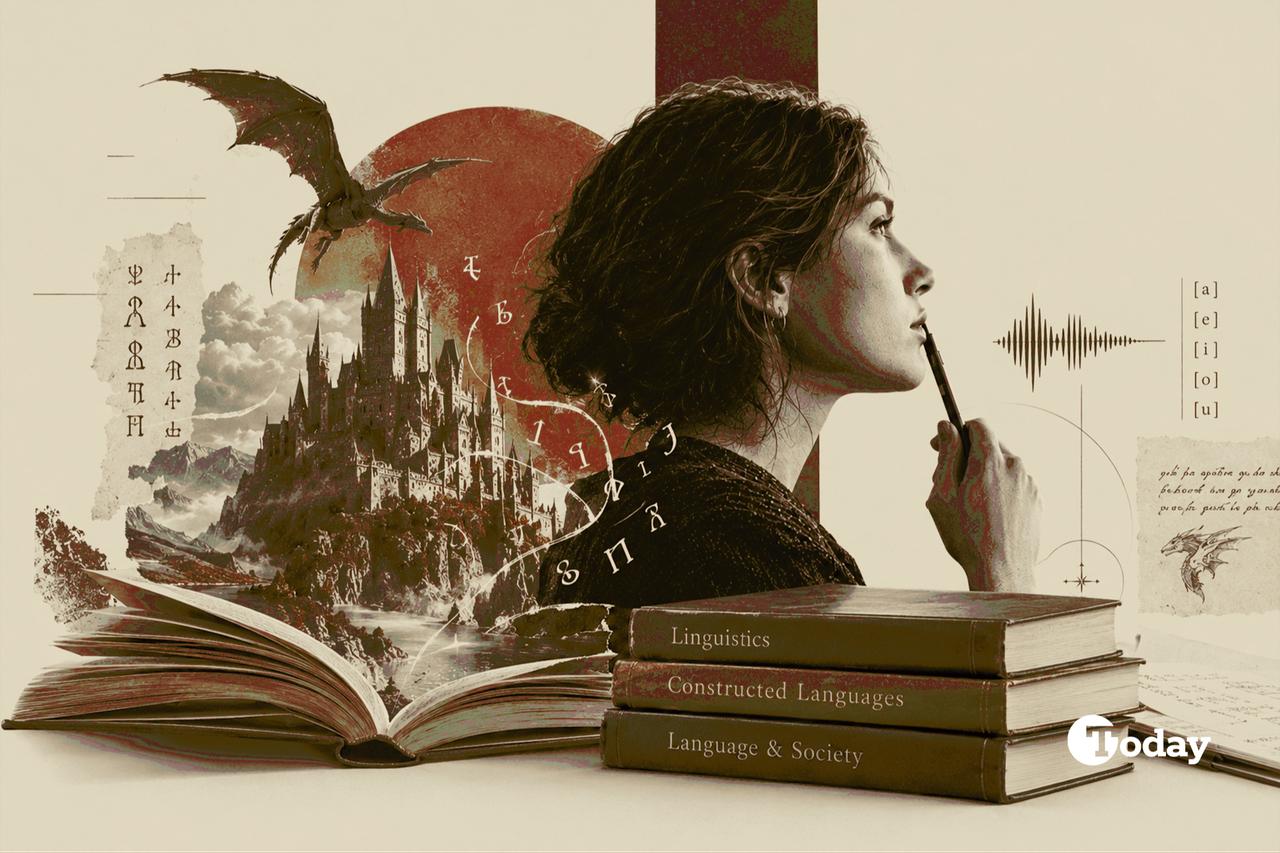
Fictional languages created for film, television and literature are the product of extensive linguistic work that goes well beyond a few seconds of on-screen dialogue, according to a report by Anadolu Agency (AA).
A few words spoken by an Elf in “The Lord of the Rings” or by the desert-dwelling Fremen in “Dune” may look like a passing detail to viewers. Yet some of these languages are learned, spoken and written by fans outside the fictional worlds that produced them.
Such languages go beyond random words, developing their own sound rules, grammar, word-formation methods, writing systems and even histories.
A language then does more than show where a character comes from. It also carries clues to the fictional world’s past and cultural ties.
The depth varies. Some productions develop only a few dozen words for on-screen use, while others build grammar systems that allow new sentences to be formed.
Some alien speech in “Star Wars” and the Elf languages developed over decades for “The Lord of the Rings” therefore differ sharply in detail and coherence.


Quenya and Sindarin, created by author J.R.R. Tolkien for the Elf peoples of Middle-earth, are among the best-known examples. They grew from spells and greetings into languages with their own sound structures, grammar rules and historical development.
According to the Tolkien Estate, which manages the author’s literary legacy, Tolkien began working on the Elf languages about 40 years before the first book of the series was published in 1954. Fans still learn both languages today.

According to the Klingon Language Institute (KLI), an independent organization that works on the language, linguist Okrand developed Klingon for “Star Trek” to differ from human languages and sound “foreign.” Its harsh sounds and grammar, matching the warrior culture of the Klingons, also helped it be perceived as distinct from widely spoken languages.
Na’vi and Dothraki show growing demand for language designers
The Na’vi language of “Avatar” is among the most extensive fictional languages built from scratch for cinema.
According to the University of Southern California (USC), linguist Paul Robert Frommer created it for the film. Frommer has since continued to expand its vocabulary and usage with a community of Na’vi enthusiasts worldwide.
“Game of Thrones” marked a turning point in making professional language design common in television and film.
George R.R. Martin’s books contain only a limited number of Dothraki words and phrases, but the adaptation needed a fuller system so characters could hold long, consistent dialogue.
Linguist David J. Peterson worked on Dothraki, as well as High Valyrian and its derived varieties. As the series gained worldwide fame, language design became a more visible part of production.

Frank Herbert’s 1965 novel “Dune” includes words and phrases used by the Fremen, but Denis Villeneuve’s film adaptations gave the language a far more extensive structure. David J. Peterson and Jessie Peterson worked on Chakobsa, the Fremen language. Villeneuve told Vanity Fair in 2024 that the film's dialogue drew on elements from Herbert’s book.
“Star Wars” features a mosaic of speech forms linked to different planets and species rather than one fully developed language. The best-known, Huttese, is associated with Jabba the Hutt and the characters around him.
Sound designer Ben Burtt told the franchise’s official website in 2023: “Jabba the Hutt spoke Huttese. It is a language I made up based on Quechua, a Peruvian Inca dialect. We had listened to recordings in Quechua and I really liked the sound and rhythm of the language.”

U.S. linguist and author Arika Okrent told AA that languages such as Elvish and Klingon are part of artistic universes, and that people who learn them are usually interested in becoming deeply involved in the fictional world behind them.
Okrent said there is no linguistic obstacle to long-term use of Elvish, Klingon or Na’vi. However, when a language is tied to a trademarked work or rights holders impose strict limits on its use, an independent, lasting community can be harder to develop around it.
She said people who speak a fictional language in daily life need to make a conscious effort to build a shared culture around it, and that a lasting language culture should emerge organically from people’s own interest and motivation.


 Set as preferred source
 Set as preferred source


 1 min read

 1 min read