Newsletters


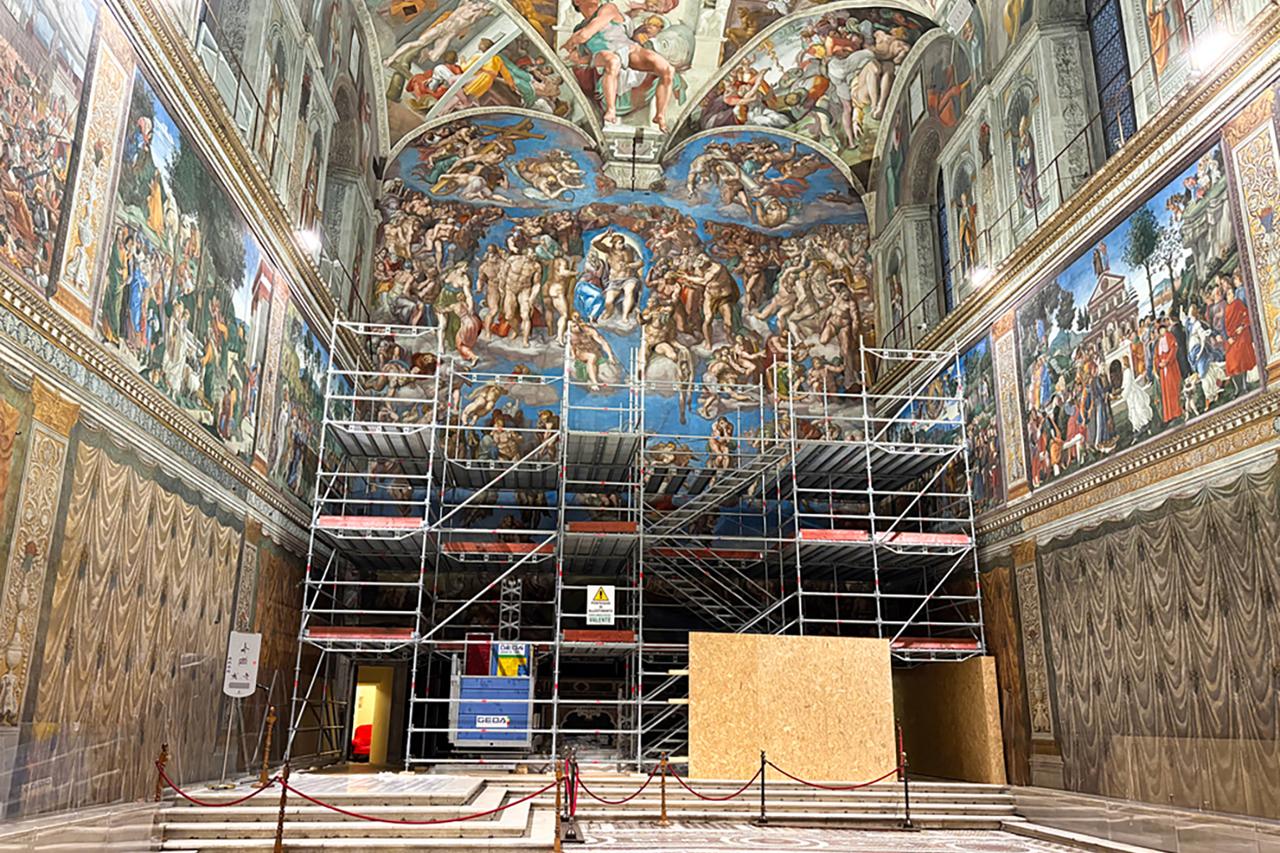


The Vatican announced Monday that a major restoration of Michelangelo’s iconic fresco "The Last Judgment" has begun in the Sistine Chapel. The project, expected to last approximately three months, marks the first intensive cleaning of the work in nearly 30 years.
Scaffolding has been installed along the 180-square-metre (1,938-square-foot) altar wall fresco, which Michelangelo painted between 1536 and 1541. The fresco, depicting Christ’s final judgment of humanity, is widely regarded as one of the masterpieces of Renaissance art.
Chief restorer Paolo Violini explained that the fresco has become obscured by a “widespread whitish haze,” resulting from the accumulation of microparticles carried by air movements over time. These deposits have diminished the original light-dark contrasts, known as chiaroscuro, and muted the colors, affecting the visual impact and expressive quality of the work.
“The cleaning will remove these deposits and restore the chromatic and luminous quality intended by Michelangelo, fully recovering the work’s formal and expressive complexity,” the Vatican stated.
To protect the chapel’s fragile artworks, Vatican officials continuously monitor humidity and temperature levels and implement preventive conservation measures. Despite the restoration work, the Sistine Chapel will remain open to visitors and worshippers throughout the project.
The chapel, located within the Apostolic Palace, was built in the 15th century under Pope Sixtus IV, from whom it takes its name. It later became a centerpiece of Renaissance art under Pope Julius II, who commissioned Michelangelo to decorate its interior. Between 1508 and 1512, the artist painted the famous ceiling, including The Creation of Adam. Michelangelo later returned to paint The Last Judgment on the wall behind the altar.


 Set as preferred source
 Set as preferred source


 1 min read
 1 min read