Newsletters


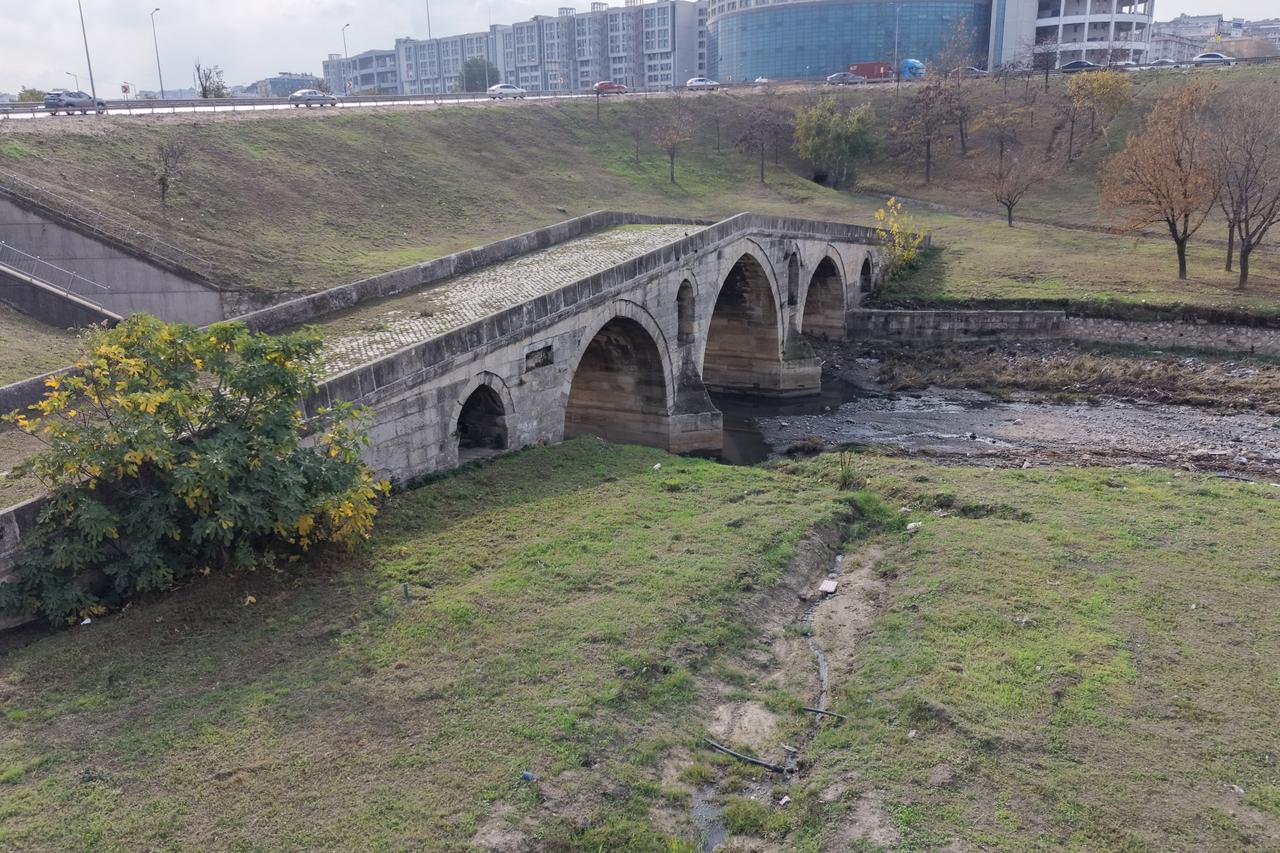


A 470- to 500-year-old stone bridge attributed to master architect Mimar Sinan has been left marooned inside a deep roadside pit beneath the E-5 Highway in Istanbul’s Beylikduzu district. Known as the Haramidere or “Kapi Agasi” Bridge, its elegant silhouette still catches the eye of motorists, yet its story remains largely unknown to those who speed past.
The bridge was commissioned by Yakup Aga, a senior court official at Topkapi Palace known as the Gate Agha—the chief of the palace gatekeepers in the Ottoman hierarchy—and was constructed on the historic caravan road that once linked Edirne to Istanbul.
In the 1980s, when the E-5 Highway and the Haramidere Interchange were raised, the surrounding ground level rose with them, leaving the bridge down in a depression, closed to use, and cut off from pedestrian access.
Archaeologist Omer Faruk Yavascay noted that sources vary slightly, but most put the bridge’s length at about 75 meters and its width at 6 to 7 meters, with piers roughly 3 meters thick.
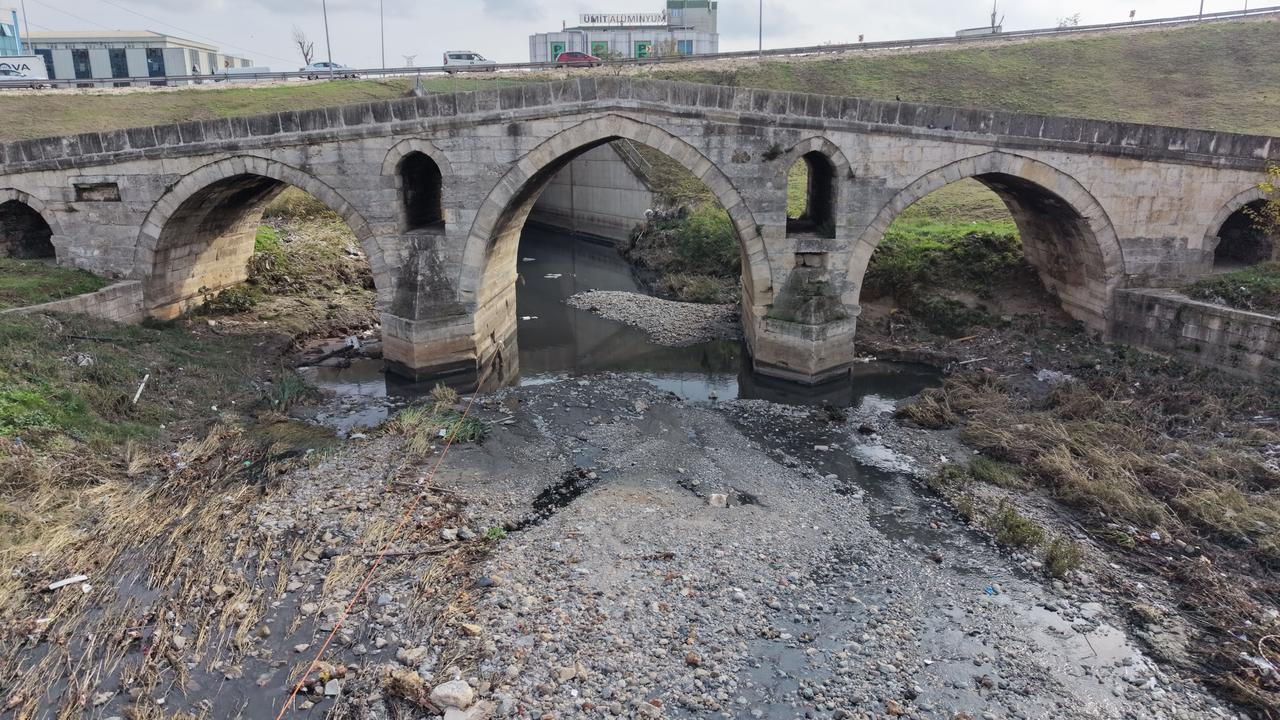
It has three main arches; the central opening measures 8.8 meters, while the side arches span 7.9 meters each. He added that wave-breakers—projecting cutwaters on the piers—were designed to split strong flows when the stream swelled after heavy rain.

Locals long knew the watercourse as Haramidere, a name tied to accounts of bandit attacks on caravans in the area; “harami” refers to highwaymen.
The bridge, once part of the Rumeli caravan route, stands as a reminder of the trade arteries that fed the Ottoman capital.
Today, the bridge is overgrown with grasses, its surroundings littered with trash, and stagnant, inky-black water pools beneath its arches.
Yavascay underlined that visitors cannot safely reach the site from the E-5, which has led many residents to call it the “Sunken Bridge.”
Yavascay argued that the structure should be reopened to the public through a practical underpass or overpass solution, stressing that “a restoration is a must.”
He added that there is no visible inscription on the monument and suggested that its whereabouts should be researched. In his view, enabling safe access would allow people to learn its history rather than just glimpse its arches from passing cars.


 Set as preferred source
 Set as preferred source


 3 min read