Newsletters


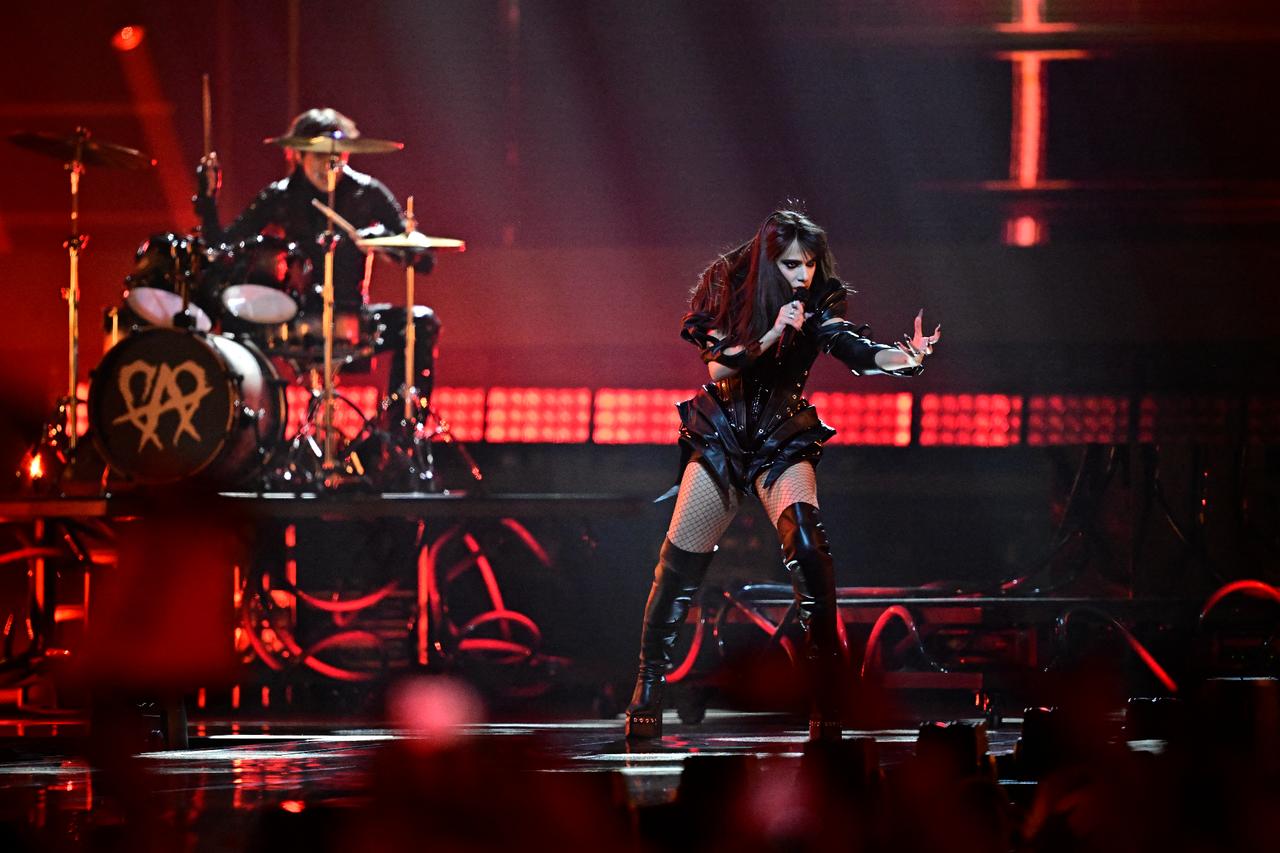


The Moldovan national jury's decision to award Romania just 3 points in the Eurovision 2026 final has triggered a wave of criticism on social media and caught even Moldova's own broadcaster off guard, with the televoter presenter saying she nearly walked off before the broadcast.
Margarita (Rita) Druta, who announced Moldova's jury scores during the Eurovision final, said in a TikTok video posted after the contest that she was blindsided when she saw the result. "When I received the result and saw Romania, 3 points, I had a shock reaction," she said. "For a few minutes I stepped away."
Druta said she called the director of Teleradio Moldova and told him she refused to present the score. "I said: excuse me, but I refuse to present this. I cannot look into the camera when Romania has that score, especially in a year when Romania has such a beautiful song," she said in the video, which she posted at 3:17 a.m., while still visibly shaken.
She also clarified a point of procedure that had confused some viewers: the person reading out scores on behalf of a country plays no role in determining them and has no input into the jury's decisions. Despite her personal objections, she ultimately delivered the result on air.
Druta added that Moldova's public told a different story: Romania received 12 points, the maximum, from Moldovan televoters. "The jury vote is not equal to the vote of the people across the entire country who voted," she said.
Vlad Turcanu, director general of Teleradio Moldova, said publicly that the jury's decision had surprised him. Writing on Facebook, he praised Romania's entry and the Moldovan public's response, saying the audience "always gets it right" and that the jury "surprised us."
Culture Minister Cristian Jardan also weighed in, noting that his ministry had no direct role in organizing Eurovision in Moldova but had supported organizers throughout. "We all need explanations, especially after such a public vote from the Republic of Moldova," he said.
Moldova's seven-member jury for the Eurovision 2026 final included broadcaster executives, performers who had competed in the national selection, a conductor, and a radio producer. Under Eurovision rules, each country's final score is a 50-50 combination of jury and public votes, a system designed to balance industry expertise with popular taste, though it frequently produces divergent outcomes.
The gap between Moldova's jury score and its public vote for Romania, 3 points versus the maximum 12, drew particular attention given the two countries' cultural and linguistic ties. Druta acknowledged the tension directly, saying she agreed the contest should not be decided on the basis of neighborly loyalty, but added that her personal support had always been with Romania's entry.
The jury result triggered a flood of negative comments online directed at Moldovan users, with some reactions drawing on narratives associated with Russian disinformation campaigns. Moldova, which borders Romania and has a large Romanian-speaking population, has been a persistent target of Russian information operations in recent years as it has moved closer to the European Union.
No official explanation for the jury's scoring has been issued by Teleradio Moldova at the time of publication.


 Set as preferred source
 Set as preferred source


 1 min read

 1 min read