Newsletters





Two-time Oscar-winning actress Cate Blanchett accepted Japan’s Praemium Imperiale on Wednesday at a black-tie ceremony in Tokyo.
At a news conference before the presentation, Blanchett spoke about doubt's role in creative work.
“In an uncertain world riddled with unthinking certainty, I believe doubt is vital to the creative process,” she said. “It’s what starts the challenge, the questioning, the exploration. It allows conversation and connection. It allows change.”
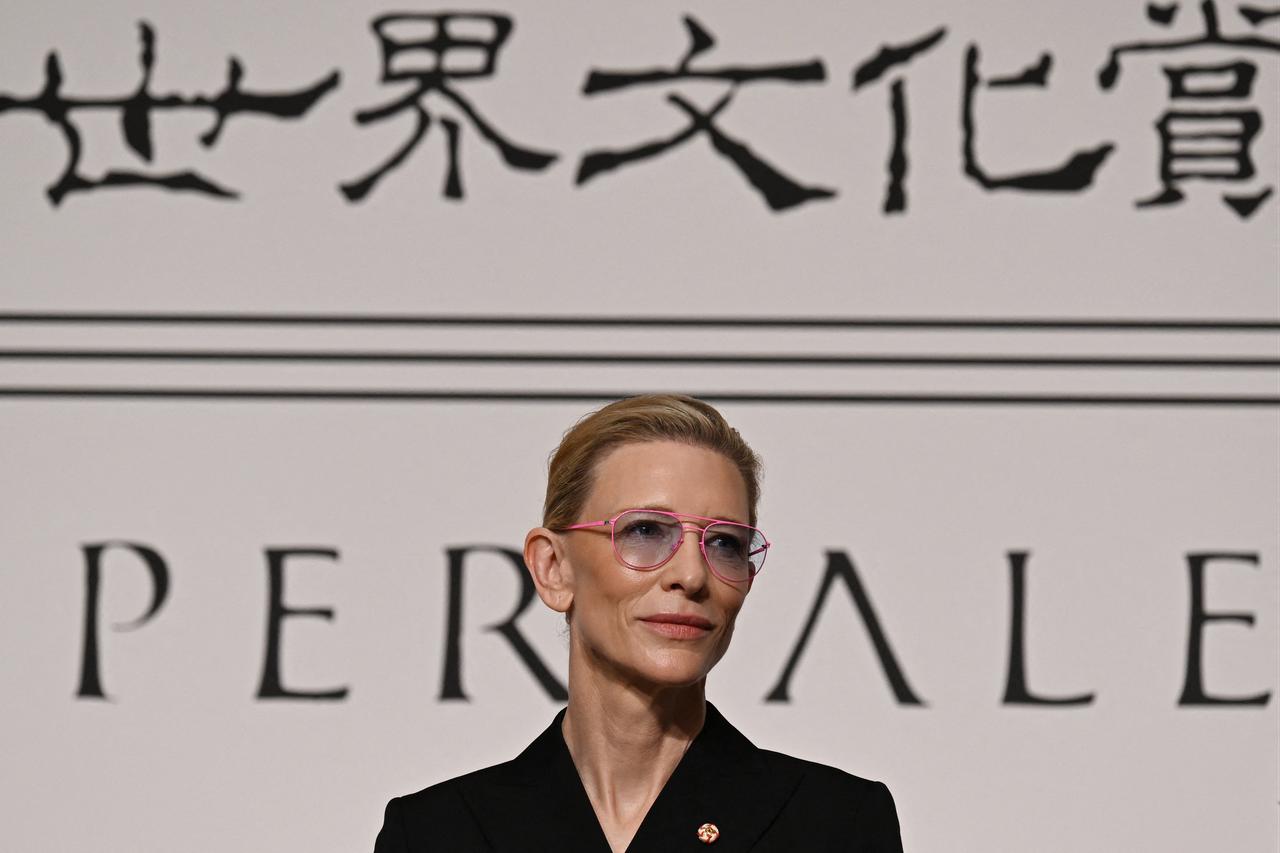

The Japan Art Association presents the Praemium Imperiale, which recognizes lifetime achievement in painting, sculpture, architecture, music and theater/film. The award is often described as the Nobel Prize of the arts.
Past theater and film recipients include Federico Fellini, Akira Kurosawa, Jean-Luc Godard, Martin Scorsese, Judi Dench and Catherine Deneuve. Ang Lee was the most recent Hollywood-associated recipient, in 2024.
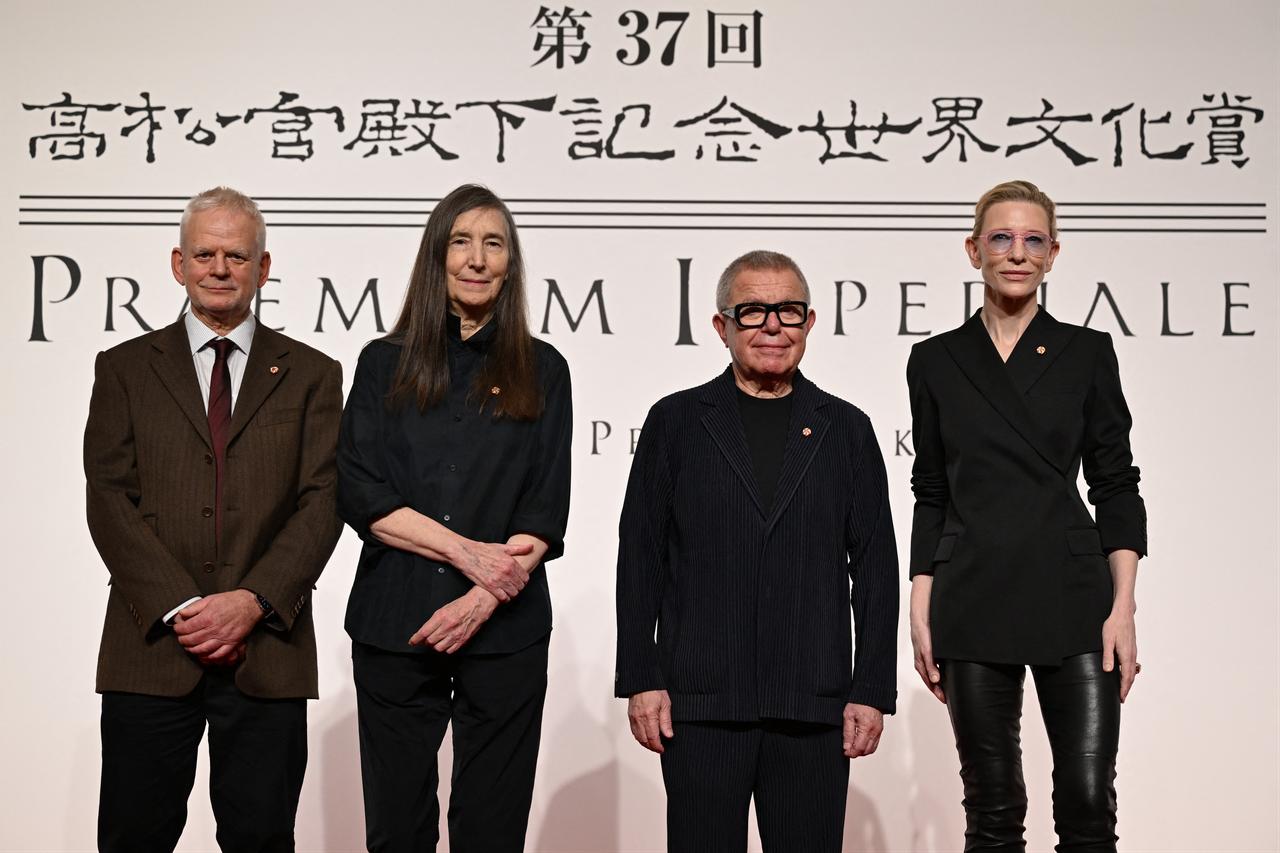
Princess Hitachi presented Blanchett with her medal at the Meiji Kinenkan in Tokyo’s Moto-Akasaka district. Each laureate also receives a testimonial letter and a 15 million yen honorarium (just under $100,000). This year’s other recipients are American artist Jenny Holzer, British sculptor Andy Goldsworthy, American architect Daniel Libeskind and Swedish conductor Herbert Blomstedt.
In her acceptance speech, Blanchett described acting as “a profession that at its worst sinks into a quagmire of literalness but at its best can leave people speechless.” She said she looks for meaning in the spaces between what is said and what is not said.
Blanchett said that as a woman, her doubt is often interpreted as a lack of confidence. “It is not. That doubt is my artistic starting point,” she said.
Former U.S. Secretary of State Hillary Clinton, the prize’s U.S. international adviser, also attended the news conference. Clinton is part of the international advisory network whose committees recommend candidates, while the Japan Art Association makes the final selections.
Clinton said the prize is “a global declaration that artists and culture are essential pillars of our societies.” She said its role has grown more important amid threats to democratic values and concerns about artificial intelligence (AI), and she called for limiting the technology’s risks while preserving human imagination and connection.
Blanchett is next scheduled to appear at the 39th Tokyo International Film Festival, which runs through Nov. 4. On Friday, she is set to join filmmakers Mohammad Rasoulof and Shahrbanoo Sadat for a Q&A after the Japanese premieres of five short films supported by the Displacement Film Fund, an initiative she co-founded and leads to support displaced filmmakers.
Later on Friday, she is due to appear with directors David and Nathan Zellner for a discussion on their alien comedy “Alpha Gang,” in which she stars.


 Set as preferred source
 Set as preferred source


 1 min read
 1 min read