Newsletters


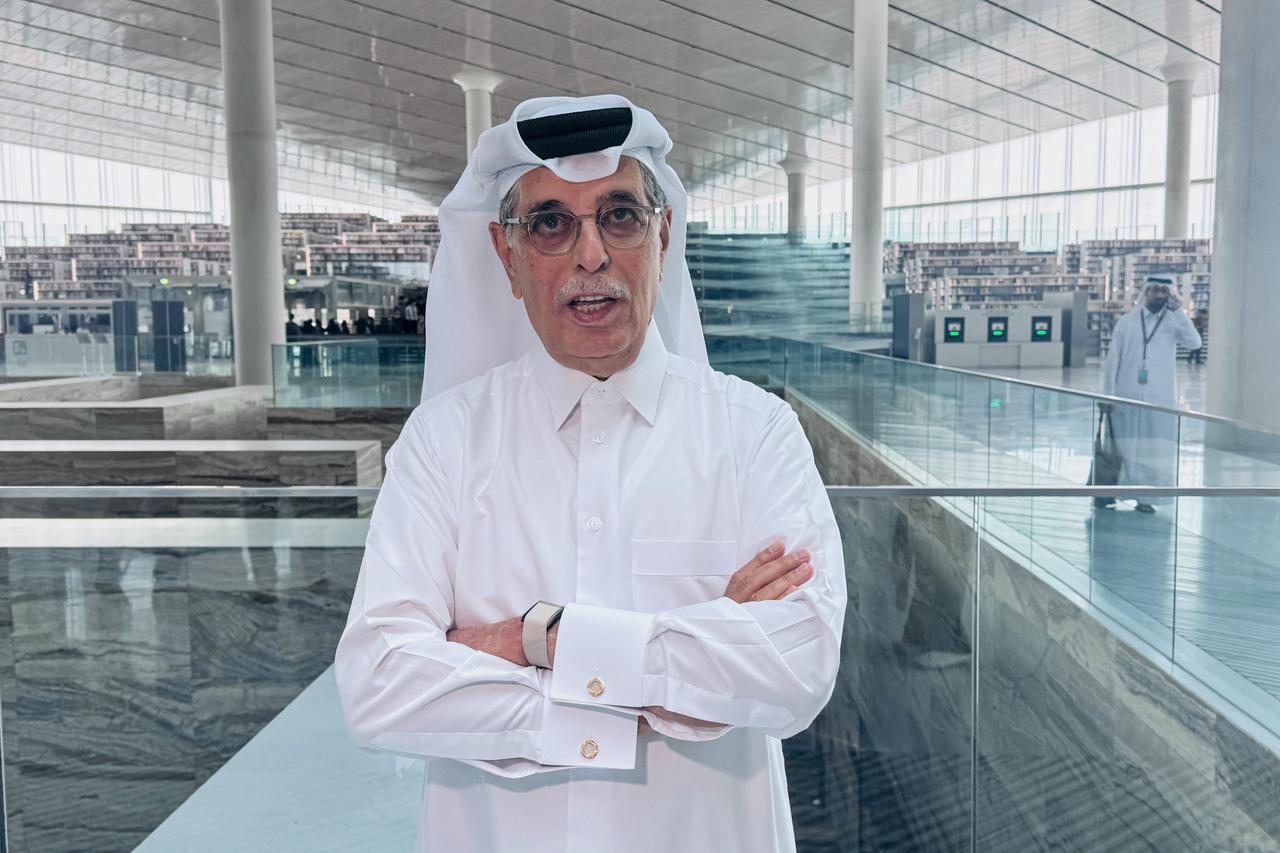


Qatar is seeking to expand its cooperation with Türkiye in historical archives, rare manuscripts, and library services, with particular interest in the country's extensive Ottoman-era collections, Qatar's Deputy Prime Minister and National Library President Hamad bin Abdulaziz Al Kuwari said.
Speaking to Anadolu Agency (AA) at the Qatar National Library in Doha, Al Kuwari highlighted Türkiye's importance in preserving Islamic cultural heritage and said the two countries were working to build on their existing partnerships in historical documentation and library management.
He emphasized that Türkiye holds an exceptionally rich collection of manuscripts inherited from the Ottoman Empire, making its libraries particularly valuable for international cultural cooperation.
"Türkiye is a very important country in the Islamic world and, thanks to its Ottoman heritage, possesses a wealth of manuscripts that cannot be found in other countries," Al Kuwari said.
Al Kuwari said cultural relations between Türkiye and Qatar had continued to develop across various fields, particularly in preserving manuscripts, archives and historical documents.
He noted that Qatar National Library maintains close contact with Türkiye's Presidential National Library in Ankara and several libraries in Istanbul, which he described as one of the world's leading cultural centers.
According to Al Kuwari, communication between the institutions remains uninterrupted, with Turkish authorities continuing to support cooperation at both political and institutional levels.
He also pointed out that Qatar National Library houses numerous Ottoman-era works, while efforts to strengthen collaboration with Turkish institutions remain underway.
The partnership builds on a memorandum of understanding signed on Oct. 18, 2021, between Qatar National Library and Türkiye's Presidential National Library.
The agreement established a framework for cooperation in education, science, culture and librarianship, bringing together specialists from both countries to share expertise in digitization, historical document preservation, professional training and joint cultural projects.
As part of the cooperation, Türkiye's Presidential National Library donated 400 books by Turkish authors to Qatar National Library.
Beyond historical preservation, Al Kuwari also addressed the growing role of artificial intelligence in language processing and cultural heritage, highlighting a gap between AI's ability to understand Arabic and the amount of Arabic-language content available digitally.
He explained that although AI systems can process Arabic effectively, the language remains underrepresented in digital resources compared with several other major languages.
"We see that artificial intelligence works very well with Arabic. However, Arabic content in the field of artificial intelligence remains quite limited compared with other languages," he said.
Al Kuwari stressed that addressing this imbalance had become an important responsibility for institutions working to preserve and promote Arabic language and cultural heritage.
He added that efforts were underway to close the gap and ensure Arabic gained a stronger position in the digital world.
Al Kuwari has headed Qatar National Library since 2020 and previously served as Qatar's minister of culture, arts and heritage. His diplomatic career also includes representing Qatar in France, the United States, the United Nations and UNESCO, the U.N. agency responsible for education, science and culture.


 Set as preferred source
 Set as preferred source



 2 min read