Newsletters


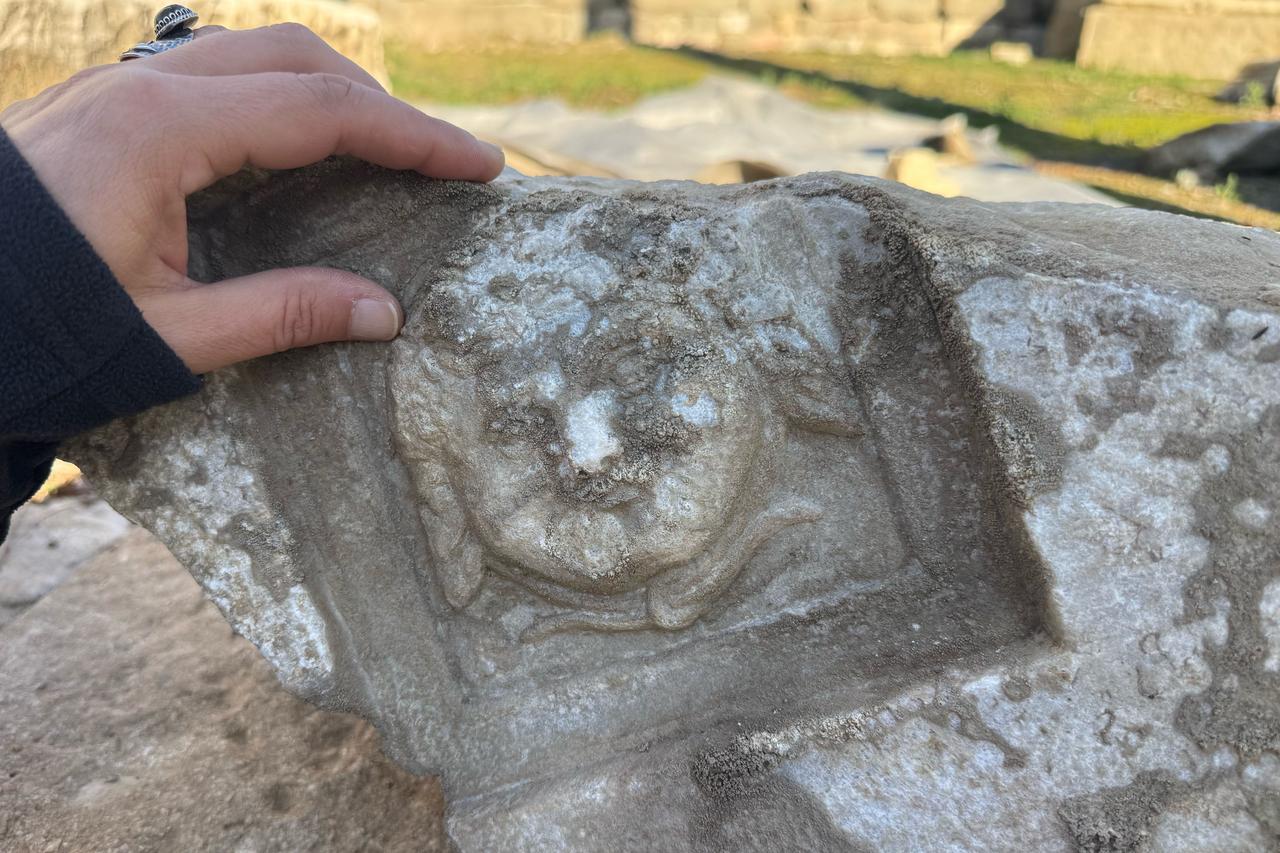


Archaeologists working in the ancient city of Amastris in the district of Amasra in Bartin have brought to light a rare smiling depiction of Medusa on the ceiling blocks of a monumental Roman stoa, a columned gallery. They say the discovery offers fresh clues about the city’s prosperity and cultural life in antiquity.
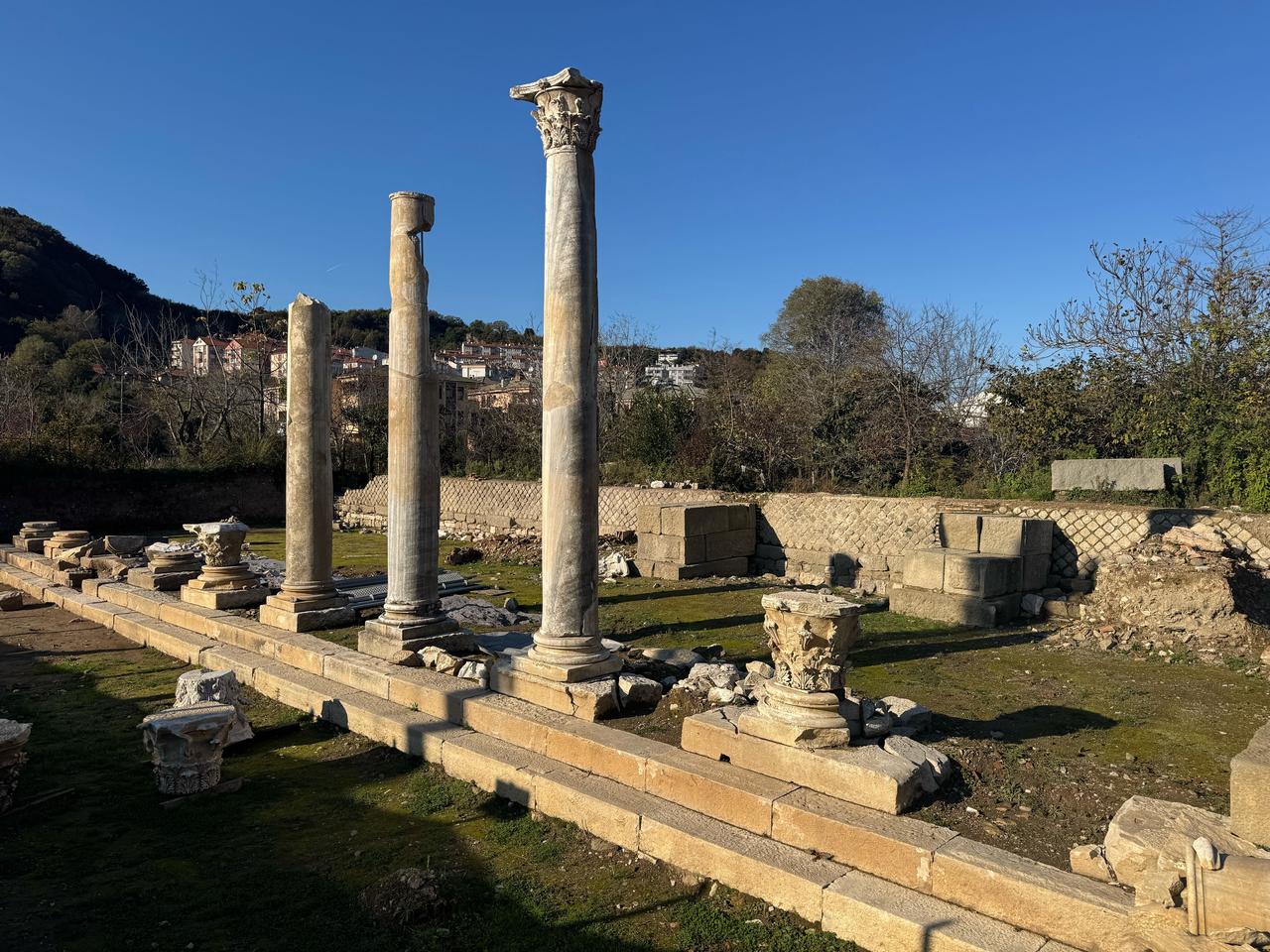

The excavations are being carried out in the ancient city of Amastris by Bartin University’s Archaeology Application and Research Center, which launched a rescue project three years ago after historical remains were identified during the construction of a school in the Kum neighborhood in 2017.
Under the leadership of Professor Fatma Bagdatli Cam, the team has been working across an area of 2,850 square metres, where they have identified the remains of a stoa from the Roman period. The structure, which rises on marble columns reaching up to nine metres in height, has been described as the most monumental marble building of the Black Sea region and is seen as a clear indication of the ancient city’s former splendour.
The stoa is being rebuilt through a meticulous restoration process known as anastylosis, in which original architectural elements are reassembled stone by stone in their presumed original positions. Within the scope of the Ministry of Culture and Tourism’s “Heritage for the Future" project, three columns have already been re-erected using original pieces, while four more columns, together with blocks, ceiling coffers and other architectural fragments, have been documented and prepared to go up in the next phase.
Professor Cam notes that the work does not only focus on the standing monument, since the team has also identified the presence of a second stoa nearby and plans to bring it to light in the coming excavation seasons.
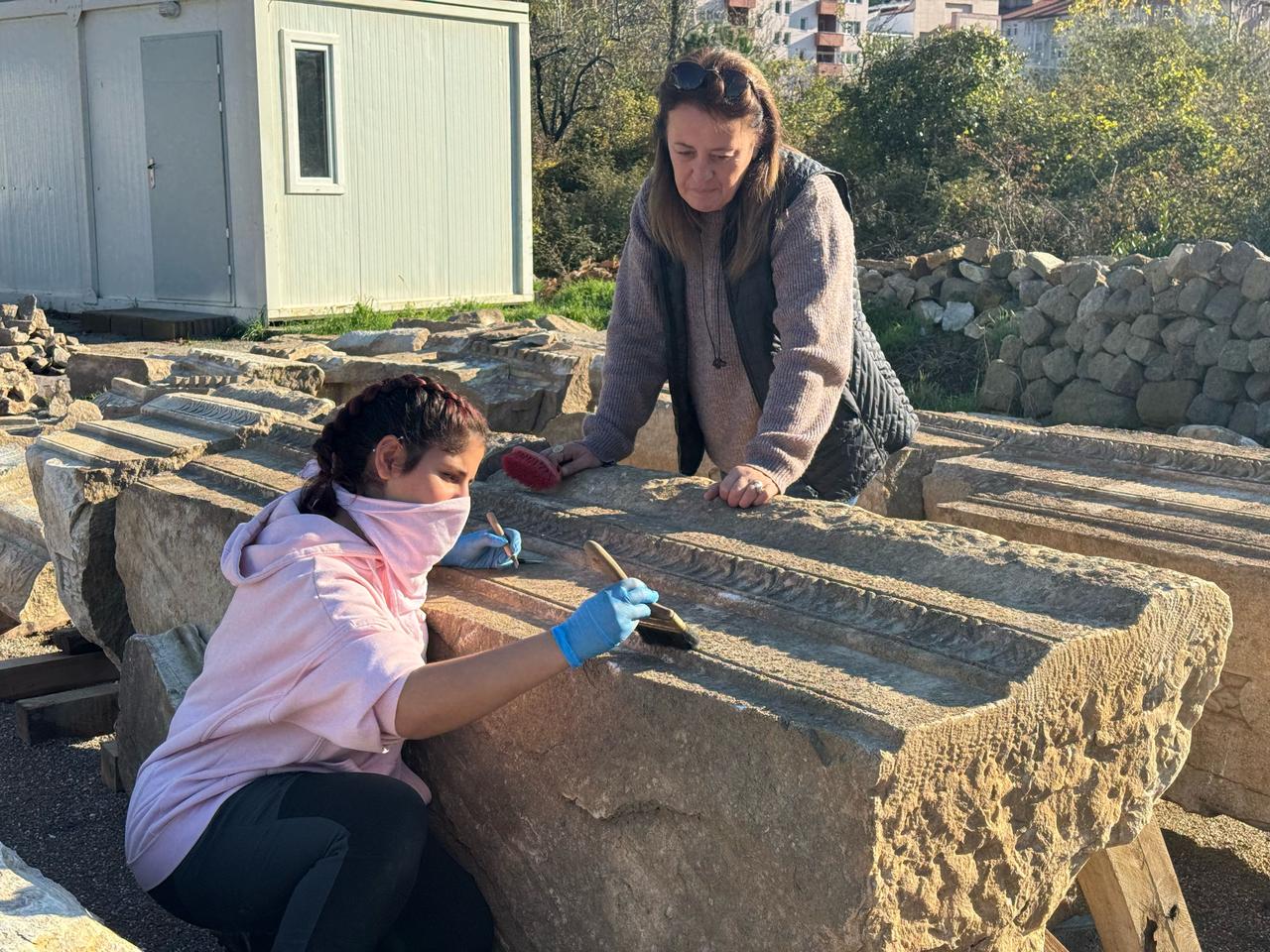
The excavation results have led researchers to conclude that the area corresponds to the agora or forum of the city, which, in the Roman period, served as the main urban space for trade, social interaction and public life. Professor Cam explains that every piece of data obtained from the stoa helps the team set out a clearer picture of the living standards and culture of Amastris in the Roman era, and she underlines that they are eager to share the revived structure with visitors.
She states that if the work proceeds as planned, the site could be partially opened to visitors between the end of 2026 and the beginning of 2027, and the team hopes that both local and foreign tourists will be able to watch how the ancient city gradually stands up again as new elements are restored.
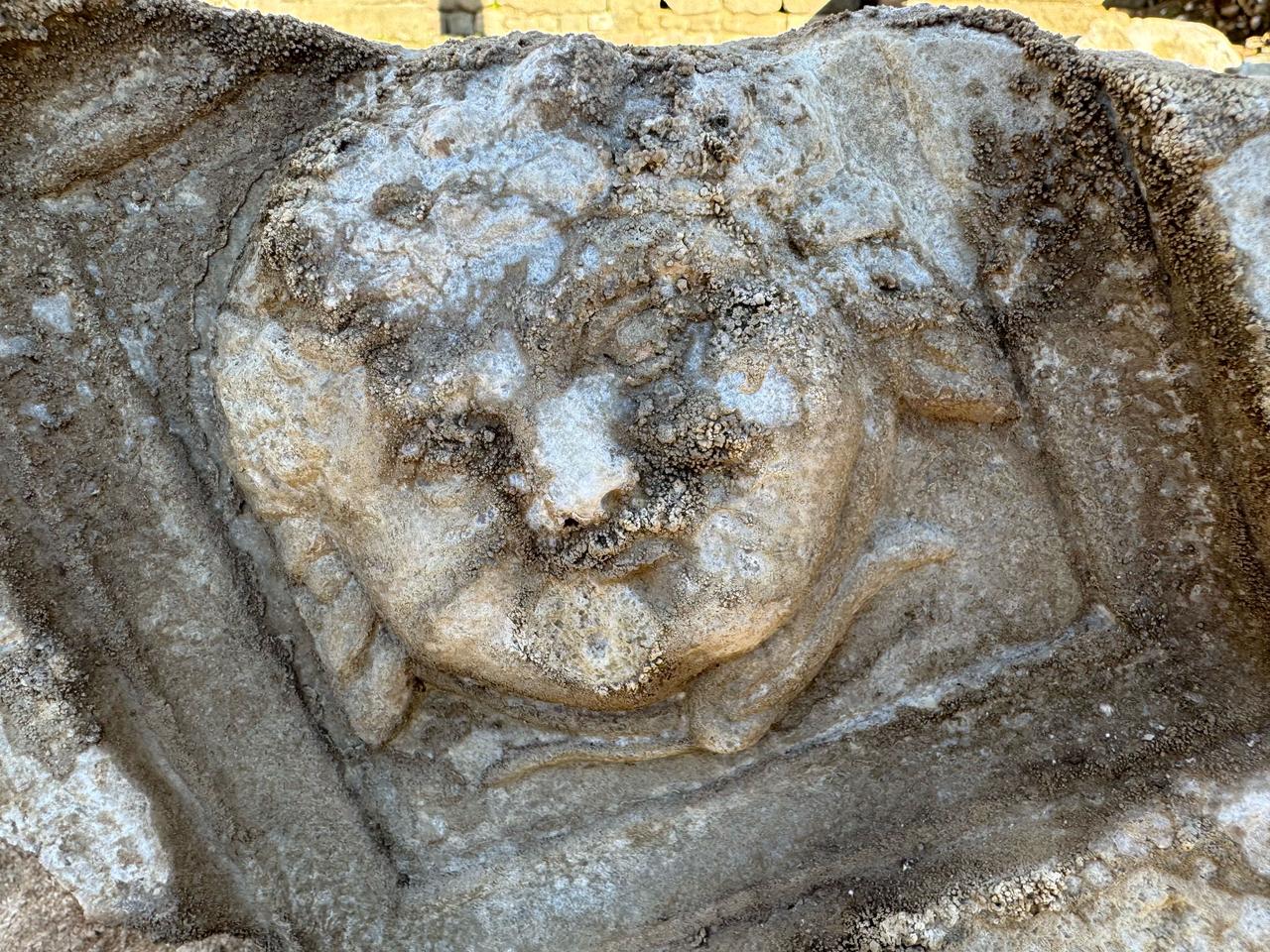
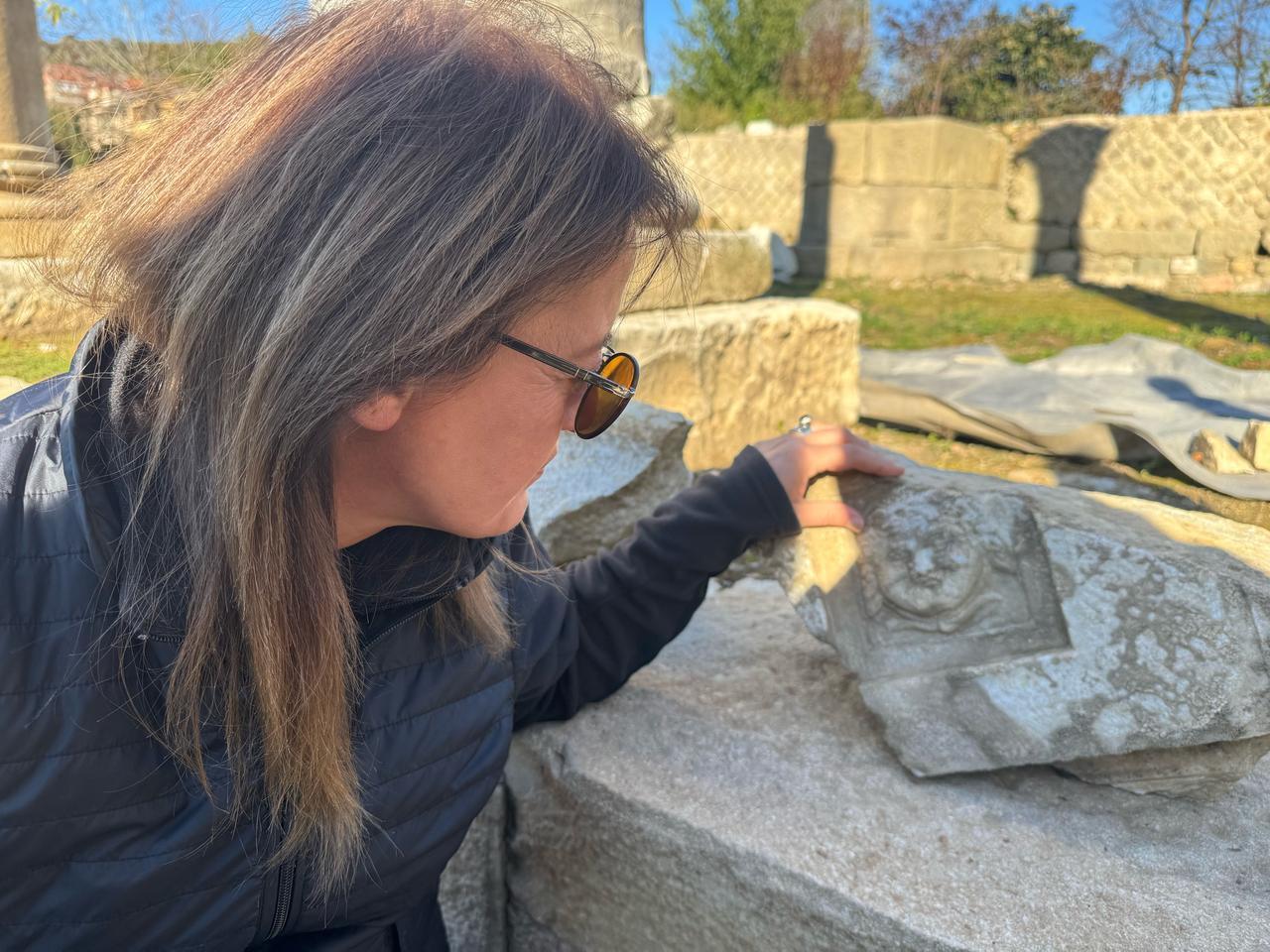
The most striking find to emerge from the restoration of the stoa so far has been a Medusa figure carved on the ceiling coffers, the decorated panels placed above the marble columns. In Greek mythology, Medusa is known as a female monster with snakes for hair, sharp teeth and a gaze said to turn onlookers into stone. In many ancient buildings and objects, her image was used in order to frighten enemies and to act as a protective symbol on façades, shields and pediments.
Professor Cam points out that this traditional image does not match the figure they have brought to light at Amastris. She recalls that Medusa usually appears with a terrifying expression intended to spread fear, yet notes that the Medusa on the stoa was rendered in a different mood. According to her, “Medusa normally became a symbol with a frightening expression and snake hair in order to scare the enemy and create fear, but our Medusa was made just like an Eros, like the face of a very small child and in a smiling pose,” and this unusual appearance has excited the team.
The professor interprets the smiling Medusa as reflecting the peace and prosperity of the city at the time when the stoa was decorated, and she stresses that the figure has given the archaeologists great hope for the next stages of research on both the building and the wider ancient city.
The smiling Medusa is not the first remarkable discovery in the Amastris excavations. Previous seasons have brought out a head of Alexander the Great, statues of a Nymphe, or water nymph, and Lares, household deities known from Roman domestic religion, as well as an amulet regarded as a protective charm, coins from different periods and fragments of inscriptions.
Taken together, these finds suggest that the site has the potential to reveal important insights into the religious and social life of the settlement. Professor Cam says that the appearance of the smiling Medusa on the ceiling of such a monumental structure has strengthened the team’s belief that the ongoing works will continue to shed light on the emergence of the ancient city and will guide future research in the area.


 Set as preferred source
 Set as preferred source


 2 min read