Newsletters


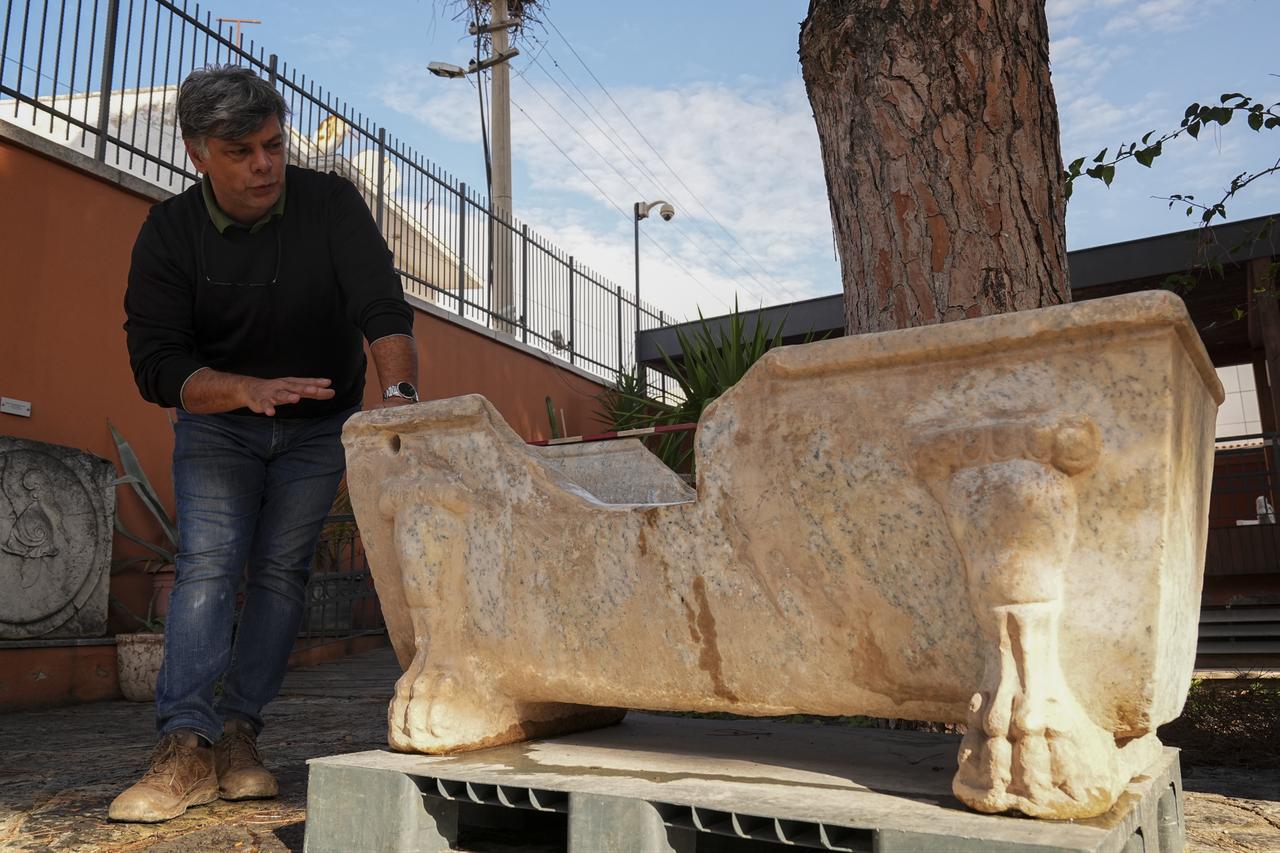


Archaeologists working in the UNESCO-listed ancient city of Ephesus have uncovered a finely crafted Roman marble bathtub that was later repurposed as a fountain trough, alongside a male statue reused as road paving. The discoveries were made during ongoing excavations along ancient stadium street, offering rare insight into how luxury household objects were adapted for practical use in later phases of the city.
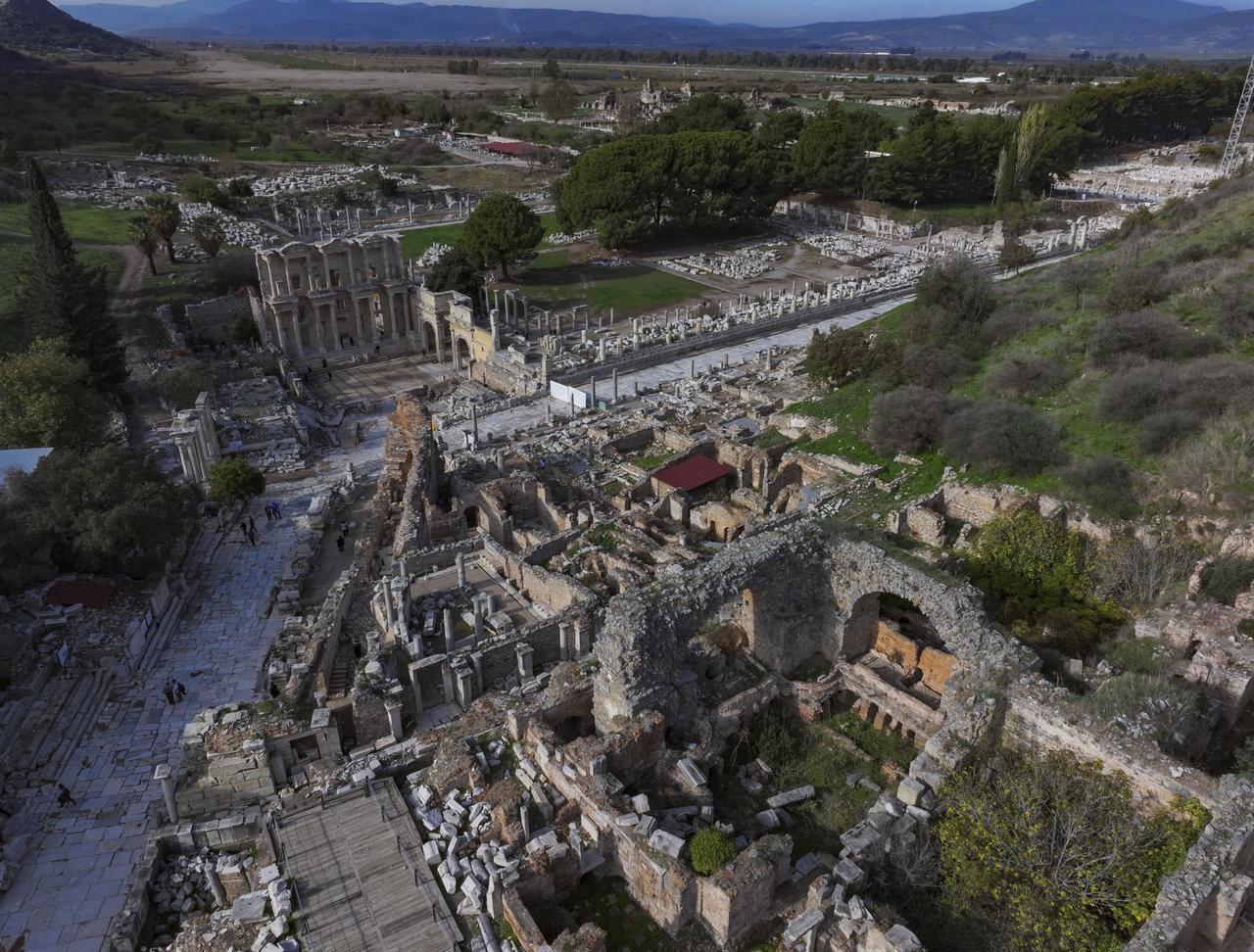

The marble bathtub, dated to the first century A.D., was found during excavations believed to be linked to the Terrace Houses, a residential area once occupied by wealthy Roman families. Measuring roughly one and a half meters in length, the tub was carved from Greco Scritto marble, a locally sourced stone known for its decorative veining.
According to project coordinator Professor Serdar Aybek of Dokuz Eylul University, the object was clearly designed for domestic bathing rather than burial or public use. He noted that bathing culture played a central role in Roman daily life, not only through monumental public bath complexes but also through smaller, private installations in elite homes. The size and depth of the tub point to its use inside a residence rather than in a public building.
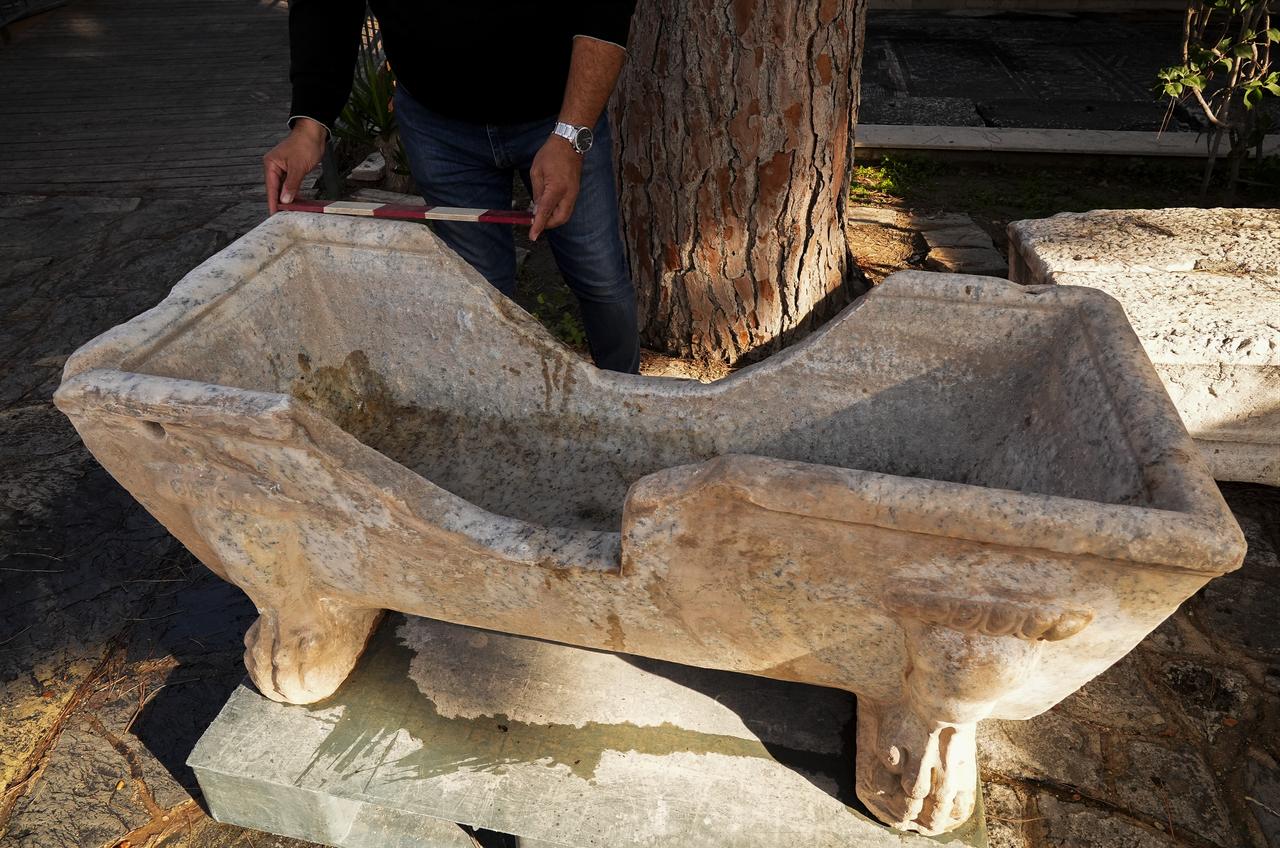
What makes the find unusual is not only its refined workmanship but also its later alteration. The team established that the tub had been reused as a fountain trough during a later repair phase of the street. Aybek explained that its original form had been deliberately modified, with holes cut at the top and bottom to allow water to flow through, indicating systematic reuse rather than accidental damage.
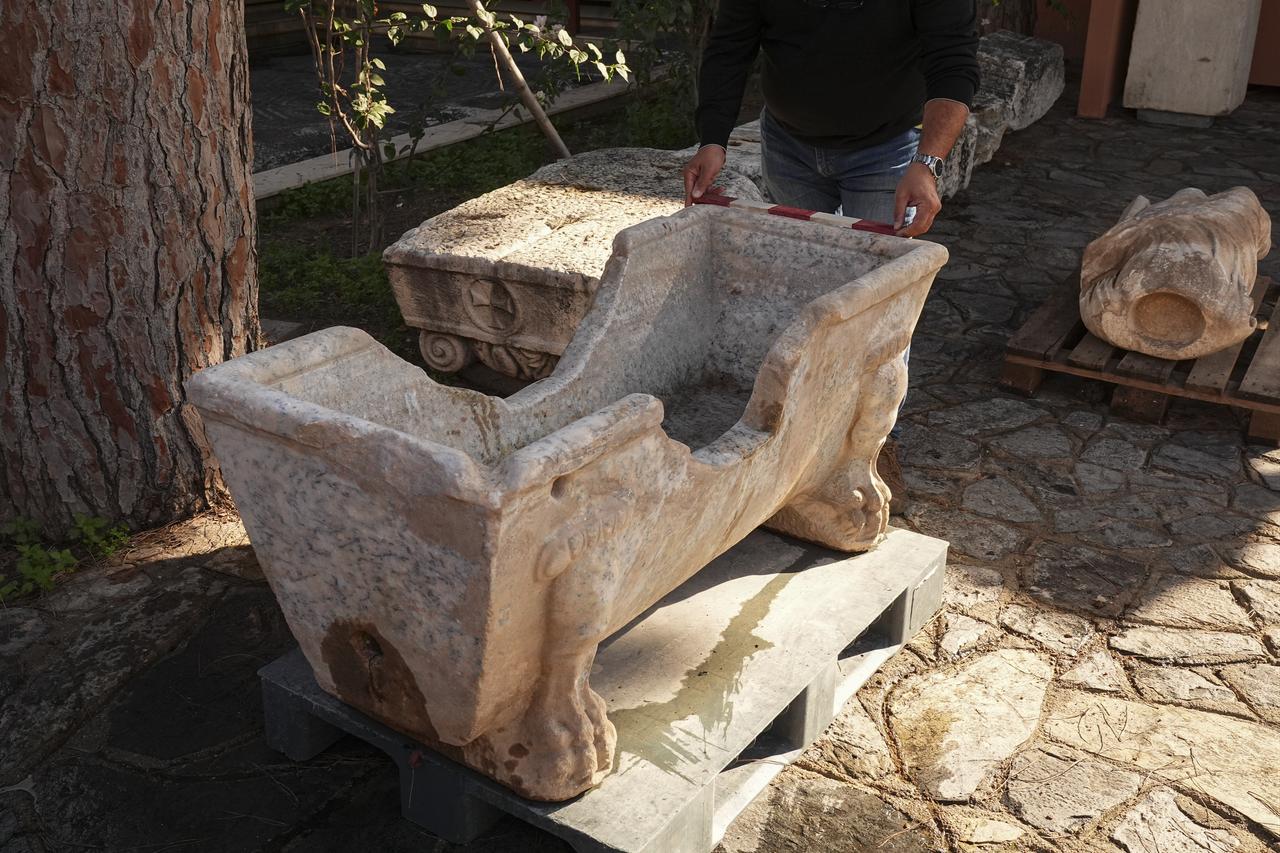
The bathtub stands out for its high-quality craftsmanship, including lion-paw feet, molded profiles, and a decorative egg-and-dart motif known in classical architecture as kymation. These features, combined with the choice of stone, suggest that it once belonged to a household of considerable wealth and status.
Aybek indicated that such objects were often dismantled and reused when urban infrastructure was repaired in later centuries, reflecting both practicality and changing priorities within the city. In this case, a private luxury item was adapted to serve a public function along one of Ephesus’ main thoroughfares.
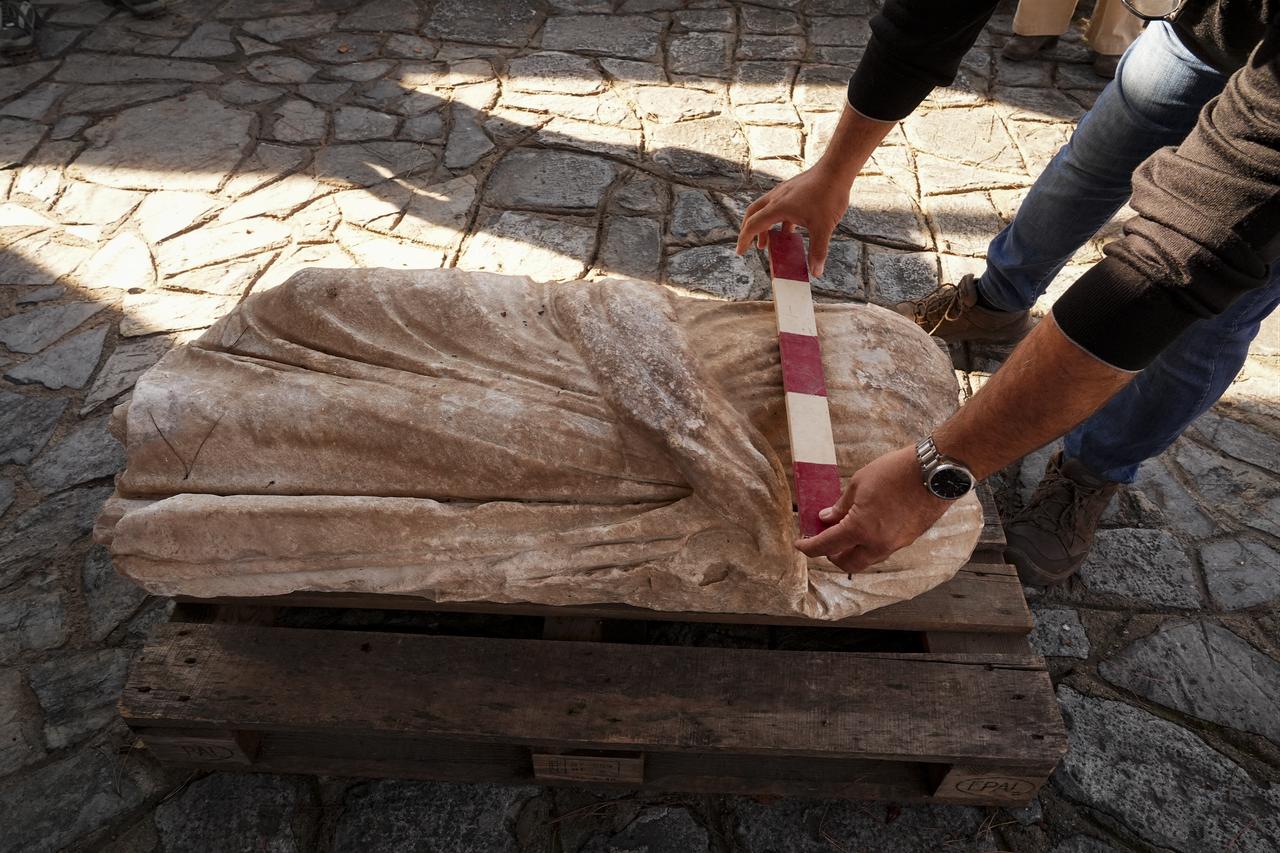
Excavations along the same stretch of stadium street also brought to light a marble male statue dating from the late first century B.C. to the early first century A.D.
Carved in separate pieces, with the head, limbs, and body made individually, the statue was found face down and inverted, having been reused as a paving slab.
The statue measures just over one meter in height and was discovered unexpectedly when archaeologists lifted what appeared to be ordinary road surfacing. Aybek described the moment as an unanticipated but welcome find, adding that the statue has now been transferred to the Ephesus Museum, where it will become part of the permanent collection.
The discoveries were made within the framework of the "Endless Ephesus, Heritage for the Future" initiative led by the Ministry of Culture and Tourism of Türkiye, in cooperation with the Ephesus Museum and the Austrian Archaeological Institute.
The project aims to open new visitor routes while also clearing long-neglected areas and bringing significant artifacts into museum collections.


 Set as preferred source
 Set as preferred source


 3 min read