Newsletters


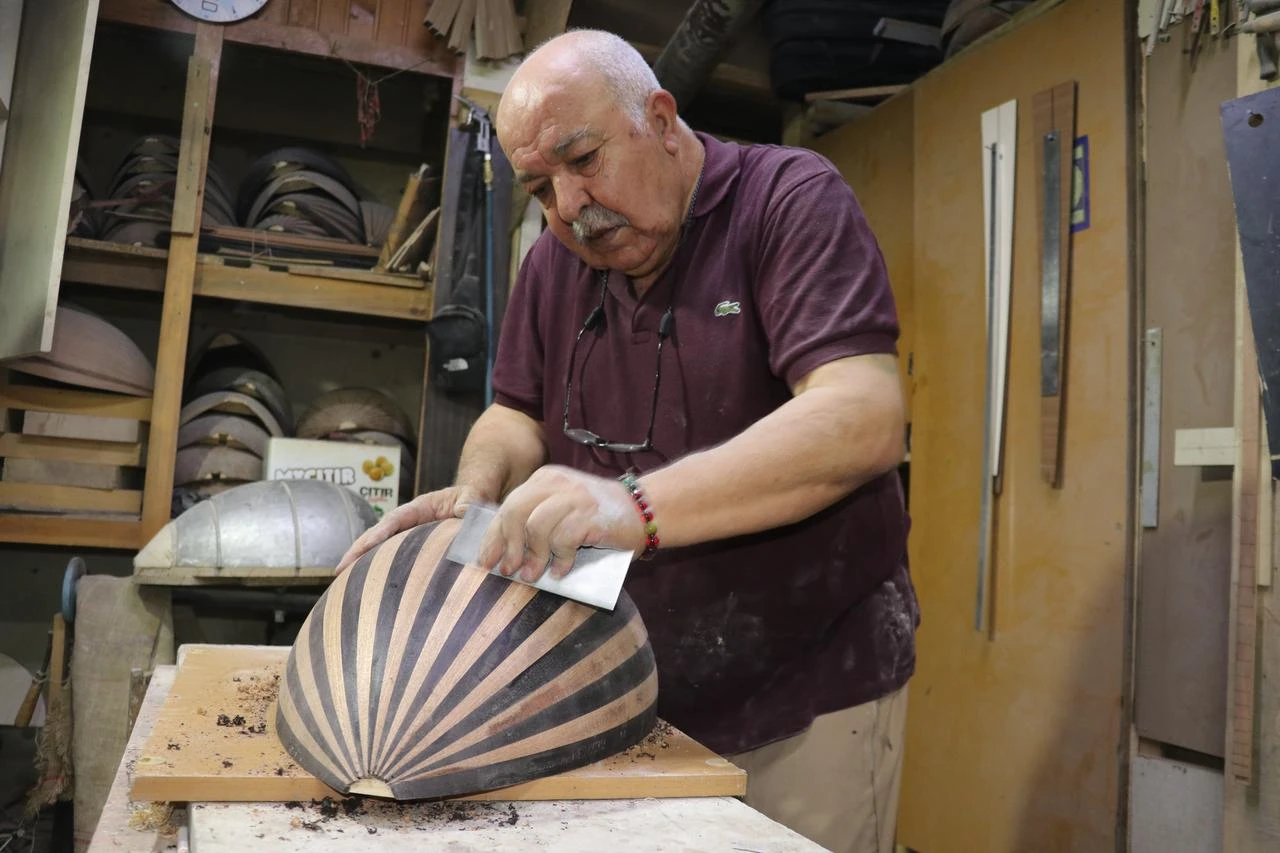


Karaoglu, a father of three, made his first oud in 1976 after developing an interest in the craft during his childhood. He has worked from his workshop ever since, producing instruments sold both within Türkiye and abroad.
Describing his approach to the trade, Karaoglu said oud making positively affects his psychological well-being and brings him happiness and vitality.
He said he begins each day at 06:00 a.m., arriving at his shop before starting work, a routine familiar to his neighbors. Even on days without orders, he said he continues to work on his instruments and looks for ways to improve them.
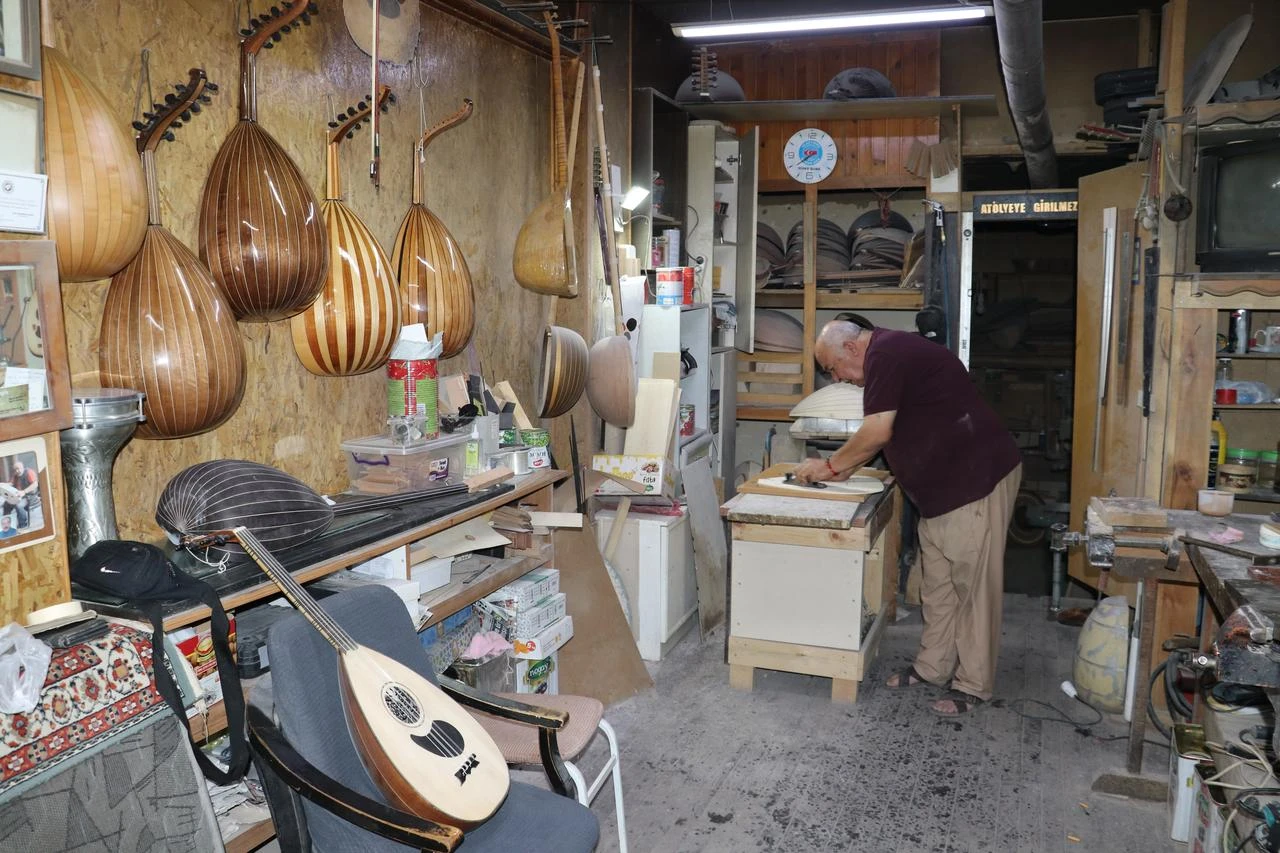

Karaoglu described the oud-making process as beginning with the selection of wood, which is cut into strips measuring 3 centimeters in width and 70 centimeters in length.
The strips are matched in pairs, shaped with heat, and then planed and sanded into thin slices. These slices are assembled in a mold and glued together without nails, eventually forming the instrument's rounded body, known as the bowl.
According to Karaoglu, ouds are typically constructed using 21, 23, 25, or 27 slices, though older instruments were sometimes made with 13 or 17. He said 21 and 23 slices are the most commonly used configurations today.
Once the bowl is removed from the mold, it is left to rest before the interior is cleaned, taped and lined with paper. Work then continues on the instrument's exterior.
Karaoglu said he ships his ouds to customers who contact him online, with orders sent primarily to Bursa, Izmir and Istanbul, as well as to buyers abroad who specify their preferred features. He described each completed instrument as holding personal significance, saying: "Every oud is like a child to me, part of who I am."
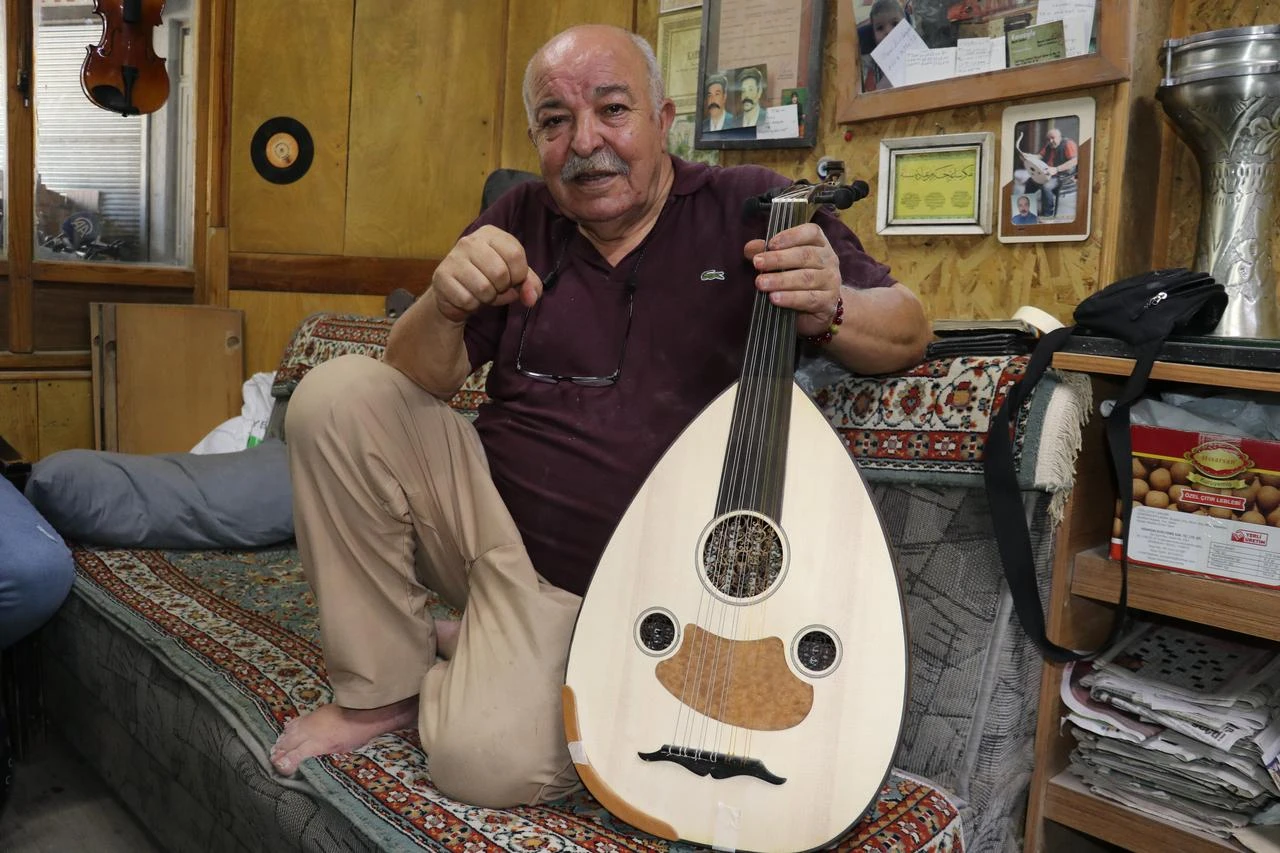
He said he intends to continue working in the profession for as long as possible, wishing to remain active in his craft until the end of his life.
Karaoglu, who once played the oud himself before an injury to his fingertips affected his ability to perform, said his hands remain well suited to building the instruments instead.
Karaoglu said he believes he was the first person to establish a professional oud-making workshop in Sivas and expressed hope that others will continue the craft after him. He noted that his family members are all musicians and that his grandchildren play instruments he has made.


 Set as preferred source
 Set as preferred source


 3 min read