Newsletters


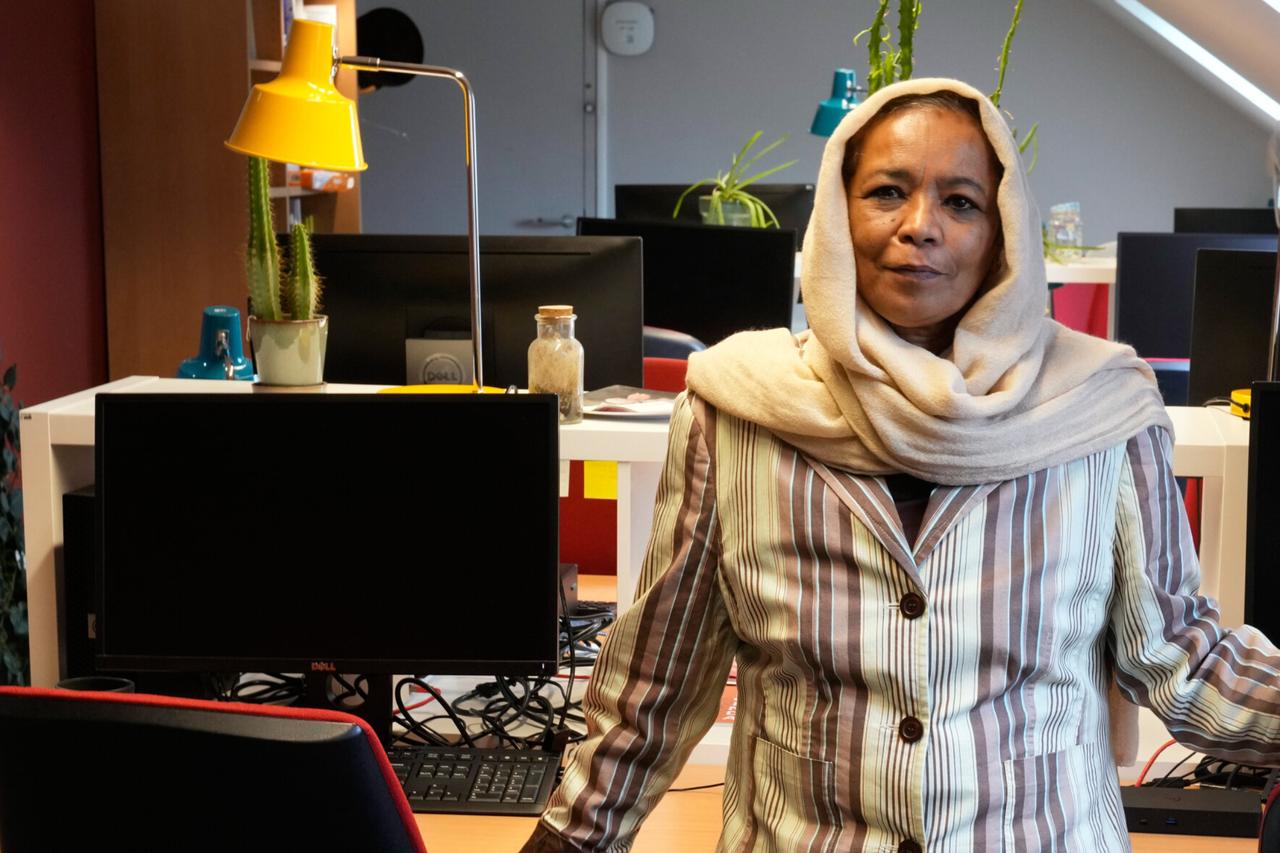


In a quiet office in Paris, Shadia Abdrabo is racing against time to record what remains of Sudan’s cultural memory, as the country’s ongoing war continues to devastate its museums, archives and archaeological sites.
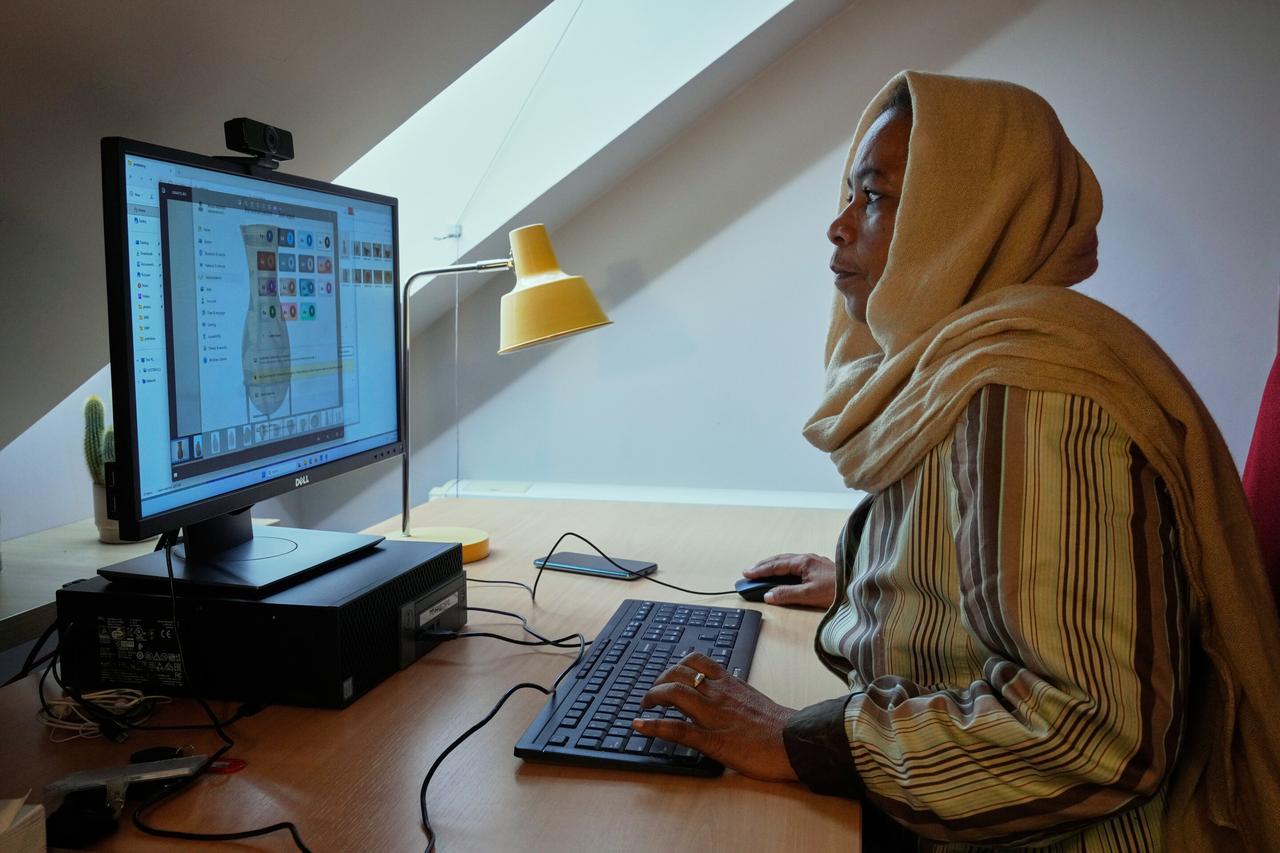
In a dimly lit office at the French National Institute for Art History (INHA), Sudanese archaeologist Shadia Abdrabo studies a photograph of pottery dating to around 7,000 B.C., typing each detail carefully into a growing archive. The curator from Sudan’s National Corporation for Antiquities and Museums is on a yearlong research grant in France, where she is building an online database that brings together Sudan’s archaeological sites, museum inventories and historical archives.
Her task became urgent after April 2023, when fighting between the Rapid Support Forces (RSF) and the Sudanese Armed Forces (SAF) led to the destruction and looting of cultural institutions. With museums ransacked and collections scattered, she says the mission now is to determine what has vanished and what can still be saved.
“We have to work fast to secure our collections. We’ve already lost two museums and we don’t want to lose more,” she told the Associated Press.
Regional museums in El Geneina and Nyala were almost completely destroyed, and the National Museum in Khartoum—once home to roughly 100,000 objects—was overrun by armed groups who posted videos from inside its storerooms. The museum held treasures from prehistoric times through the Kerma, Napatan and Meroitic periods, along with some of the world’s oldest mummies and royal Kushite artefacts.
UNESCO warned that the “threat to culture appears to have reached an unprecedented level,” while Sudanese heritage advocates described entire archives “vanishing” as applications for protection were still being processed.
For Abdrabo, the destruction is deeply personal. She comes from Nubia in northern Sudan, a region filled with ancient monuments and sites connected to some of Africa’s earliest kingdoms, civilizations that once rivaled ancient Egypt.
She was working at the National Museum when the war erupted. As daily life collapsed with shortages of electricity and water, she fled north with her sisters before eventually reaching Port Sudan. Even during displacement, she and her colleagues worked to protect the country’s 11 museums and several UNESCO World Heritage sites, moving objects into safe rooms and undisclosed locations.
But the efforts were often overtaken by the speed of the conflict. “While applications were being drafted, sites were being emptied,” wrote heritage advocate Ali Nour for the U.K.-based International Institute for Conservation. “While risk assessments were reviewed, entire archives vanished.”

UNESCO initiated emergency measures, including inventories and training for police and customs officers to help identify stolen artefacts, while urging collectors not to acquire Sudanese objects. Yet researchers argue that Sudan’s heritage crisis has not received the same global visibility as those in Afghanistan or Iraq, resulting in a slower international reaction.
Sudan’s ancient cultures were deeply connected to Egypt, the Mediterranean and Mesopotamia through trade and military ties, and the region supplied much of the gold that circulated in antiquity. “If we’re interested in these ancient cultures, then we have to be interested in Sudan,” said archaeologist Geoff Emberling of the University of Michigan.
Emberling is involved in the Sudan Cultural Emergency Recovery Fund, which aims to unite institutions, donors and experts around urgent recovery efforts. He describes Abdrabo’s work as “urgently essential,” noting that a team of Sudanese specialists is now cleaning and restoring what remains inside the Khartoum museum, preparing to compare surviving objects with her database.
Abdrabo’s research grant runs until April 2026, but she is concerned the timeframe won’t be enough. The process is slow and meticulous: some records arrive in spreadsheets, others as old photographs or handwritten notes. She receives support from colleagues at the Louvre and the British Museum, yet she carries out most of the work alone.
“I’ve done about 20% of the work,” she says. “Just for the national museum, I’ve recorded 1,080 objects so far… and then I have to do other museums, sites, archives. I need to add pictures, ID numbers, coordinates.”
She often becomes emotional while describing the loss. “I cry when I talk about this,” she said. “My only goal is to bring back as much as possible, to do as much as I can for Sudan.”
With millions displaced and militias occupying cultural sites, she fears the situation could worsen. “Until the war finishes we just don’t know what is going to happen,” she said.


 Set as preferred source
 Set as preferred source


 2 min read