Newsletters


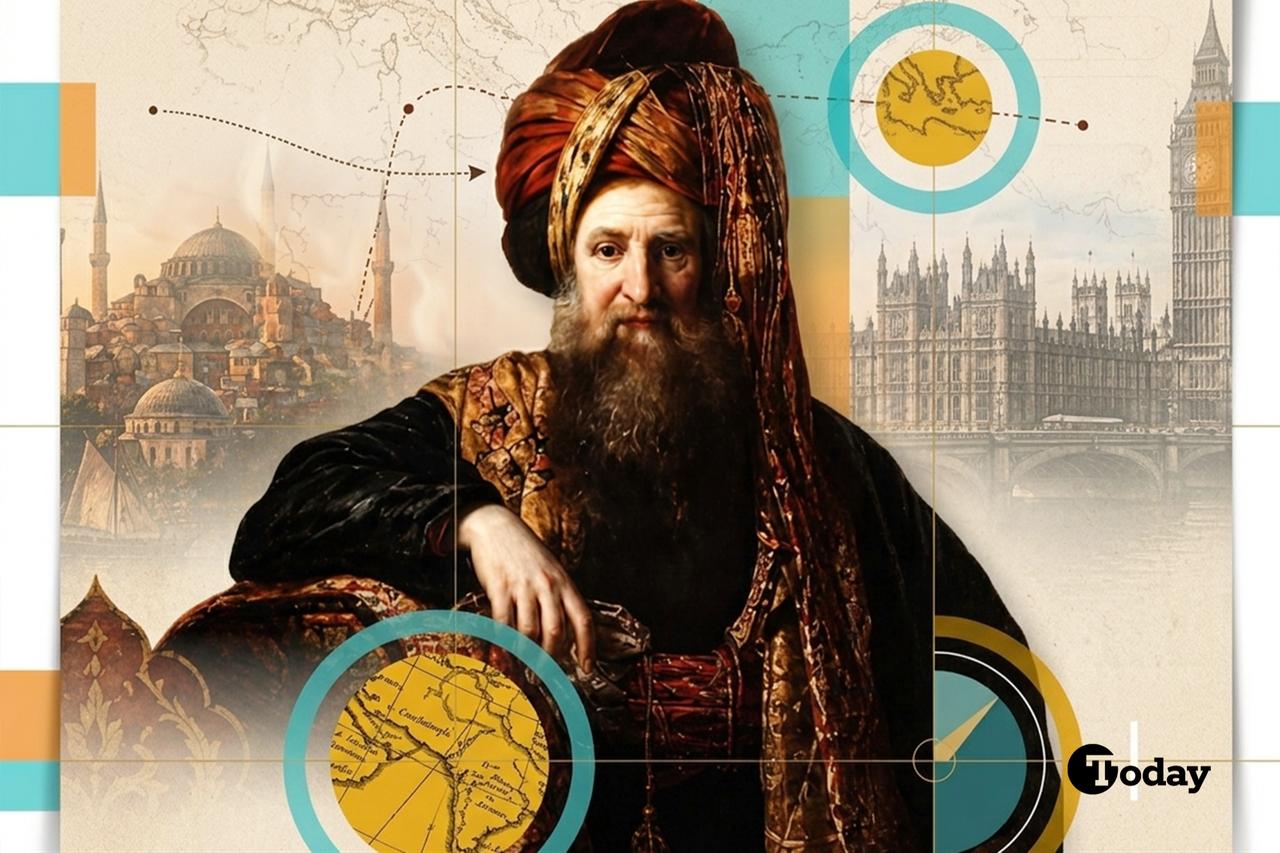


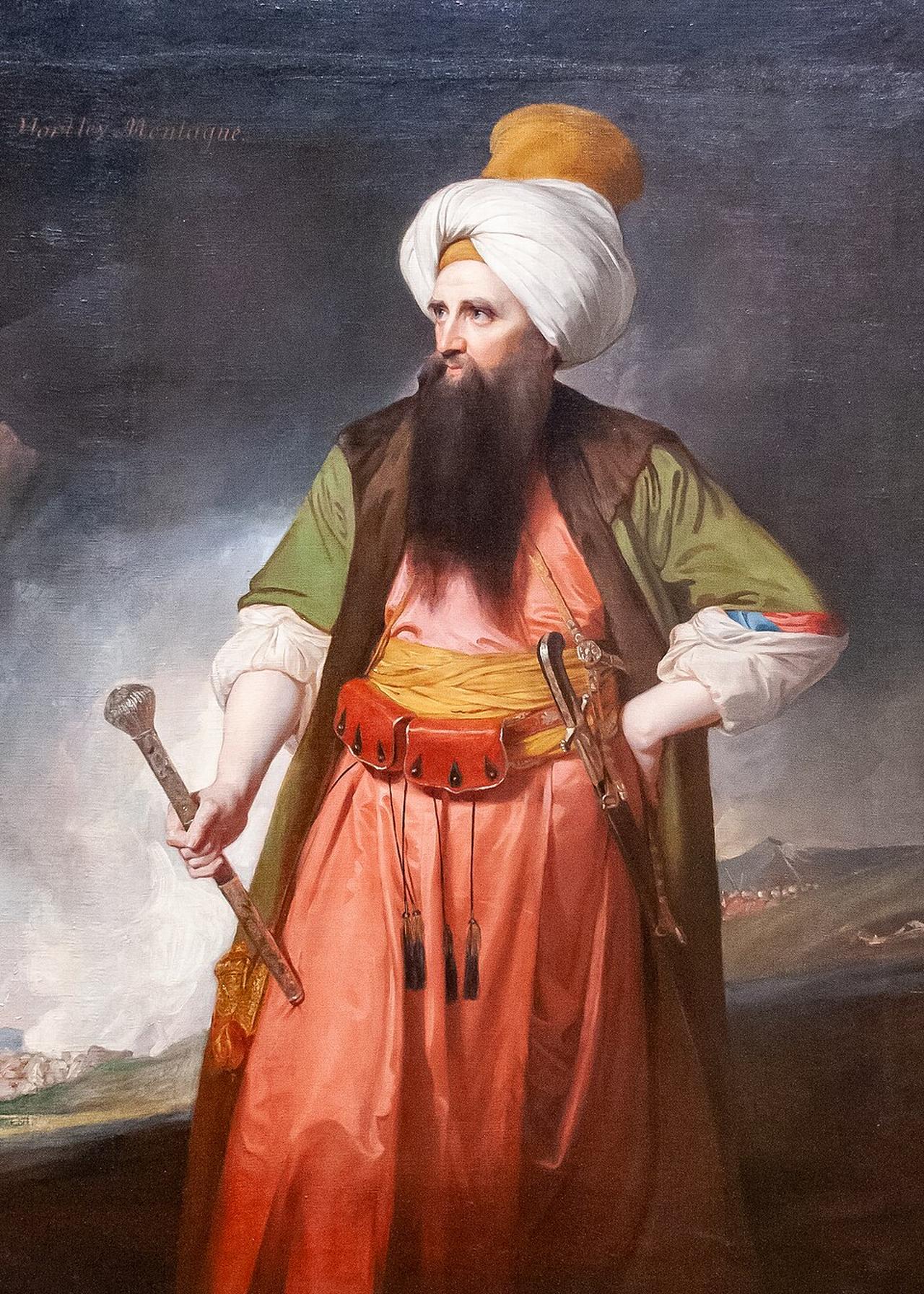
There is a portrait by Matthew William Peters, painted in Venice around 1775, of a man leaning forward out of darkness. Clad in heavy robes and a turban, his beard erupting onto his chest, he has the glassy gaze of one who has either found enlightenment or lost his mind.
The chiaroscuro is Rembrandtesque, and Peters had clearly been looking at the right paintings. But the subject refuses any attempt at Old Masters gravity. He is 62 years old, an English MP for Bossiney in Cornwall, and the son of one of the most famous women in European letters.
He is also, at this moment, very possibly a Muslim, certainly bigamous, and almost certainly accompanied by a Nubian boy whose status remains uncomfortably ambiguous.
He has not worn European clothes in over a decade. And when the Duke of Hamilton called on him, he found him “wonderfully prejudiced in favor of the Turkish character and manners, which he thinks infinitely preferable to the European, or those of any other nation.”
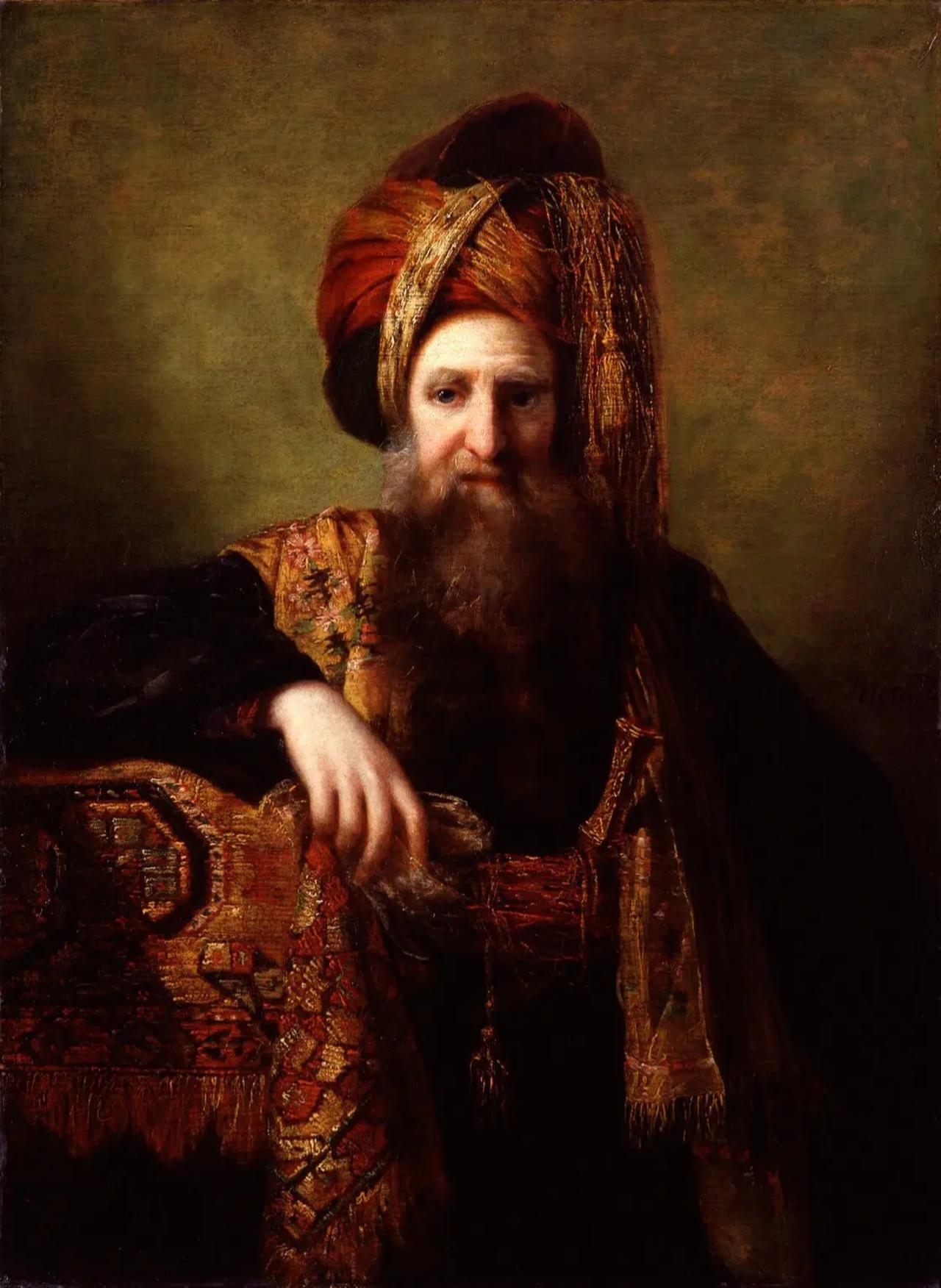

Edward Wortley Montagu the Younger is the 18th century's most committed Ottomanist, and the least credited.
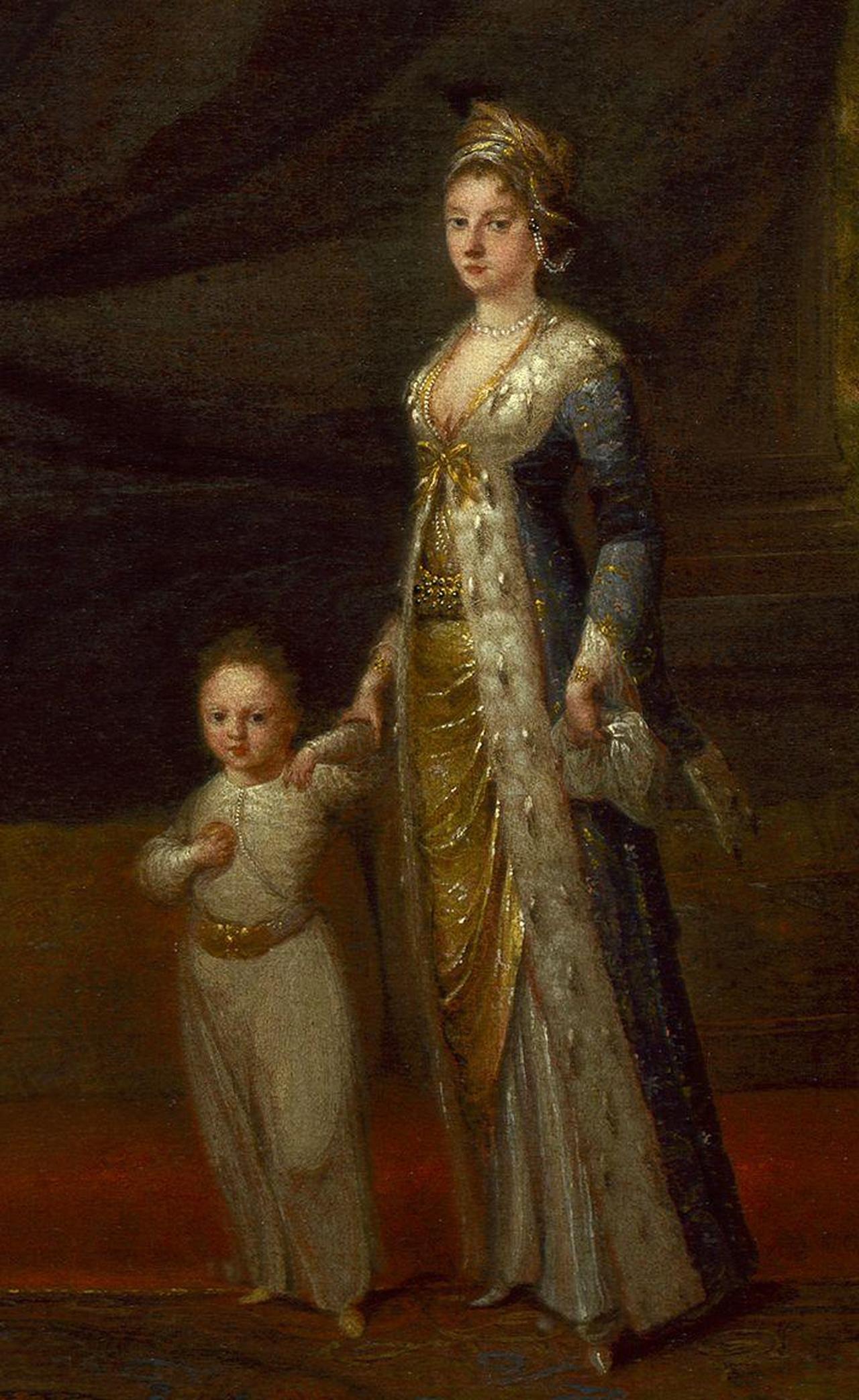
His mother, Lady Mary, gets all the glory. Scholars pore over the "Turkish Embassy Letters," her advocacy for inoculation, and the portraits in turban and ermine. Perhaps because she at least remembered to go home.
Her son never quite managed it. Or rather, he went home, hated it, and kept dashing for the exit until he eventually ran out of reasons to return. The problem, it seems, was not that Edward could not settle abroad, but that he could not settle in England.
In 1716, he was carried to Constantinople by his parents and inoculated for smallpox, becoming one of the earliest Britons known to have undergone the procedure. It is worth pausing to note that the foundation of Edward’s lifelong Ottoman identity was essentially 18 months in Constantinople at the age of 3. He remembered none of it.
Most people, confronted with this fact, would call it a childhood vacation. Edward treated it more like a life mandate, which is either delusional or simply how identity shifts work.
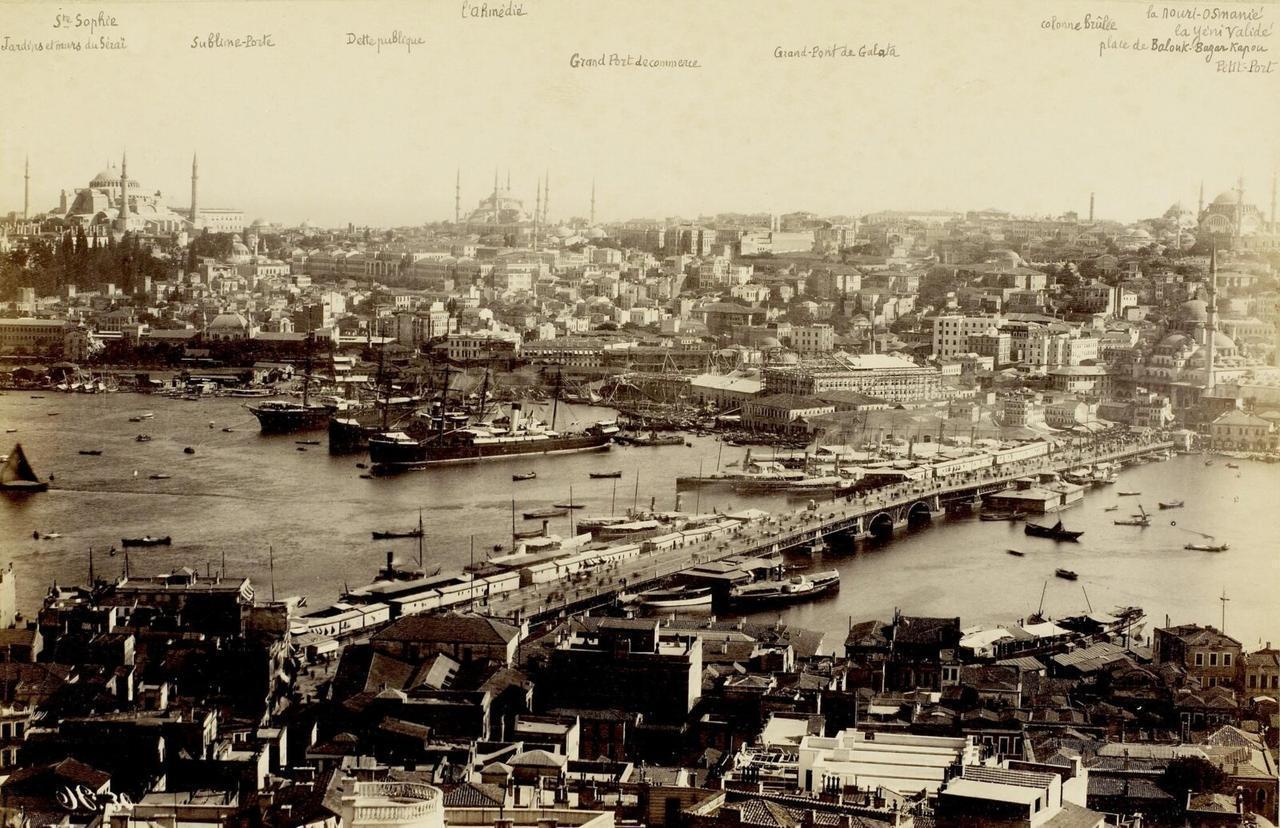
One sympathizes with the idea that something got into him then, some microbe of the Bosphorus entering the bloodstream alongside the smallpox matter perhaps, because from that point forward no conventional English institution could hold him.
Westminster School certainly could not. He ran away no fewer than four times: once ending up selling fish at Blackwall with a basket of flounders on his head, and another time driving mules in the interior of Portugal before the British consul caught him.
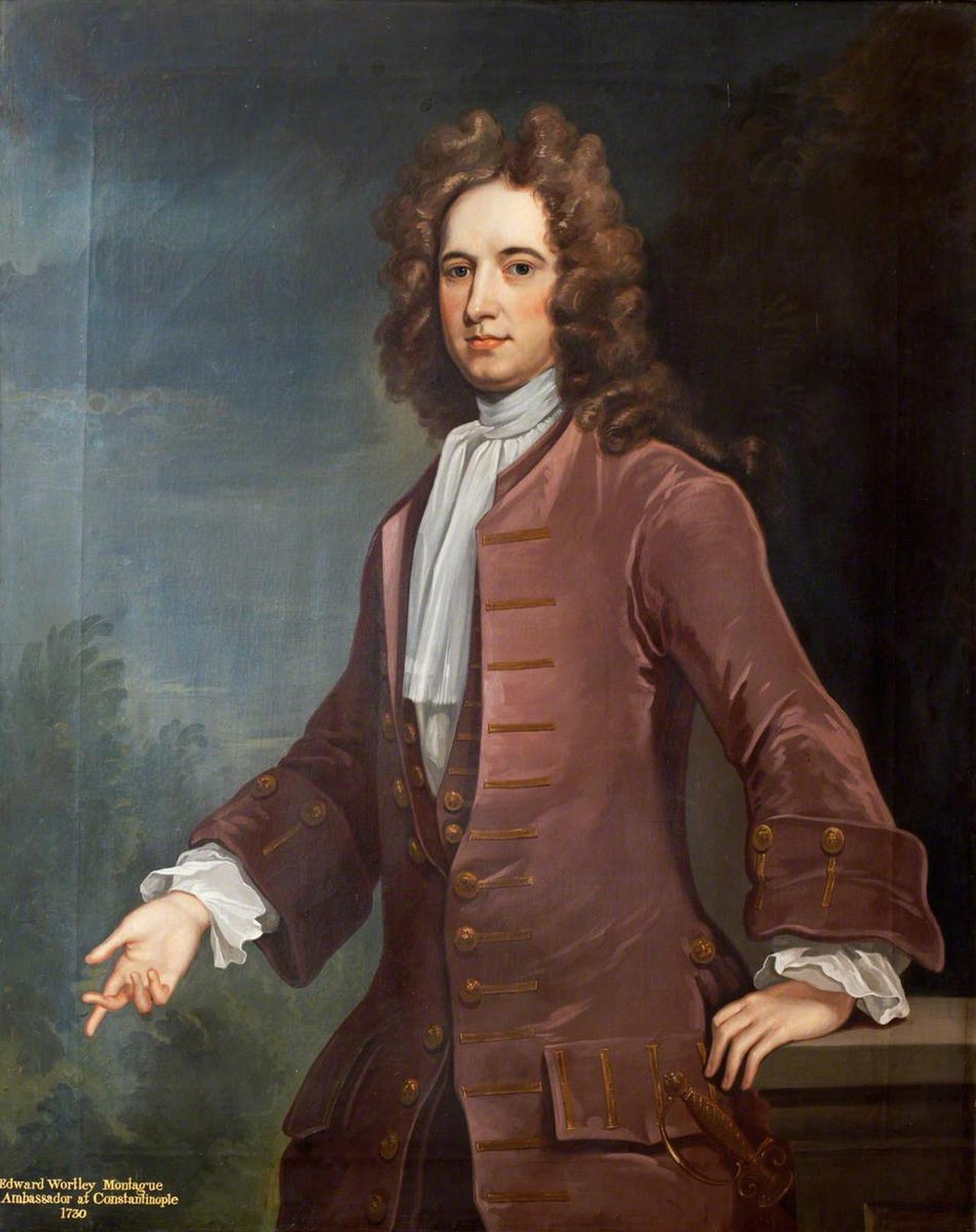
His mother called him "that young rake." His father, a Yorkshire coal magnate whose idea of adventure was a mildly contentious parliamentary seat, regarded his son’s activities as a personal affront.
He later described these wandering years in a letter to a Florentine priest as a Fieldingesque tour through European social roles: laborer in Switzerland, postilion in Holland, petit-maitre in Paris and Lutheran pastor in Hamburg, which is either very funny or very sad.
Either way, the young man was, at the very least, learning how costumes worked and how easily a life could be remade inside one.
Montagu did eventually settle, albeit briefly, into the sort of life his father could recognize involving army service, an MP's seat, and a secretarial role at the peace conference of Aix-la-Chapelle.
But by 1751, he had been arrested in Paris for cheating a Jewish man at cards and then robbing him when he declined to pay. He served 11 days in the Chatelet, then returned to Parliament, apparently unruffled.
In 1761, Montagu re-enrolled at Leiden under the description Linguarum Orientalium Cultor, or a cultivator of Oriental languages. He was 48, and the phrase had the quality of a man formally declaring an intention that everyone around him had long since noticed. Then he simply never came back.
By the time he reached Venice, the experiment had hardened into theater. He declared himself “a part of the polite education of any noble youth who comes to this place on the Grand Tour,” which was either magnificent self-possession or self-parody and probably both.
Dr John Moore, tutor to the Duke of Hamilton, arrived to find no chairs; Montagu received him cross-legged on a carpet, long beard arranged on his chest, the whole tableau apparently held without effort.
Pietro Longhi painted him as a Venetian curiosity, placing him in the same series as the city's elephant and rhinoceros.
His family's response was at least consistent.
His mother left him a single guinea in her will. His father had already spent three decades perfecting the same message with coal money. The Montagus were dab hands at financial disapproval, and Edward was equally talented at converting what little he got into Oriental credentials.
It’d be misleading, however, to paint Edward as merely Turkish delight in a rogue’s gallery. When his father died, his brother-in-law, who had just become prime minister, offered him large sums and an estate worth £8,000 a year. Montagu took the money and went to sleep on the ground in Egypt.
In other words, he was offered the costume of English respectability and turned his nose up. Most people go "native" when there’s nothing to go back to, yet Montagu had Downing Street on the other end of the line and chose not to answer.
Edward Wortley Montagu died in Padua in April 1776, some distance from Yorkshire. Most accounts present this as a cautionary tale, but that has it exactly the wrong way round. He was a man who went somewhere that took hold of his imagination, stayed, and learned the language. He sat differently, prayed differently, dressed differently.
Unlike most of his countrymen, who toured the East with notebooks and condescension, he never came back to write a book explaining what was wrong with it.
What remained of this self-invention was two sons. The elder, Edward—the son of a woman his father had widowed by rumor—became a King's Scholar at Westminster. He died at sea in 1777, shipwrecked on his return from the East Indies after hearing his father was gone.
The younger was Massoud Fortunatus, born in Egypt to a woman named Ayesha. At 13, he could read Arabic, Persian and Turkish but not English—his father bequeathed him all the Oriental volumes accordingly.
Massoud, whose six syllables knitted together all Mediterranean history, outlived him by 22 years, ending in a Sussex churchyard whose parish register distinguished his entry with a single note: “a Black man, said to be born in Egypt.” The manuscripts were sold, and neither son left children.
Posterity may have cast the wizened old man as an “eccentric.” What it can never quite say is what about his eccentricity offended. It was not the robes, the mat, nor even the Arabic, but the implicit judgment.
Edward had looked at England and found it insufficient, and the English have never been particularly comfortable with such conclusions, even when the evidence is compelling.


 Set as preferred source
 Set as preferred source


 3 min read