Newsletters


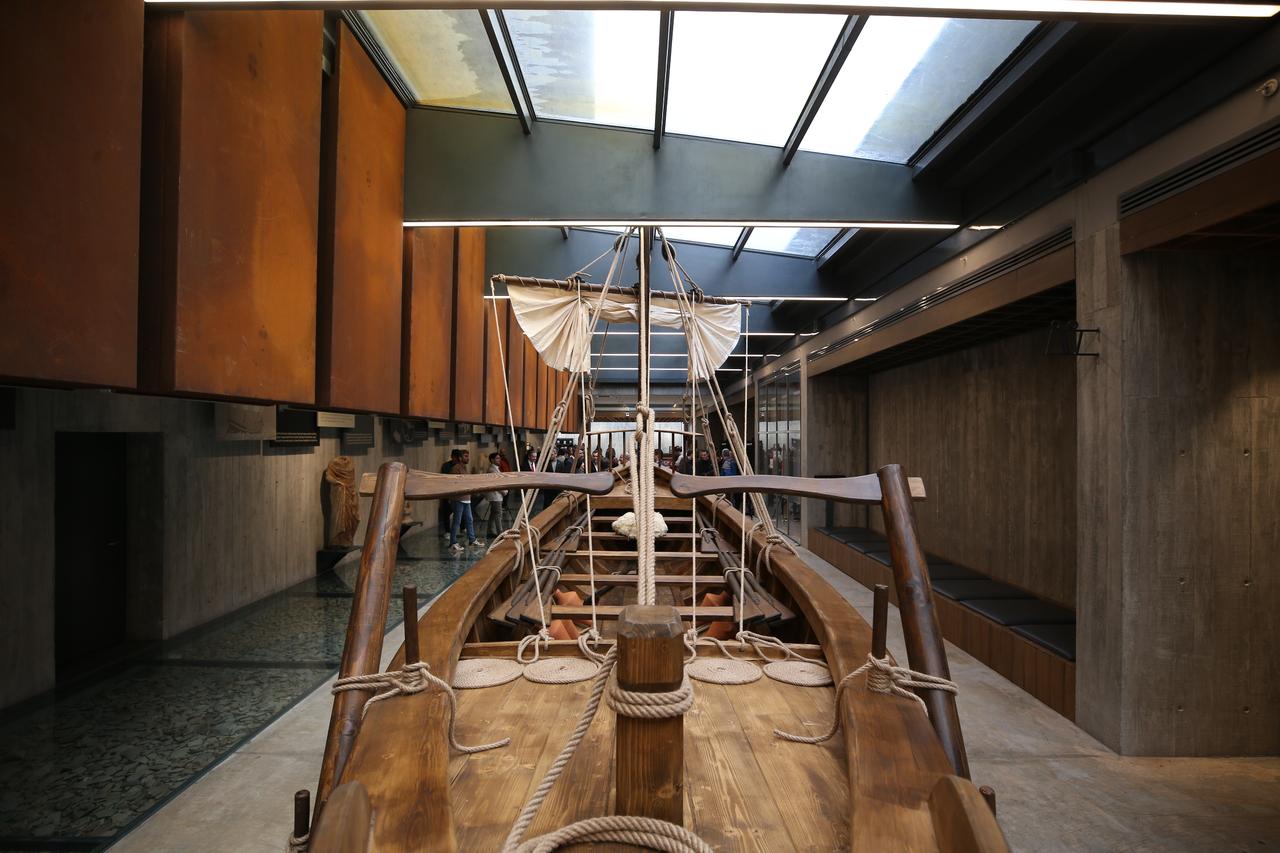


The Troy Museum in Canakkale has officially opened its new Maritime Exhibition Hall, placing a full-scale ship replica inspired by Homeric epics on permanent display and reinforcing the ancient city’s historic connection with the sea. The exhibition brings together cultural heritage, experimental archaeology, and modern institutional cooperation, offering international visitors a clearer picture of maritime life during the Trojan era.
At the heart of the new exhibition stands a wooden ship constructed in line with techniques believed to have been used during the Trojan period. The vessel was built using the mortise-and-tenon method, a traditional joinery system in which wooden planks are locked together without nails. This technique, widely used in the ancient Mediterranean, is explained on-site for visitors unfamiliar with early shipbuilding practices.
The replica was produced through a partnership between Enerjisa Uretim, the Ministry of Culture and Tourism of Türkiye, and the 360 Degree History Research Association. After completion, it was formally added to the Troy Museum’s collection and positioned as a permanent exhibit, allowing visitors to visualize the types of ships that may have taken part in the legendary Trojan War.
Speaking at the opening ceremony, Enerjisa Uretim CEO Ihsan Erbil Baycol said the ship had finally found its rightful place at the Troy Museum, where it would remain on display. He underlined that the wider Canakkale region has long been shaped by strong winds, a natural feature that once supported ancient seafaring and today underpins modern wind energy production.
Baycol explained that Enerjisa Uretim operates around 300 megawatts of wind power capacity across Türkiye, contributing both to competitive electricity generation and to green energy supply. He noted that several of the company’s wind power plants are located near major archaeological sites, including multiple facilities close to Troy, others within short distance of Ephesus, and one of Türkiye’s largest wind farms near Pergamon.
According to Baycol, the project grew out of a shared vision formed with the Troy Museum and the 360 Degree History Research Association, eventually turning an idea into a permanent cultural asset. He described the ship as a tangible way for visitors to imagine the thousands of similar vessels that once formed part of the Trojan War narrative, adding that the region has historically been a center of determined struggles shaped by both nature and human effort.
Baycol also pointed out that Enerjisa Uretim supplies close to five percent of Türkiye’s total electricity consumption through five different energy technologies. While emphasizing the company’s wide geographic footprint, he said the proximity of energy facilities to ancient cities reflects a growing effort to integrate modern infrastructure with cultural landscapes.
He framed the Troy ship project as a responsibility toward future generations, explaining that wind is viewed not only as a link between past and present but also as a key element in maintaining balance with nature. He added that similar cultural projects are expected to continue.
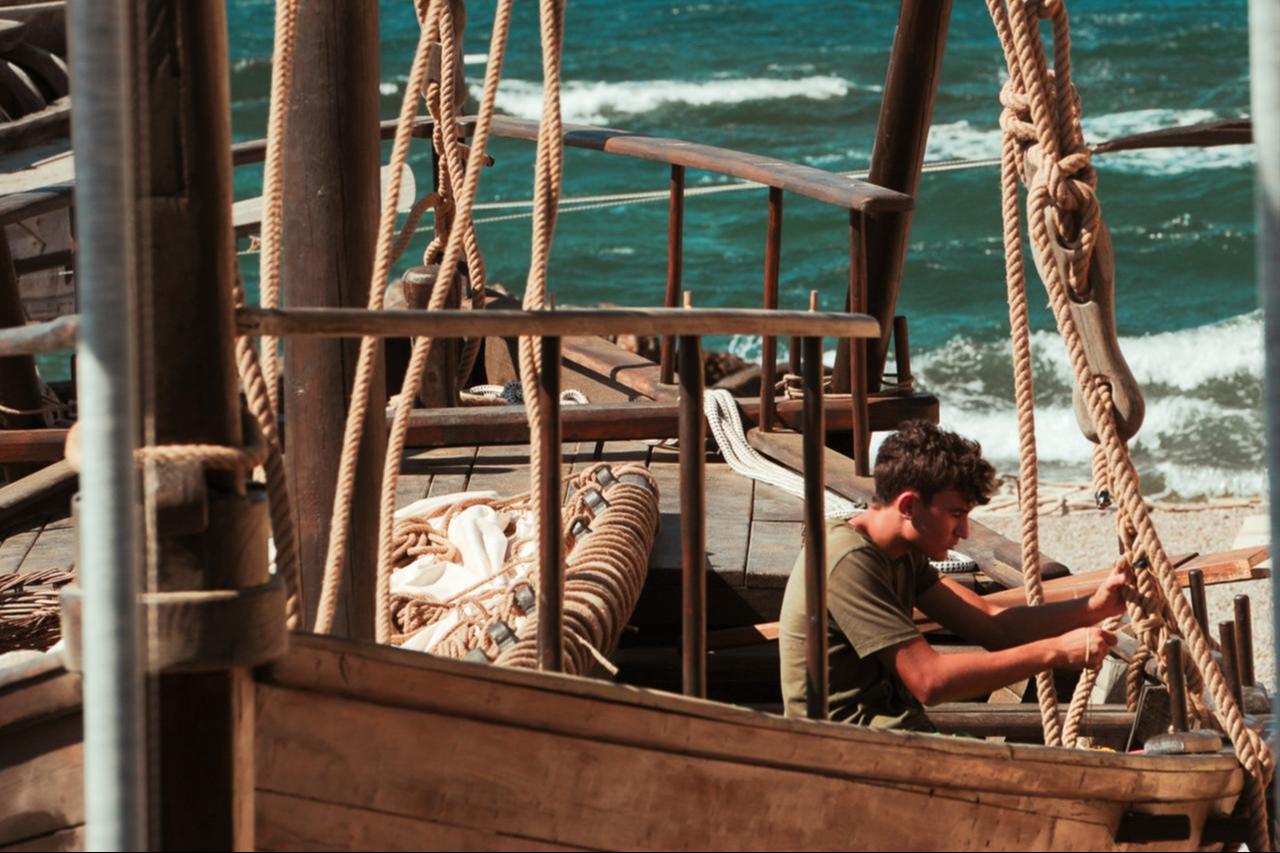

Mualla Erkurt, President of the 360 Degree History Research Association, said work on the ship began with planning in November last year, while full-scale construction started in July. She explained that the team moved quickly in order to establish a lasting exhibition that would reconnect Troy with its maritime identity.
Erkurt said the process of building the vessel was marked by strong excitement, noting that the support of Enerjisa Uretim, the Ministry of Culture and Tourism, and the Troy Museum made it possible to complete the project in a short time. She expressed hope that the ship would serve future visitors by telling its story clearly and strengthening understanding of ancient sea routes and maritime culture.
She also highlighted that, in ancient times, the sea functioned as a barrier-free transportation network where goods could move without obstacles, adding that museums play a key role in explaining this dimension of history to the public.


 Set as preferred source
 Set as preferred source


 1 min read
 1 min read