Newsletters


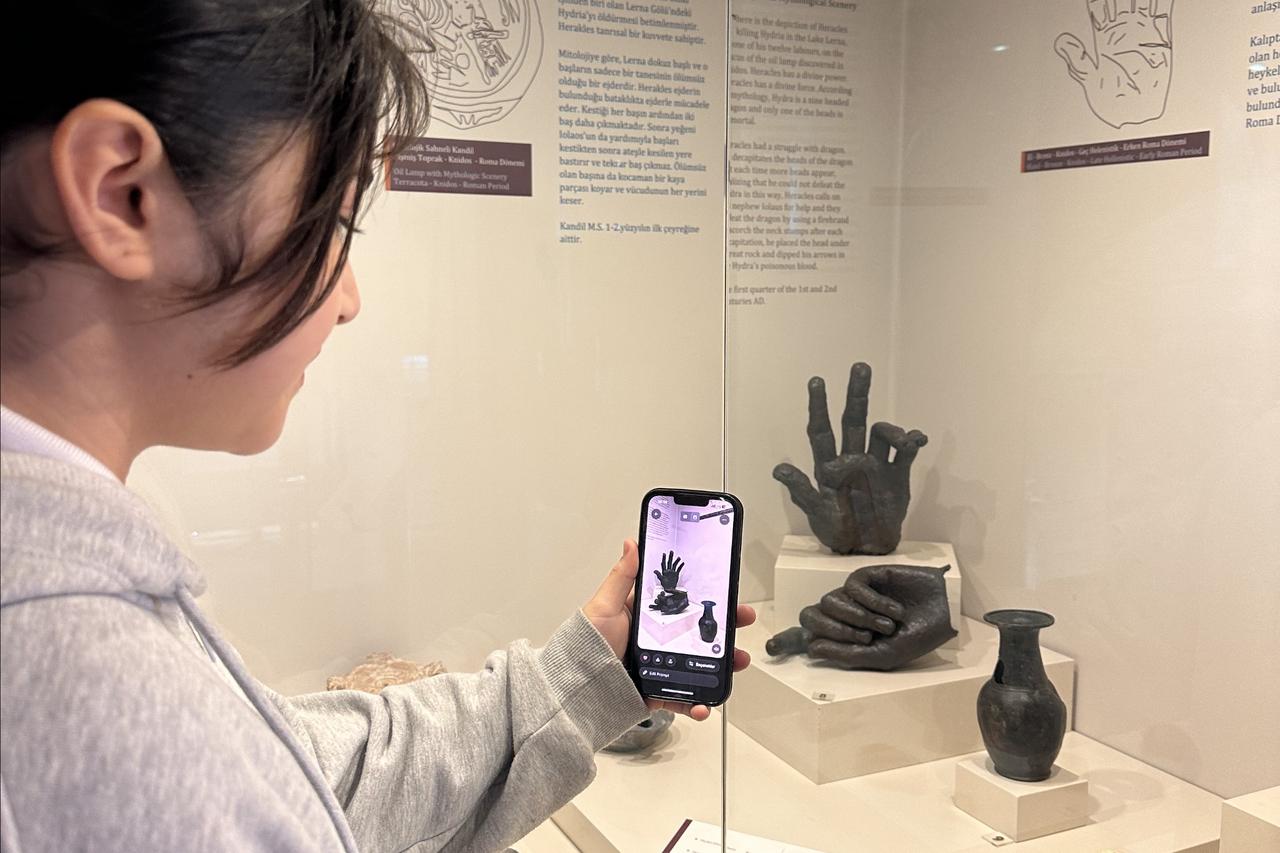


Students in the resort town of Marmaris, in southwestern Türkiye, have used artificial intelligence to reimagine and digitally revive historical artifacts displayed in a local museum, turning a school project into an educational social media initiative that connects the past with modern technology.

The initiative was carried out by students from Evrenpasa Middle School as part of a project titled "Codes of the Past: The Techno-Antique Project." Developed through the joint efforts of Turkish language, mathematics, and information technologies teachers, the project began with a visit to the Marmaris Castle Museum, a historic fortress overlooking the Mediterranean Sea.
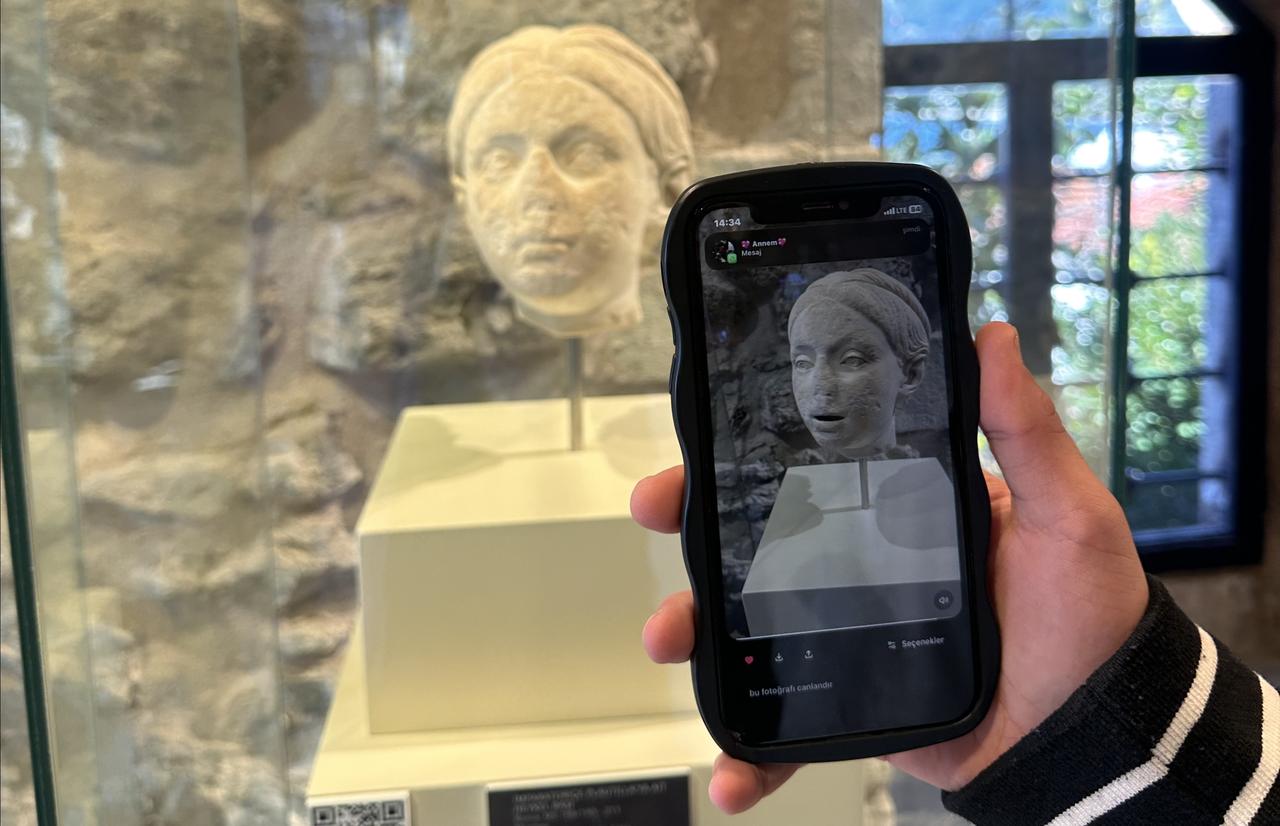
Under the theme “These artifacts are not just stones; each one has a story,” students selected artifacts from the museum collection and used artificial intelligence tools to animate them. The resulting visuals were then edited into short video clips and shared on social media platforms, allowing a wider audience to engage with local cultural heritage.
Middle school students animate historical artifacts using artificial intelligence during an educational project at the Marmaris Castle Museum in Mugla, Türkiye, Jan. 15, 2026. (AA Photo)
The videos feature animated representations of key historical elements linked to Marmaris Castle, including its founder, Ottoman ruler Sultan Suleyman I, known internationally as Suleiman the Magnificent.
Also brought to life are artifacts from the Roman and Ottoman periods, such as a Roman-era bronze female statue referred to as “Leyla.” Through AI-assisted animation, these figures appear as if they step out of the artifacts and into the present day.
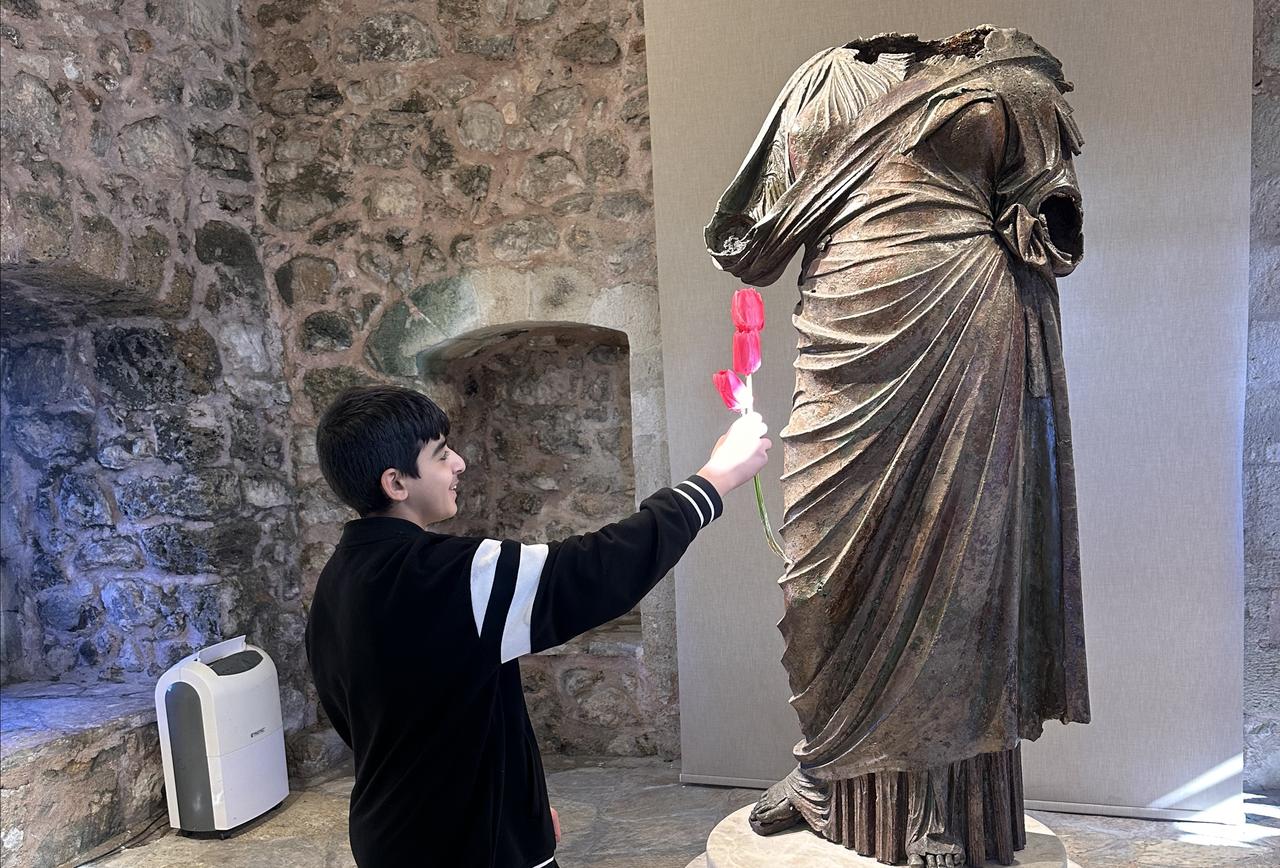
Turkish language teacher Seda Demirturk explained that the project aimed to help students build historical empathy and see cultural heritage not only as something to be preserved, but also as something to be understood and felt. She underlined that students did more than simply examine museum pieces; they used artificial intelligence to bridge the gap between past and present in a meaningful way.
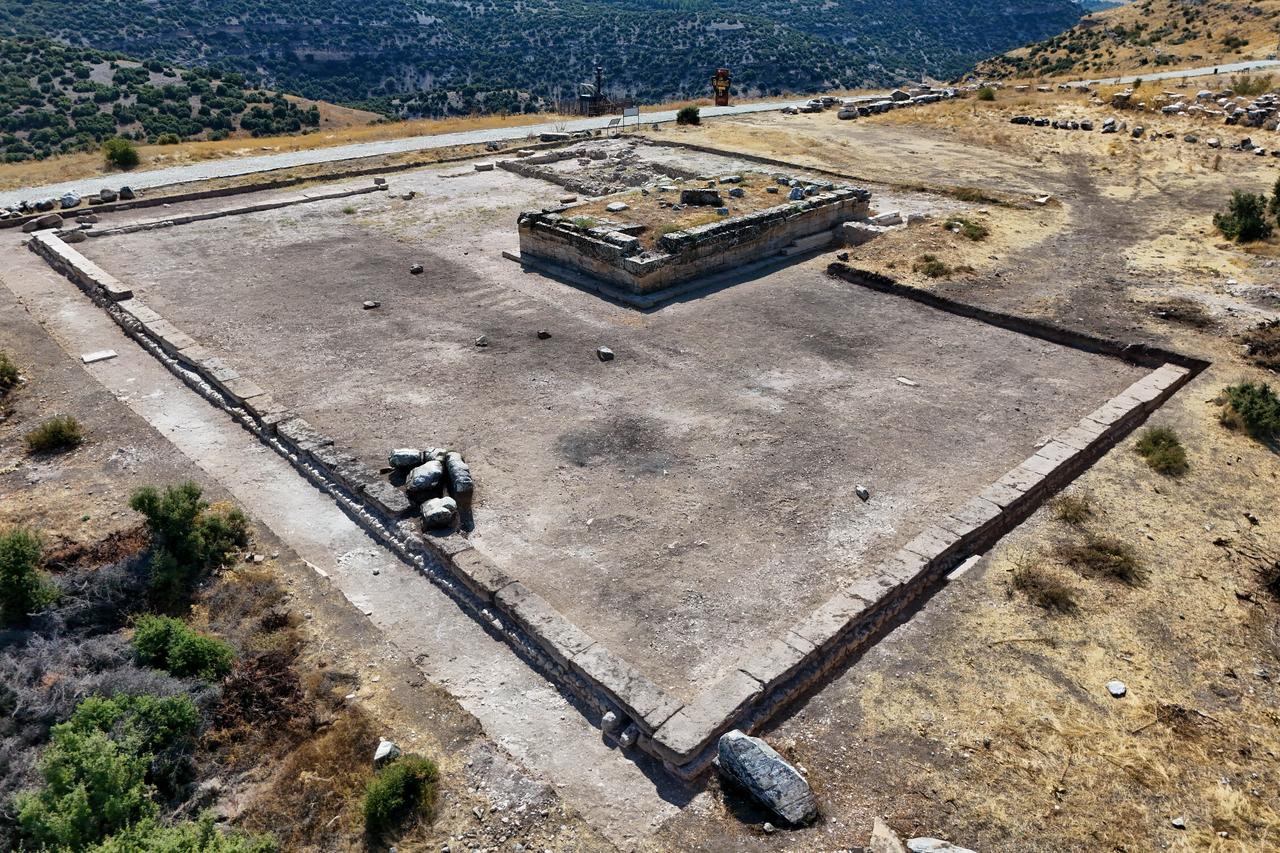
Demirturk also pointed out that the interdisciplinary approach helped students see technology as a tool for producing meaning rather than passively consuming content. According to her, the next phase of the project will take place at Becin Castle near Milas, where students will calculate wall structures and slopes, and take part in history-based games designed to deepen learning by simulating journeys into the past.


 Set as preferred source
 Set as preferred source


 3 min read