Newsletters


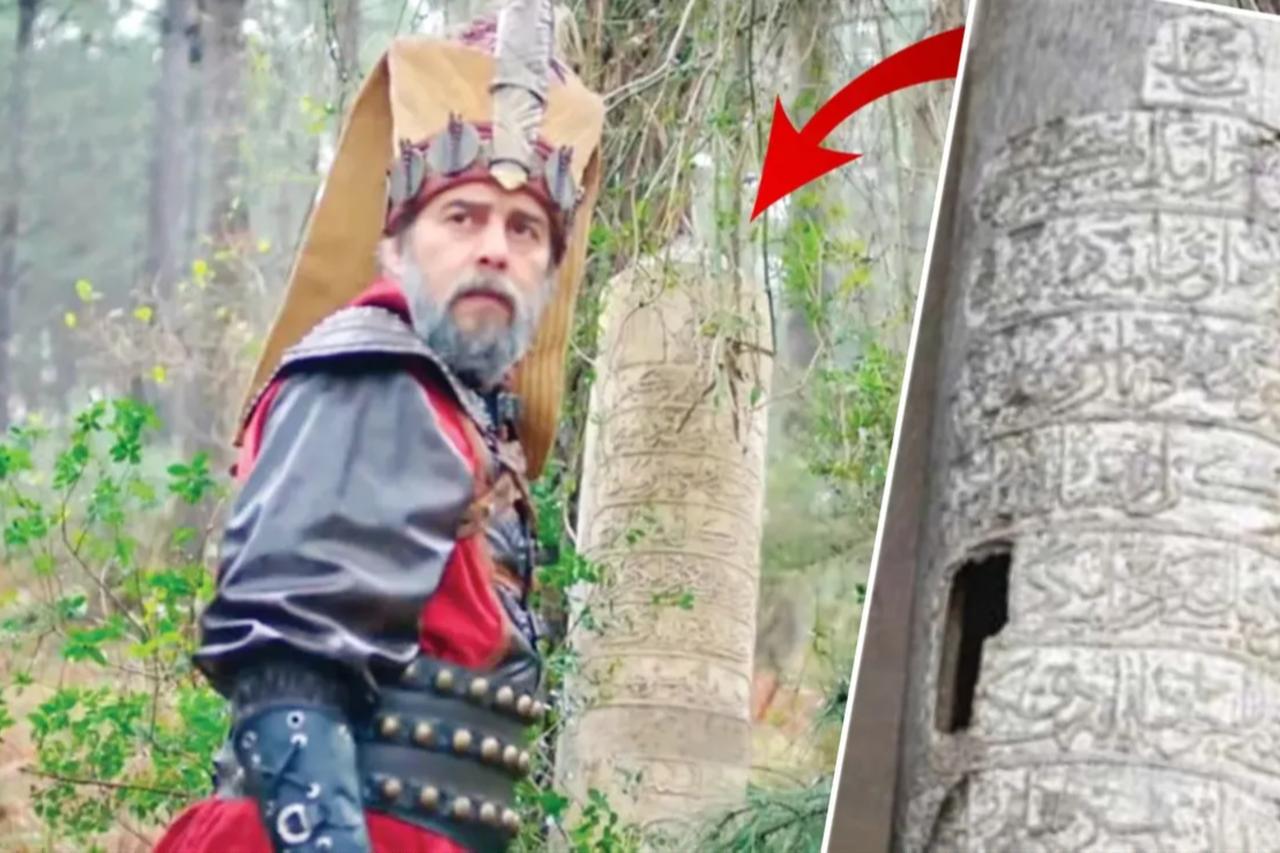


A wooden prop produced in 2019 for the children's television series Tozkoparan Iskender was mistakenly registered as a historic cultural asset in Türkiye after it was identified as an Ottoman-style archery range stone, in a case that later drew criticism from the academic consultant who had helped design it.
The incident centered on a wooden decorative piece left in an area in Istanbul's Tuzla district where the series had been filmed. Two experts reportedly applied to the relevant authorities for its registration, arguing that it was a menzil tasi, a stone marker associated with Ottoman archery ranges.
The object was reviewed by the Istanbul No. 5 Cultural Heritage Preservation Board on Feb. 26, 2025, and was officially registered as a historic artifact. It was then transferred to the Turkish and Islamic Arts Museum in Istanbul for protection and conservation work. The object was also discussed in an academic journal article, where it was described as "Tozkoparan's first and only range stone."
Officials at the Turkish and Islamic Arts Museum later realized that the piece was not a historic artifact and began preparing a report stating that it was, in fact, a modern set prop. Despite that step, the preservation board's decision remained unchanged.
The case then drew wider attention after Sukru Seckin Anik, a faculty member who had provided academic consultancy during the production of the prop, spoke about what he described as a tragicomic mistake.
Anik said he had come across the academic article because he follows scholarly work on archery as part of his field. He recalled being surprised to see that a prop he had helped shape while working at the Okcular Vakfi had been taken for a historic menzil tasi and turned into the subject of an academic study.
He also pointed out that the prop appears in episode 14 of the series and said real range stones are made of marble. He added that several specialists, including people at the Archers Foundation and other researchers working on the subject, could have been consulted before the registration process moved forward.
While saying that academics can make mistakes and that the social sciences often move ahead through correcting them, Anik argued that the main problem lay not with the scholars but with the preservation board that approved the registration. He summed up his concern with a stark warning: "This collective mistake led to a TV set prop being registered as a historic range stone. What happens if this board one day decides to demolish a real historic monument?"


 Set as preferred source
 Set as preferred source



 1 min read