Newsletters


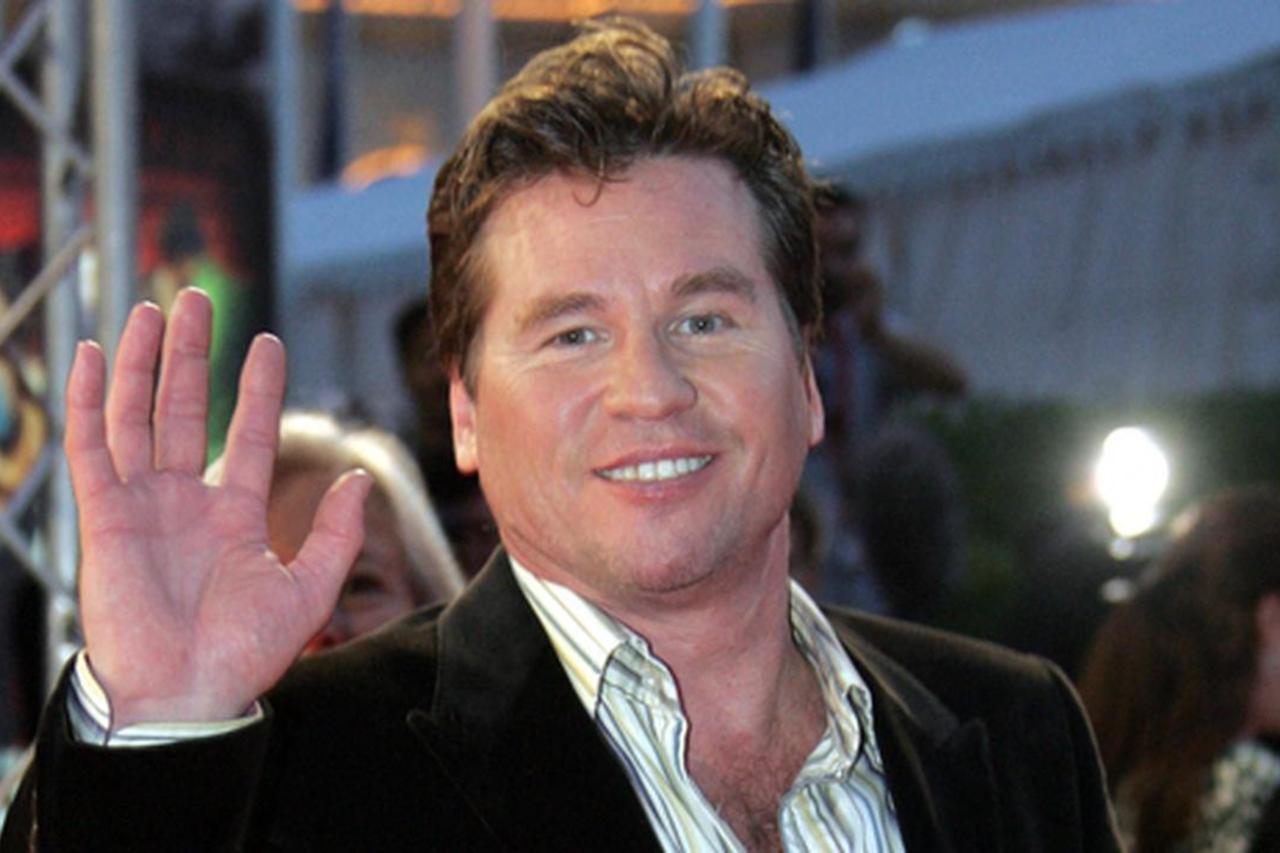


The late Val Kilmer, one of Hollywood's most iconic leading men, is set to appear in a new feature film through the use of artificial intelligence (AI), in a move his family has endorsed and which is already reigniting debate over AI's growing role in the film industry.
Director and writer Coerte Voorhees announced that Kilmer, who died last year from pneumonia following a prolonged illness related to throat cancer, will be digitally recreated using generative AI for the film 'As Deep as the Grave.'
The project centers on the true story of Ann and Earl Morris, American archaeologists who worked with the Navajo people in the 1920s to uncover the Ancestral Puebloan civilization, one of North America's earliest known cultures.
Kilmer was to play Father Fintan, a Native American spiritualist and Catholic priest. Voorhees told industry magazine Variety that the role was written with Kilmer specifically in mind, citing the actor's advocacy for Native American rights and his claimed Cherokee heritage. "He was the actor I wanted to play this role," Voorhees said. "It drew on his Native American heritage and his ties to and love of the Southwest." Kilmer had signed on to the project but was unable to make it to set as his health declined.
Voorhees said he is working closely with Kilmer's estate and his daughter, Mercedes, to bring the actor back to the screen. His son, Jack, an actor himself, also supports the project. "His family kept saying how important they thought the movie was and that Val really wanted to be a part of this," Voorhees told Variety. "Despite the fact that some people might call it controversial, this is what Val wanted."
The AI-generated version of Kilmer is expected to appear in a "significant" portion of the film, Voorhees said, using images of the actor taken throughout his life to recreate his likeness across different ages. Kilmer was known for keeping a vast personal archive of footage and photos.
Kilmer, who died at age 65, built a career spanning both blockbuster hits and acclaimed independent films. He is best remembered for his roles as Iceman in the 1986 film 'Top Gun' and its 2022 sequel, where AI had already been used to recreate his voice after throat cancer affected his ability to speak. He also portrayed Jim Morrison in 'The Doors' (1991) and Batman in the 1995 film 'Batman Forever.' A 2021 documentary, 'Val,' drew on his personal archive to tell his life story.
The project arrives at a sensitive moment for the film industry. Actors, writers, and other creatives have raised persistent concerns that AI could displace jobs across Hollywood. The use of AI on deceased performers in particular raises complex ethical questions about consent, legacy, and the boundaries of digital likeness.
This is not the first time AI has entered mainstream filmmaking. Brady Corbet's Oscar-winning epic 'The Brutalist' (2024) used AI to refine actor Adrien Brody's Hungarian accent, and performers including Matthew McConaughey and Michael Caine have signed deals with startup ElevenLabs to create AI versions of their voices.
The AI recreation of Val Kilmer has the backing of his estate and children, but whether digitally resurrecting a deceased actor, even with family consent, sets a troubling precedent for Hollywood remains an open question.


 Set as preferred source
 Set as preferred source



 5 min read