Newsletters


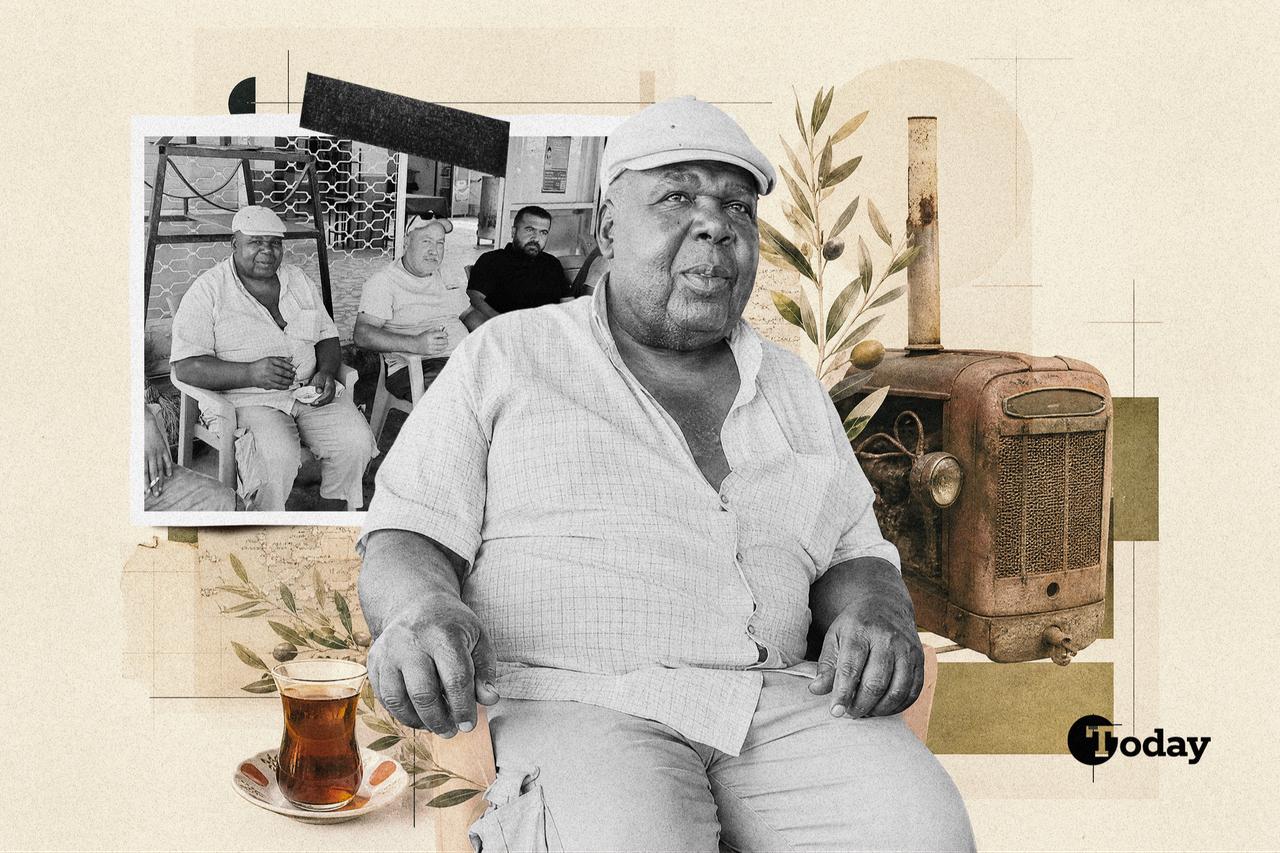


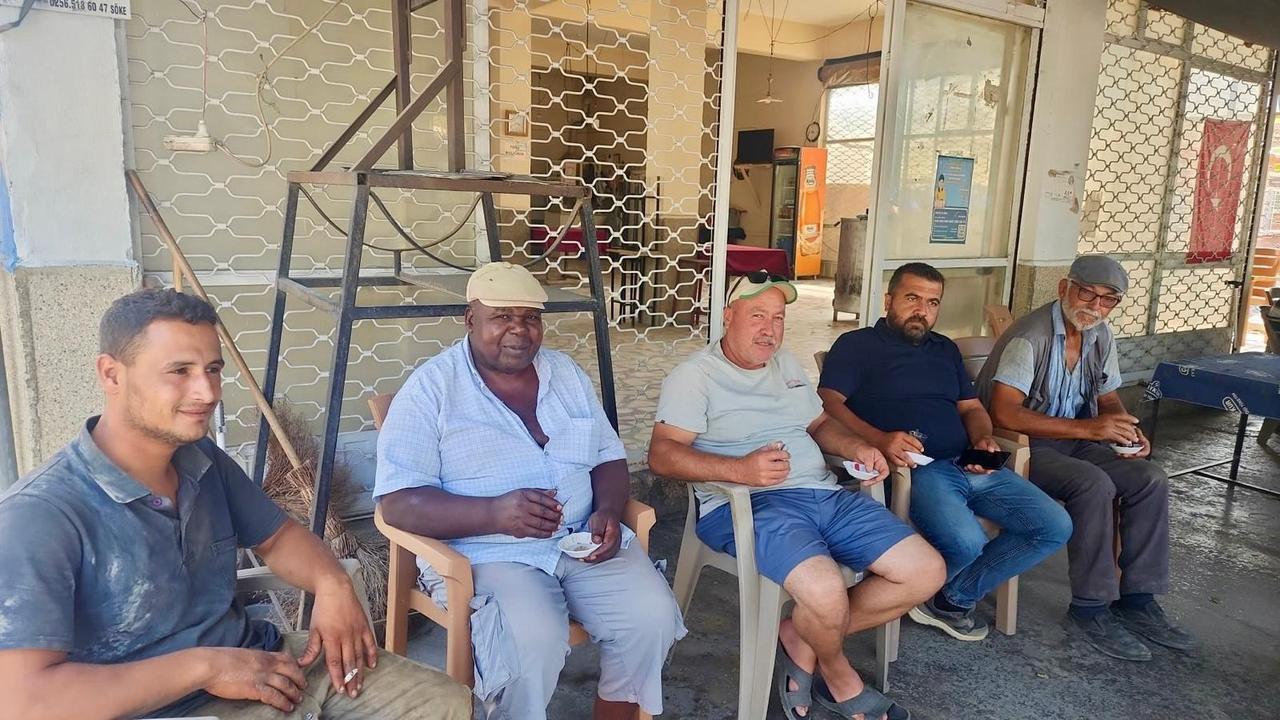
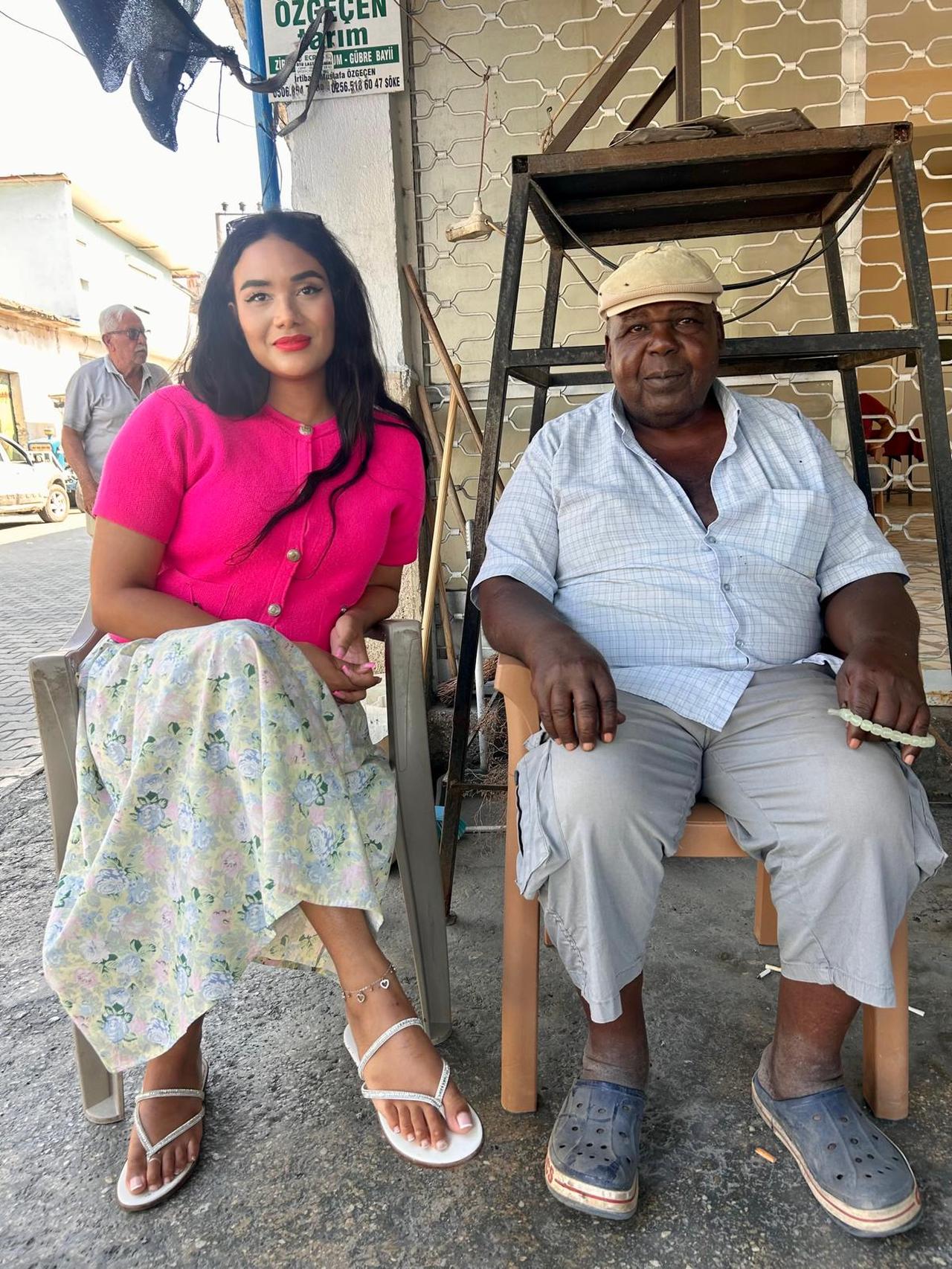
Musa sat across from me in a plastic lawn chair, working his light emerald-green tespih (prayer beads) through his fingers. Sitting next to him was his friend, whose piercing eyes could not hide his disapproval of my self-imposition on the two men's afternoon chai break.
To his friend, my unexpected arrival made little sense. He couldn't hide his confusion—why would a random American woman travel for hours on three dolmus just to speak with Musa? Or someone who looked like him.
But to me, the outside observer, Musa wasn't just any Turk. He was an Afro-Turk, part of a distinct and little-known ethnic group whose identity has been shaped more by Turkish culture than by genetic heritage.
Afro-Turks live mainly in Türkiye's Aegean and Marmara regions, with population estimates so uncertain that the number can be anywhere between 5,000 and 100,000. That gap is part of why I'd taken three dolmus across the Aydin Province countryside to Burunkoy, a farming village of about 600 people.
Unlike recent African migrants, who over the past couple of decades have emigrated to the country carrying their own cultural traditions, Afro-Turks have been deeply integrated into Turkish society for centuries, with a presence dating back to the Ottoman era.
The ancestors of today’s Afro-Turks arrived through the slave trade from countries like Niger, Kenya, Sudan, and parts of Northern Africa, often working in palaces, large households, or in agricultural trades.
In contrast, others came voluntarily in search of work as merchants or sailors. During the Ottoman period, some Afro-Turks successfully rose through the ranks of society, attaining prestigious military posts and serving as elite guards and as Eunuchs within the imperial harem. These positions often came with immense political and financial power that could be wielded to influence state policy.

Throughout the mid-to-late 1800s, as the Ottoman Empire gradually restricted and eventually banned slavery, it implemented settlement programs that provided freed Afro-Turks with housing and land throughout the Aegean region. The result, unintentional but lasting, was a cluster of villages—some still racially uniform.
Burunkoy, where I sat with Musa, shares that history, though not its uniformity. Located in the Soke district of Aydin province, the close-knit village was never a homogeneous Afro-Turkish community. Instead, a large population of Afro-Turks settled there and integrated with the ethnic Turks already living in the area.
Within Burunkoy and the surrounding Aydin region, cross-ethnic unions between Afro-Turks and other local Turks were relatively common.
“Intermarriage between black Turks and white Turks is not like in America,” explained Dunya Basol, an assistant professor at Batman University in southeastern Türkiye, whose youth was spent in the Aydin region.
I was having dinner with Basol and his wife in the town of Didim, about an hour’s drive from Burunkoy, snacking on cig borek and admiring the Greek island of Agathonisi off in the distance. It was there that Basol told me something that stopped me: Ahmet Ali Celikten, widely regarded as the world’s first black military pilot, had been born in this very province.
“If you look around in this restaurant,” he said, “You notice no Turk here looks the same; some families have originated from the Balkans, or the Caucasus, but we are all Turkish.”
For Basol and other locals, the presence of the Afro-Turk appeared to be understood in the same way.
“Growing up, we never viewed the Afro-Turks differently than other Turks. It was clear that they were from this region due to their very thick and tough Aegean accent. They were ordinary villagers to us,” Basol added.
Perhaps this explained the puzzled look on Musa's friend's face during my unexpected visit. There was little about Musa's presence in Burunkoy that seemed unusual to the community—only to me, the encroacher carrying preconceived notions of what race was supposed to mean.
I sat there, the only American among a group of Turkish farmers, most of them of pension age, who welcomed me into their conversation and fed me a steady diet of chai and cigarettes.
It was there, surrounded by their hospitality, that it dawned on me: perhaps I was the only person in the room placing blackness before Turkishness.
To always view the world through a specific racial ordering has been central to the American experiment and to how Americans see their place in the world.
This preoccupation runs throughout America's own history, from Jim Crow-era segregation, to sundown towns across the Midwest that barred non-white people after dark, to a modern fixation on racial identity so strong it's made Americans among the world's largest buyers of ancestry kits. And as American culture is exported globally, so is its particular understanding of race.
But can that framework be translated to a place like Burunkoy?
“To me, race is a social construct that is very multi-layered,” noted Nigerian-American travel content creator Derrick Akinyanju, whose travel-based YouTube channel, "Paint Your Lifestyle," has highlighted Afro-ethnic groups around the world.
In 2022, Akinyanju made a pilgrimage to Izmir, Türkiye, to meet with the local Afro-Turk community.
“I noticed that my own challenge when visiting with the Afro-Turks was that I was trying to fit my Western view of race, nationality and ethnicity into their world. I don’t think you can take Western views on race and try to put it in other parts of the world,” argued Akinyanju.
Beyond his arresting features, normally associated with populations indigenous to Northeast or Western Africa, Musa was very much a Turkish man, with mannerisms blending into the broader social context that made up his community.
Like the majority of his peers, Musa was a tractor driver who harvested corn, cotton and olives. The only separation between him and the rest of the men at the cafe was that he belonged to one of the last two remaining Afro-Turk families still living in Buronkoy.
As Musa put it, “The families get along very well; we get along with everyone.”
Musa’s family had deep roots in the Aydin region since his grandfather had arrived in the province around 150 years ago. He did not know what originally brought his grandfather to Buronkoy.
He recalled that his grandfather spoke Arabic, which initially led him to believe his family had originated from Saudi Arabia. But as our conversation progressed, he revised that answer to northern Sudan—a region where Arabic is also widely spoken.
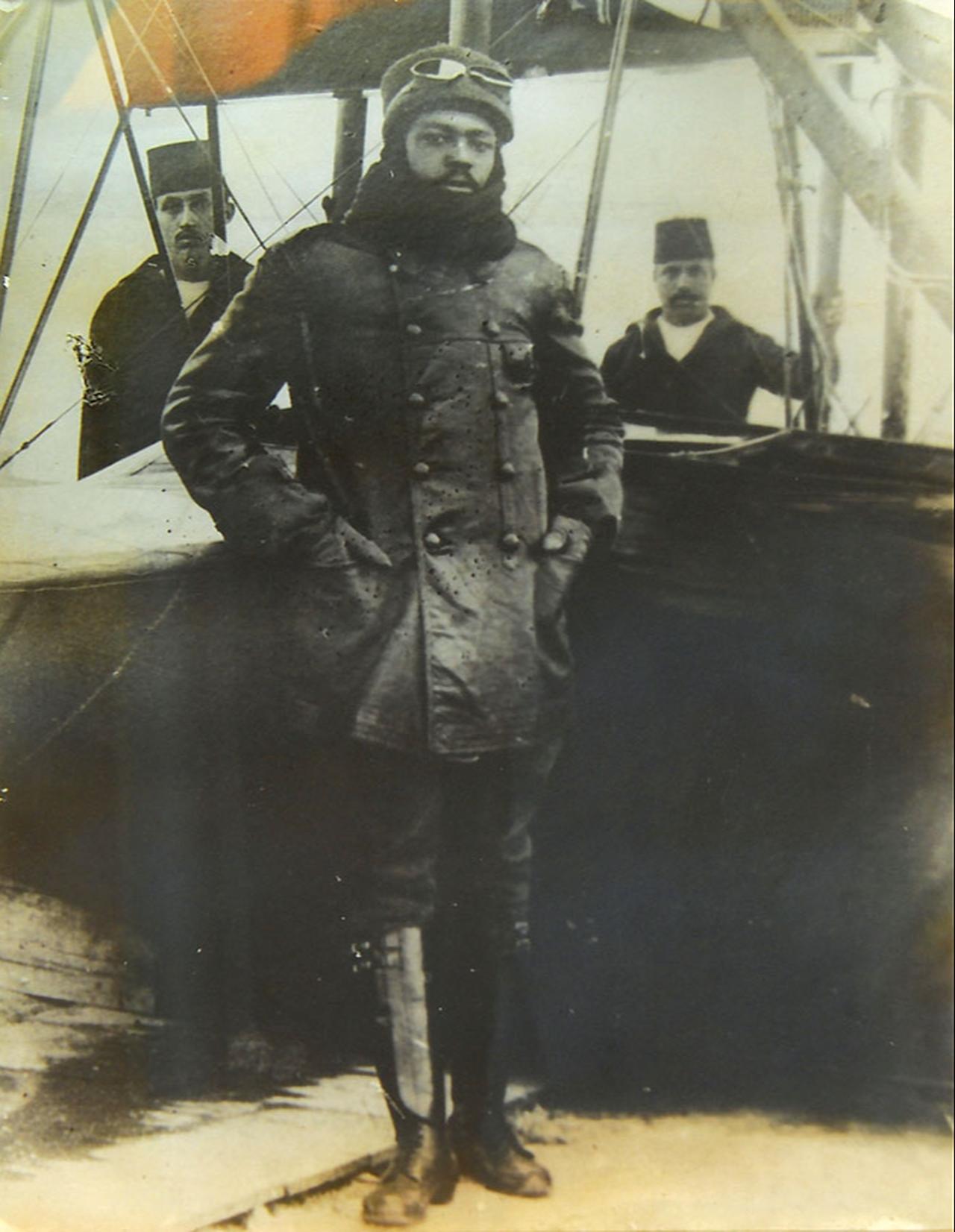
Musa himself had never married, but had come from a large family that included six brothers, all of whom were married and had children.
“Some of them have black children, some of them have white children,” he said with a shrug.
Beyond completing his Turkish military service, Musa had never ventured beyond the province of Aydin, not even to Istanbul, which came as a shock to me as an adopted Istanbulite. But the city's bustle seemed far from the minds of the farmers, who all spoke about Burunkoy with a deep fondness, Musa included, who saw little reason to venture too far from home.
As time passed, it became clear that I was the only one focused on race, with a curiosity that was starting to feel more objectifying than understanding.
My attempts to steer the conversation to topics of my interest, such as Musa’s life as a black man, potential racism he may have experienced or identity concerns he had in Türkiye, were secondary to the immediate concerns of the farmers, such as whether I had ever driven a tractor or what I had been up to in Didim, the beach town where I was staying. As one farmer jokingly said, “We go to Didim when we want to lose all our money for the night.”
Soon, more farmers of varying ages arrived, including an older gentleman in his mid-to-late 70s who immediately caught my attention for noticeable features that, to me, bore a resemblance to someone born of mixed Afro-Turkish ancestry. He could not seem to hide his eagerness at guests coming to visit Burunkoy on this mundane August afternoon.
As the farmer grew more insistent on joining the conversation, I, in turn, doubled down on my efforts to ethnically place him.
In an attempt to be coy, I turned to the farmer sitting closest to me and asked, “Is your friend also Turkish?” He looked at me and laughed. “We are all Turkish.”


 Set as preferred source
 Set as preferred source


 3 min read
 1 min read