Newsletters




I have lost count of the number of times I have been asked how I speak fluent English despite being from Pakistan. My answer has always been the same: my country was once colonized by the British Empire, also known as the British Raj.
But I have come to realize that it’s not only about the language we speak, it’s also about how we speak—the words we choose. Decolonisation or decolonization? asks my hyperlexic brain as I write this piece. It is the food we eat. The way we dress. The literature we read. The songs we dance to. It all boils down to where we belong and who managed to domesticate our lives for the three G’s: gold, glory and god.
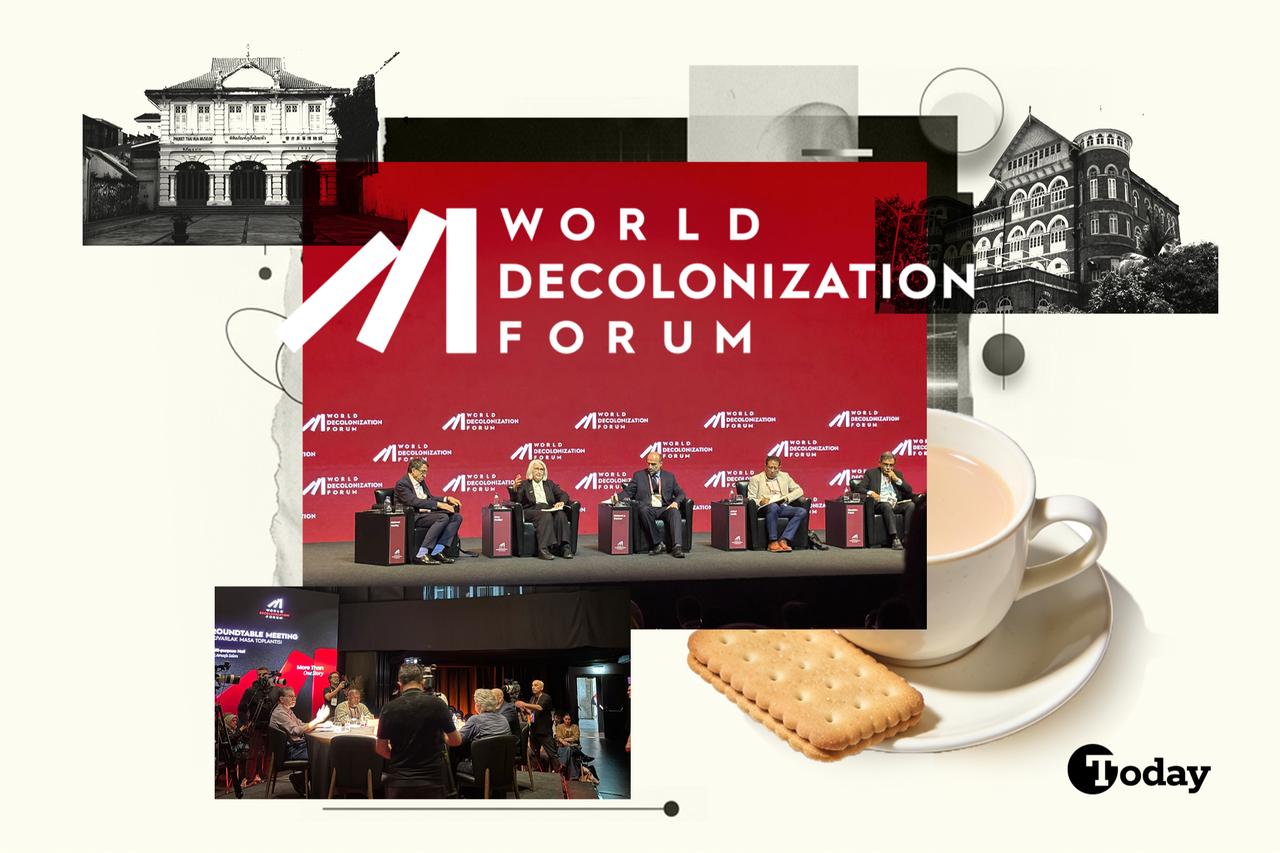
So I certainly had to attend the World Decolonization Forum in Istanbul—a smart choice for a venue, as Türkiye, along with Japan, is one of the few countries that have never been colonized. The city is quintessential for opening dialogues that challenge colonial mindsets, embrace plurality and impugn epistemological hierarchies and injustices. After all, it has a rich blend of cultures and histories that have coexisted for years.

Istanbul hosted scholars, thinkers, artists, journalists, and sportspeople from around the globe on May 11 and 12 at the Ataturk Culture Center under the banner of the World Decolonization Forum.
The summit is set to unfold under three thematic stages. The upcoming series will likely take place in 2028, covering the theme “Decolonizing Institutions and Organizations,” and 2030, which will explore “Decolonization in Practice: Proposals for Society.” This year around, it focused on “Decolonizing Knowledge Production and Circulation.”
The event featured simultaneous roundtables, plenary sessions and academic conferences. The attendees got to pick and choose. I chose to attend the summit on the second day.
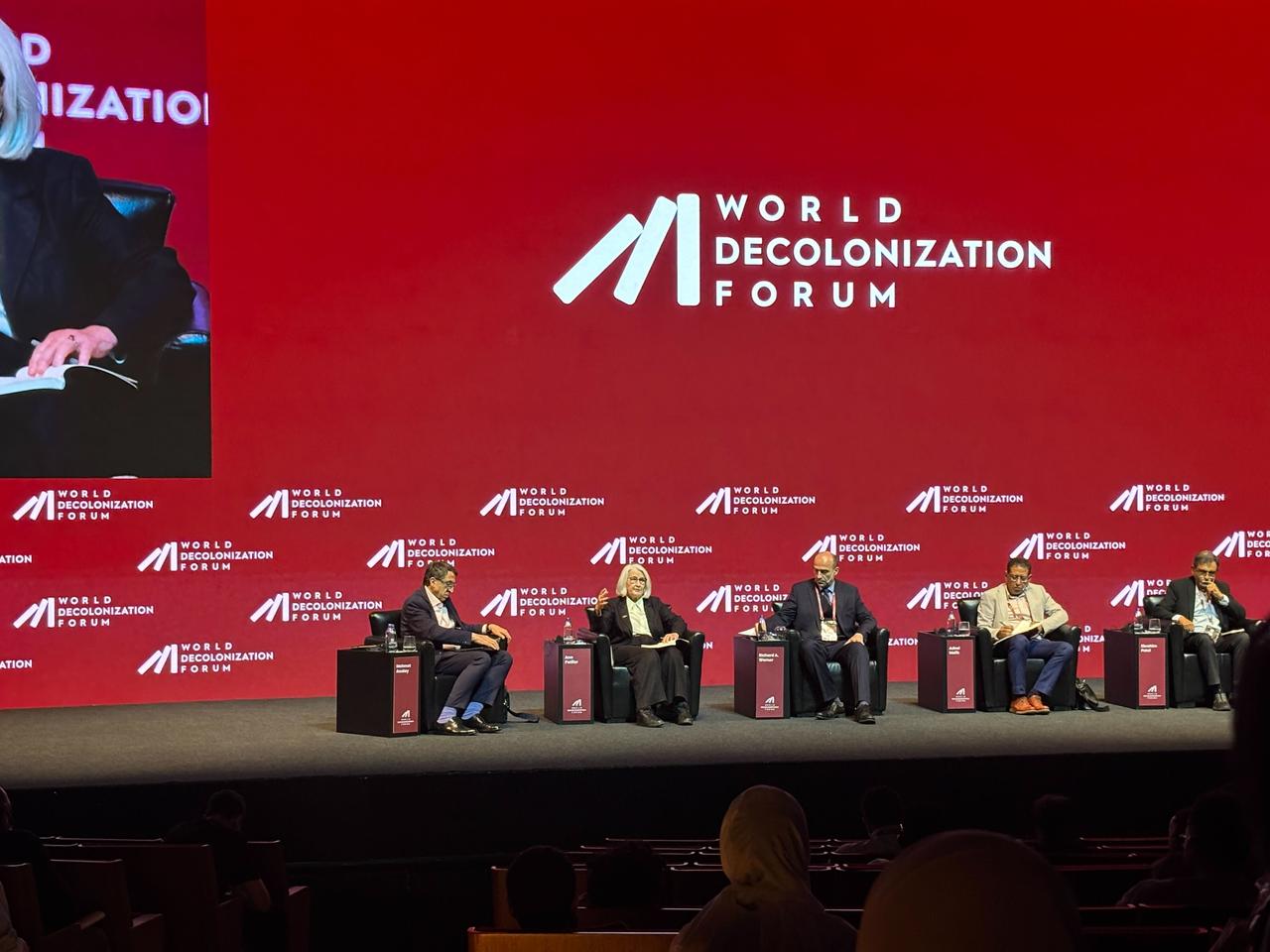
The first session I attended was titled “Palestine: Settler Colonialism and Ruse of Independence” with American activist and investigative journalist Jeremy Scahill, along with professors like Sami A. Al-Arian at the table. Palestine is the most conspicuous example when talking about enduring settler colonialism. The ruthless displacement and killing of Palestinians mirror classic colonial practices, emphasized the moderator of the session.
“People often ask me why Palestine is always considered the central issue. I reply because of the nature of its enemy. It won’t stop and wants to be the hegemon. The world calls it ‘the Palestinian issue'; I call it an ‘Israel problem.’ Palestine is the first victim but certainly not the last,” stressed A. Al-Arain, who is also the author of dozens of books related to Islamophobia, civil rights, Palestine, the Arab Spring and American foreign policy, among other subjects.
The professor, who lost over 200 family members to Israeli oppression, exuded hope for an end to zionist regimes as the world is waking up to the stark reality that being pro-Palestinian is not very different from being pro-humanity.
Scahill agreed with the notion and criticized U.S. President Donald Trump for replicating the same model in Iran, along with a complicit Israel. He spotlighted the grueling struggle of journalists working in war zones like Gaza to bring anticolonialist resistance to light.
Over 300 journalists have been killed in Gaza since Oct. 7, Scahill, who is also the co-founder of online news publications like The Intercept, lamented. He recalled the day when Palestinian journalist Hossam Shobat, who also contributed to Al Jazeera and Dropsite news, filed his last story.
“The morning of the day when Shabaat was murdered, he apologized for his copy being messy. He said he was distracted because an Israeli quadcopter was constantly circling above the compound he was in. Later in the day, we got the news that we lost Shabaat after his body was severed into two halves in an Israeli attack,” the journalist shared the chilling story, regretting that the entire family lineages have been wiped out in Gaza.
Joseph Massad, a professor of Modern Arab Politics and Intellectual History at Columbia University and an author of several books, led the audience through an enlightening history of colonialism. He traced its origins and perceived necessity from the era of the Crusades to the modern world.
“We often miss that zionism lacks originality and that it’s copied from other European colonialism models. When France colonized Algeria in 1830, it claimed to be a descendant of the Romans. Arabs are the real colonizers, they had said back then, and zionists claim the same,” explained Massad, noting that the word "independence" is mainly framed to cater to English sentiments.
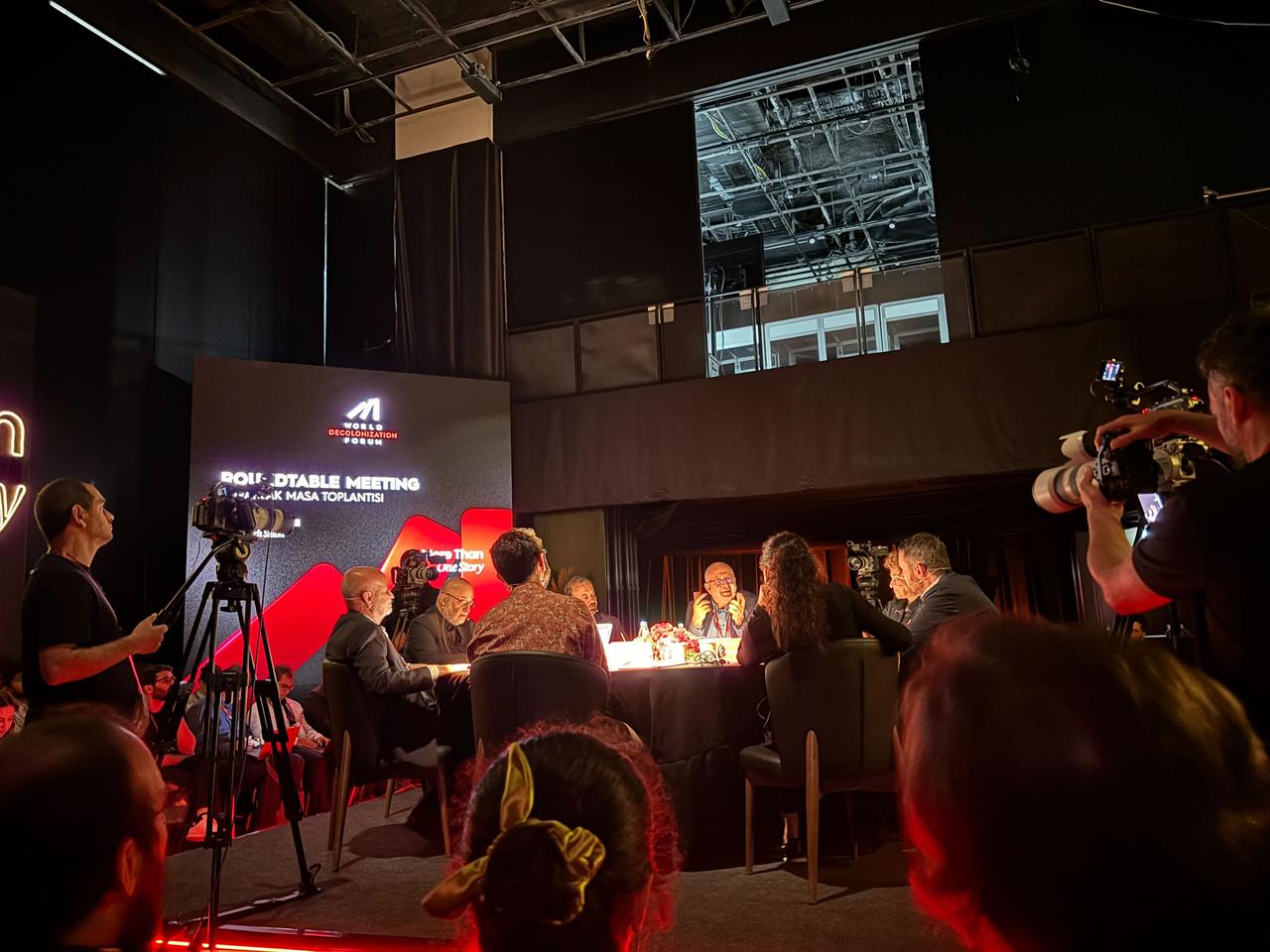
Another thought-provoking round-table discussion titled “Technocolonialism: Knowledge, Power, and Algorithmic Domination” asked a pertinent question: how is the rise of AI in this global age revamping the power dynamics through algorithmic domination that often dismisses the pre-existing inequalities between the Global North and the South?
The speakers of the session included Anne Pettifor, an international political economist best known for predicting the Global Financial Crisis of 2007-9; British writer and broadcaster Afua Hirsch, known for her best-selling book “Brit(ish): On Race, Identity and Belonging” and her documentaries, among other renowned names.
All panel members agreed that we are no longer merely colonized by states but by markets and artificial intelligence, a shift that has spawned data colonialism. It’s threatening societies more than ever.
When asked how journalists working in media structures influenced by AI algorithms navigate or resist the one-sided narratives, Hirsch, who also teaches journalism at the University of Southern California, told Türkiye Today that, unfortunately, the only way to resist is to stay in the system and "hack it."
Apart from exploring interesting themes like knowledge epistemology and technocolonialism, the forum also highlighted the unique yet intricate relationship between sports and colonization.
A special session featured famed footballer Lilian Thuram, who, together with the French team, won the World Championship in 1998 and the European Championship in 2000.
Thuram has also authored several books and now runs the foundation Education contre le racisme, pour l’egalite to fight racism in sports.
“People often ask what business athletes have in policymaking or activism. I say they should be very active in such matters because sports is connected to people in special ways. The change they can peddle should not be undermined,” the former football player said.
Thurram held a huge world map upside down and showed it to the audience.
“I often show this to my students in class. They laugh and say you’re holding the world map all wrong. It’s upside down. I ask them who gets to decide which side of the map is right. Does a football have a right side? No, because it’s round. The world is round, too, so it shouldn’t matter how we perceive or understand it. The map we have is disproportionate."
"Similarly, we are conditioned to look at things a certain way from someone else’s perspective. We have to break the chains and disrupt the narrative,” the ex-footballer noted.
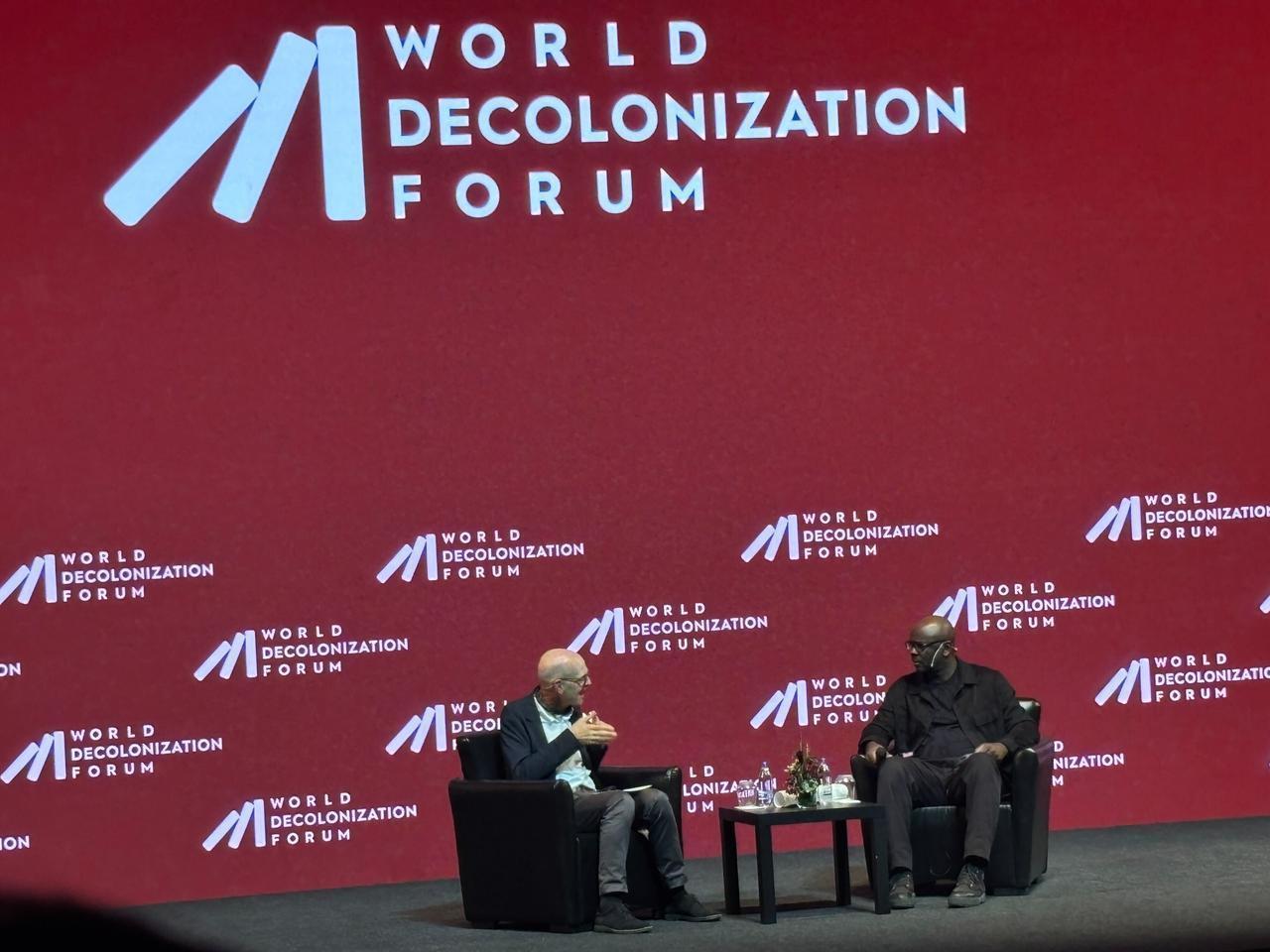
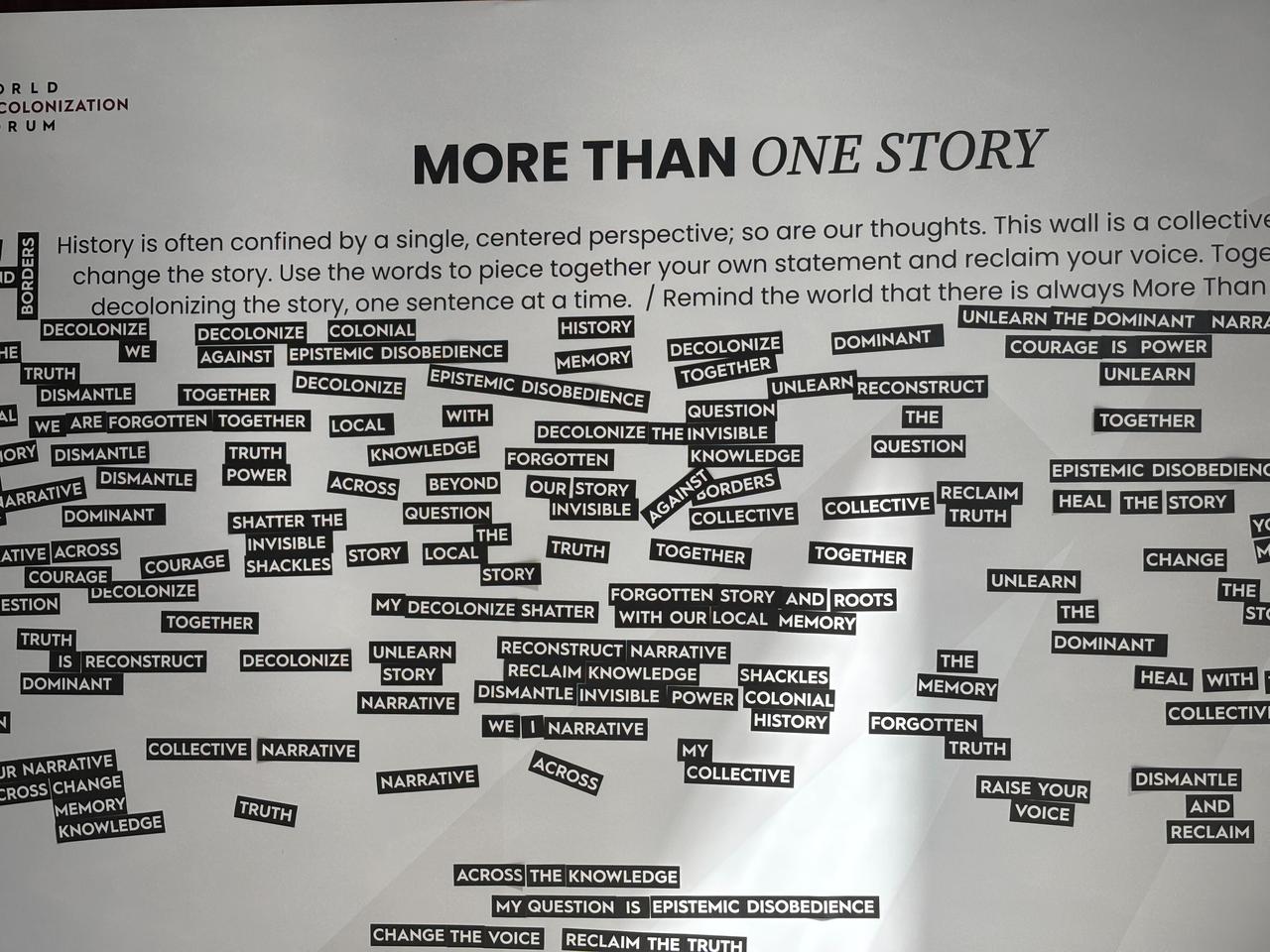
The forum, with a tagline, “More Than One Story,” was all about bringing forward different narratives from around the world. You could hear people from all walks of life speaking different languages, hopping from one session to another with translation headsets in hand, embracing diversity and pluralism.
The takeaway: decolonization doesn’t necessarily have to be an intellectual process.
Sometimes we just have to run a check in our daily lives and question if colonization has systematically brainwashed us or if it has plunged us into mundaneness and mediocrity, stripping us away from our true nature.
Now I understand clearly why I call it a “zebra crossing,” while this word is quite new for some of my native American friends, who call it a “crosswalk.” Maybe that’s why I prefer tea with milk and those buttery Scottish cookies, despite never having witnessed English culture firsthand.
The colonizers might have left our homes decades ago, but their ghosts still linger in our dining rooms, kitchen cabinets and often in our conscience, shaping how we determine right from wrong.


 Set as preferred source
 Set as preferred source



 1 min read