Newsletters




Uzbekistan has officially inaugurated the Uzbekistan Islamic Civilization Center, one of the largest cultural and historical projects in the country’s modern history. The center, an initiative of President Shavkat Mirziyoyev that was more than eight years in the making, held its opening ceremony on March 17, 2026.
Located in the historic part of Tashkent, the massive complex spans 10 hectares and features a three-story structure with a total area exceeding 40,000 square meters. Its striking architecture includes a 65-meter-high dome, making it one of the most prominent cultural landmarks in Central Asia.
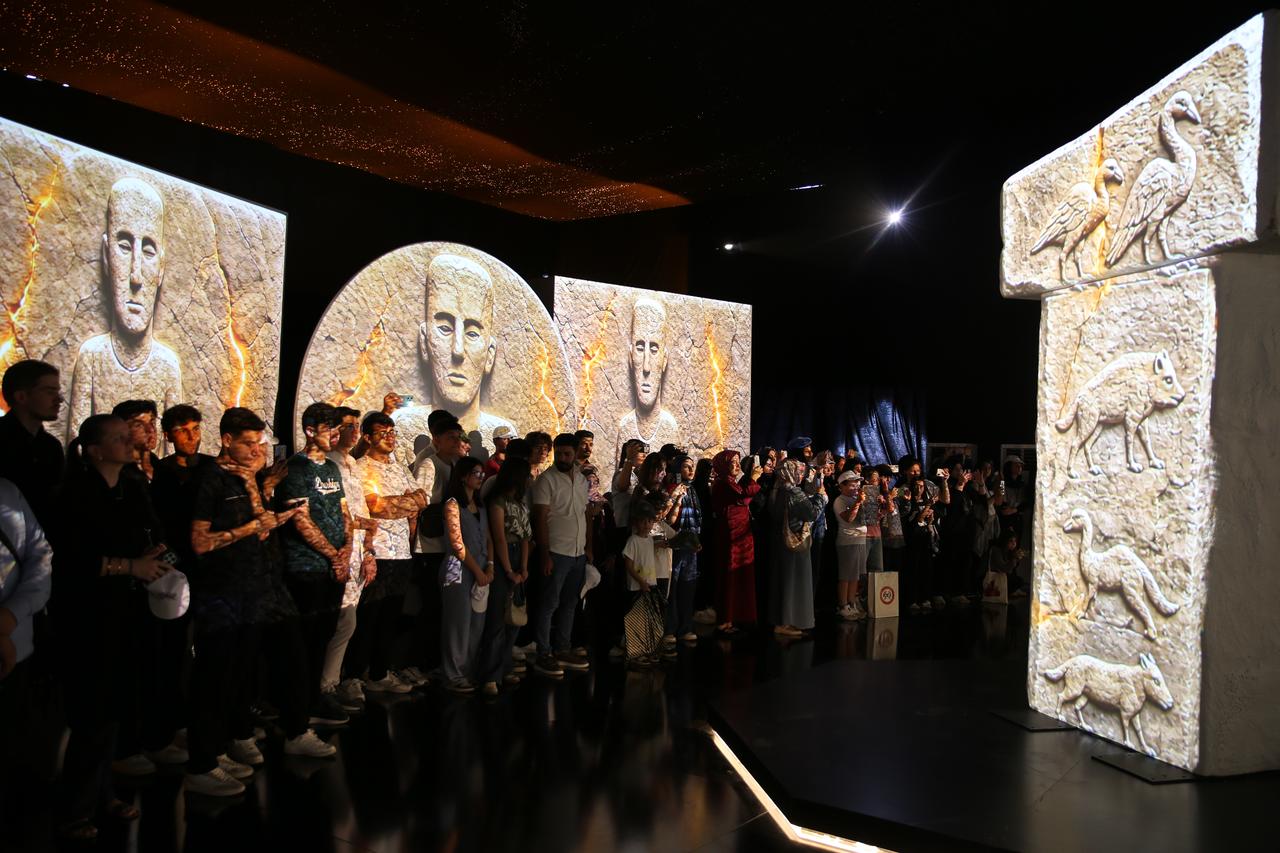
The center presents more than 3,000 years of the region’s history, from ancient civilizations to modern-day Uzbekistan, through a combination of scientific research, cultural heritage, and advanced digital technologies.
The exhibitions are organized into four main sections: the pre-Islamic period, the First Renaissance, the Second Renaissance, and the New Uzbekistan. Each section highlights key historical eras, major scientific achievements, and influential figures who shaped the region’s intellectual legacy.

Artifacts from ancient civilizations such as Sogdiana, Bactria, and Khwarezm are displayed alongside manuscripts and scientific instruments from renowned scholars like Al-Khwarizmi, Al-Biruni, and Avicenna. The Timurid era is represented through architectural models, miniature paintings, and astronomical works associated with Ulugh Beg.
The “New Uzbekistan” section focuses on recent reforms and modernization efforts, presented through AI-supported interactive displays.
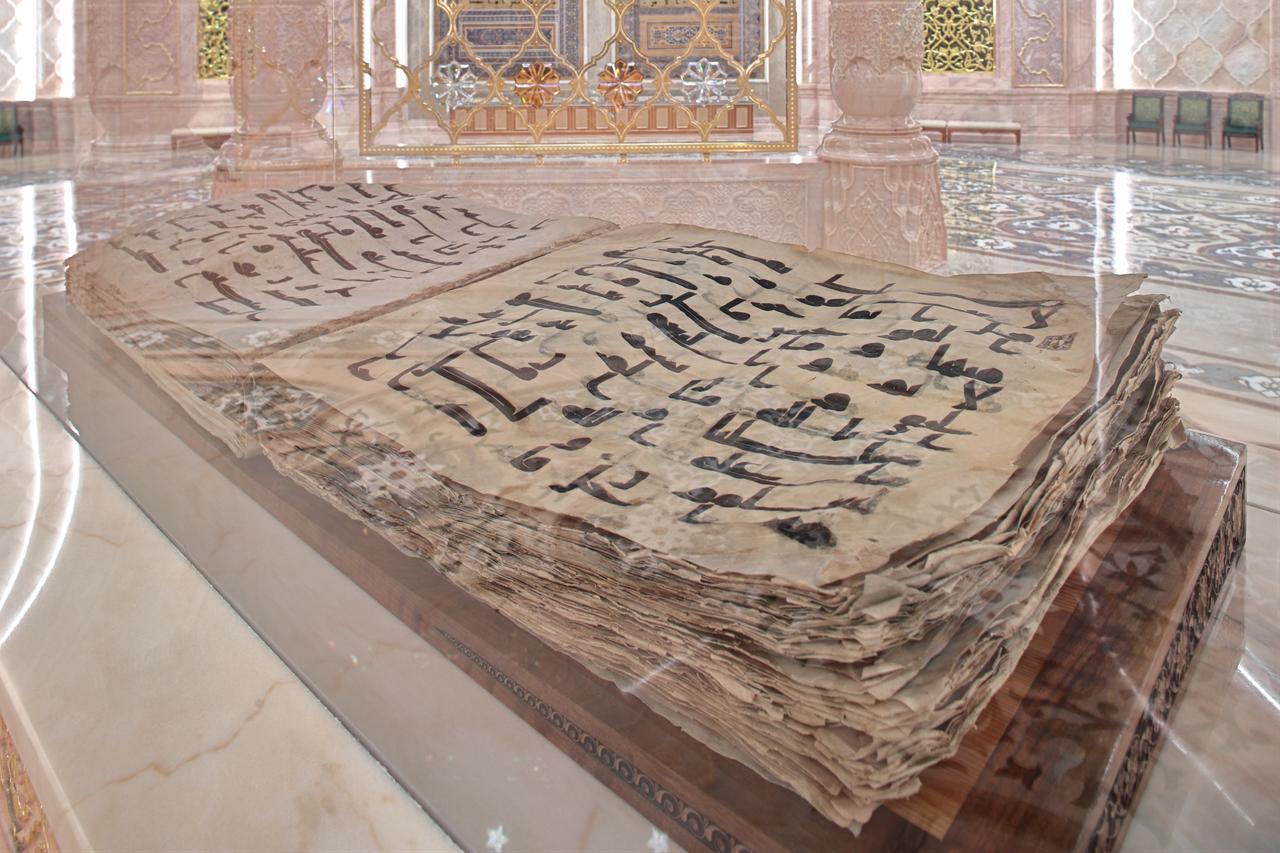
One of the most notable areas of the complex is the Quran Hall, which showcases one of the oldest known manuscripts of the Quran, the Osman Mushaf, along with 114 rare handwritten copies. The hall also features a holographic system that projects verses of the Quran in a visually immersive experience, simulating the feeling of divine revelation.
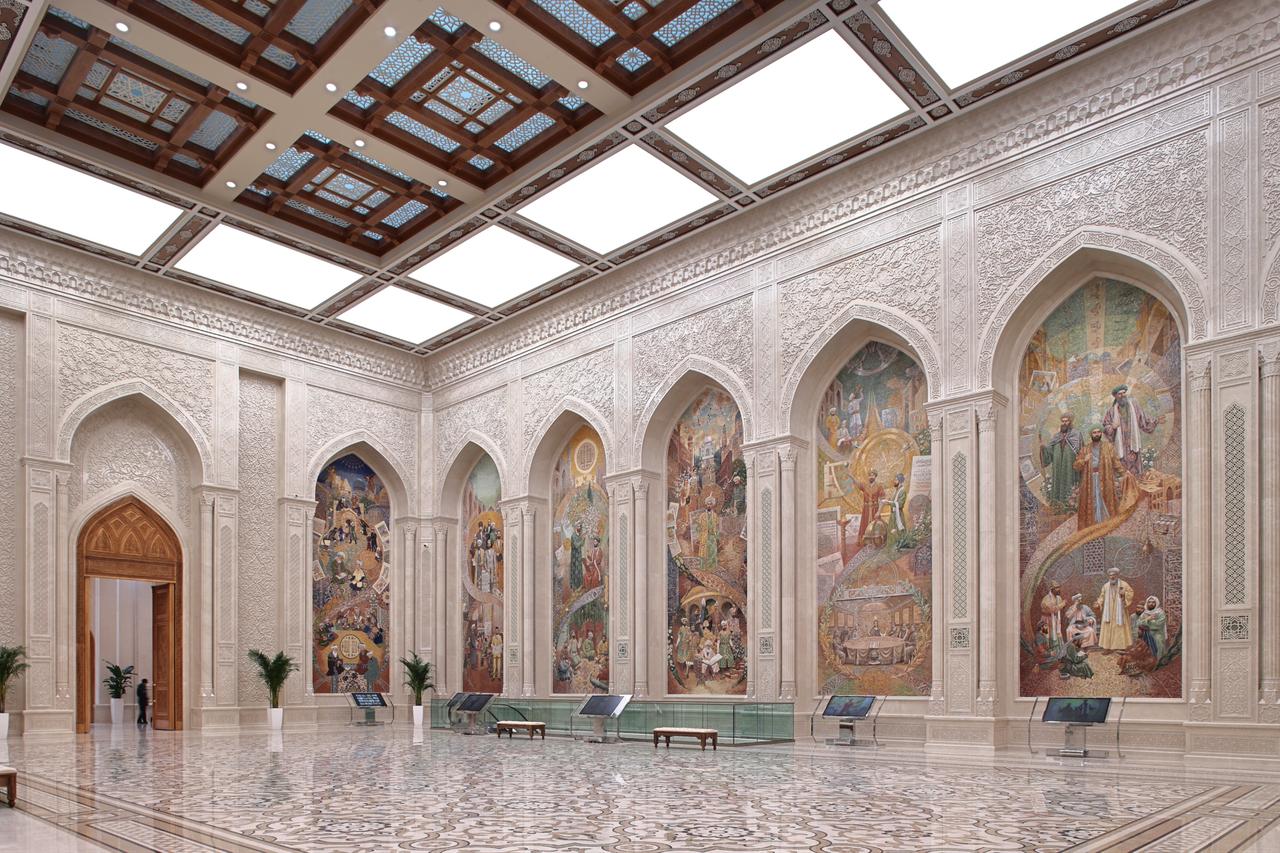
The center also includes a Hall of Honor, featuring large panels dedicated to historical figures such as Amir Timur, Babur, Ulugh Beg, Al-Biruni, and Al-Khwarizmi.
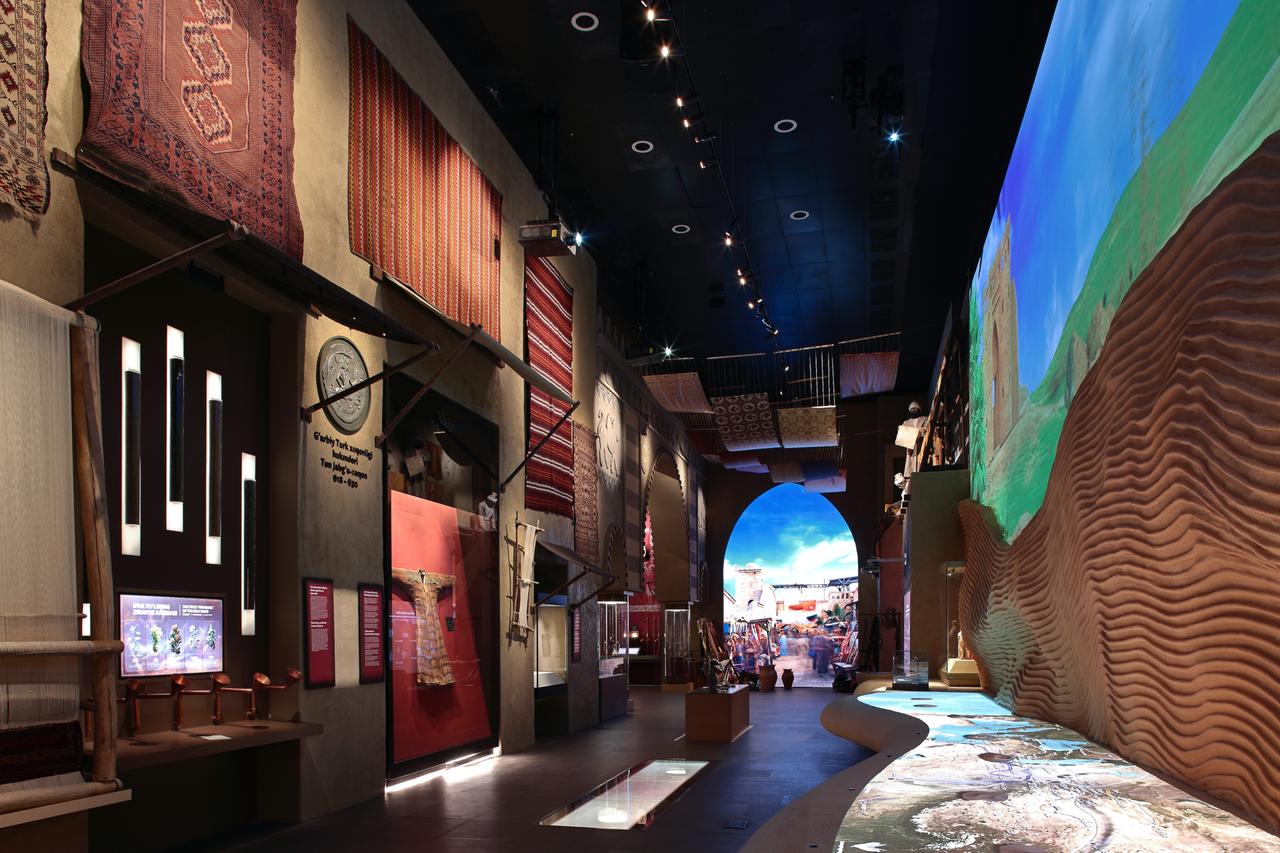
Thanks to its scale, collection size, and multifunctional design, the center was officially recognized by the Guinness World Records on April 13 as the “World’s Largest Islamic Civilization Museum.” The evaluation considered its vast exhibition space, 65-meter dome, collection of over 50,000 historical items, and its integrated role as a museum, research institute, and educational hub.
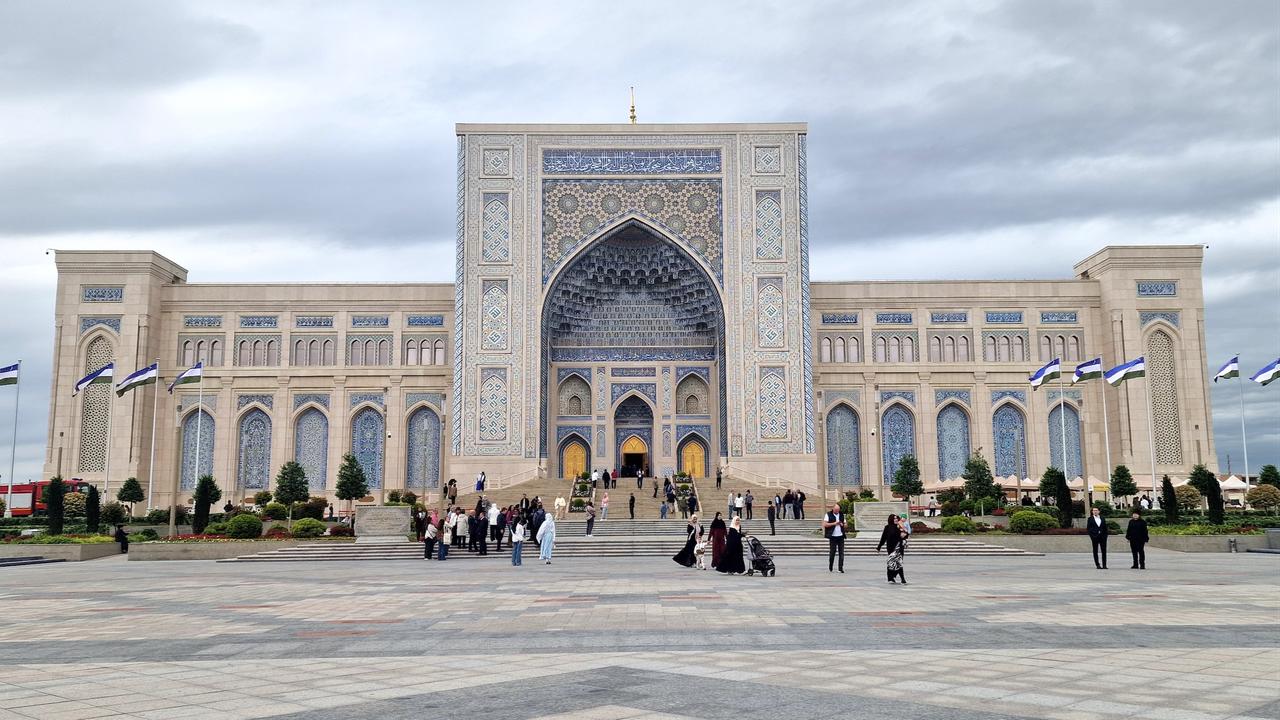
According to officials, the center is not only a museum but also a scientific and educational platform. It houses research facilities, a library with tens of thousands of manuscripts, and digital archives exceeding 500,000 sources.
The center also hosts international organizations such as the International Organization of Turkic Culture (TURKSOY) and Research Center for Islamic History, Art and Culture (IRCICA), further strengthening its role as a hub for cultural cooperation. Daily visitor numbers have already reached around 5,000, reflecting strong public and international interest.


 Set as preferred source
 Set as preferred source


 2 min read