

 Newsletters


 Featured
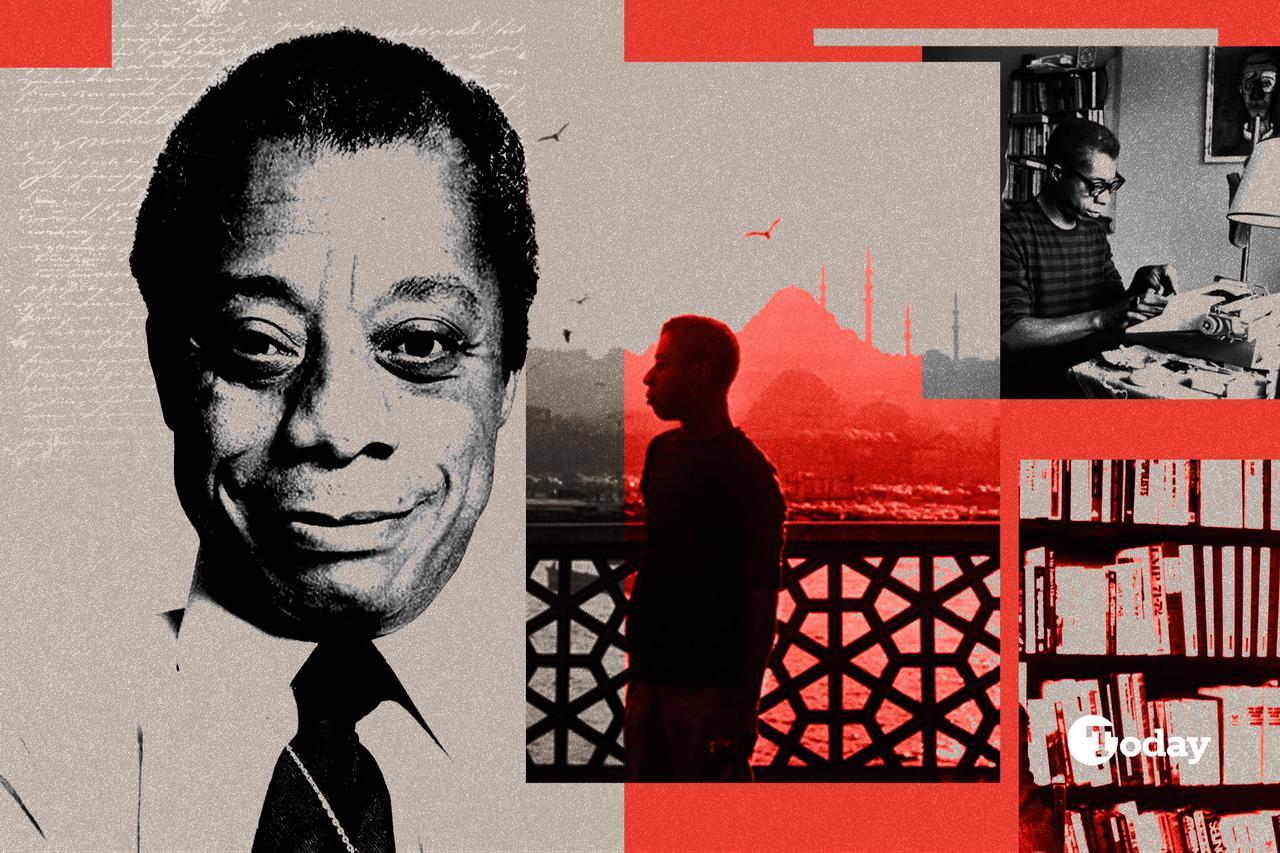


The side street in Istanbul’s Sisli neighborhood is better known these days for its upscale menswear boutiques than for its theatrical history.
But it was here, inside the smoke-filled Gulriz Sururi–Engin Cezzar Theater, that James Baldwin, the American novelist and civil-rights luminary, helped bring Turkish theater into the international repertoire.
The jackets are expensive now. What happened here then was priceless.
It was the same theater where “Canli Maymun Lokantasi” (“The Live Monkey Restaurant”), a satire by one of Türkiye’s most prominent modern playwrights, Gungor Dilman, skewered the emptiness of Western capitalism.
And it is where plays from the English-speaking world enjoyed a Turkish audience, including the adaptation of Christopher Isherwood’s “Cabaret,” set in Berlin during the rise of Nazism, and Shakespeare's “Othello,” which explores themes of race and power.
Within the American cultural milieu, the venue staged the anti-war counterculture Broadway hit “Hair” and American playwright Edward Albee’s “Everything in the Garden,” a dark comedy that explored the hollowness of American suburban life and its materialistic hypocrisy.
Here, Baldwin, whom his friends often called Jimmy, directed the play “Fortune in Men's Eyes,” written by Canadian playwright John Herbert. The play, set in an American juvenile detention center, toyed with themes of masculine loneliness and violence that resonated across cultures. Although it made little headlines back in the States, it became a resounding success within Turkish artistic spaces and cemented Türkiye’s place on the international theater scene.
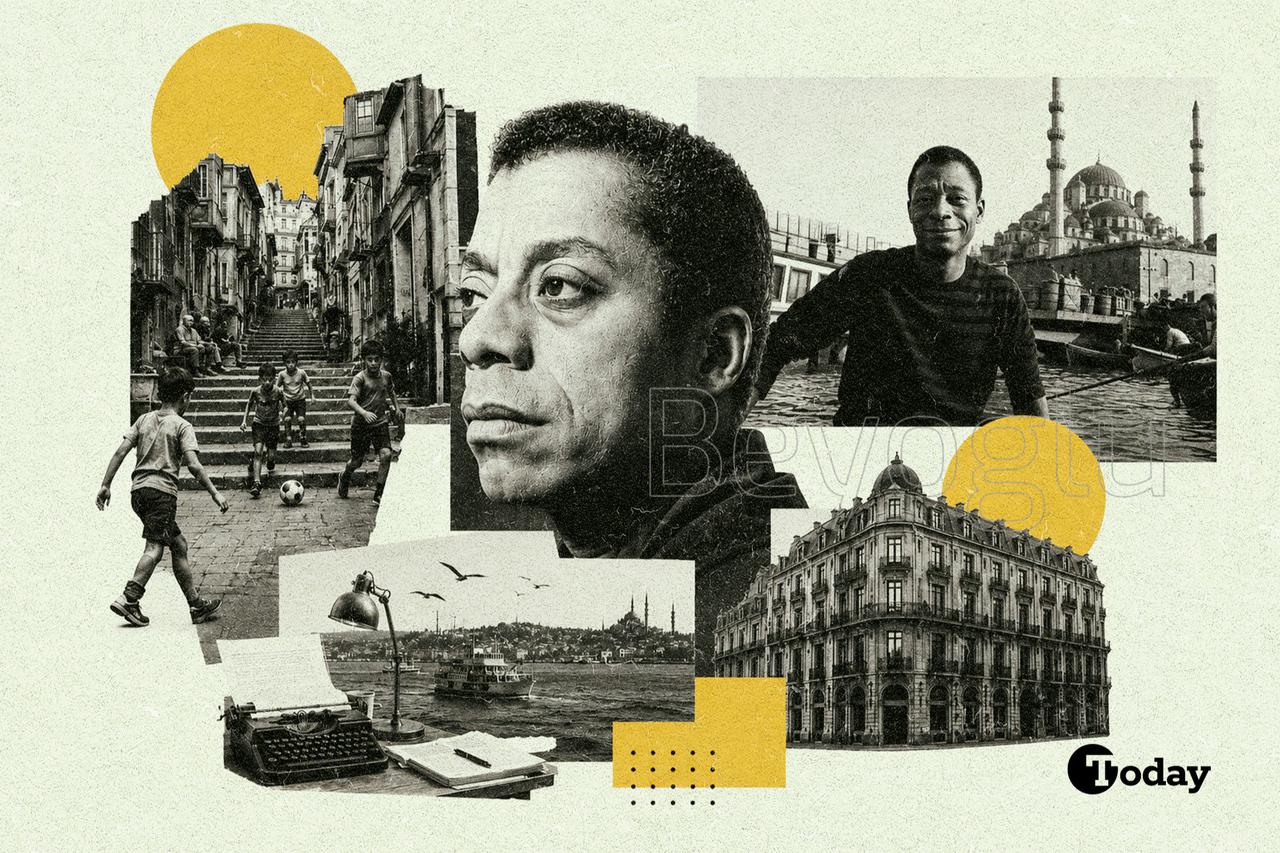
While Baldwin held connections to Paris, Southern France, Switzerland and London, he chose to spend one of his most creative decades self-exiled in Istanbul. Paradoxically, scholars have characterized his Turkish era as producing some of his most “American” work.
“In the 50s and 60s, there was the global struggle against colonialism and imperialism. Many African Americans were identifying themselves within those struggles in the Muslim world,” argues Yannis Mahil, assistant professor of Islamic Studies at Türkiye’s Gaziantep Islam Bilim ve Teknoloji Universitesi, who specializes in the intersection between African American identity and Islam.
“Türkiye, as a Muslim country, was a good balance for African Americans during this time. Some African Americans lived in Egypt, Ghana or Morocco when trying to find space away from America. Türkiye was a place between the East and West, a kind of middle path for someone who is still an American.”
Mahil also noted that Islam's egalitarian approach to race shapes how Turkish society engages with questions of racial inequality toward Africans and African Americans in ways that differ from the American context.
“When discussing race in Türkiye, several historical and cultural dimensions need to be taken into account. The first is Islam, which played a major role in shaping the country’s social and cultural values and which, in principle, promotes a universalist conception of humanity and racial equality.”
Whatever Baldwin’s reasons may have been, it was evident that Istanbul became his medium that allowed him to look inward, to further explore his own identity as an African American with a global microphone representing a unique American struggle.
In filmmaker Sedat Pakay’s “James Baldwin: From Another Place,” which documents the novelist's life in Istanbul, Baldwin said: “You can make comparisons from another place, from another country, which you aren't able to make in America because there's nothing to compare America to when you're there.”
But this story goes further than intellectualized race debates and points to something more human.
Here in Türkiye, Baldwin found an artistic home.
The writer’s introduction to Istanbul came through his close friend Engin Cezzar, whom he had met in New York City in the late 1950s. In 1961, a distraught Baldwin arrived in Istanbul unannounced and made his way to the doorstep of Engin and his new wife Gulriz after experiencing a bout of professional and personal setbacks.
Unbeknownst to Baldwin, the couple had been celebrating their wedding the night of his arrival. Exhausted, he ended up falling asleep on the lap of Turkish actress Ayla Algan, whom he had met only a few hours earlier.
Seeing Baldwin in a state of such distress led the newlyweds to temporarily house him in their modest Taksim Square flat, with Engin building Baldwin a handcrafted wooden desk. It was at this desk that the novelist would go on to finish his work of art, “Another Country.”
But despite spending a decade in self-exile in Türkiye, the American playwright never learned Turkish. It was to build a wall of quiet solitude far away from the screaming noise of his celebrity back home.
Beyond a few translators, when it came to Baldwin’s staging of “Fortune in Men’s Eyes,” he notoriously bypassed the language barrier by directing through movement and emotion that could be universally understood. He also relied heavily on his fluency in jazz. Growing up as the child of a Pentecostal minister, he became acutely attuned to the cadence of worship music, which became a language of its own.
Throughout the production of “Fortune in Men’s Eyes,” Baldwin became infamous for interrupting the actors, proclaiming, “I don't know what you are saying, but I know you are lying!”
For a visionary like Baldwin, Türkiye in the 1960s served as a fertile creative ground brought on by a combination of institutional expansionism in the arts and a populist makeover in the theater scene that was once seen as an elitist pastime.
This decade in Turkish arts and theater ushered in an era of experimentation and creativity that is often heralded by experts as “the Golden Age” of both Turkish literature and theater.
“It is impossible to understand contemporary artistic practice in Istanbul without tracing it back to the critical ground laid down by the late-1960s avant-garde,” said curator and writer Nazli Gurlek in an interview for Frieze magazine on Istanbul’s art scene.
In 1990, the Gulriz Sururi Engin-Cezzar theater closed because of financial strains, but its impact remains. Through their work, Cezzar and Sururi could inject a flavor of Western styling into a Turkish theater that lives on to this day.
In 2018, Sururi passed away at 89, leaving behind the Gulriz Sururi-Engin Cezzar Theatre Encouragement Award. The accolade, which is distributed every year by the Istanbul Foundation for Culture and Arts, gives up-and-coming troupes grants to help produce new work.
And the bond between Istanbul and African American arts did not leave with Baldwin either. To this day, Istanbul serves as a canvas for a new generation of African American creatives. In 2017, acclaimed African American conceptual artist Fred Wilson featured his exhibition on Africans within the Ottoman Empire and contemporary Türkiye at Istanbul’s Pera Museum with text from Baldwin’s “Another Country” interlaced within his Afro-Kismet exhibition.
Legendary African-American rapper and activist formerly known as Mos Def has deep ties to the country, notably cultivating inspiration for his music within Türkiye’s cultural fabric.
In 2023, the rapper, who is prominent in the genre of hip hop with a consciousness, held a performance in Istanbul to raise money for the victims of the 2023 Türkiye-Syria earthquake, with 100% of the proceeds going to a Turkish relief organization.
“Türkiye was a kind of good middle ground for Baldwin, allowing him to escape pressures from America,” Mahil noted toward the end of the conversation.
And perhaps decades later, the country continues to serve a similar purpose for a younger generation of African American creatives. Today the street has traded its avant-garde past for a curated present imbued with luxury. But the artistic soul of the theater lives on through Baldwin and the legacy of this artistic community.


 Set as preferred source
 Set as preferred source


 2 min read
 1 min read


