Newsletters


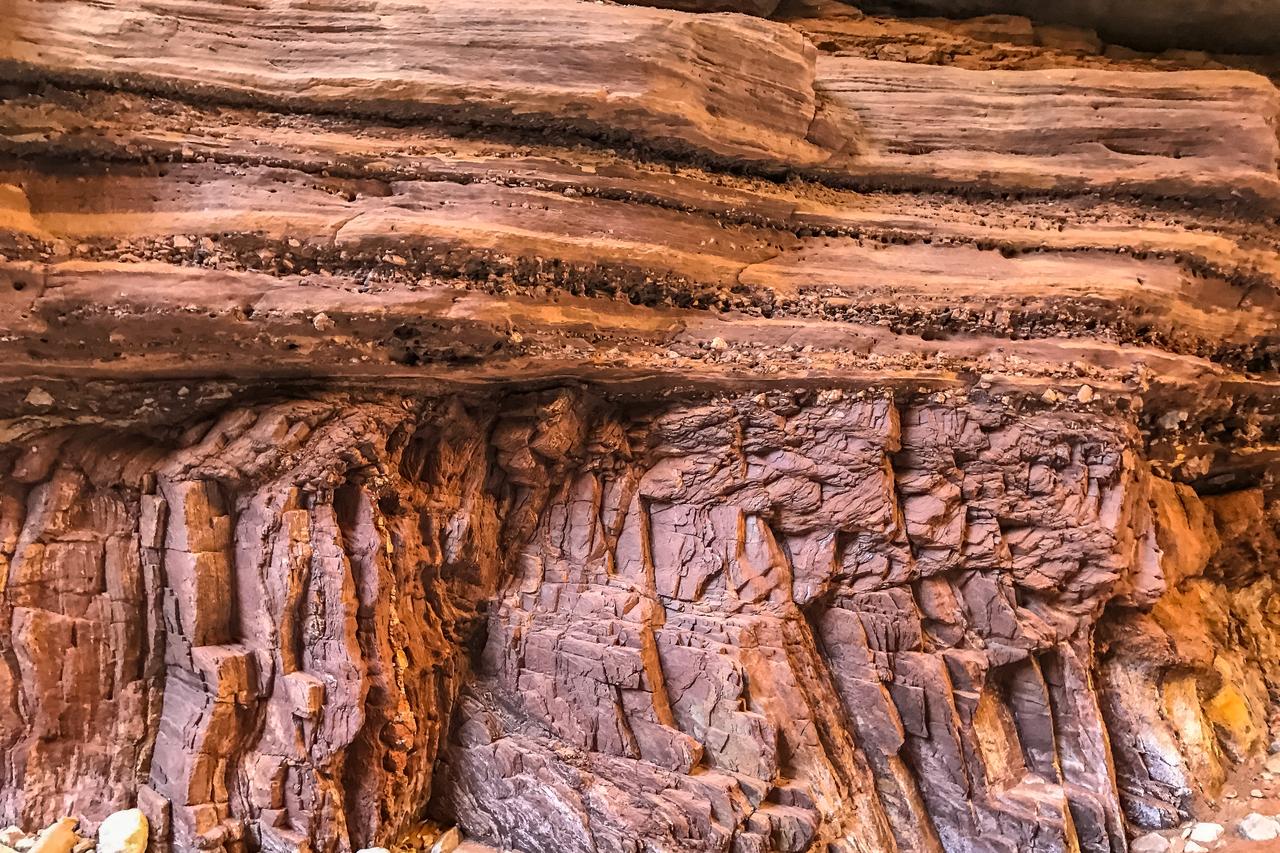


A massive gap in Earth’s geological record has puzzled scientists for more than 150 years.
Now, a new study argues that ancient tectonic forces, not a planet-wide deep freeze, erased up to a billion years of history.
Geologists call this gap the Great Unconformity. It appears when relatively young sedimentary rock, about 500 million years old, sits directly on top of much older “basement” rock that can exceed 1.7 billion years in age. The missing layers represent anywhere from several million to more than 1 billion years of geological time.
The feature is visible in places such as the Grand Canyon and in remnants of other ancient landmasses, including Baltica and Amazonia. Scientists have long debated what removed so much of Earth’s crust.
A study published this week in the Proceedings of the National Academy of Sciences points to a much older cause than previously thought.
For years, many researchers linked the Great Unconformity to “Snowball Earth,” a period between roughly 720 million and 635 million years ago when glaciers may have covered much of the planet.
Some scientists proposed that these vast ice sheets scraped away rock and dumped it into ancient oceans.
The new study challenges that idea.
Scientists led by Rong-Ruo Zhan of Northwest University in China analyzed rocks from five sites in North China. They examined the thermal history of the rocks using zircon U-Pb dating and (U-Th)/He thermochronology, techniques that track how rocks cooled and moved over time.
Their findings show that the most intense period of crustal exhumation, when buried rocks rose toward the surface and eroded, occurred much earlier, between 2.1 billion and 1.6 billion years ago. That timeframe aligns with the formation of one of Earth’s earliest supercontinents, Columbia.
“The contribution of this paper is to show that exhumation of mid-crustal metamorphic/igneous rocks in North China occurred mostly between 2.1 and 1.6 billion years ago, and that the timing of exhumation varies from one continent to another,” said study co-author Nicholas Christie-Blick, professor emeritus at Lamont-Doherty Earth Observatory of Columbia University, in an email to 404 Media.
“In other words, the surface may appear to be global, but its significance varies,” he added.
The results suggest that powerful tectonic forces, as landmasses collided to form Columbia, pushed deep rocks upward. Over time, erosion removed those rocks, creating the gap seen today.
The new timeline weakens the idea that a single global ice age wiped out the missing layers everywhere.
According to the study, the timing of erosion differs by region. In North America, for example, researchers have linked similar gaps to the breakup of another supercontinent, Rodinia, as well as prolonged sea flooding.
“The best way to think about unconformities is that they represent everything that may have happened over a span of time that in this particular case is more than 1 billion years,” Christie-Blick said. “It was never in the cards that we would discover one ‘cause.’”
He added that much of the erosion occurred early and that the formation of the unconformity could not have “triggered” the emergence of animals during the Cambrian period.
The debate over the Great Unconformity has also shaped theories about the Cambrian explosion, a period around 530 million years ago when most major animal groups first appeared.
Some researchers suggested that glaciers during Snowball Earth scraped nutrients off continents and delivered them to the oceans, helping spark this burst of complex life.
The new study challenges that narrative. If most erosion occurred a billion years earlier during the Columbia cycle, it cannot directly explain the later biological transition.
“The conclusion therefore isn't surprising,” Christie-Blick said. “It is just very nice to have shown in a previously less documented example (North China) that the timing has nothing much to do with late Proterozoic glaciation (720-635 million years ago) or the emergence of animals in the Cambrian.”
Scientists say the findings do not close the case. The Great Unconformity remains complex and may reflect different processes in different regions.
Still, the study shifts the focus from a dramatic global freeze to the slow but powerful movements of Earth’s tectonic plates, suggesting that the planet’s missing chapters began far earlier than many once believed.


 Set as preferred source
 Set as preferred source




 2 min read