Newsletters




One of my fondest memories is standing with my father in a crowded gymnasium in our small New Jersey town in 1955, a four-year-old child waiting to receive Jonas Salk’s polio vaccine.
There isn’t much to it, really—my tall father beside me, the blur of other people, mostly kids, and the chatter and hum of shared excitement. I didn't know what was going on. It took decades—and the successful vaccination of more than 2.5 billion children—to fully appreciate the global scale, scope, and consequence of Salk's serum.
It was, in fact, the beginning of the most successful public health campaign of the 20th century. With the development and distribution of the Salk vaccine, and later the Sabin vaccine, polio was eradicated in the U.S. by 1979. Since the launch of the Global Polio Eradication Initiative (GPEI) in 1988, worldwide cases have decreased from 350,000 to fewer than 100.
Without question, the elimination of polio stands as a monumental achievement in human history. Unless, of course, you’re Robert F. Kennedy Jr. “I know it’s a mythology to say that (vaccines) cured polio and smallpox and measles, et cetera,” he said in 2019 during a podcast, “but it’s just not true.”
Today, Kennedy, who also claimed in a 2023 podcast that the polio vaccine had caused a cancer that “killed many, many, many, many, many more people than polio ever did,” holds the single most important public health position in the U.S., and arguably, the world.
As President Donald Trump’s Secretary of Health and Human Services (HHS), Kennedy, the former heroin addict and rabid anti-vaccine zealot, controls the Centers for Disease Control and Prevention (CDC) and the National Institutes of Health (NIH)—both world-class institutions with bulletproof reputations before he took over.
And I’m here to tell you, four decades into my career as a journalist covering health and medicine, that we—all of us, oceans and borders be damned—are faced with a deadly threat unlike any before.
The damage Kennedy has done and continues to do ranges from the senseless—crippling the CDC and NIH; to the stupid, abruptly canceling millions in research on mRNA vaccines (the type used against COVID-19); to the dangerously insane—triggering measles outbreaks in 26 states, resulting in over 3,000 cases and three deaths, with his mealy-mouthed undermining of the vaccine that eliminated the disease in 2000.
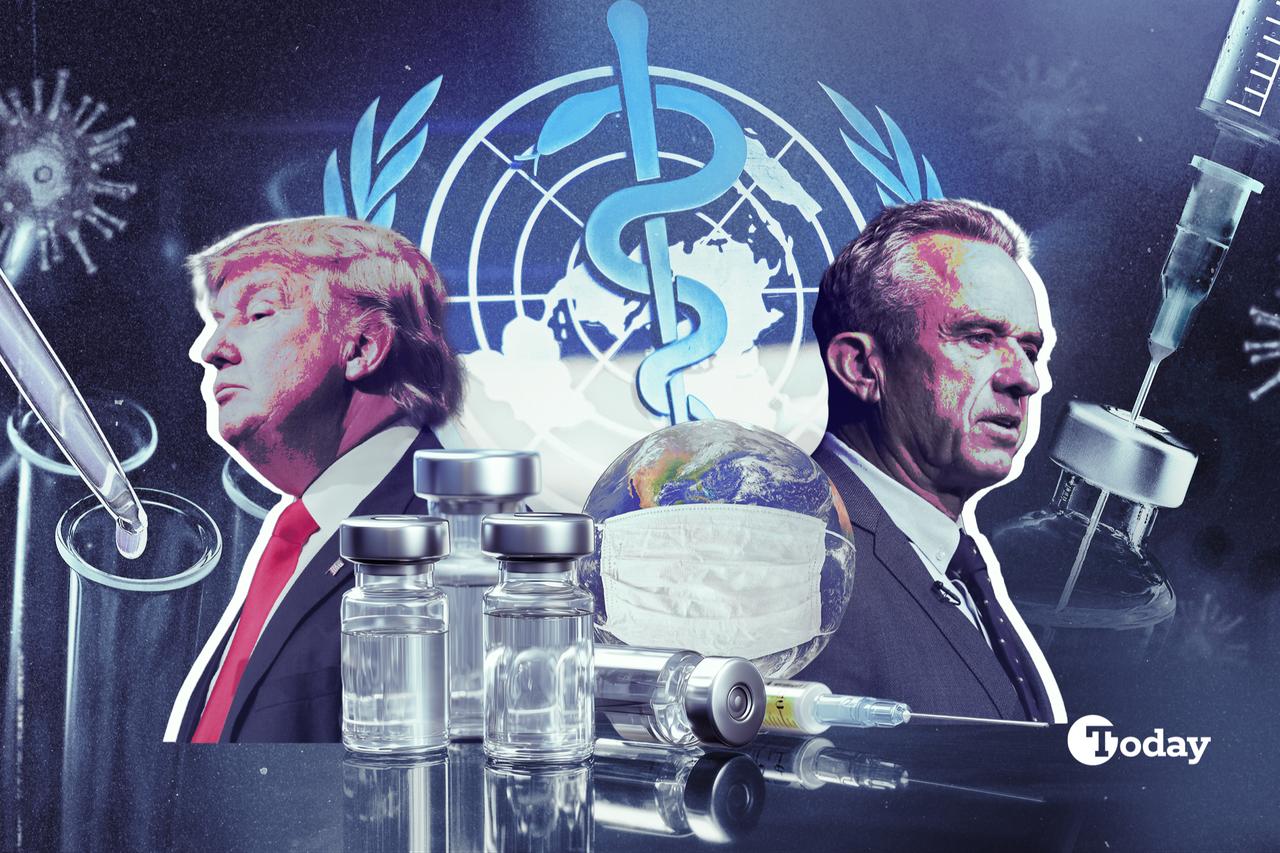
Now, in yet another demonstration of their utter disregard for the health and well-being of their fellow man, and their disdain for people and institutions dedicated to making the world a better place, Trump and Kennedy, with U.S. Secretary of State Marco Rubio along for the ride, have finally and officially quit the World Health Organization.
“United States Completes WHO Withdrawal” is the headline on the HHS press release announcing the move. As with all of Trump’s unmoored and overheated declarations, the hypocrisy is baked in. He would have us believe that one big reason the U.S. is bailing on WHO is “…due to the organization’s mishandling of the COVID-19 pandemic…”
Specifically, Trump claims with feigned outrage that the WHO was late in officially declaring a pandemic, an action it took on March 20, 2020. His retroactive wrath would make more sense if he hadn’t told Americans on March 30, 2020, to “Stay calm, it will go away. You know it, you know it is going away, and it will go away, and we are going to have a great victory.” It’s worth noting that some 650 of those Americans died of COVID-19 that day.
There’s no room here to go into Trump’s countless other failures as a leader during the pandemic. To be sure, no country or organization handled COVID-19 perfectly, far from it. But Trump’s performance was objectively egregious. With the unique power of the presidency at his disposal, he squandered the opportunity to bring his country together and chose instead to embark on a divisive course that put him repeatedly at odds with his government’s scientists and public health experts.
Given the inherent toxicity and plain craziness of the Trump/Kennedy approach to public health and medical science, it’s tempting to think that WHO (and the rest of the world, for that matter) is better off without the current American administration on the team.
But the global impact of the U.S. withdrawal will be major.
For starters, the U.S. is by far the largest funder of the WHO, providing more than $650 million a year in dues and contributions. That’s a big chunk of money, considering WHO’s announced 2026-27 budget of $4.2 billion. Essential functions such as disease surveillance, outbreak response, and providing drugs and vaccines will suffer from both financial constraints and the lack of participation by U.S. personnel.
In a post last year responding to the initial announcement of the withdrawal, Johns Hopkins epidemiologist Judd Walson warned that the U.S. would not be spared from the global impact of leaving the WHO.
“Ultimately, the global community, including Americans, will suffer and have poorer health,” he wrote.“Take, for example, my colleagues around the world, including people at the WHO, working to reduce childhood deaths. That's important for people living in low-income settings, but it's important here, too. Many of us have relatives or friends who have had a baby born premature—that's a high-risk period for a baby. Where do the guidelines come from? How do we know what the best interventions are for preterm babies? That comes from data collected around the world… We benefit in real ways here at home from the work of the WHO. This is not only about what we do for others; it's also about what we do for ourselves.”
In one final irony, last week the Washington Post reported that the Trump administration was planning to spend $2 billion a year “to replicate the global disease surveillance and outbreak functions the U.S. once helped build and accessed at a fraction of the cost.”
Now I ask you, WHO could have seen that coming?


 Set as preferred source
 Set as preferred source


 2 min read