Newsletters


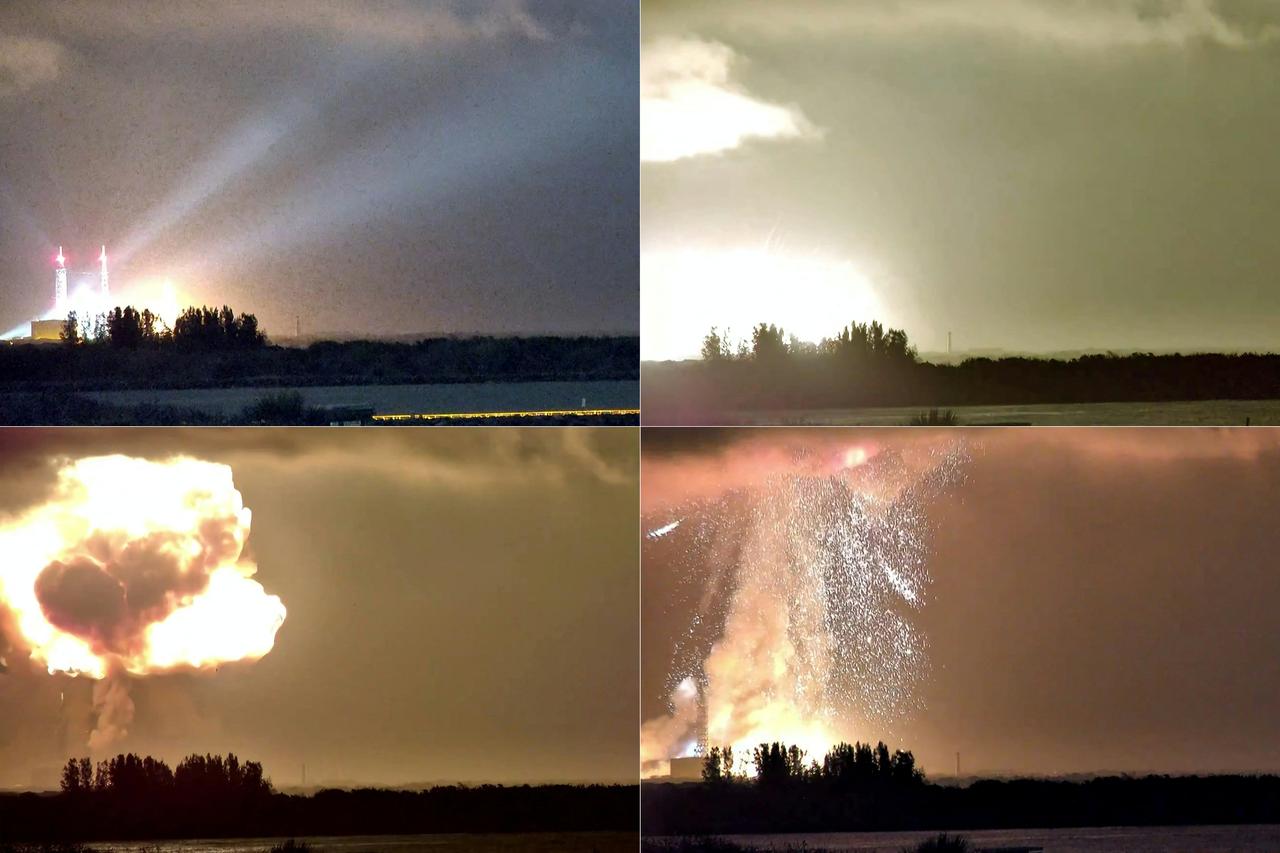


Blue Origin’s New Glenn rocket exploded during a ground test in Florida, dealing a major setback to Jeff Bezos’ space company and raising questions over NASA’s upcoming Moon missions, the BBC reported.
The 98-meter rocket, the most powerful in Blue Origin’s fleet, exploded around 9 p.m. local time Thursday at Cape Canaveral while being tested ahead of an upcoming flight. No injuries were reported.
The BBC reported that the rocket had been due to launch 48 satellites for Amazon’s Leo broadband network as early as June 4.
“Spaceflight is unforgiving,” NASA Administrator Jared Isaacman said on X, adding that NASA would support a full investigation into the incident.
Jeff Bezos also said all personnel were safe.
“Very rough day, but we’ll rebuild whatever needs rebuilding and get back to flying. It’s worth it,” Bezos said on X.
The explosion damaged Space Launch Complex 36, the only facility in the world built to launch New Glenn, the BBC reported.
Footage showed one of the pad’s lightning protection towers falling after the blast. Analysts said rebuilding and recertifying the launch pad could take months, not weeks.
Blue Origin declined to provide further details on the incident, the scale of the damage or the investigation, which is being conducted with NASA and the U.S. Space Force.
New Glenn will remain grounded while the investigation continues.
The blast also destroyed the rocket, which had been preparing for its upcoming mission.


The explosion could affect NASA’s Artemis lunar program, which depends in part on Blue Origin’s rockets and landers.
NASA has tasked Blue Origin and SpaceX with developing lunar landers to transport astronauts and equipment to the Moon as part of plans to build a lunar base.
According to the BBC, NASA’s Moon Base 1 mission is due to be flown on Blue Origin’s robotic Blue Moon Mark 1 “Endurance” lander no earlier than autumn 2026.
The mission is intended to carry two NASA science payloads to the Shackleton Connecting Ridge and demonstrate precision-landing techniques needed for future crewed missions.
Earlier this week, NASA also awarded Blue Origin a contract worth up to $468 million to deliver two commercial lunar terrain vehicles to the Moon’s south pole by 2028.
NASA is aiming to test an in-orbit rendezvous between a spacecraft and one or two lunar landers in 2027 and carry out a crewed lunar landing before the end of 2028.
The destroyed rocket had been due to launch satellites for Amazon’s Leo broadband constellation, formerly known as Project Kuiper.
Amazon’s Leo network is designed to compete with SpaceX’s Starlink, but it remains far behind.
The BBC reported that more than 300 Amazon Leo satellites are currently in orbit, compared with more than 10,000 Starlink satellites.
Under its U.S. Federal Communications Commission license, Amazon must have half of its 3,236-satellite constellation in orbit by July 30, 2026.
As of late May, the company was more than 1,300 satellites short of that target, with delays blamed partly on launch vehicle availability.
With New Glenn expected to be grounded for months, Amazon may become more dependent on rival launch providers, including SpaceX.
SpaceX CEO Elon Musk reacted to footage of the explosion on X, saying: “Most unfortunate. Rockets are hard.”


 Set as preferred source
 Set as preferred source


 1 min read
 1 min read