Newsletters


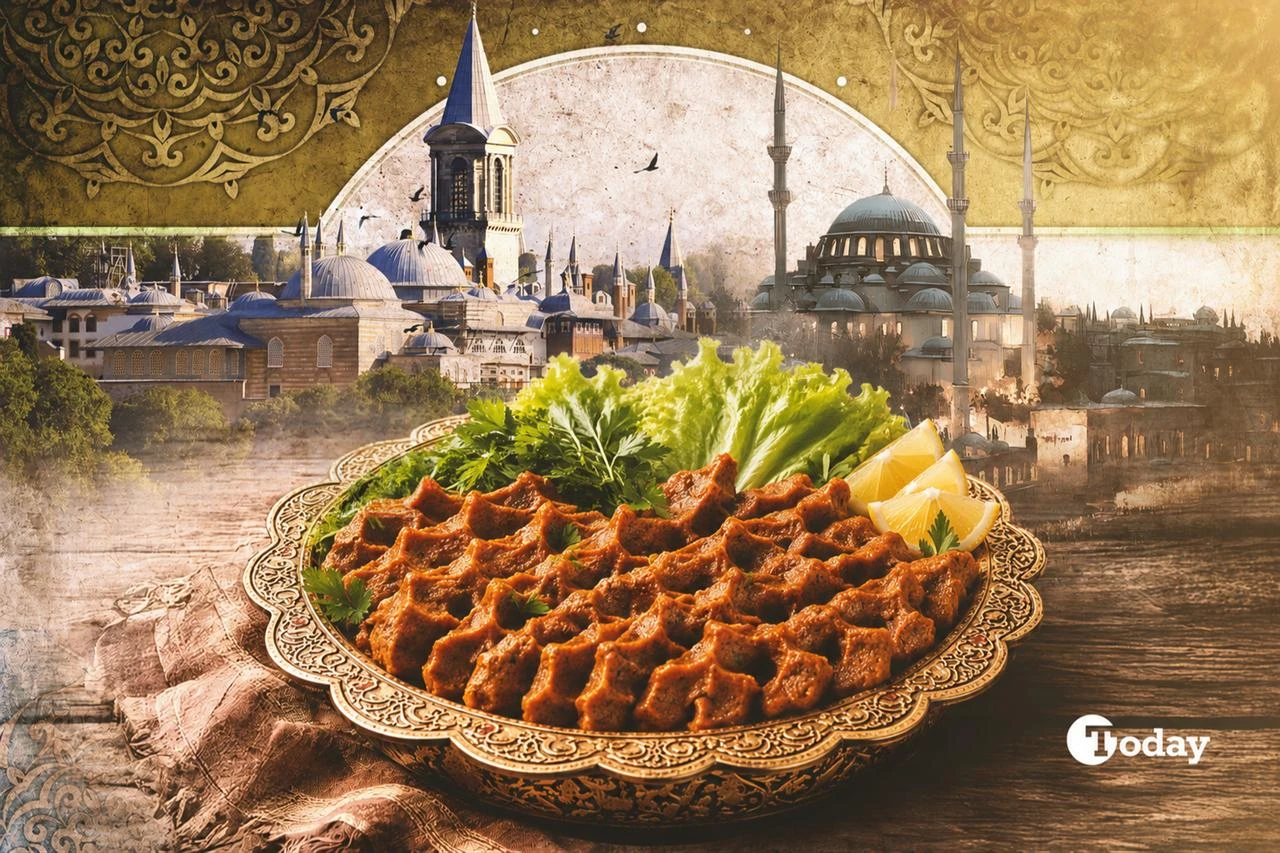


Cig kofte arrives as a dark-red mountain—not the purple-pink of raw meat but the fluorescent glare of a traffic cone, the kind that provokes both recoil and curiosity without resolving.
The vendor slices a portion with practiced indifference, presses it into lavash with pickles, pomegranate molasses, and a fistful of lettuce. Glimpse inside and each piece is a ridged, finger-marked cylinder like a sheep’s knuckle.
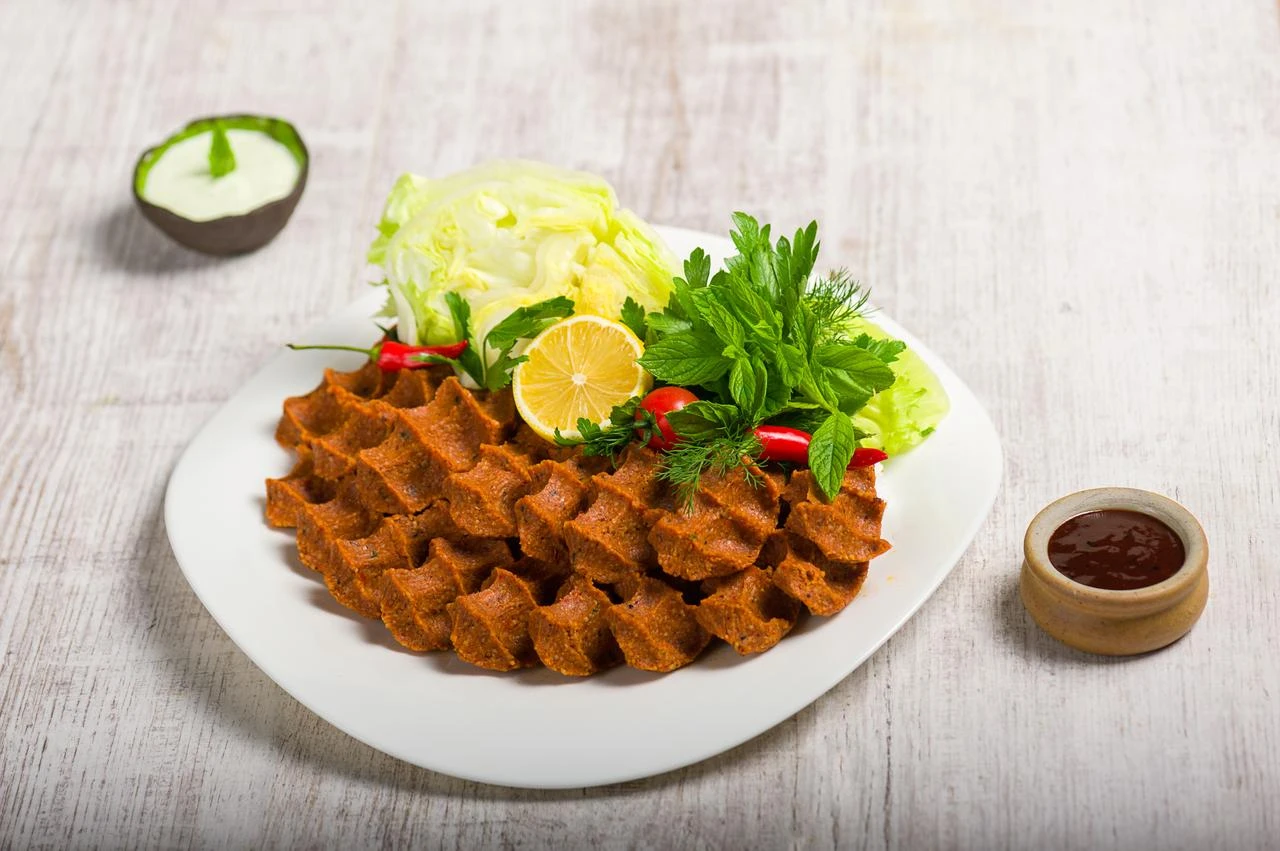

It looks like raw meat, yet it contains none. That begs a question—one whose answer began 4,000 years ago, with each new chapter involving the removal of something essential followed by the dish's cheerful refusal to care. That makes it essentially the “Merry Monarch” (Charles II) of street food, somehow improving with each dispossession.
The origin story is unusually specific, which is either a sign of historical accuracy or the kind of overconfidence that only survives because why question an outrageous backstory.
Either way, 1,000 years ago in Urfa—a city so ancient it claims Abraham as a local—King Nimrod decided to burn a prophet on a pyramid of a pyre that required every piece of wood in the region, leaving the population without fire.
When a hunter returned home with a freshly killed gazelle, his wife was unable to cook it. She took lean meat from the thigh, crushed it with bulgur, and kneaded it with isot—Urfa's native pepper, sun-dried by day and sweated under wraps at night until it turns a deep purplish black and develops a slow, raisined heat quite unlike chilli—along with salt, parsley and onion, until the friction worked its quiet magic. The first constraint had been imposed, and the first workaround found.
Making it properly requires kneading raw lamb on a ridged copper tray for up to two hours, demanding four to six people in rotating shifts, placing it somewhere between a communal ritual and an organized punishment, depending on your relationship with the host.
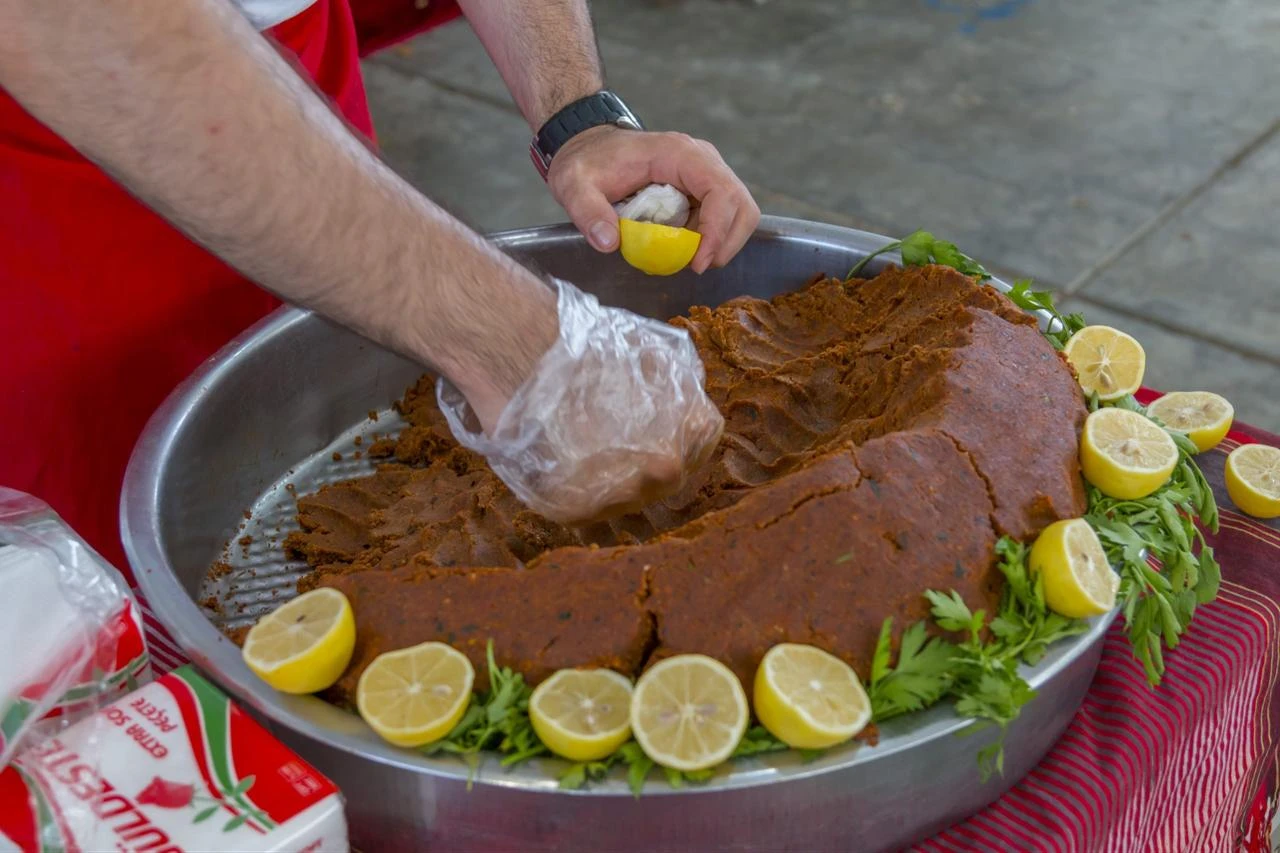
The warmth of the hands, combined with the acidity of the lemon and deep sweetness of pomegranate molasses, does what Nimrod's fire could not.
Do not call it uncooked—this is rude and, more importantly, wrong. Cig Kofte is raw in the same way ceviche is raw, which is to say “not really, and stop asking."
The same logic ran across the whole region. In Lebanon, kibbeh nayyeh is the definitive festive food—raw lamb, bulgur, onion, spice, served at weddings to hundreds of guests, prepared from an animal slaughtered that morning.
Lebanese fathers taught their sons to taste the meat raw from the butcher's paper before any spice touched it, to confirm what the eyes and nose already knew. The food safety system was personal rather than bureaucratic. A butcher in Beirut who poisons a wedding doesn't work again.
Then, in 2008, the Turkish Health Ministry issued a circular about tapeworms.
Taeniasis is a genuine public health concern when raw meat meets Turkish summer temperatures at fast food volume across 81 provinces. The circular was not unreasonable. The dish, however, was also, very characteristically, not bothered.
The name—raw meatball—remained, now attached to something that was neither raw nor a meatball, with the blithe confidence of a man who has lost his job title but kept his desk and waits to see if anyone notices.
Fire had been taken away, cig kofte invented itself. Meat was taken away, cig kofte reinvented itself. If nothing else, admire the sheer ebullience of a dish that treats every constraint as a design brief.
What followed was one of the more improbable transformations in Turkish food history.
Three competing chains now operate over 2,000 cig kofte branches between them. Adiyorem, on the Samsun-Ankara highway, produces 40 tons of the stuff daily from a factory built specifically for this single purpose.
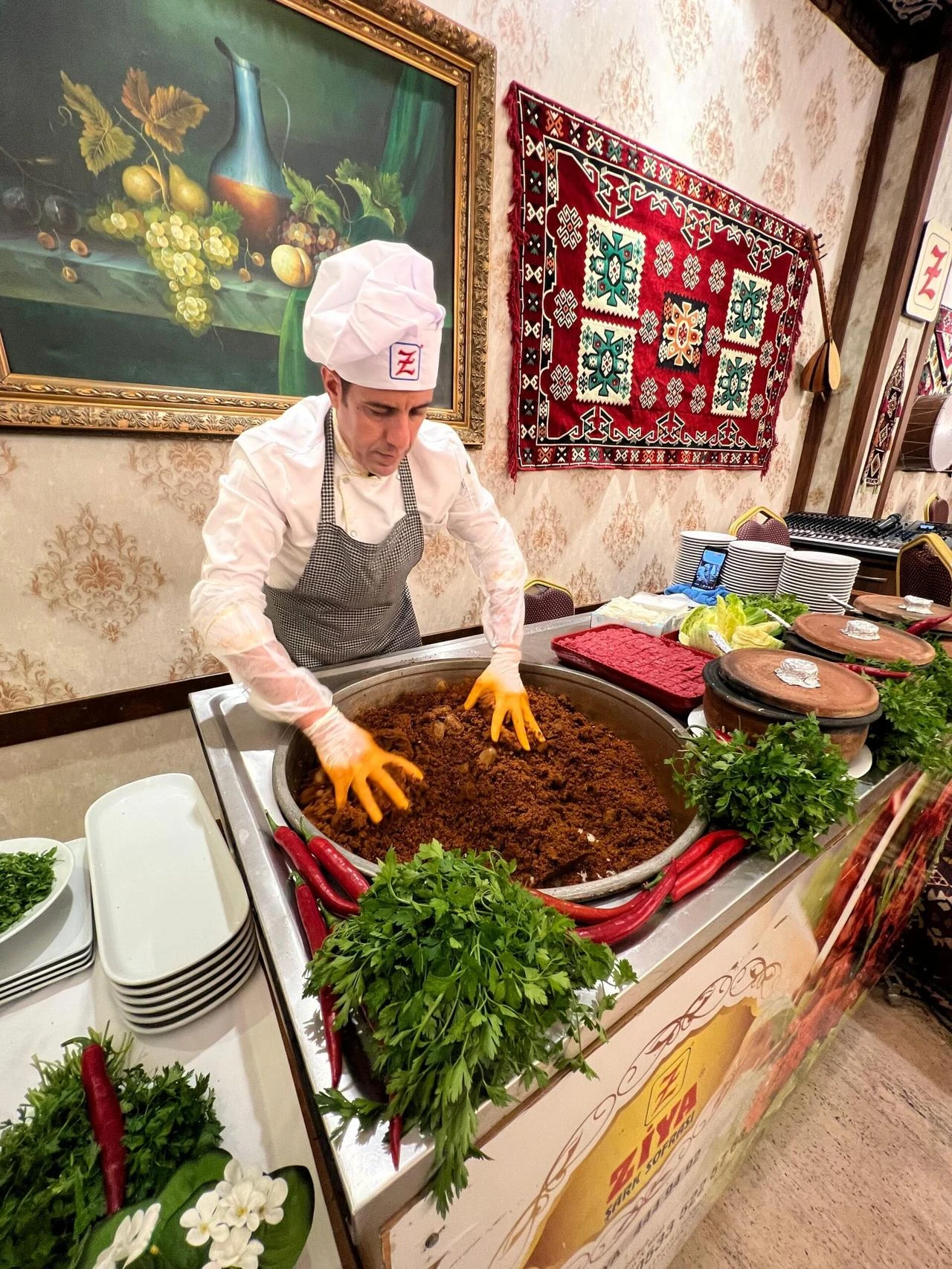
Cigkoftem has since spread to Belgium, Germany, France, the Netherlands and Austria. The emergency invention of a woman who couldn't find firewood in Urfa is now available, lightly branded, in a shopping center in Warsaw.
At around 40,000 stores, Türkiye now has far more cig kofte shops than France has McDonald's, the latter being the largest market for the American food chain in Europe.
The raw version survives, or is said to survive, in those few Istanbul addresses passed around with the furtive solemnity normally reserved for mistresses, tailors and men who can still fix a carburettor.
Bezirgan is one of them: a small place in Fatih run by Murat Ceylan, a man from Malatya, which in this context is less a biographical note than a credential. Nobody worth their salt would trust raw meat to a concept restaurant.
The name is almost too good. Bezirgan comes from the Persian bazargan, meaning merchant, trader, provisioner, a word with Ottoman echoes of ledgers, saddlebags and hard bargainers, which makes the place sound less like a restaurant than a late-imperial commercial office that happens to sell raw meat by the fistful.
Naturally, modernity has got its fingers in. Online, Bezirgan offers 300 grams, 500 grams and 1 kilogram portions, mega durum, ayran, salgam and, after all that, firin sutlac. The old rite now comes with delivery logistics, customer ratings, plastic-bag charges and the possibility of paying by card.
None of this should detract, however, from the small room where there is no menu worth reading. Ceylan uses meat butchered that morning, kneads it with the patience of someone who knows that haste is the first cousin of intestinal regret, and serves it the same day.
First-timers are regarded with the mild suspicion properly extended to tourists, journalists and anyone who arrives in a clean shirt.
He is, in every meaningful sense, running a private members’ club. The membership card is trust. The initiation rite is a risk-tolerant appetite. The annual fee is not asking too many questions.
Ingredients
To serve
Method
1) Start the bulgur
Place the bulgur in a large wide bowl. Add the tomato paste, red pepper paste, isot, paprika, cumin, black pepper and salt. Add the warm water gradually and begin working everything together with your hands. The water should be absorbed into the bulgur before you add more. You are looking for a dough that holds its shape without crumbling, not a paste.
2) Knead
This is a key step. Knead the mixture continuously and firmly for at least 15–20 minutes, and longer if you have the patience or the company. The warmth of your hands is doing what fire once did.
Add the grated onion halfway through, which will loosen the mixture slightly and then firm again as you work it in. The bulgur should soften visibly and the color should deepen.
3) Add the aromatics
Once the base is smooth and cohesive, add the spring onions, parsley, mint, pomegranate molasses and olive oil. Knead these in thoroughly.
Taste.
It should be bold—spiced, a little sour from the molasses, unmistakably red.
4) Shape
Take small portions and squeeze them firmly in your fist, then press with two or three fingers to leave the characteristic ridged surface. Each piece should hold its shape without assistance.
5) Serve
Arrange on lavash with lettuce, a drizzle of pomegranate molasses and a squeeze of lemon.
Eat immediately, standing up if possible. This is not a dish that improves with reflection.
Notes
On isot pepper: This is not optional. The isot is really what the dish is. Substitute fresh chilli and you have made something else entirely, and it’s not something better.
On kneading: The traditional version requires four to six people rotating over two hours. You are probably only one person with a Tuesday evening. Fifteen minutes of genuine effort will get you most of the way there. Stop when the mixture is smooth, warm and fragrant.
On the raw version: The meat version requires lamb or beef of absolute freshness, a butcher you trust completely, and the kind of confidence that comes from a lineage of people who have done this and survived. If you have all three, you don't need this recipe.
On pomegranate molasses: It goes in the dough and on top. This is not excess. The dish needs a lot.


 Set as preferred source
 Set as preferred source


 3 min read