Newsletters


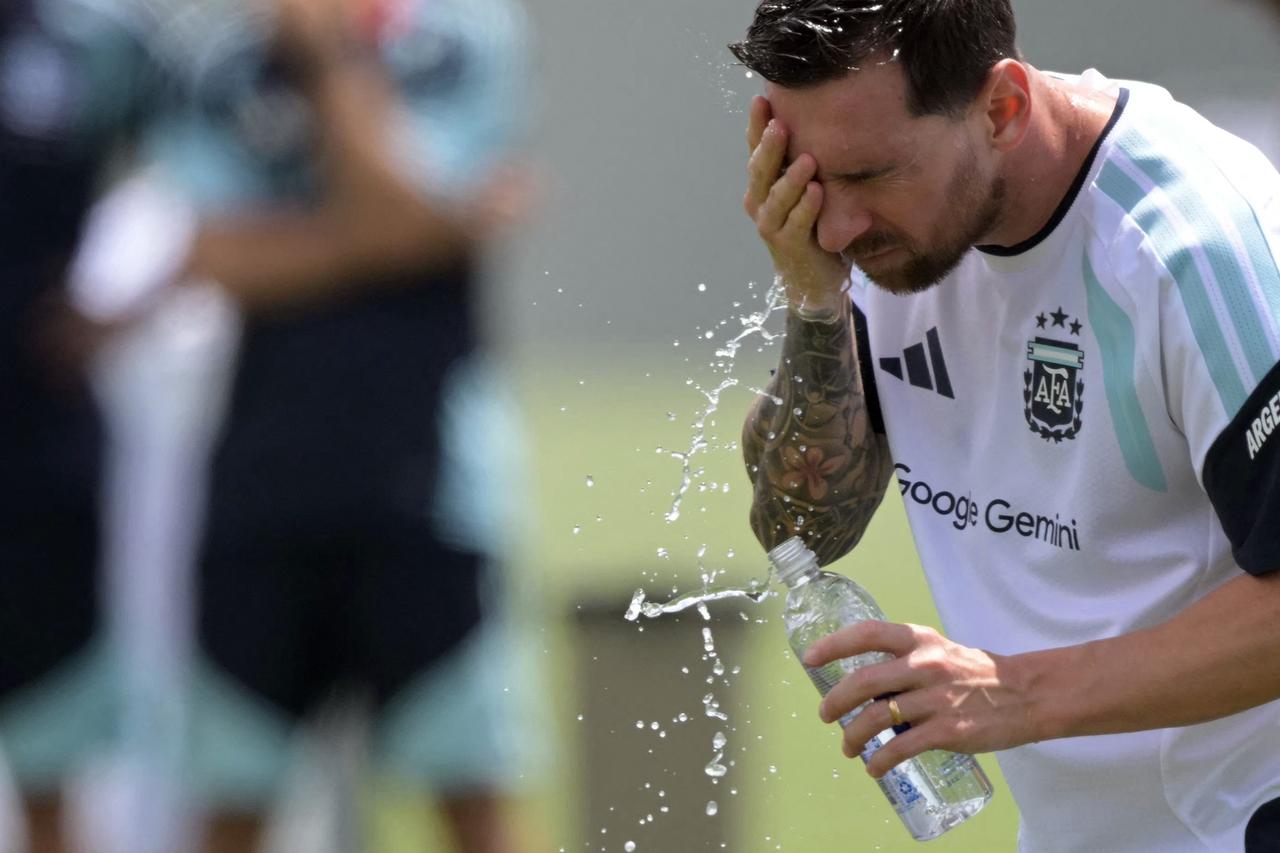


Climate Central, a climate research group, found that 49 out of 104 matches at the 2026 FIFA World Cup have at least a 50% chance of temperatures rising high enough to hurt player performance.
In 26 of those matches, climate change raises that risk by at least 10 percentage points.
The 2026 FIFA World Cup will feature 48 teams, including Türkiye's national team, playing 104 matches in 16 cities across the United States, Canada, and Mexico.
The research shows that temperatures above 28 degrees Celsius (82.4°F) can hurt player performance and affect how teams plan and play their matches.


Climate change is expected to have the biggest impact on the Uruguay-Spain match, set for June 26 in Guadalajara, Mexico.
There is a 70% chance that temperatures will go above 28 degrees for this game, which is 37 percentage points higher than it would be without climate change.
For the Türkiye-United States match on June 25 at Los Angeles Stadium, there is a 49% chance temperatures will exceed the threshold. Climate change is responsible for six percentage points of that risk.
The final, which will take place on July 19 in New Jersey, has a 47% chance of players facing heat that affects performance. Without climate change, this chance would be 30%.

The analysis also looked at how often extreme-heat days occurred in June and July over the past decade (2016 to 2025) compared with the decade before each city's last time hosting the World Cup. This focused on 10 of the 16 host cities that have previously hosted matches.
Miami, which hosted in 1994, and Mexico City, which hosted in 1986, have each had seven times as many extreme heat days in June and July over the past decade as during the years when they last hosted the tournament.

Abdullah Yener Ince, an orthopedics and traumatology specialist at Acibadem Maslak Hospital, said that rising temperatures are one of the biggest environmental challenges for football in recent years.
He added that this issue should be considered in terms of both player health and performance. They are forced to contend not only with their opponents but also with the weather.
"In tournaments played during the summer months, this becomes much more pronounced. We can see its effects very clearly on the pitch. Players lose more fluids, their heart rates rise, and recovery becomes harder. Sustaining high-tempo running in the later stages of a match becomes increasingly difficult. At a certain point, the body prioritizes cooling itself over performing," he said.
Ince also said that higher temperatures lead to fewer repeated sprints, make it harder for players to concentrate, and can cause split-second delays in decisions that might change the result of a match.
He pointed out that many teams now include heat acclimatization in their pre-tournament camps. Training in similar weather can make a big difference in how players perform.

Ince said that the expected heat during the World Cup will affect how teams play and the results of matches.
Some teams build their game around high tempo and intense pressing, while others prefer to control the game through possession.
Hot weather can particularly affect high-energy playing models, and that can change the course of matches,' he said.
Ince concluded, "In the past, we only spoke about training science and nutrition. Today, we are also talking about climate conditions.
In the years ahead, successful teams will need not only good players but also strong health and performance units that can adapt to environmental conditions. This is no longer a luxury; it is an important part of the game.'


 Set as preferred source
 Set as preferred source




 6 min read