Newsletters


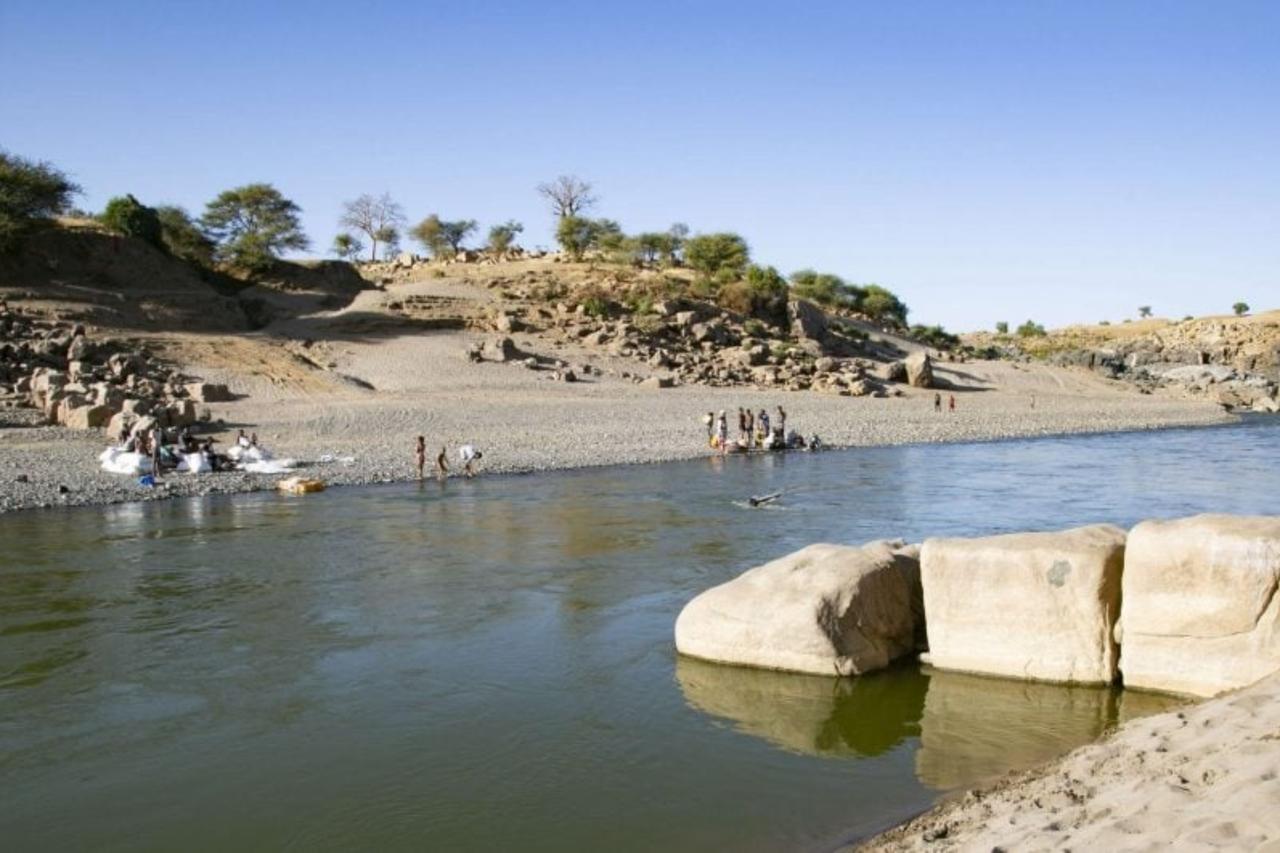


On the banks of the Atbara River, at its confluence with the Setit River, opposite the city of Al-Shuwak in Gedaref State, about 340 kilometers (211.2 miles) east of Khartoum, a shocking scene struck fear into residents’ hearts.
Hundreds of dead rats were found scattered along the riverbanks, turning what was once a source of life into a scene of mass die-off amid growing fears of water contamination.
Foul odors also spread across the area, leaving residents shocked and increasingly worried that an even bigger disaster may be looming.
A video documenting the scene swept across social media at lightning speed, turning the incident into a tremor on Sudan’s streets as people asked, “Has poison entered the river? Has the lifeline been contaminated?”
The citizen who filmed the disaster warned everyone against drinking water from the river after seeing huge numbers of rats dying on its surface.
In an effort to ease public fears, authorities in Kassala State announced that the rat outbreak and die-off had affected the areas of Al-Shagarab, Khashm al-Qirba, Al-Hafair, and both banks of the Atbara River, noting that similar outbreaks had previously appeared in Al-Jazira, Sennar, and Gedaref states.
They attributed the situation to a sharp increase in rat populations after pest-control campaigns were halted over the past two years because of the war.
They added that the rats reached Kassala in large swarms coming from far distances and expected the phenomenon to subside within a short period.
Authorities also said laboratory tests on live and dead rats came back negative and showed no diseases.
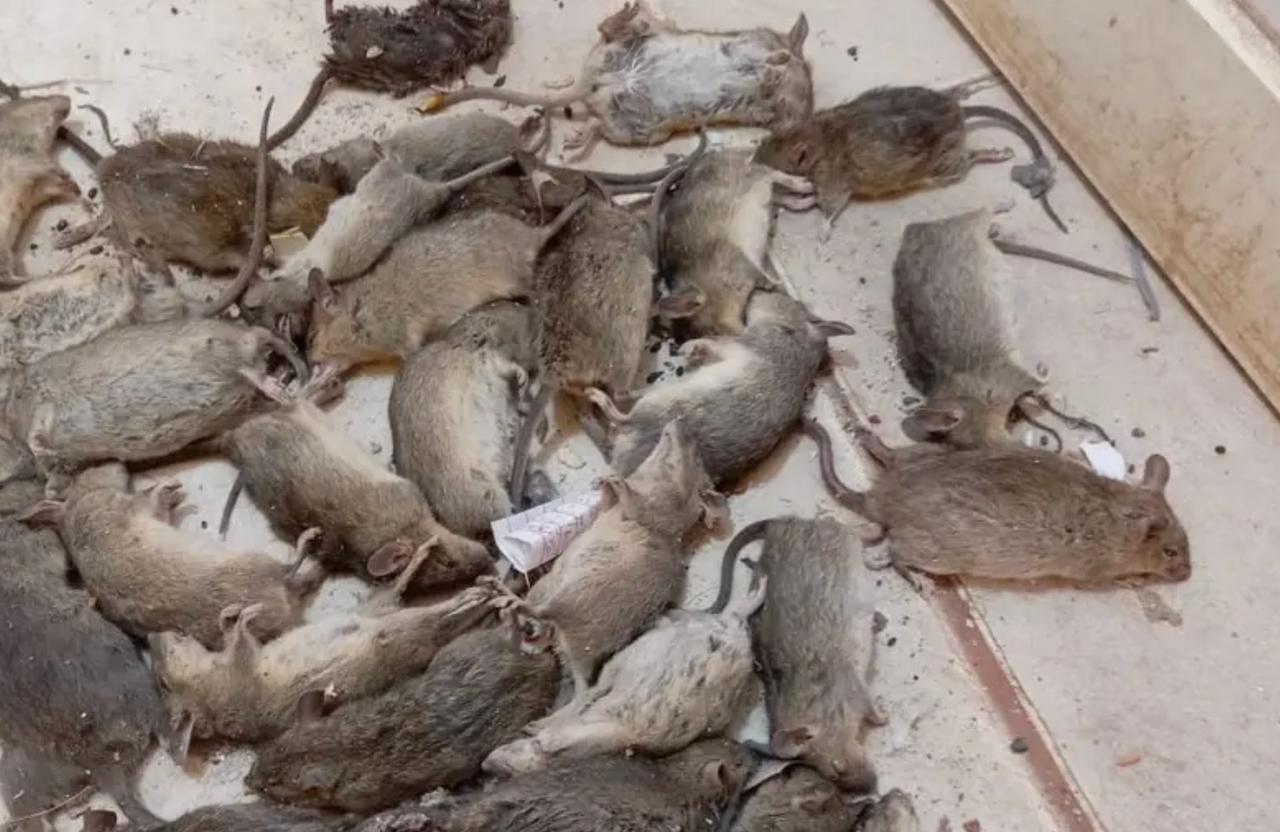

For his part, Kassala State’s minister of production and economic resources, Khudr Ramadan, said in press statements that the spread of rats in Khashm al-Qirba locality is an unusual phenomenon.
He noted that the rats came from Sennar State, and that the reasons behind their population boom go back to the suspension of control campaigns for two years.
He stressed that the die-off is natural and does not transmit diseases and that the main cause of death is a lack of food, supporting the biological nature of the event rather than any epidemic or chemical impact.
Scientific committees in other states, such as Al-Jazira’s committee, also confirmed that the die-off resulted from a natural population explosion after pest-control efforts were absent due to the war.
They said the dead rats showed no signs of poisoning or disease, and that no chemical or epidemic indicators were detected.
The committee, formed after a similar spread of dead rats in huge numbers last August, underscored the importance of continuous monitoring, environmental prevention, and addressing any potential public health concerns among residents.
It also said the disposal of dead rats is carried out in an environmentally safe manner, and that laboratory samples were free of dangerous pathogens.
But despite the reassurances, many residents are still deeply uneasy. They say that “thousands of hungry rats are invading homes, damaging property, and cannot be easily controlled.”
They also point out that the Atbara River, the main source of water, is covered with dead rats, asking, "How can we trust that the die-off is purely natural?"


 Set as preferred source
 Set as preferred source



 3 min read