Newsletters


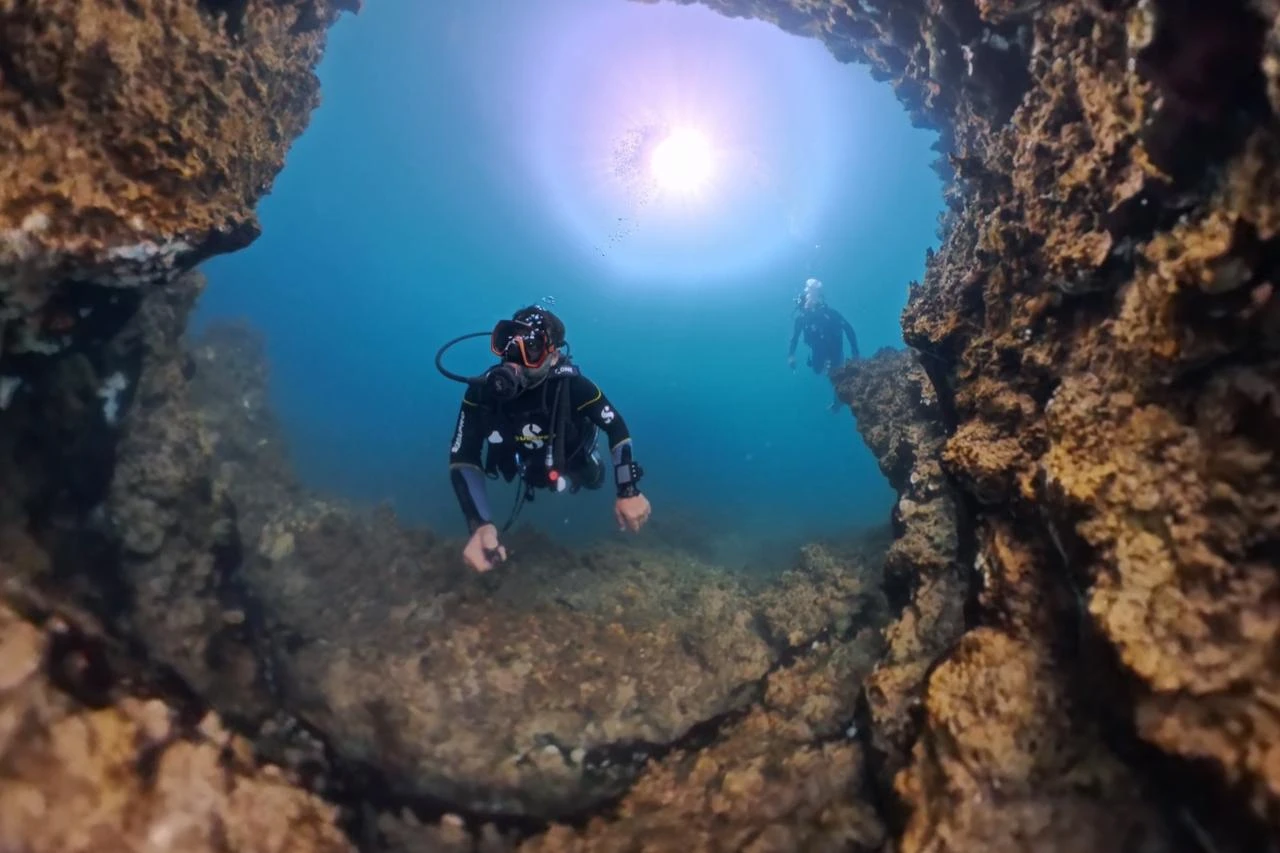


A team of 32 divers explored a Russian shipwreck and the world's largest microbialites in the depths of Türkiye's Lake Van amid a recent rise in diving activities in the area.
Regarded as one of Türkiye's major diving routes, the lake offers divers the chance to discover underwater shipwrecks and natural formations, with the region's diving tourism potential becoming increasingly prominent.
Among Lake Van's unique underwater riches are historical ruins, shipwrecks, and the world's largest microbialites, offering diving enthusiasts a range of different experiences.
Documenting these underwater treasures both preserves the lake's underwater heritage and helps promote the region.
Most recently, a diving event organized by the Van Diving School off the village of Resadiye, in Bitlis province's Tatvan district, saw a team of 32 divers enter the water.
The divers explored a 40-meter-long (131.23 feet) Russian shipwreck resting at a depth of around 17 meters, along with microbialites stretching for meters, documenting the underwater riches of Lake Van.
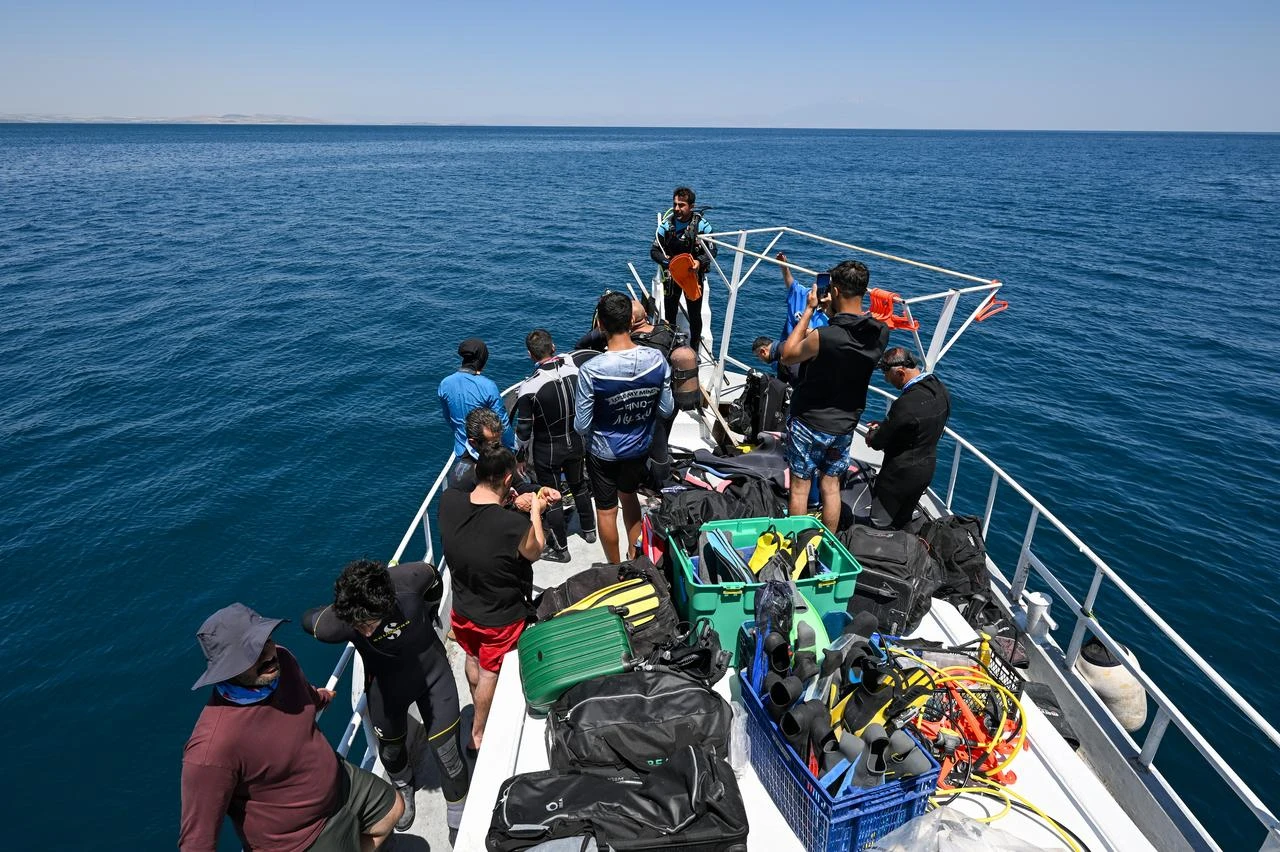

Serkan Ok, the Turkish Underwater Sports Federation's provincial representative for Van and a diving instructor, said that the group had come together to showcase the underwater mysteries of Lake Van.
Ok noted that Lake Van has become a focal point for diving enthusiasts in recent years, adding that the lake is home to the world's largest microbialites.
He pointed out that Lake Van contains the remains of a sunken city dating back to before the common era, as well as a Russian shipwreck from 1905.
"Lake Van is around 600,000 years old and is home to microbialites formed over thousands of years. The lake, where altitude diving is possible, is preferred by expert divers for this reason. We have around 14 major diving points in the lake. One of the most important is the area in Resadiye where the microbialites and the Russian wreck are located. Today we dived here with 32 divers," he claimed.
''Due to the water temperature, our maximum diving depth doesn't exceed 17 meters, but visibility is quite high. The absence of currents in June, July and August also increases interest in the region," the diver added.
Ok said the largest microbialite identified in Lake Van to date measures 34.4 meters in length and is roughly 100,000 years old, adding that they believe even larger microbialites may be found.
Emphasizing the importance of the Russian wreck for diving tourism, Ok said, "There are many artificial wrecks in Türkiye and around the world. This one, however, is a real ship that saw war and sank as a result of natural disasters. Diving enthusiasts are most eager to see this natural wreck. That's why the tours we organize draw significant interest."
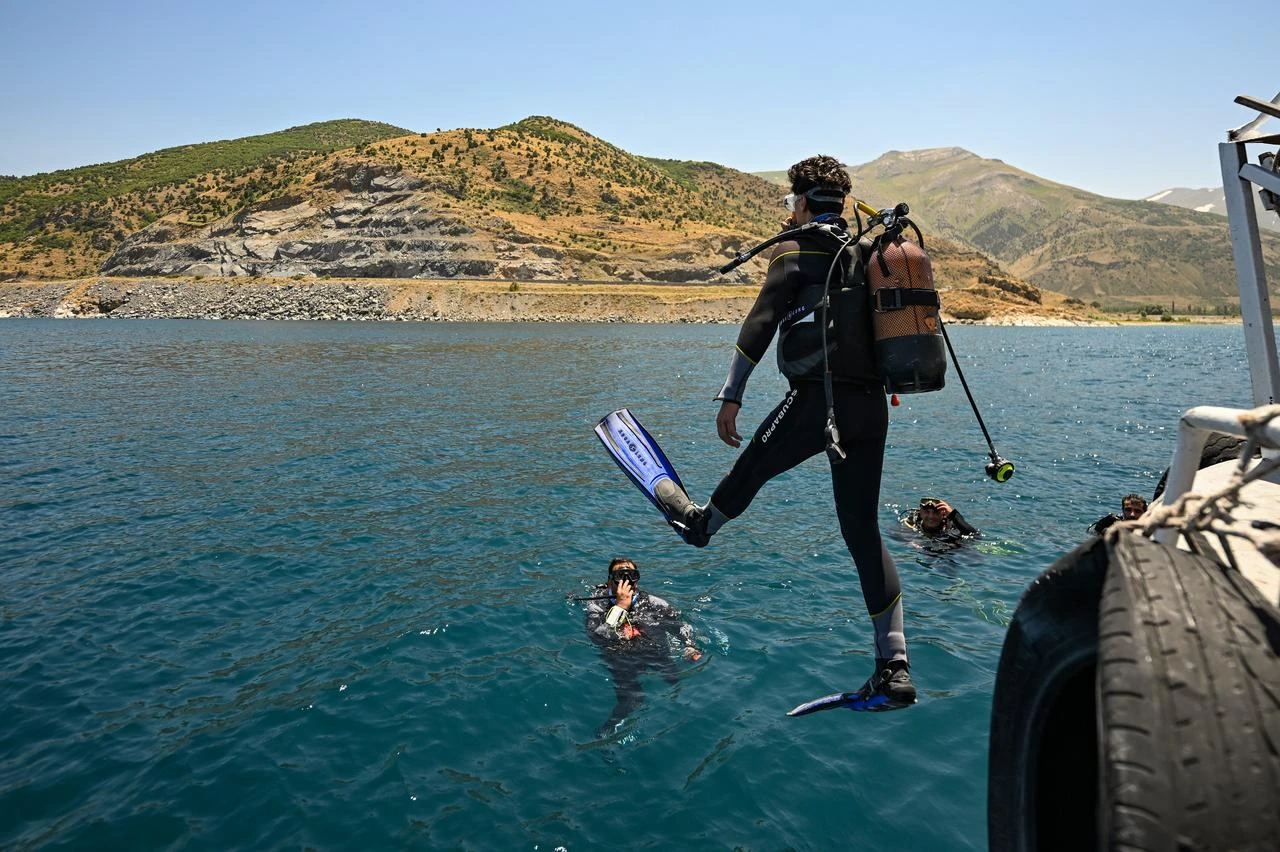
Mehmet Akcan, who took part in the diving event with his children, said he had received diving training at Lake Van and had dived in various regions of Türkiye.
Describing his first dive among the microbialites, Akcan said, "I'm trying to get my children interested in this sport too. After the microbialites, we also saw the Russian wreck. Being the only wreck in Lake Van and the view it offers make it quite impressive. We invite everyone to come dive here."
Diver Lokman Guden said he had dived in various locations across Türkiye but that the experience at Lake Van was very different.
Describing the underwater scenery as giving him the feeling of being on another planet, Guden said, "The microbialites and the Russian wreck were quite impressive. We had an exciting and enjoyable dive. I'd recommend everyone come and see this beauty."
Gulsum Akcan, who dived together with her father, said seeing the natural underwater formations was an unforgettable experience for her, adding: "As you go deeper, the water gets colder, and it's sometimes challenging, but seeing the microbialites makes all the fatigue worth it."


 Set as preferred source
 Set as preferred source


 1 min read
 1 min read