Newsletters




El Nino is forecast to return as early as May, bringing above-normal temperatures to nearly every region on Earth and reshaping rainfall patterns across continents, according to a new climate update.
In its Global Seasonal Climate Update published April 21, the World Meteorological Organization (WMO) reported that El Nino is set to develop during the May to July season.
Climate models currently suggest the event could be a "strong" one, the WMO said, with confidence in the prediction expected to firm up after April.
"After a period of neutral conditions at the start of the year, climate models are now strongly aligned, and there is high confidence in the onset of El Nino, followed by further intensification in the months that follow," said Wilfran Moufouma Okia, chief of climate prediction at the WMO.

El Nino events occur every two to seven years as part of the El Nino-Southern Oscillation (ENSO), a natural climate cycle in the Pacific Ocean.
The cycle alternates between the warmer El Nino phase and the cooler La Nina phase, with neutral periods in between.
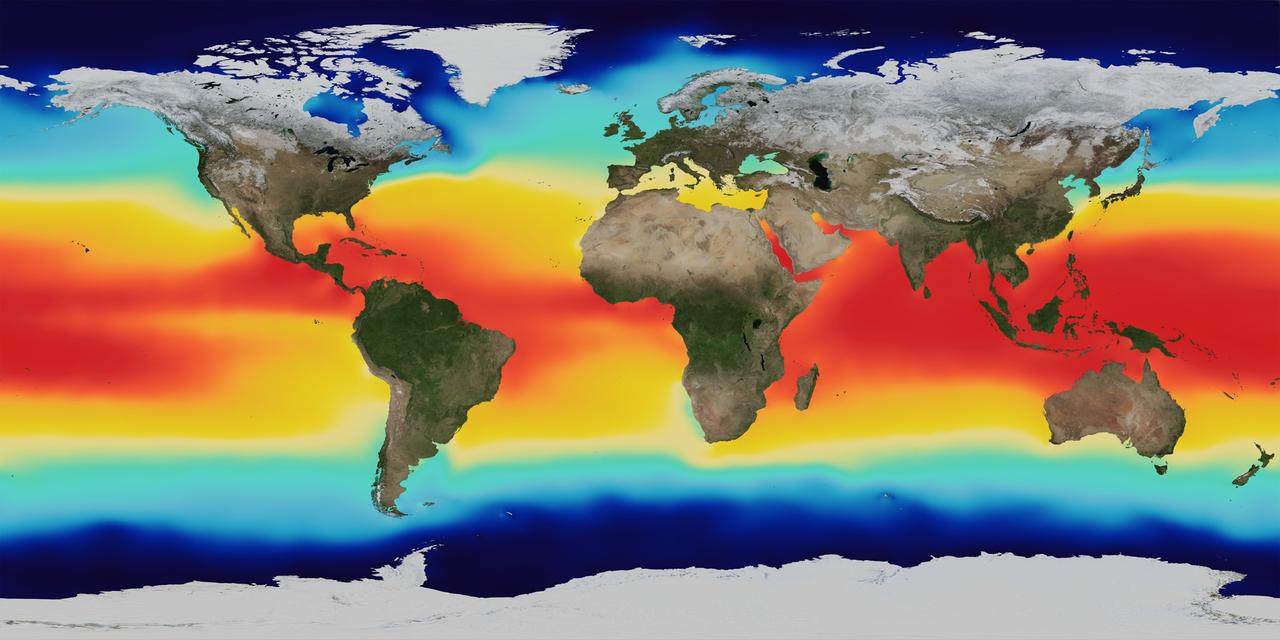
During El Nino, sea surface temperatures rise across the central and eastern Pacific, weakening or reversing trade winds and disrupting global temperatures and rainfall patterns.
The WMO update points to a rapid warming trend for May, June, and July. Elevated temperatures are highly likely across southern North America, Central America, the Caribbean, Europe, and Northern Africa, the report said.
Rainfall patterns are also expected to shift significantly worldwide, though the outlook for parts of North America remains unclear.
For Türkiye and the wider Mediterranean basin, the projected warming over Europe and Northern Africa raises the prospect of hotter summer conditions, with potential implications for agriculture, water resources, and tourism, according to the WMO outlook for the region.

The United States National Oceanic and Atmospheric Administration (NOAA) Climate Prediction Center reached similar conclusions.
NOAA placed the probability of El Nino emerging between May and July at 61%, with the event likely continuing through the rest of the year.
NOAA also estimated a 25% chance of a "very strong" El Nino beginning in November, a designation the WMO does not use.
The most recent El Nino period ran from May 2023 to March 2024 and contributed to 2024 becoming the hottest year on record, when global temperatures breached the 1.5 degrees Celsius (2.7 degrees Fahrenheit) threshold above preindustrial levels for the first time on an annual basis.
Past El Nino events have been linked by researchers to droughts, floods, and forest fires in different parts of the world, as well as to disruptions in food production and water supply.
The WMO said it will publish a revised El Nino update in late May.


 Set as preferred source
 Set as preferred source




 2 min read