Newsletters


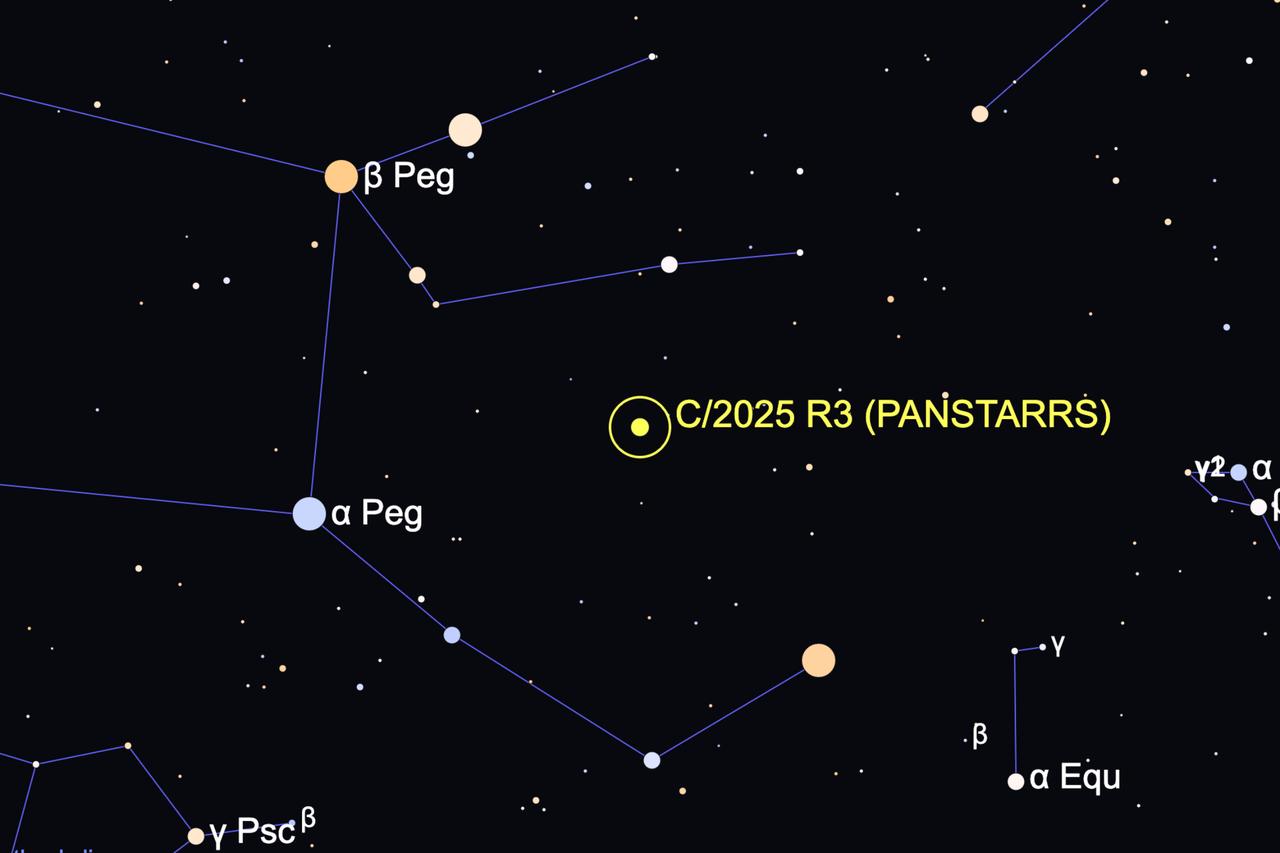


Astronomers tracking the early weeks of 2026 have identified a new comet that could become the brightest celestial visitor of the year.
The object, named C/2025 R3 (Pan-STARRS), is now racing toward the inner solar system and may become visible to the naked eye by April 2026.
Scientists first detected the comet on Sept. 8, 2025, through the Panoramic Survey Telescope and Rapid Response System at Haleakala Observatory in Hawaii, but it appeared faint at the time. Subsequent observations now suggest it could develop into what astronomers often call a Great Comet, meaning the brightest comet of a given year.
The discovery arrives after a busy period for comet observers in 2024 and 2025. Recent years delivered Comet Tsuchinshan-ATLAS, Comet Lemmon, Comet SWAN, and the interstellar visitor 3I/ATLAS. Researchers now place C/2025 R3 at the center of 2026 skywatching expectations.
Tracking data from TheSkyLive and NASA’s small body database show C/2025 R3 currently sits roughly 216 million miles from Earth, between the orbits of Mars and Jupiter. The comet continues to accelerate toward the Sun.
Key upcoming milestones:
Astronomers expect the best viewing window to occur a few days before perihelion. April 17 offers favorable conditions because a new moon will darken the sky. After April 27, the comet may move into a position near the Sun that makes viewing more difficult. Observers in the Southern Hemisphere may gain another opportunity in early May.
During perihelion, C/2025 R3 will appear in the constellation Pisces, just below the Great Square of Pegasus, according to Space.com.
Scientists do not yet agree on how bright the comet will become. Current brightness estimates vary widely.
Some researchers predict the comet will reach apparent magnitude 8, a level that requires binoculars or a telescope. Others estimate it could reach magnitude 2.5, a level of brightness that allows unaided eye visibility under dark skies. On the astronomical magnitude scale, lower numbers mean greater brightness.
Several physical processes will determine the final outcome. As the comet approaches the Sun, solar radiation heats its icy core and this heating releases gas and dust that reflect sunlight toward Earth.
If the comet passes directly between Earth and the Sun, a phenomenon called forward scattering may intensify the reflected light. This effect is often described as sunlight scattering through the comet’s dusty coma, which can increase brightness for a short period.
Scientists have classified C/2025 R3 as a long-period comet. That category makes it valuable for researchers studying early solar system material. Observatories plan to examine their gas, dust, and chemical composition to search for water signatures, organic molecules, and isotopic ratios that can reveal how planetary systems formed.
Few other notable comets are predicted to approach Earth this year.
This scarcity increases the likelihood that C/2025 R3 will claim the informal title of 2026’s Great Comet, as reported by Live Science. Astronomers caution that future surveys could still discover another bright comet later in the year. For now, C/2025 R3 leads the list of anticipated sky events for spring 2026.
Observers and astronomy groups will publish detailed viewing guides as April approaches. If brightness predictions prove accurate, casual skywatchers across parts of the world may see the comet without specialized equipment. If brightness remains lower, binoculars and small telescopes will still offer viewing opportunities.
Either way, C/2025 R3 already stands as one of the most closely watched celestial visitors of the new year.


 Set as preferred source
 Set as preferred source



 3 min read