Newsletters


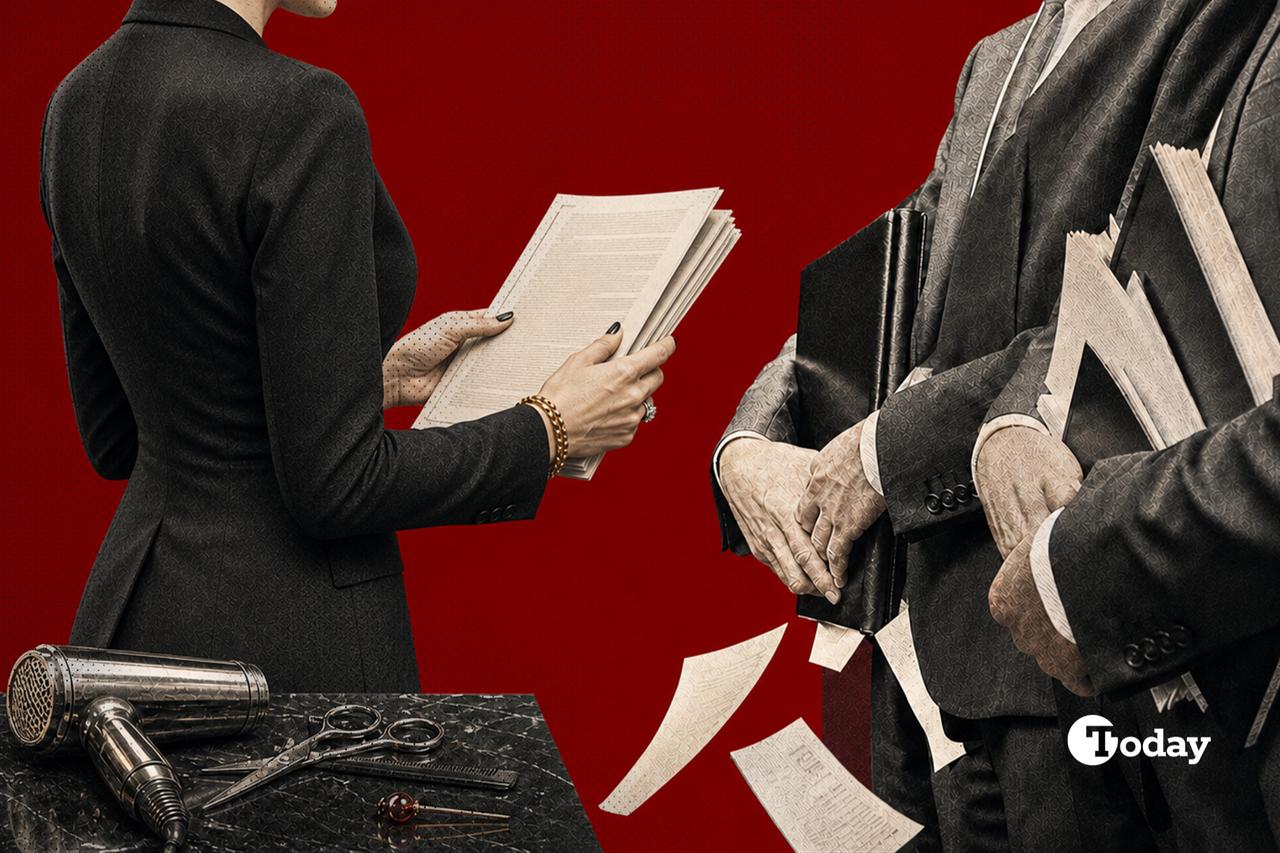


Students of comparative diplomacy were treated last week to an event rarely observed outside the controlled conditions of an embassy safe room: the collision of a Trump political appointee and the U.S. Foreign Service, two incompatible schools of statecraft united only by the urgent need to restore strategic hold in a high-humidity environment.
The occasion was one of America's delayed 250th-birthday celebrations, postponed while the Iran war made party planning unusually complicated.
Presiding was Tom Barrack, U.S. ambassador to Türkiye, billionaire real estate investor, and presidential envoy for Syria and Iraq.
In an earlier America, these jobs would have required several people. In the current one, they require a cellphone and the foreign-policy doctrine of John Water’s Hairspray: integration, ambition, and industrial quantities of aerosol.
Barrack was merely the host. The evening's principal weather system was Mora Namdar.
Namdar is Trump's Assistant Secretary of State for Consular Affairs. She is also a lawyer, a former Near East policy official, the daughter of Iranian immigrants, and, most inspiring for Rumpelstiltskin, the founder of a Dallas beauty business. Washington used to produce statesmen who wrote six-volume memoirs. It now produces people with product lines.
Namdar entered the reception at conversational Mach 3, scattering canapé-bearing diplomats before her like villagers fleeing Krakatoa.
Within minutes she had acquired a semicircle of Turkish guests and was explaining the central lesson of her career: Dream big. She knew this because she had once opened a beauty salon. It was an inspirational message, although judging by several Turkish faces, some had understood it as a new condition for NATO membership.
Twenty feet away stood the career Foreign Service. You know these people. They have served in Ouagadougou. They can pronounce Ouagadougou. They have opinions about the agricultural attaché in Ouagadougou, which they will reveal only after retirement. Their natural plumage is navy blue. Their principal defense mechanism is the briefing book.
Let us call their leader Arthur, a composite of the career diplomats surrounding Namdar that evening. Arthur had spent 30 years mastering the ancient diplomatic art of saying absolutely nothing in 17 consecutive paragraphs.
He had survived coups, evacuations, appropriations hearings, and State Department travel software.
Nothing had prepared him for Mora.
“The United States remains committed to a mutually beneficial bilateral framework,” Arthur offered hopefully. Nobody heard him.
“Türkiye, of course, possesses NATO's second-largest military—and our robust people-to-people ties…”
Still nothing.
He looked down at his talking points. The talking points looked back. For the first time in their relationship, neither knew what to do.
Then Namdar announced that she had a Bill Clinton story, at which point even Arthur stopped pretending to discuss tariffs. As Namdar tells it, the former president once wandered into her beauty business and told her he liked women with political aspirations.
Whether Clinton actually said this is between Clinton, Namdar, and whichever celestial recording secretary has been assigned the Clinton beat. But as a diplomatic anecdote, it contained everything the State Department traditionally tries to exclude from diplomatic anecdotes: a former president, a beauty salon, women, ambition, and a sentence nobody had cleared with Public Affairs.
Arthur's face assumed the expression of a man watching someone microwave the Vienna Convention. Somewhere inside his skull, an emergency cable was composing itself:
SECRET ANKARA 001234
SIPDIS
E.O. 12958: DECL: 09/21/2026
TAGS: PREL PGOV NATO HAIR
SUBJECT: UNAUTHORIZED ANECDOTAL ENGAGEMENT WITH FORMER POTUS CLASSIFICATION / HAIR FORCE ONE
The younger officers froze. They had trained for hostage situations, earthquakes, and hostile surveillance.
Nobody at the Foreign Service Institute had covered what to do when an assistant secretary begins telling Clinton beauty-shop stories within canape range of a NATO ally.
 1 min read
And suddenly the Trump revolution in American diplomacy became visible in miniature. For decades Washington maintained a priesthood of professionals trained to believe international affairs consisted of expertise, preparation, discretion, and knowing exactly which fork belongs to the chargé d'affaires.
Trump introduced another species into the terrarium: businesspeople, donors, friends, people with brands, and people who regard “protocol” as something their iPhone does automatically.
The career diplomats responded as career diplomats always do when confronted with an existential threat. They formed a working group.
And yet an uncomfortable fact hung over the reception. Mora had the room; Arthur had the briefing book. Mora had Clinton walking into a beauty salon; Arthur had bilateral merchandise-trade statistics. It wasn't a fair fight.
By dessert, nobody remembered whether the strategic partnership was “durable,” “enduring,” “deepening,” or—God forbid—"robust."
But everybody remembered Mora Namdar.
This is the new American diplomacy. For 250 years, the Republic sent Benjamin Franklin, Thomas Jefferson, George Marshall, and generations of anonymous professionals abroad to represent its interests.
Now it has discovered something they apparently neglected to teach at Georgetown:
When soft power fails, try strategic root maintenance.
And if that doesn't work, bilateral highlighting to trigger regional damage control.


 Set as preferred source
 Set as preferred source


 1 min read