Newsletters


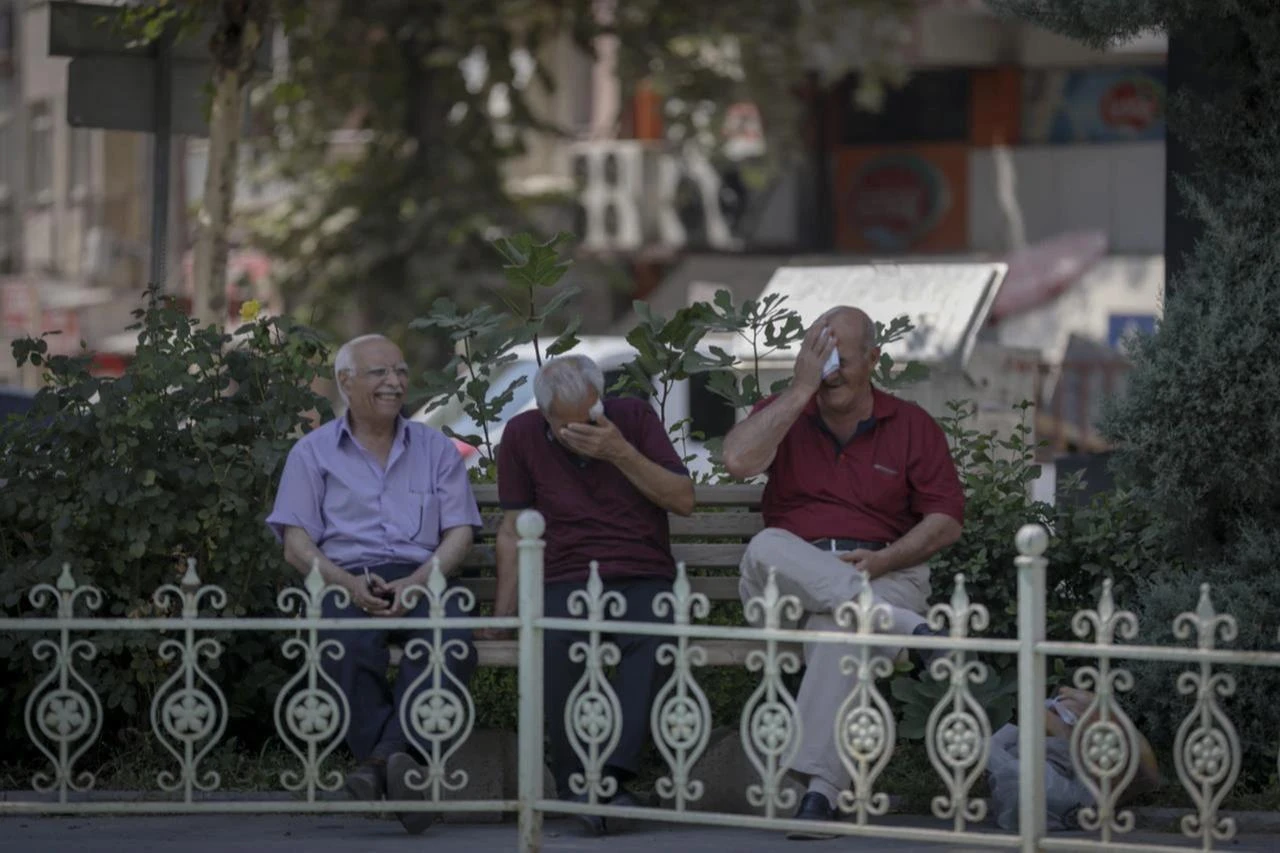


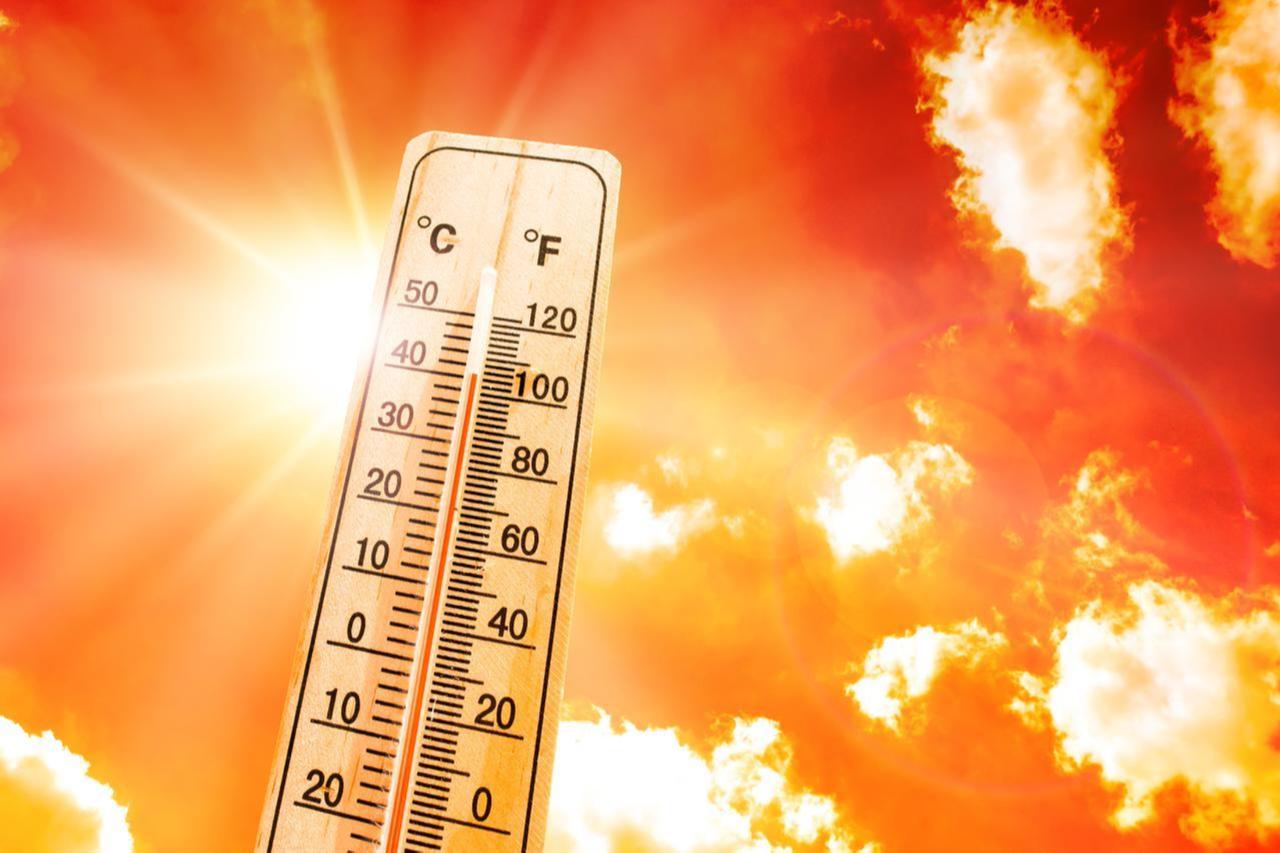
Almost every day, people wake up to news about extreme heat. Wildfires have swept across Europe and the U.S., driving people from their homes and, in some cases, costing lives.
But the damage does not stop when the sun goes down. Extreme heat is also stealing our sleep, according to a new analysis by the nonprofit Climate Central.
Sleep is not optional maintenance. Plenty of things shape how well a person sleeps, but heat after dark is fast becoming one of the more serious environmental risks, both because the planet is warming and because more people now live in dense cities that hold onto that warmth long after sunset.

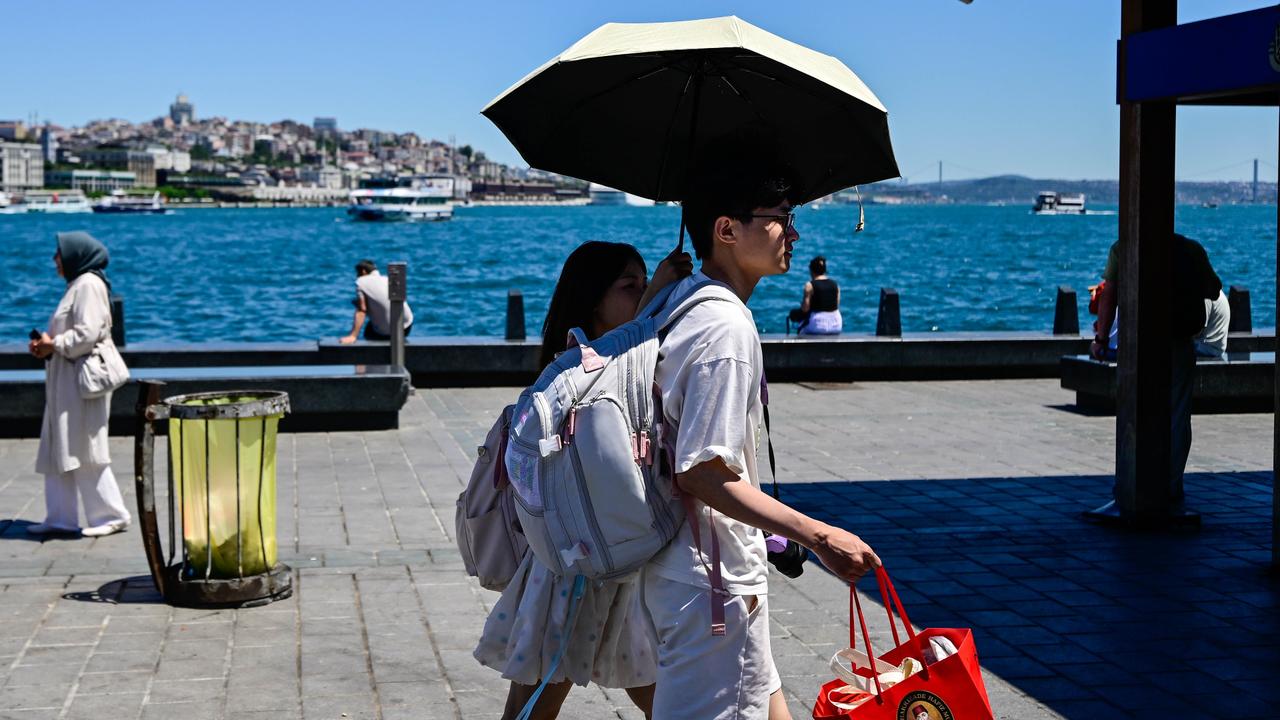
Türkiye has already had a taste of this. In late June, as a warm air mass pushed in from the northwest, Istanbul's actual temperature was forecast to reach 32 degrees Celsius (89.6 degrees Fahrenheit), while the city's humidity threatened to drive the heat index as high as 40 degrees Celsius. Dr. Deniz Demirhan of Istanbul Technical University's Department of Climate Science and Meteorological Engineering told Anadolu Agency (AA) that high temperatures and humidity together make it hard for the body to cool down.
"When you go outside, the moisture on your body cannot evaporate. That sticky, damp feeling never goes away because the air is already humid. That's why the temperature feels much higher," he said. "This is dangerous weather."
Demirhan said the city's sprawl of concrete, asphalt and dense construction makes matters worse, leaving Istanbul stuck in an "urban heat island" effect, in which built-up areas retain the day's heat instead of shedding it after dark. "Istanbul is a city that cannot cool down at night. Because it gets too hot during the day, it never gets a chance to breathe," he said. He added that planting green space around buildings and paved areas would help.
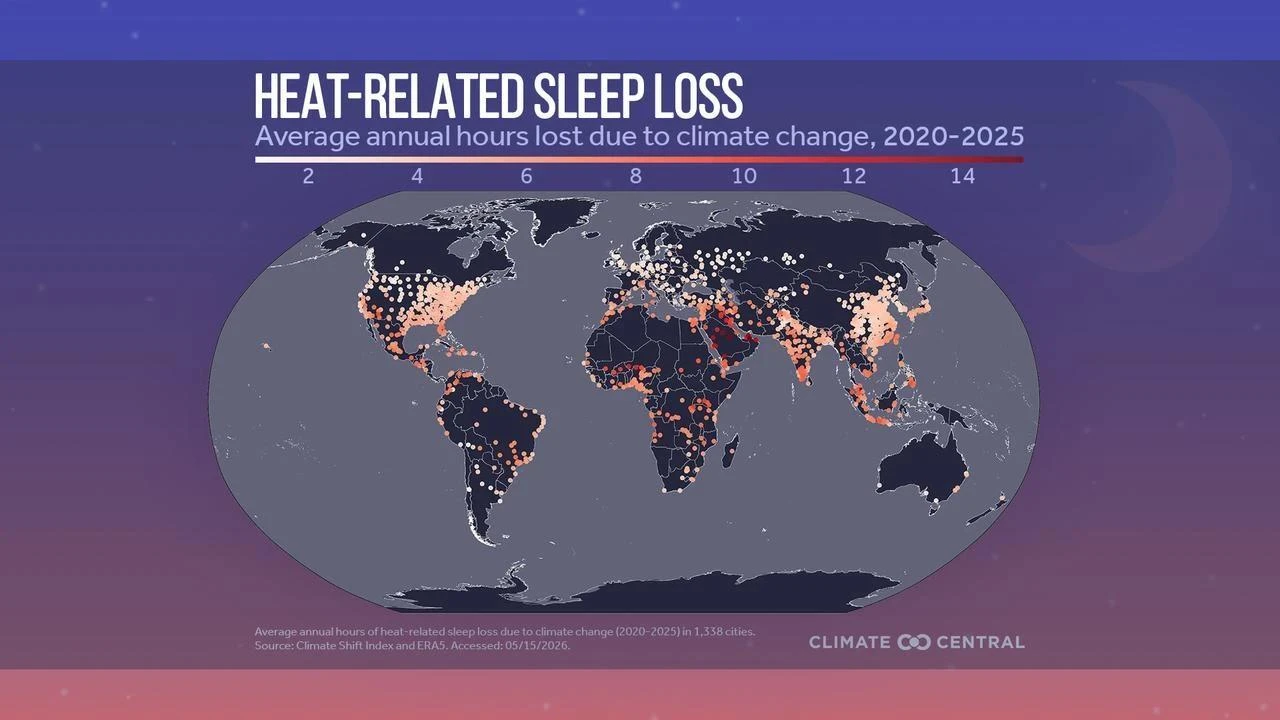
Heat that lingers after dark does more than make people uncomfortable; it measurably shortens their sleep. Between 2020 and 2025, the average person worldwide lost close to 56 hours of sleep a year to high ambient temperatures, Climate Central found. About 10 percent of that loss, around six hours per year, was the result of climate change.
In cities across Saudi Arabia, Oman and the United Arab Emirates, residents lost between 55 and 87 hours of sleep a year to warm nights, with 12 to 16 of those hours attributed to climate change—close to two full nights of sleep gone each year because of it. In southern India and parts of Southeast Asia, the annual loss ran from 78 to 91 hours, roughly eight or nine of them tied to climate change. In Chennai alone, the figure reaches 93 hours. Across nearly every city in the analysis, the share of sleep loss linked to climate change has at least doubled since the early 1970s.
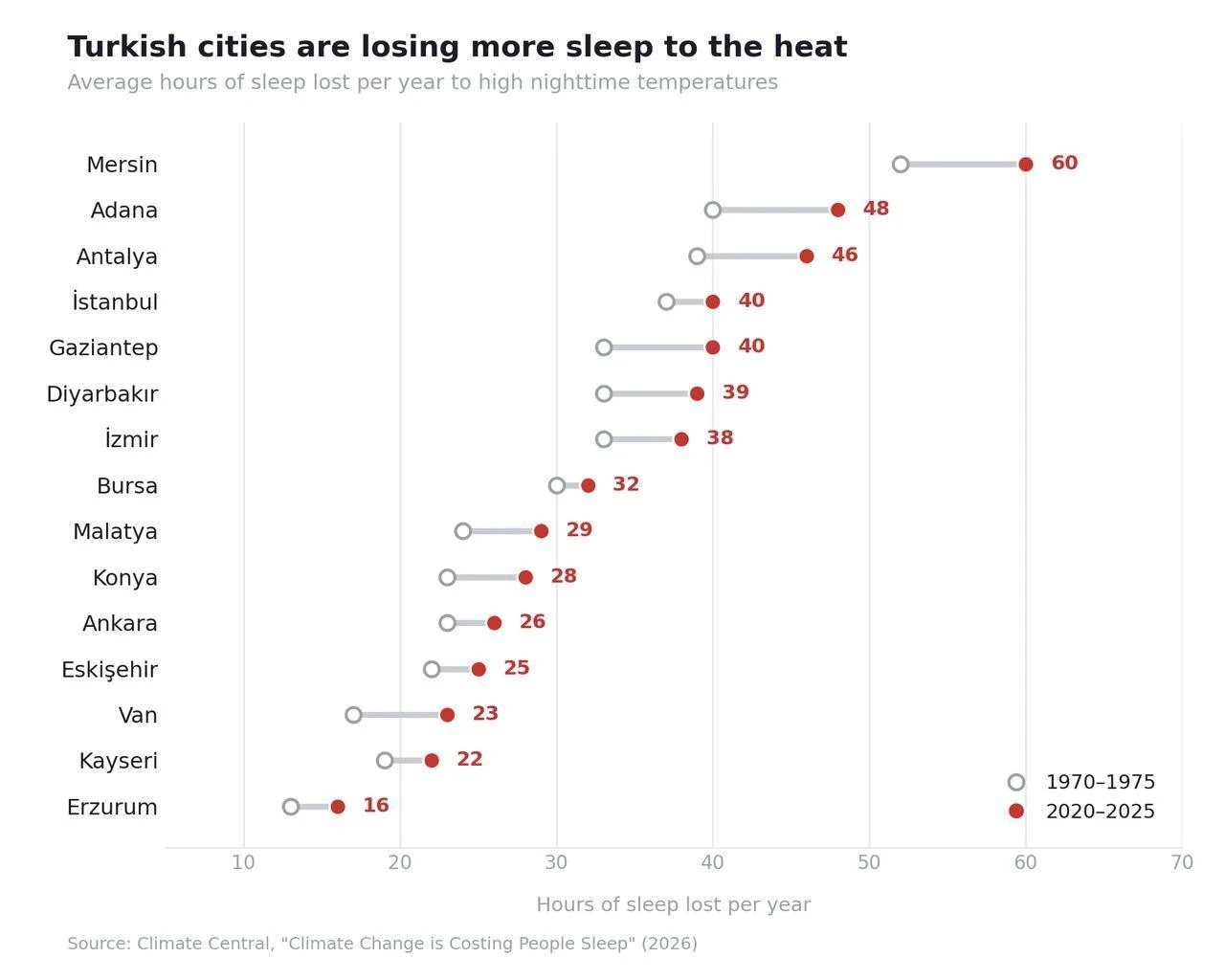
Across the 15 Turkish cities in the dataset, the average loss was about 35 hours of sleep a year to heat between 2020 and 2025, up from roughly 30 hours in the early 1970s. Around 4.5 of those hours—close to half a night's sleep—are attributed to climate change. The burden falls hardest on the south: in Mersin the annual loss has climbed from 52 to 60 hours and in Adana from 40 to 48, with seven of Adana's hours tied to warming, more than any other Turkish city. Istanbul, at 40 hours a year, sits closer to the middle of the pack.
Nights that stay above 20 degrees Celsius (68 degrees Fahrenheit) are known as tropical nights, and they are becoming markedly more common across the Mediterranean. A study by Dogukan Dogu Yavasli and Ecmel Erlat, published in the International Journal of Climatology, found that the tropical night season now begins roughly 35 days earlier than it did in the mid-20th century and also ends later.
In western and southeastern Anatolia, the first tropical night arrives about five days earlier with each passing decade, while the season's overall length has been growing by around four days per decade in southern and western Türkiye.
Whether a hot night actually costs someone sleep depends in large part on whether they can cool the room they are sleeping in. According to studies conducted by experts at the Ministry of Energy and Natural Resources, there were roughly 11 million air conditioners in Turkish households in 2025, and that number is projected to nearly double over the next decade.
Electricity demand is set to follow. Household air conditioners drew between 5,000 and 6,000 gigawatt-hours for heating and cooling in 2025, a figure the ministry expects to surpass 12,000 GWh by 2035.
Sleeping too little has been associated with poorer mental health, dulled thinking and lower productivity, as well as higher rates of heart disease and obesity. Newer work also points to a more immediate cost: a tired brain has a harder time keeping intrusive thoughts at bay.
Experts advise keeping the home as cool as it can be kept. Where running an air conditioner is not an option, drawing the blinds or curtains during the day to shut out direct sun still helps.


 Set as preferred source
 Set as preferred source


 0 min read
 1 min read